Skiascopy (retinoscopy) in Moscow

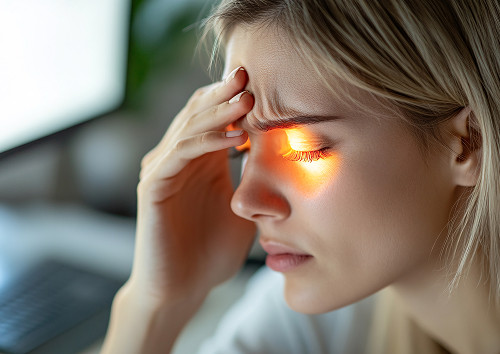
Vision can change throughout the day: after reading, studying, or working on a screen, clarity often decreases. A chart test helps assess visual acuity, but it doesn't always reveal why the eye is having trouble maintaining focus.

At K+31 in Moscow, skiascopy is performed when the doctor needs to objectively evaluate the refraction of the eye and determine whether the patient needs correction.

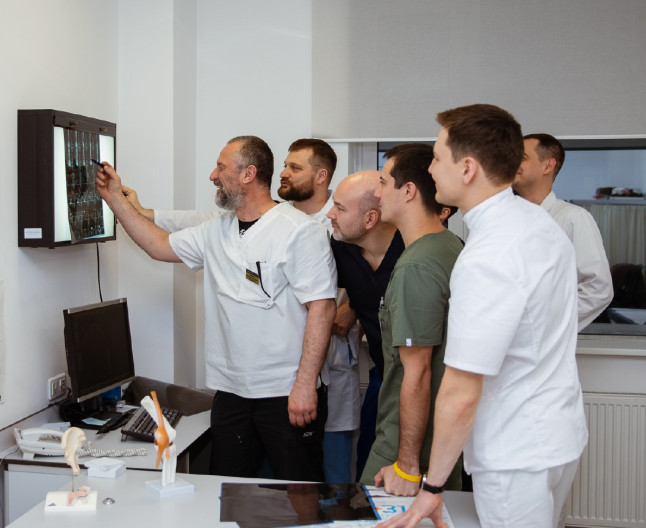
Best specialists
Best
specialists
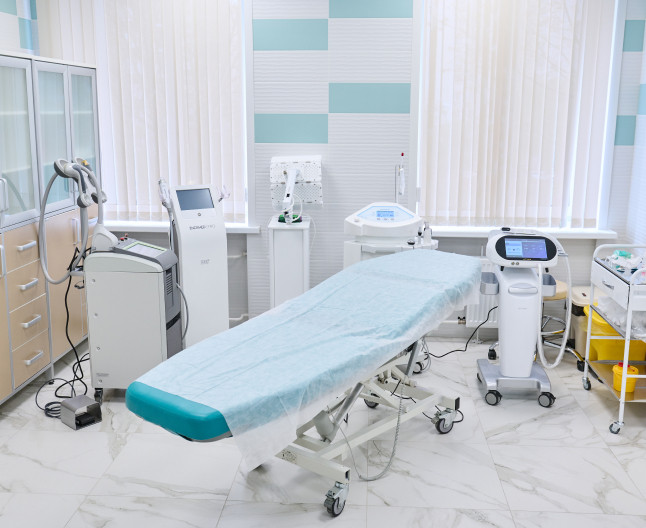
Expert equipment
Expert
equipment
Advanced diagnostic treatment
Advanced diagnostic
treatment
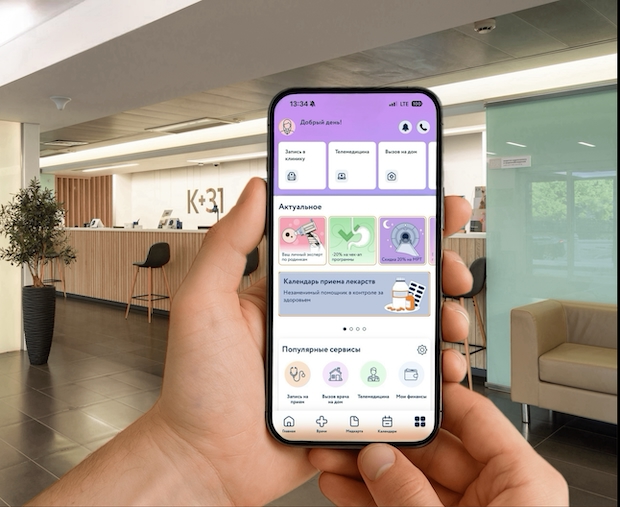
Download the application “Personal Account K+31”
Everything about your health in one click!
Subscribe to social networks K+31
To keep up to date with current offers and receive useful advice about your health.

What is skiascopy and why is it needed?

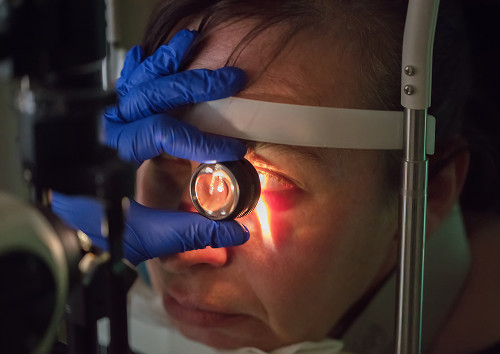
Skiascopy is an objective method for assessing refraction based on observing the movement of a shadow in the pupil. Therefore, the test is also called a shadow test. The doctor shines a light into the eye and observes which lenses neutralize the shadow.

Retinoscopy helps identify refractive errors: myopia, hyperopia, and astigmatism. This method is useful for children, with inconsistent results, and with questionable instrument data. The results are always compared with the patient's complaints, age, accommodation, and other tests.

What is skiascopy and why is it needed?

In what cases do we recommend skiascopy?

We prescribe an examination when a chart or device printout alone is not enough. It is important for the patient to understand why their vision has become less clear. Therefore, the ophthalmologist evaluates the results in the context of the examination.

Most often, an examination is necessary in several situations:

  • There is a suspicion of nearsightedness, farsightedness, or astigmatism
  • A child is undergoing a vision test
  • An initial or repeat fit of glasses is needed
  • The device data does not match the patient's complaints
  • There are signs of accommodation strain

After this, the doctor clarifies the cause of the complaints. If necessary, other methods are added to the examination.

Suspected nearsightedness, farsightedness, or astigmatism

Myopia causes difficulty seeing distant objects. Farsightedness often causes strain when looking up close. Astigmatism often causes blurred edges and fatigue.

This method helps determine the direction and severity of the optical error. The doctor evaluates each eye separately, the difference between the eyes, and the cylindrical component.

Vision examination in children

A routine eye test for a child does not always reflect the real picture. Children may guess symbols, become tired, or answer unsurely. Therefore, the pediatric ophthalmologist uses objective methods.

In pediatric ophthalmology, accommodation is important - the ability of the eye to change focus. If it is overly active, the data may be unstable. According to indications, the doctor applies cycloplegia - temporarily relaxes accommodation with drops.

Eyeglasses Selection and Refractive Impairment

Eyeglasses cannot be selected based solely on an automatic printout. The doctor checks:

  1. Lens Tolerance
  2. Distance and Near Clarity
  3. Both Eyes Working Together

Therefore, refraction determination must be based on actual visual load.

This examination provides an objective basis for further fitting. Trial lenses, visometry, and other tests are then performed. This way, the doctor understands which vision correction is safe.

If the patient already wears glasses, the doctor compares the new data with the previous prescription. A sudden change in lens strength without checking tolerance can cause fatigue, so the final correction is selected in stages. Tolerance monitoring is especially important with the first prescription.

General information

How Skiascopy is Performed at K+31

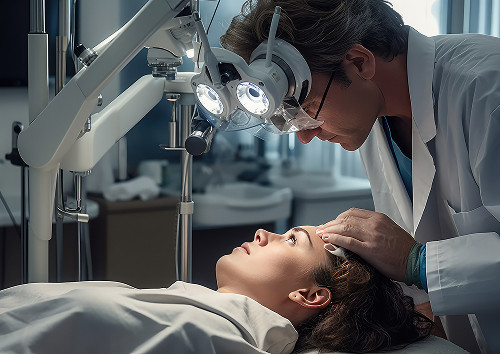
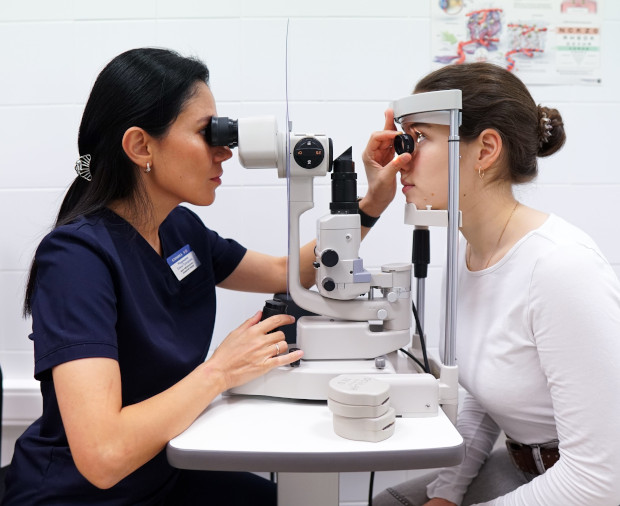
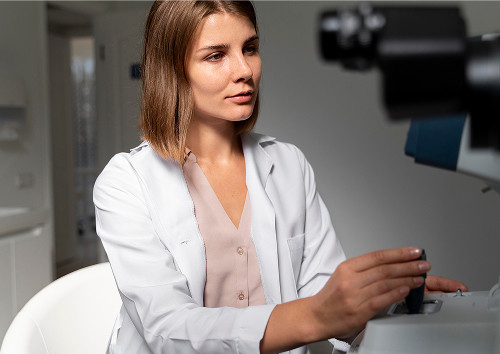
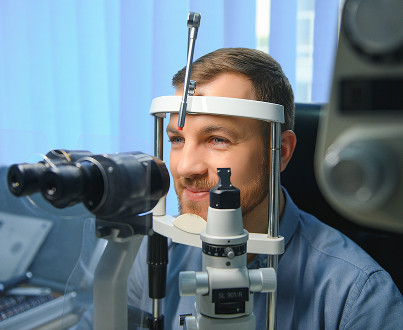
At our clinic, the examination is performed in the ophthalmologist's office. The patient sits in front of the doctor and looks in a designated direction. The specialist illuminates the pupil, observes the shadow, and refines the data with lenses.

Preparing for the Examination

Usually, no special preparation is required. It's best to bring your current glasses or contact lens prescription, as well as previous examination results, to your appointment. This will make it easier for the doctor to monitor your progress.

If drops are planned, the doctor explains their purpose in advance. After the pupil is dilated, near vision may become blurry and light may become brighter. It's best to drive after vision clarity is restored.

Procedure Steps

First, the doctor clarifies the patient's complaints:

  • When does vision clarity decrease?
  • Are you experiencing fatigue?
  • Are you experiencing headaches, double vision, or difficulty reading?

Then a basic vision diagnosis and the examination itself are performed.

The doctor observes the shadow in the pupil and selects lenses until it is neutralized. This is how the refraction of each eye is analyzed. If necessary, the examination is repeated after the drops.

What the result shows and how we interpret it

The result shows how the eye's optical system refracts light. The doctor sees the magnitude of the error, the direction of the change, the difference between the eyes, and signs of the astigmatic component.

We explain the results without complex formulations. The patient understands which data are significant, whether correction is needed, and why additional tests are sometimes needed.
How Skiascopy is Performed at K+31

Why do patients choose K+31 for vision diagnostics?

Patients need a clear answer, not a set of confusing indicators. At K+31, we connect complaints, examination data, and recommendations. Skiascopy in Moscow is also included in the diagnostic pathway for adults and children.

Experienced ophthalmologists

The examination should be performed by an ophthalmologist or a specialist under their supervision. Not only the technique but also the interpretation is important. The same numbers have different meanings for a schoolchild, an office worker, and a patient with poorly fitted glasses.

The doctor takes into account:

  • Age
  • Complaints
  • Previous correction
  • Condition of the ocular surface
  • Lens tolerance

If there are signs of disease, the patient receives recommendations for further examination.

Accurate refraction determination and a comprehensive approach

A single method rarely provides a complete picture. Autorefractometry is needed for a quick preliminary assessment, visometry is for checking visual acuity, and skiascopy is for clarifying objective refraction. The doctor compares the results and only then draws a conclusion.

At K+31, we use this method as part of a comprehensive diagnostic program. "This method is especially valuable for children and patients with complex refractive errors," says the clinic's ophthalmologist.

Comfortable diagnostics for adults and children

We explain in advance what will happen during the appointment. It's important for adults to understand the steps, and for children to calmly get used to the office, the light, and the doctor. We explain to parents why drops are sometimes needed.

A calm environment helps conduct the examination more accurately. The patient follows the doctor's instructions without unnecessary stress, and the specialist receives more reliable data.

Why do patients choose K+31 for vision diagnostics?

Sciascopy and other vision testing methods: what's the difference?

Vision testing methods don't overlap. One helps assess visual acuity, another quickly displays instrumental readings, and a third refines refraction under the doctor's supervision. The ophthalmologist decides exactly what the patient needs after examining the patient and examining them.

Method What it shows When it's useful Feature
Skiascopy Refraction of the eye, shadow movement For children, with complex refraction, to clarify data Objective diagnostics under the supervision of a physician
Autorefractometry Preliminary refractive indices For a quick initial assessment Convenient, but not always sufficient on its own
Visometry Visual acuity For a general assessment of clarity Does not directly show refraction

The table simplifies comparison but does not replace a consultation. The doctor selects the methods after an examination.

How does skiascopy differ from autorefractometry?

Autorefractometry is performed by a device and quickly provides approximate values. The result is affected by gaze fixation, accommodative tension, and ocular surface dryness. The printout is not a ready-made prescription.

Retinoscopy helps the doctor manually double-check the instrument data. During the examination, the specialist evaluates the movement of the shadow in the pupil and compares the results with the patient's complaints.

This method is especially useful if the device readings vary from one examination to the next or do not explain the decrease in visual acuity.

When One Examination Is Not Enough

One test is not enough if vision has declined sharply, double vision, pain, severe redness, or discomfort has developed compared to previous glasses. Situations where the eyes function differently also require a separate evaluation. In this case, the doctor checks not only refraction but also the overall condition of the visual system.

Additionally, the doctor may prescribe:

  1. Fundus examination
  2. Anterior segment assessment
  3. Intraocular pressure measurement
  4. Tear film testing

The volume depends on the patient's complaints and the initial examination.

Why is it important for the doctor to evaluate the data as a whole?

The results may be the same, but the recommendations may differ. A child, a driver, an office worker, and an older patient have different visual needs. The doctor considers how the patient uses their vision every day, any complaints, and the current condition of the eyes.

A comprehensive eye examination is especially important for astigmatism, different refractions in both eyes, suspected accommodation spasm, and poor tolerance of glasses. Then the patient receives a clear path: observation, correction, treatment of a related problem, or additional vision examination.

Sciascopy and other vision testing methods: what's the difference?

Limitations, Safety, and When to Consult a Doctor

This examination is not a substitute for a full ophthalmological examination. If vision deteriorates sharply, or pain, flashes, fog, double vision, injury, or severe redness occur, an in-person consultation is necessary. The cause of such complaints may not be related to refraction.

If eye drops are used, inform your doctor about any allergies, unusual reactions to medications, pregnancy, or breastfeeding. Be sure to disclose any existing chronic medical conditions. After using the drops, blurring of near vision and sensitivity to light may occur. If severe discomfort occurs, consult a specialist.

Limitations, Safety, and When to Consult a Doctor

Frequently Asked Questions about Skiascopy

What is skiascopy and how does it differ from autorefractometry?

Skiascopy is a method for objectively assessing refraction. The doctor looks not at the patient's responses, but at the movement of the shadow in the pupil when the eye is illuminated. Autorefractometry provides estimates more quickly, but the doctor makes the final conclusion after examining and comparing all the data.

Is there any preparation required for the test?

No preparation is usually required. If the doctor plans to use drops to dilate the pupil or relax accommodation, they will inform you. It is best to drive after vision is restored.

Is the test performed on children?

Yes, the method is often used in pediatric ophthalmology. It helps assess vision in children who cannot reliably compare lenses or tire quickly. If necessary, the test is performed in the presence of cycloplegia.

Are there any contraindications or restrictions after the procedure?
If drops have not been used, there are usually no special restrictions after the test. The patient can return to their normal activities immediately after the appointment. After pupil dilation, near vision may become temporarily blurred, and sensitivity to bright light may sometimes occur. If pain, severe redness, or an unusual reaction occurs, contact your doctor.
Book an eye exam at K+31

Book an eye exam at K+31

We perform skiascopies in Moscow for adults and children when you need to clarify your refraction and receive clear recommendations after the examination. During the appointment, the doctor will assess your complaints, conduct the necessary tests, and explain the results. To get an eye exam at K+31, schedule a consultation with an ophthalmologist at a convenient time.

Our doctors

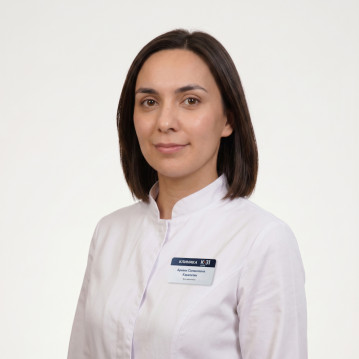
Karapetyan Arevik Samvelovna
Experience 12 years
Make an appointment
Karapetyan
Arevik Samvelovna
Ophthalmologist, Laser Surgeon
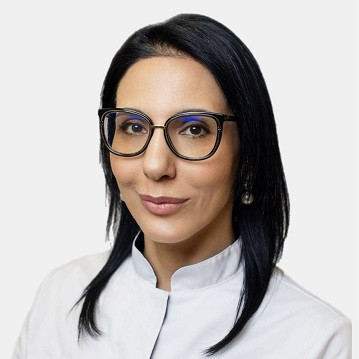
Batalina Larisa Vladimirovna
Experience 33 years
Make an appointment
Batalina
Larisa Vladimirovna
Deputy chief physician for ophthalmology, ophthalmic surgeon, leading specialist in laser vision correction
Amiryan Anush Gamletovna
Experience 28 years
Make an appointment
Amiryan
Anush Gamletovna
Ophthalmic oncologist surgeon
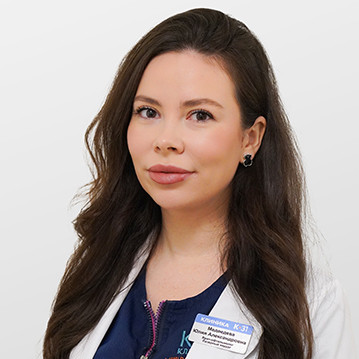
Medvedev Yulia Alexandrovna
Experience 11 years
Make an appointment
Medvedev
Yulia Alexandrovna
Ophthalmologist, Laser Surgeon
Rudkovskaya Elena Mikhailovna
Experience 38 years
Make an appointment
Rudkovskaya
Elena Mikhailovna
Ophthalmologist
Tegniryadnova Ekaterina Valerievna
Experience 20 years
Make an appointment
Tegniryadnova
Ekaterina Valerievna
Ophthalmologist, laser surgeon
Fadeeva Victoria Anatolievna
Experience 13 years
Make an appointment
Fadeeva
Victoria Anatolievna
Doctor ophthalmologist, laser surgeon
Shamsetdinova Leila Tagirovna
Experience 17 years
Make an appointment
Shamsetdinova
Leila Tagirovna
Pediatric ophthalmologist
Gavrilina Polina Dmitrievna
Experience 8 years
Make an appointment
Gavrilina
Polina Dmitrievna
Ophthalmologist, laser surgeon
Kovaleva Olesya Alexandrovna
Experience 7 years
Make an appointment
Kovaleva
Olesya Alexandrovna
Ophthalmologist, laser surgeon
Sugonyaeva Olga Yurievna
Experience 26 years
Make an appointment
Sugonyaeva
Olga Yurievna
Ophthalmologist, laser surgeon
Khlunovskaya Anna Nikolaevna
Experience 8 years
Make an appointment
Khlunovskaya
Anna Nikolaevna
Ophthalmologist
Akhiyarova Azalia Azatovna
Experience 4 years
Make an appointment
Akhiyarova
Azalia Azatovna
Ophthalmologist
Putintseva Polina Andreevna
Experience 6 years
Make an appointment
Putintseva
Polina Andreevna
Ophthalmologist
Agafonova Oksana Sergeevna
Experience 21 year
Make an appointment
Agafonova
Oksana Sergeevna
Ophthalmologist, pediatric
Kazennov Alexey Nikolaevich
Experience 19 years
Make an appointment
Kazennov
Alexey Nikolaevich
Ophthalmologist, ophthalmologist-surgeon
Petrova Maria Grigorievna
Experience 14 years
Make an appointment
Petrova
Maria Grigorievna
Ophthalmologist, ophthalmic surgeon
Mazmanyan Karen Akopovich
Experience 28 years
Make an appointment
Mazmanyan
Karen Akopovich
Ophthalmic surgeon
Suchkova Valeria Alekseevna
Experience 6 years
Make an appointment
Suchkova
Valeria Alekseevna
Ophthalmologist
Khubieva Salima Aslanbievna
Experience 7 years
Make an appointment
Khubieva
Salima Aslanbievna
Ophthalmologist, laser surgeon
Rytik Nina Petrovna
Experience 15 years
Make an appointment
Rytik
Nina Petrovna
Ophthalmologist
All specialists
2GIS Award
2GIS Award

This award is given to clinics with the highest ratings according to user ratings, a large number of requests from this site, and in the absence of critical violations.

«Good place» according to Yandex

This award is given to clinics with the highest ratings according to user ratings. It means that the place is known, loved, and definitely worth visiting.

Our doctors are laureates of the ProDoctors Award

The ProDoctors portal collected 500 thousand reviews, compiled a rating of doctors based on them and awarded the best. We are proud that our doctors are among those awarded.

Make an appointment at a convenient time on the nearest date

Price

Reception
Price
Initial Ophthalmologist Appointment
from 6 450 ₽
Corneal Collagen Crosslinking with Ultraviolet Irradiation
from 52 500 ₽
Femtosecond Laser-Assisted Intrastromal Segment Implantation
from 200 000 ₽

Other services

Laser vision correction Phacoemulsification of cataract with IOL implantation of any complexity Vitreoretinal surgeries of any complexity (vitrectomy) Laser photocoagulation of the retina during tears and degenerative changes in the retina Laser photocoagulation for diabetic retinopathy Intravitreal administration of Anti-VEGF drugs, hormonal implants Antiglaucomatous operations using various drains YAG laser dissection of the posterior capsule for secondary cataract Cataract treatment Treatment of glaucoma Retinal dystrophic changes Vitreous pathology Injury to the eye Post-traumatic and postoperative complications Myopia treatment Farsightedness Treatment of astigmatism Retinal disinsertion Non-contact laser procedure SMARTSURFACE Keratoplasty Femto SUPER LASIK Laser coagulation of the retina of the eye treatment on Ellex Integre Pro Scan Treatment of the retina with the Navilas laser system Femtolaser Cataract Removal Selection of children's night lenses Laser vision correction Clear Офтальмолог-онколог в Москве Treatment of keratoconus Laser coagulation of the retina Refractometry Retrobulbar injections Restoration of vision Lacrimal ducts Eye wash Synoptophore Forbis ESOM Pediatric ophthalmologist Ophthalmologist Glasses Biomicroscopy Night lenses Photo of an eye Eyelid suturing Selection of lenses Retinal laser Vision test Vitrectomy Vitrectomy Vitrectomy Eye pressure Ophthalmoscopy Fundus Gonioscopy Discision Orbitotomy Ophthalmodiagnostics OCT of the optic disc Keratoplasty Crystalline lens replacement Lacrimal duct Eye biometrics Angle of strabismus Lacrimal point IOL implantation Heterophoria Refraction Needling pillows Sclerectomy Micropulse laser Eyelid massage Intravitreal injections Iridoplasty Accommodation Bacterial culture Ophthalmology Cyclophotocoagulation Laser trabeculoplasty Laser stimulation Makdel Iridotomy Goniopuncture Corneal crosslinking Perimetry Pachymetry Angio-OCT Tubular test Convergence test Autofluorescence Eye mobility Corneal transplant Injection in the eye Tonometry Schirmer's test Trabeculotomy Diaphanoscopy
Make an appointment

Appointment to the doctor

Fill out the form, our managers will contact you within 15 minutes

Reviews

Super doctor
29.06.2026
Aleksey K.
I would like to express my sincere gratitude to all the staff of the K+31 clinic. Special thanks to the doctors of the ophthalmology department, Ekaterina V. Tegniryadnova, who has been seeing me for a long time, and Maria Grigorievna Petrova, who operated on me for a lens replacement. Everything went great! I would also like to mention the work of Diana's ophthalmology manager. I received comprehensive and timely answers to all my questions. THANK you so much to all of you!
I am very pleased with the reception, smart doctor, thank you By +31.
26.06.2026
Irina T.
The Miracle Doctor
24.06.2026
Anush D.
I underwent preoperative preparation before laser correction at Azaliya Azatovna, I was satisfied! A very sensitive and understanding doctor. I drew schematically how the operation would take place, it was interesting and the fear went away. She also performed postoperative examinations. I wish you grateful patients and success in carrying out laser corrections. I will recommend it to my friends and family.
23.06.2026
Ekaterina Sh.
A very qualified doctor! Attentive and caring!
20.06.2026
Olga Ch.
Olesya Alexandrovna is an excellent specialist, listened attentively and carried out the necessary diagnostics, answered all questions in detail and kindly and gave recommendations. I plan to see Dr. Kovaleva in the future.
18.06.2026
Anton Sh.
Почему К+31?
К + 31 — full-cycle multidisciplinary medical centers, including the possibility of providing medical services of European quality level.
К + 31 — are leading doctors and diagnostics using high-tech equipment from world manufacturers (Karl Storz, Olympus, Siemens, Toshiba, Bausch&Lomb, Technolas, Zeiss, Topcon).
К + 31 — is ethical. The staff of K+31 clinics maintain open relationships with patients and partners. An individual approach to each patient is the basis of our service standards.
К + 31 — is modernity. On call 24/7: call center operators will answer your questions at any time and book you an appointment with doctors. Contact us by phone, through the feedback form on the website and Max.

Our clinics

Address K+31 Lobachevskogo 2

st. Lobachevskogo, 42/7

Contacts

+7 499 999-31-31

Opening hours

Mon-Fri: 08:00 – 21:00
Weekend: 09:00 – 19:00

Address K+31 on Lobachevskogo

st. Lobachevskogo, 42/4

Contacts

+7 499 999-31-31

Opening hours

Mon-Fri: 08:00 – 21:00
Weekend: 09:00 – 19:00

Address K+31 Petrovskie Vorota

1st Kolobovsky pereulok, 4

Contacts

+7 499 999-31-31

Opening hours

Mon-Fri: 08:00 – 21:00
Sat-Sun: 09:00 – 19:00

Address K+31 West

Orshanskaya, 16/2; Ak. Pavlova, 22

Contacts

+7 499 999-31-31

Opening hours

Mon-Fri: 08:00 – 21:00
Sat-Sun: 09:00 – 18:00
K+31 on Lobachevskogo
Didn't find the service you were looking for?

Экстренная помощь