
Synoptophore in Moscow: hardware treatment for strabismus and amblyopia
Effective hardware treatment with a synoptophore allows for gentle and safe training of the eyes to work together, forming correct neural connections. Today, this proven technique remains one of the main tools when competent strabismus treatment is required.
We see patients in Moscow, providing each with a personalized approach and careful medical monitoring of their progress throughout the entire treatment process.

specialists

equipment

treatment



When we prescribe treatment on a synoptophore
The following main indications for treatment with this device are included in everyday practice:
- Strabismus of various forms and degrees of severity
- Amblyopia, requiring a comprehensive and regular approach
- Identified impairment of binocular vision
- Difficulties in merging images of various origins
- The need for orthoptic rehabilitation of vision after surgery
Strabismus
This pathological condition, known as strabismus, requires immediate restoration of proper, cooperative function of both eyes. Using the device helps smoothly and gradually reduce the angle of squint.
Amblyopia
The pathology that leads to amblyopia often develops due to a severe imbalance, when one eye is practically excluded from the visual process.
Regular hardware treatment with a synoptophore forces the functionally weak eye to actively engage in daily work. Central gaze fixation is gradually restored, and visual acuity begins to steadily improve. In childhood, amblyopia responds to therapeutic correction much more quickly and successfully.
Binocular vision disorder
The ability to see the surrounding world in three dimensions is an incredibly complex and multifaceted neurophysiological process. If a patient is reliably diagnosed with binocular vision impairment, their brain perceives only a flattened, two-dimensional image.
How does the hardware treatment course work?
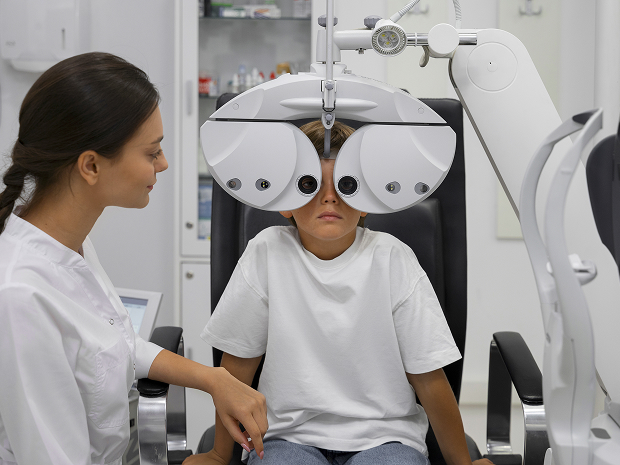
A comprehensive vision diagnostic is mandatory before any training session. Based on the medical data obtained, a strictly individualized rehabilitation training program is developed.
What does the patient experience during a session?
The course of treatments does not cause any mechanical stress on the eye tissue. If significant fatigue, headache, or discomfort occurs during the session, the load is adjusted.
How long does the course last and how often are treatments needed?
A standard training session lasts fifteen to twenty minutes to avoid overstraining the visual analyzer.
Repeat hardware treatment may be required after several months to consolidate the clinical results.
General information
What do we combine with a synoptophore for best results?
To achieve true clinical success, strabismus treatment must be accompanied by proper and consistent optical correction.
Occlusion and pleoptics
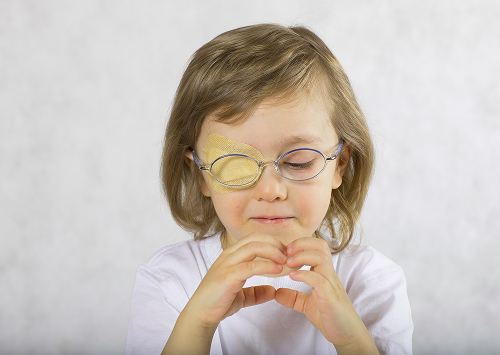
To force the weakened lazy eye to work, ophthalmologists often use direct occlusion—temporary patching of the healthy eye. This classic technique is perfectly complemented by modern pleoptics, which aims to intensely stimulate the retina.
When properly combined, these proven approaches prepare the visual system for subsequent complex exercises. If the patient has been diagnosed with concomitant strabismus, such measures are especially important. Properly prescribed occlusion accelerates the recovery process. Amblyopia often requires long-term follow-up with a specialist.
Computer simulators and home recommendations
We actively use modern computer simulators as an excellent supplement. They effectively maintain patient interest in the recovery process in a playful and easy-to-use format, which is especially important in pediatric ophthalmology. Interactive computer simulators make daily sessions engaging and completely tiring.
Comprehensive vision therapy always includes homework, which we explain in detail. Full binocular vision develops over the years, so consistency is essential.
For clarity, we have prepared a detailed table showing the role of various methods in our practice:
| Method | Main objective | Who is it suitable for? | What it provides? |
|---|---|---|---|
| Synoptophore | Binocular vision training | Strabismus, amblyopia | Improved image fusion |
| Occlusion | Enabling the weak eye to work | Amblyopia | Reduced visual imbalance |
| Computer simulators | Visual stimulation | Children and adolescents | Increasing treatment engagement |


The path to perfectly healthy vision always begins with a comprehensive examination in a modern clinic. It's easy to schedule an expert diagnostic in Moscow by choosing the most convenient time for your upcoming visit.
Course selection and patient support
After the examination, we discuss the results in detail and create a completely clear, step-by-step treatment plan. The doctors at our professional clinic in Moscow will carefully guide you throughout the lengthy rehabilitation period.
Comprehensive strabismus treatment requires close teamwork between the treating physician, the patient, and their family. Our individualized program helps prevent eye strain at all stages. Stable binocular vision is the key to successful rehabilitation.
FAQ
At what age can synoptophore treatment be started?
Is it painful?
Does a synoptophore help with strabismus?
How many sessions are required?
Our doctors









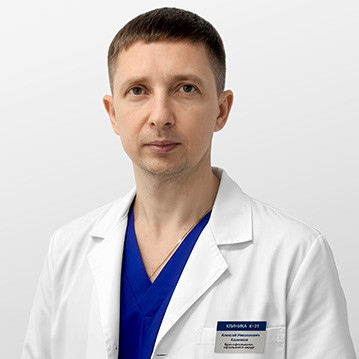

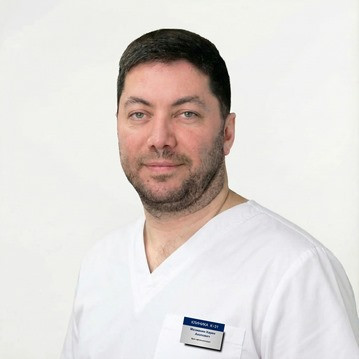
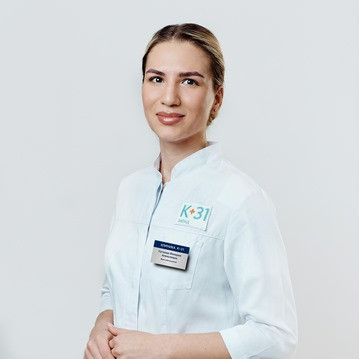

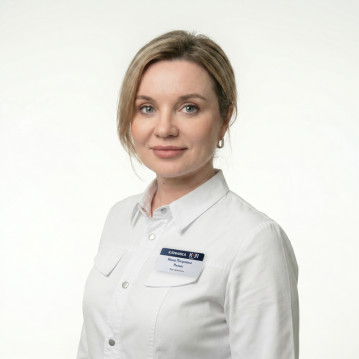

This award is given to clinics with the highest ratings according to user ratings, a large number of requests from this site, and in the absence of critical violations.

This award is given to clinics with the highest ratings according to user ratings. It means that the place is known, loved, and definitely worth visiting.

The ProDoctors portal collected 500 thousand reviews, compiled a rating of doctors based on them and awarded the best. We are proud that our doctors are among those awarded.
Make an appointment at a convenient time on the nearest date
Price
Other services

Appointment to the doctor
Reviews








Our clinics


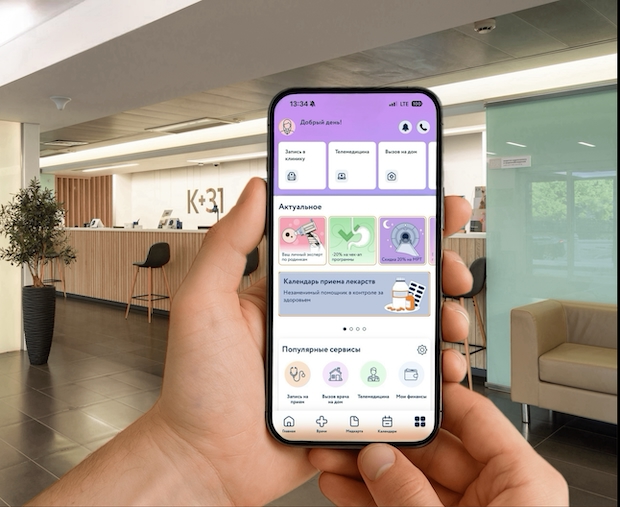
Application “Personal Account K+31”










What is a synoptophore and how does it work?
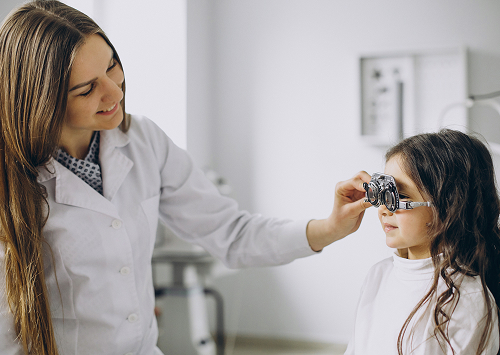
A classic synoptophore is a complex optical device that mechanically separates the visual fields of the right and left eyes. The patient looks through special eyepieces, where each eye sees a separate part of the image.
The brain's task at this point is to combine the resulting fragments into a single whole, ensuring proper image fusion. By training image fusion, we help neural connections adapt to normal visual loads. A modern synoptophore allows for smooth changes in the viewing angle, forcing the oculomotor muscles to work with extreme precision.
How does a synoptophore differ from other hardware techniques?
Many modern hardware techniques focus solely on light stimulation of the retina or the relief of muscle spasms. In contrast, this device provides comprehensive orthoptic treatment, restoring bifoveal fusion.
It trains the central nervous system to perceive three-dimensional images by actively combating the suppression of the visual signal from the squinting eye. This is why hardware treatment with it provides a more stable and reliable foundation for subsequent vision rehabilitation. It is most often used to correct strabismus.