
Congenital Glaucoma (Infantile Glaucoma)
Congenital glaucoma is a rare eye disease in infants. It disrupts the outflow of intraocular fluid, increases intraocular pressure, and places dangerous strain on ophthalmic structures. Parents should be alert to non-infectious tears, photophobia, frequent eyelid closure, and a cloudy or enlarged cornea.
At "K+31," we carefully examine your child, explain the results, and help them navigate the care plan.

specialists

equipment

treatment






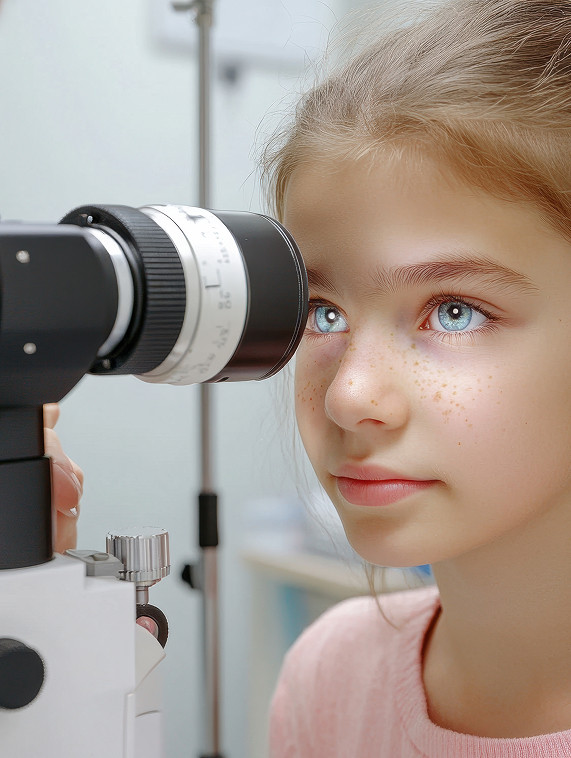
The most common cause is a disorder of the anterior chamber angle and the aqueous outflow pathways. Aqueous fluid continues to be produced, but its drainage is impaired. This leads to increased intraocular pressure.
Congenital anomalies in the development of the ocular drainage system
Developmental anomalies can affect the trabecular meshwork, Schlemm's canal, and adjacent structures. These areas are responsible for the normal outflow of aqueous humor. If a disease is suspected, the doctor compares:
- Appearance of the eye
- Corneal transparency
- Pressure
Hereditary factors and associated syndromes
In some children, the disease is associated with heredity or syndromes that cause the eye to develop with unusual characteristics. The doctor clarifies the family history and pregnancy history. We also ask parents about other congenital changes and the results of previous examinations.
Childhood glaucoma can be primary or secondary. Therefore, we involve related specialists when necessary.
Symptoms of congenital glaucoma

Signs are often noticeable by the behavior and appearance of the eyes. The child:
- Squints
- Turns away from light
- Rubs face
- Fidgets when washing
Sometimes one eye appears larger than the other. The cornea may also take on a grayish tint.
Tearing, photophobia, blepharospasm
Tearing can usually be a reaction of the cornea to irritation and increased pressure. Photophobia manifests itself as crying, squinting, and a refusal to open the eyes in normal light.
Blepharospasm appears as frequent blinking or a tight closure of the eyelid margins.
Corneal Enlargement, Clouding, and Changes in Eye Appearance
An increase in corneal diameter in an infant is associated with the stretching of the eye tissue under pressure. Corneal clouding is a worrying sign. In this condition, the transparent layer loses its normal appearance. In this situation, the child needs to be examined immediately.

Behavioral Signs Noticed by Parents
A young child does not report that their vision is deteriorating. Therefore, recurring behavioral changes are important. He may:
- Have a poorer eye focus
- Be less interested in toys
- Rub his eyes frequently
- Be fussy in bright light
Symptoms of congenital glaucoma may worsen gradually. Therefore, repeatability of symptoms is important.
Signs that require urgent medical attention should be clear to parents of young children:
- Tearing
- Photophobia
- Blepharospasm
- Corneal clouding
- Corneal enlargement
- Anxiety in bright light
- Frequent eye rubbing
If several signs are present, a visit cannot be postponed. A child with a combination of tears, photophobia, and a cloudy cornea requires an urgent examination.
How we conduct the examination
Diagnosis of congenital glaucoma begins with a conversation with the parents and a thorough examination. We ask when the changes appeared, how the child reacts to light, and whether there are similar illnesses in the family. The doctor then develops an examination plan and explains what information is needed to confirm the diagnosis.
Pediatric Ophthalmologist Examination
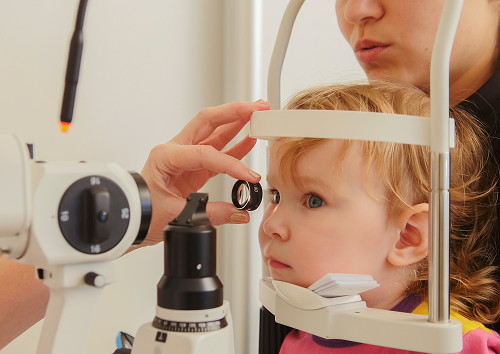
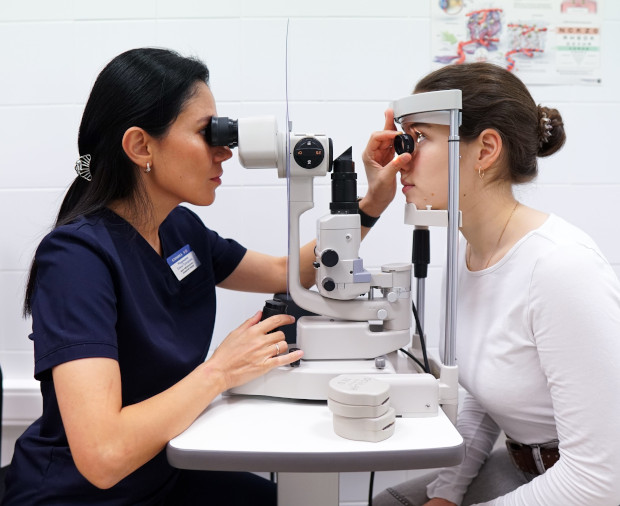
During the appointment, the doctor works at a pace appropriate to the child's age. The doctor evaluates the eyelids, cornea, reaction to light, gaze fixation, and possible asymmetries. The child's examination is performed carefully, with parents nearby.
Measuring Intraocular Pressure
Intraocular pressure is measured with specialized ophthalmological instruments. In young children, tonometry depends on crying, body position, and eyelid closure. Therefore, the readings are evaluated in conjunction with the clinical picture.
Gonioscopy, Ophthalmoscopy, and Optic Nerve Assessment
Gonioscopy is used to assess the anterior chamber angle, where the fluid drainage pathways are located. A fundus examination helps determine whether the optic nerve is affected. It also helps determine the severity of the condition.
The doctor selects the appropriate format after assessing the child's age, corneal transparency, and overall condition.
Additional tests if needed
If the initial data is insufficient, the doctor can evaluate the corneal diameter, eye length, refraction, and medial transparency. Ultrasound and tomography are sometimes used.
The diagnosis of congenital glaucoma includes anatomy, pressure, and visual development. This provides the family with a clear medical diagnosis.
For clarity, here is the connection between the symptom and the medical actions:
| Symptom | What may occur with the congenital form of the disease | What the doctor does |
|---|---|---|
| Lacrimation | A common early symptom | Examination, IOP measurement |
| Photophobia | Possible reaction to increased pressure | Assessment of the cornea and eye condition |
| Corneal clouding | A sign of progression | Urgent diagnosis and treatment plan |
The table helps to understand the procedure, but a diagnosis is made only after an in-person examination. It is impossible to independently distinguish this ophthalmological condition from other causes of tears in an infant.
General information
How is congenital glaucoma treated?
Therapy is aimed at reducing pressure and protecting developing vision. In children, the cause is often associated with an anatomical obstruction to fluid outflow. For this reason, drops rarely provide lasting results. The treatment strategy depends on:
- Age
- Corneal transparency
- Severity of changes
Medication preparation
Drops and other medications are used only as prescribed by a doctor. Their purpose is to temporarily reduce pressure or prepare the eye for surgery, if such a decision is made. Self-treating elevated intraocular pressure is dangerous. Losing time can worsen the prognosis for vision.
Surgical treatment as a primary method
Surgical treatment is the primary method when an anatomical cause of outflow obstruction has been confirmed. Surgery helps open or create a pathway for intraocular fluid. The type of intervention is chosen after an examination, taking into account the angle structure, corneal transparency, and the degree of eye magnification.
Observation and follow-up after treatment
After surgery, the child needs to be monitored by a doctor. Even if the eye appears normal, we monitor:
- Pressure
- Corneal transparency
- Refraction; vision development
- Need for optical correction
Children's form may require follow-up examinations at different growth stages.



Frequently Asked Questions
What should I do if my child has excessive tearing and photophobia?
Can congenital glaucoma be completely cured?
How often are post-treatment checkups necessary?
When to book a consultation

An appointment with a doctor is recommended if there are repeated changes in the eye's appearance, reaction to light, or behavior. An urgent examination is necessary if tears, photophobia, and a cloudy cornea appear simultaneously or if symptoms worsen.
At K+31, we conduct an examination, explain the results to the family, and develop a safe care plan. Early treatment helps protect your child's vision.
References
- The Registry of Clinical Guidelines of the Ministry of Health of the Russian Federation — https://cr.minzdrav.gov.ru/
- The Russian Society of Ophthalmologists — https://www.ophthalmology.ru/
- The Journal "Vestnik of Ophthalmology" — https://www.mediasphera.ru/journal/vestnik-oftalmologii
- The Russian Medical Journal — https://www.rmj.ru/
- CyberLeninka - https://cyberleninka.ru/
Our doctors




















This award is given to clinics with the highest ratings according to user ratings, a large number of requests from this site, and in the absence of critical violations.

This award is given to clinics with the highest ratings according to user ratings. It means that the place is known, loved, and definitely worth visiting.

The ProDoctors portal collected 500 thousand reviews, compiled a rating of doctors based on them and awarded the best. We are proud that our doctors are among those awarded.
Make an appointment at a convenient time on the nearest date
Price
Other services

Appointment to the doctor
Reviews


















Our clinics


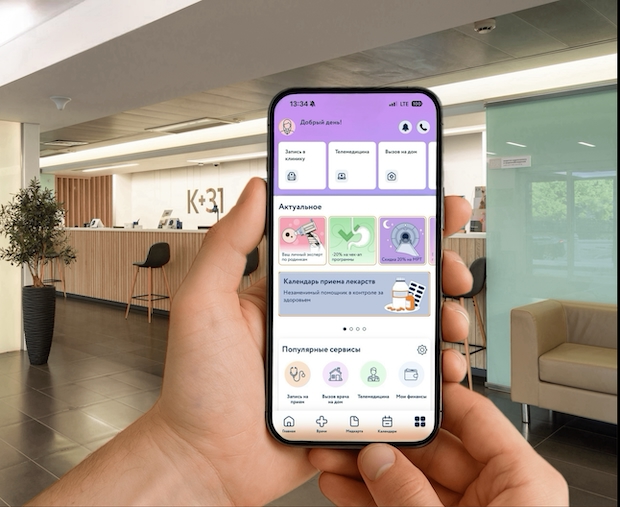
Application “Personal Account K+31”












What is congenital glaucoma?
This ophthalmological disease develops when the eye's drainage system is not properly formed. Intraocular fluid is constantly produced, but its outflow is impeded. In children, eye tissue is more elastic than in adults, so the disease can change the size and transparency of the cornea.
How does congenital glaucoma differ from other forms of the disease?
In adults, the disease often does not change the appearance of the eye for a long time. In infants, signs are often visible from the outside. The eye appears larger, the cornea becomes cloudy, light causes crying, and the edges of the eyelids become tightly closed.
Infantile glaucoma manifests before the age of three. Therefore, the doctor evaluates:
Why the disease is especially dangerous at an early age
A child's vision actively develops after birth. If pressure remains high for a long time, the risk increases:
Glaucoma in children requires a prompt assessment. After all, a child cannot describe visual changes.