
Convergence test: how the eye convergence test works
Clear near vision requires more than just visual acuity. The eyes must converge synchronously and maintain focus on text, a screen, or another nearby object. If this mechanism is unstable, visual strain quickly causes strain, fatigue, and sometimes a sensation of double vision.
The convergence test in "K+31" allows you to check how both eyes work when focusing near and determine whether the patient needs additional ophthalmological care.

specialists

equipment

treatment





When do we recommend diagnostic testing?

We recommend an examination if complaints recur, worsen in the evening, or appear when eye strain lasts for hours. Sometimes, patients dismiss the symptoms as simple fatigue. However, if they recur, it's best to have an eye exam and calmly determine the cause.
Complaints that shouldn't be ignored
If the eyes don't work together properly, a person may complain of double vision, heaviness in the bridge of the nose, and rapid fatigue when reading. Headaches sometimes develop after school, working on a laptop, or looking at a phone for long periods. In children, the symptoms often present differently: the child rubs their eyes, loses track of lines, and refuses to read.
A convergence study is ordered:
- If double vision occurs
- Eyes tire quickly when reading
- Difficulty maintaining focus
- Headaches occur after visual strain
The symptoms listed are not always serious. However, they indicate that the visual system is under strain. A doctor should evaluate this in person, especially if the complaints interfere with studies, work, or daily activities.
Indications for children and adults
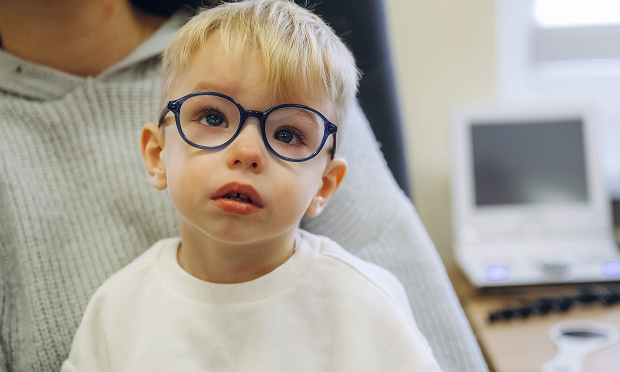
Children are examined if they complain of reading difficulties, fatigue, suspected strabismus, amblyopia, or difficulty keeping a line. Parents may have difficulty understanding whether this is related to attention, workload, or vision. Therefore, the results should be evaluated by a specialist.
In adults, a convergence test is necessary for screen time, frequent reading, and eyestrain. It is also necessary for complaints after changing glasses or contact lenses. Recurring double vision is an important indication, especially if it has recently developed. If double vision occurs suddenly, or if there is pain, trauma, or a sudden deterioration in vision, a consultation should not be postponed.
How convergence research is conducted
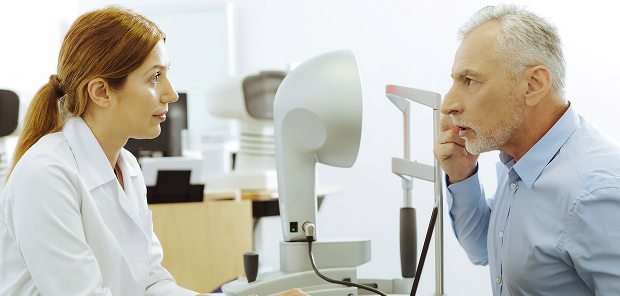
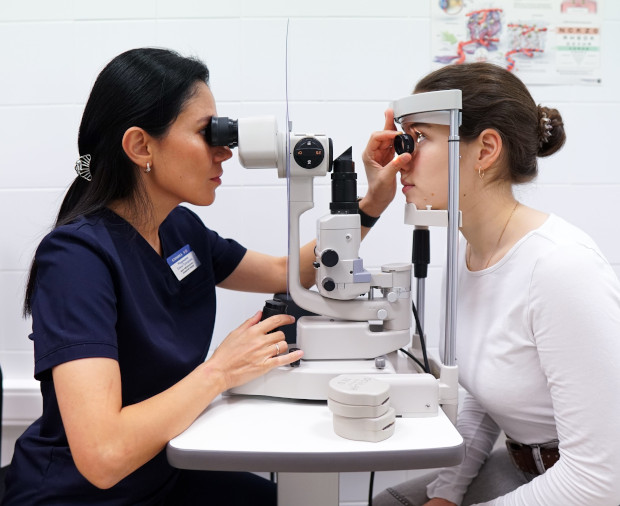
The examination takes place in the doctor's office. The patient is seated and looking at an object. The doctor evaluates how the eyes converge as the target approaches. There are no injections or complicated preparations.
Preparing for the procedure
No special preparation is necessary. The patient arrives in a normal state, picks up glasses or contacts if they wear them regularly, and tells the doctor about their complaints. It's important to mention when eye fatigue occurs and how much time they spend reading or working on a screen. It's also important to ask about headaches and the severity of their visual strain.
Before the examination, we ask about the patient's age, visual strain, history of eye diseases, history of strabismus in childhood, and current correction. This information helps ensure the test is taken in context. A single result without a medical history can be misleading.
Main stages of the test
During the procedure, the doctor asks the patient to fixate on a small object. The object is then slowly brought closer to the bridge of the nose. The doctor then observes whether both eyes maintain convergence. If one eye wanders or the patient reports double vision, this is noted.
The convergence test involves several steps:
- The doctor explains the task and selects an object for fixation.
- The patient looks at the target with both eyes.
- The object is gradually brought closer to the face.
- The specialist notes the distance at which fixation is lost.
After the first trial, the doctor may repeat the test to compare results and rule out random fixation errors. If necessary, eye movements are additionally assessed, as convergence is closely related to the functioning of the oculomotor system. Accommodation—the eye's ability to change focus when looking at different distances—is also taken into account. This makes the convergence assessment more accurate and clinically meaningful.
Does it hurt and how long does it take?
The examination usually takes a few minutes. The patient may experience fatigue when focusing their gaze, but there should be no pain. If significant discomfort occurs, notify the doctor immediately.
Convergence testing does not require any recovery time. The patient can return to normal activities immediately after the procedure. Restrictions are possible only if the doctor used pupil dilation drops as part of the extended examination.
What the test results show
The results show how well the eyes work together when looking at a close object. The doctor evaluates how convergence manifests itself, what the patient feels, and how both eyes behave. This is a clear way for the patient to determine whether symptoms are related to the convergence mechanism.
Normal and possible abnormalities
Normally, both eyes maintain joint fixation on a close object without double vision or significant strain. If convergence decreases, the patient may quickly tire when reading, lose lines of text, or complain of blurring. Sometimes the problem only appears after prolonged use.
This table helps you see what exactly the doctor compares during the examination:
| Indicator | Normal | Possible deviation |
|---|---|---|
| Convergence | Maintained | Decreasing or becoming unstable |
| Symptoms | Absent | Double vision, fatigue, headaches |
| Focus | Comfortable | Fatigue when reading |
The table does not replace a physical examination. It only provides a general outline of the assessment. The final conclusion depends on the patient's age, complaints, visual acuity, eye position, test results, and overall condition.
When additional examinations are needed
If a convergence disorder is detected, the doctor orders a binocular vision test. They will also order a visual acuity test, a refractive evaluation, fusion reserve tests, or an orthoptic examination. Sometimes a more comprehensive vision evaluation is required. This is also necessary if strabismus or amblyopia is suspected.
Not everyone needs additional tests. They are prescribed when complaints are severe, the results are unstable, or there are signs of another ophthalmological problem. Exercises, prisms, or glasses cannot be selected online.
Why patients choose our team
At "K+31," we evaluate not just one test, but the entire visual system. It's important for us to understand how the patient sees in real life.
- Does the patient read without strain?
- How does the patient tolerate a screen?
- Do symptoms appear in the evening?
This makes the examination practical and the recommendations clear.

Ophthalmologists' experience
Complaints of visual fatigue should be handled carefully. The cause may be:
- Refraction
- Dryness of the ocular surface
- Accommodation problems
- Problems with the eyes working together
Therefore, the patient should be examined by an experienced ophthalmologist.
"We conduct this examination as part of a comprehensive vision diagnosis. This helps us quickly understand how both eyes work together. It also helps us quickly detect problems that the patient may not associate with the eyes," says an ophthalmologist on our team.

Modern diagnostics and accuracy
Ocular convergence is not assessed in isolation. We compare test data with vision screening, complaints, and other test results. If necessary, we conduct binocular vision testing to understand how the brain integrates images from both eyes.
A modern approach is important for both children and adults. In children, complaints may be disguised as a reluctance to read. In adults, they may be disguised as work fatigue. In both cases, vision testing helps us get a medical assessment rather than guessing.
Clear recommendations after the examination
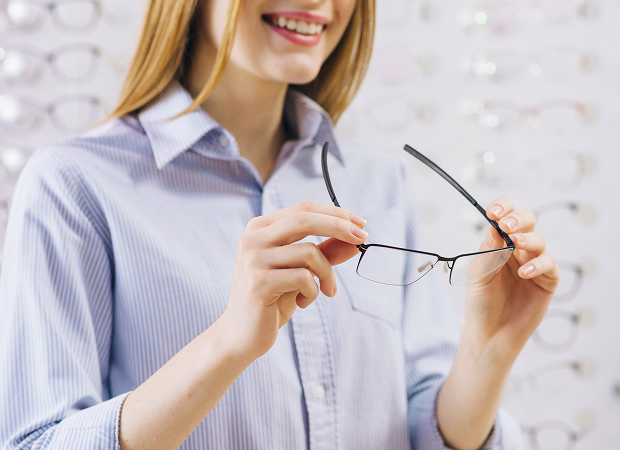
After the examination, we explain the results in simple terms. The patient should understand whether there is a deviation, how significant it is, and what to do next. No intimidation. No promises to "fix everything at once."
If a convergence disorder is detected, the doctor recommends:
- Monitoring
- Additional testing
- Eyeglass correction
Sometimes orthoptics is necessary. A consultation with a related specialist may be necessary. The plan depends on the cause of the complaints, the patient's age, and the general condition of their eyes.
FAQ about convergence research
Before their appointment, patients most often ask what exactly the doctor will do and whether they can interpret the results themselves. The short answer is: the test is quick, but a specialist should interpret it.
What is a convergence study?
How is a convergence test performed?
Do I need to prepare for the examination?
What should I do if the results are abnormal?
How to sign up for the study
You can make an appointment with an ophthalmologist. During the visit, the specialist will collect your complaints, conduct an examination, and determine the scope of testing needed. If your complaints appeared suddenly, after an injury, or along with a sudden deterioration in vision, it's best to see them immediately.
What to prepare before your visit
Bring your glasses, contact lenses, or prescription, if applicable. Remember when the complaints began and under what strain they worsen. It's helpful for your child to note how they read: whether they lose track of a line, whether they close one eye, or whether they complain of fatigue.
A vision exam with an ophthalmologist will be more accurate if the doctor has this information immediately. Avoid doing home tests or trying to assess convergence using video. Such tests are not a substitute for an in-person examination.
What happens during a post-diagnosis consultation?
After the examination, the doctor explains how binocular vision works, whether there are any abnormalities, and what may be causing the complaints. If the problem is related to focusing, strain, or eye position, the patient receives a further treatment plan.
At K+31, a convergence test is performed as a thorough ophthalmological examination. We:
- Assess symptoms
- Conduct the necessary tests
- Explain the results without unnecessary terminology
If you need to check your binocular vision, clarify the cause of fatigue, or undergo a convergence test, you can schedule a consultation and receive clear recommendations after the diagnosis.

Our doctors








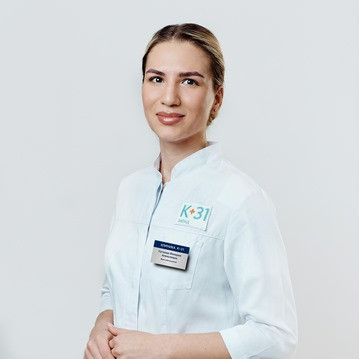
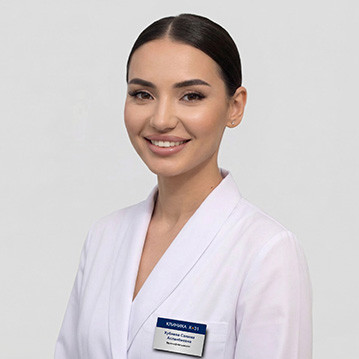
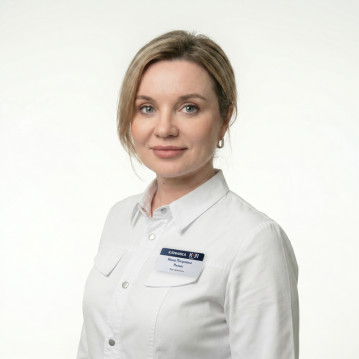

This award is given to clinics with the highest ratings according to user ratings, a large number of requests from this site, and in the absence of critical violations.

This award is given to clinics with the highest ratings according to user ratings. It means that the place is known, loved, and definitely worth visiting.

The ProDoctors portal collected 500 thousand reviews, compiled a rating of doctors based on them and awarded the best. We are proud that our doctors are among those awarded.
Make an appointment at a convenient time on the nearest date
Price
Other services

Appointment to the doctor
Reviews
















Our clinics


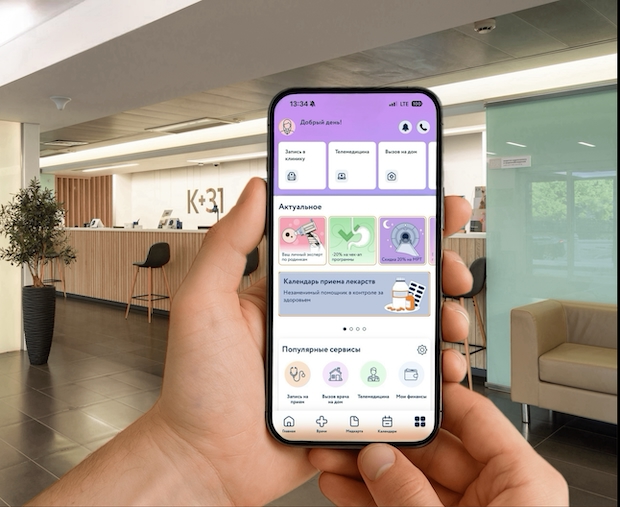
Application “Personal Account K+31”










What is convergence research?
Ocular convergence is the inward movement of both eyes when looking at a close object. This merges the images from the right and left eyes into a single, stable image. If this mechanism is unstable, reading, computer work, and studying become more tiring than usual.
Ocular convergence is related to vergence—the coordinated movement of the eyeballs. Accommodation is also involved. The eye changes focus when looking at both near and distant objects. If one system is overloaded, the complaint may appear as simple screen fatigue.
The convergence test shows how the eyes react when an object approaches the face and whether they maintain joint fixation. This is not a treatment or a diagnosis based on a single movement. It is part of an ophthalmological examination that helps the doctor understand where problems may be occurring.