Ectropion: Symptoms, Causes, and Treatment

The lower eyelid should fit tightly against the eyeball. This protects the eye, evenly distributes the tear film, and helps tears drain through the puncta.

When the edge of the skin fold around the eye recedes outward, this protection is compromised. This condition is called ectropion. At first glance, this condition may appear to be a cosmetic issue. In reality, it directly impacts the ocular surface and vision.

Best specialists
Best
specialists
Expert equipment
Expert
equipment
Advanced diagnostic treatment
Advanced diagnostic
treatment
Download the application “Personal Account K+31”
Everything about your health in one click!
Subscribe to social networks K+31
To keep up to date with current offers and receive useful advice about your health.

Why does the position of the century change?

Ectropion is an outward deviation of the eyelid margin, leaving the eye less protected. With ectropion:

  • The mucous membrane dries out more quickly
  • Tears drain more slowly
  • Discomfort increases

It's important to distinguish this condition from inversion of the eyelid. This occurs when eyelashes injure the eye from the inside. Diagnosis is key. The ophthalmologist examines the eyelid, cornea, and lacrimal puncta. Then, an individualized treatment approach is chosen.

How the position of the eyelid changes with ectropion

Normally, the edge of the lower eyelid gently touches the entire length of the eye, thereby retaining the thin tear film. With eversion, its edge sags and moves forward, exposing the inner pink surface—the conjunctiva. The further the eyelid lags behind the eye, the less effective the tear drainage mechanism. At first, this is barely noticeable—a slight lag at the outer corner—but over time, eversion often progresses.

The dangers of incomplete eyelid closure

When the eyelid doesn't close completely, the cornea—the transparent front layer of the eye—is primarily affected. The tear film no longer evenly covers the surface. Dry areas, irritation, and, in advanced cases, inflammation and damage to the cornea appear.

Therefore, eversion of the eyelid is not a cosmetic defect, but a medical problem: the symptom carries risks, and the decision on treatment is made by a doctor.

Why does the position of the century change?

Causes and types of eversion of the eyelid

Ectropion develops for various reasons, and treatment choices depend on these. The most common causes include age-related, cicatricial, paralytic, traumatic, and congenital.

Why does the eyelid change position with age?

With age, eyelid tissues gradually lose density and tone. Ligaments become weaker. The muscles are less able to hold the eyelid margin to the surface of the eye. Because of this, the eyelid begins to recede outward, and the mucous membrane remains less protected.

This is how everting of the lower eyelid most often develops. The process is slow. At first, a person notices:

  • Dryness
  • Irritation
  • Redness

Then lacrimation appears: tears are less well distributed throughout the eye and are less able to drain naturally. At this stage, complaints are already related to the position of the eyelid, although external changes may seem minor.

How does cicatricial eversion form?

Cicatricial eversion occurs when the skin around the eye becomes constricted by scars following burns, injuries, surgeries, chronic skin inflammation, or the removal of tumors.

The scar tissue shortens, pulling the eyelid margin outward. Treatment here is aimed at both the position of the eyelid and relieving tissue tension.

Paralytic Eversion

Paralytic eversion is associated with dysfunction of the facial nerve, which controls the orbicularis oculi muscle. If the muscle loses tone (for example, after neuritis), the eyelid droops and moves away from the eye.

Here, it's important to address the underlying cause. And it's imperative to protect the ocular surface until tone is restored.

Traumatic and congenital causes

A separate group consists of traumatic eyelid injuries and rare congenital structural features. After injury, ectropion may develop due to tissue deformation or improper healing. Congenital ectropion is uncommon. Regardless of the reason, the diagnosis of eyelids and the choice of tactics should be entrusted to an ophthalmologist.

Form Common reason What the patient will notice Possible tactics
Age Tissue weakening Tearing, incomplete closure of the eyelid Examination, selection of treatment, often surgical correction
Scar Scars after injury or inflammation Tension of the skin, eversion of the edge of the eyelid Elimination of the cause, operation
Paralytic Dysfunction of facial muscles drooping and eversion of the eyelid Treatment of the underlying cause, eyelid correction

General information

When does eversion begin to interfere with the eye?

With eversion of the eyelid, complaints often develop gradually. Initially, a person notices mild irritation, followed by discomfort when blinking, redness, and constant tearing. These symptoms require an in-person assessment: an ophthalmologist will check the position of the eyelid, the condition of the conjunctiva, and the cornea, and will select a safe treatment plan.

You should make an appointment with a doctor if you experience the following complaints:

  • Tearing that recurs daily
  • A feeling of dryness, burning, or a foreign body
  • Redness and irritation of the mucous membrane
  • A noticeable separation of the eyelid from the eye
  • Discomfort that gradually increases

After the examination, the doctor will explain whether the complaints are related to eversion of the eyelid, inflammation, impaired tear drainage, or another cause.

Why do tearing, dryness, and a gritty sensation occur?

One of the first signs is persistent tearing. This seems paradoxical, since ectropion causes the eye to dry out, but the cause is logical: the punctum moves away from the eye and stops draining the tears, causing them to run down the cheek. At the same time, the surface is deprived of moisture, resulting in dry eyes and the characteristic gritty sensation, as if a speck of dust is trapped under the eyelid.

Redness, irritation, and discomfort

The exposed conjunctiva and dry surface quickly react with inflammation. Eye redness, a burning sensation, a gritty sensation, and an irritated eyelid appear. Discomfort increases in wind, in dry rooms, or towards the end of the day.

Over time, irritation becomes chronic, and dry eyes become a constant companion.

Lower Eyelid Position Changes

This is most often a symptom of lower eyelid eversion: its edge pulls away from the eye, droops, and a pink stripe of mucous membrane is visible. Unlike inversion, the edge of the lower eyelid points outward. Any persistent change in eyelid position is a reason to consult a specialist.

Possible Complications to the Cornea and Vision

If left untreated, eyelid eversion puts the cornea at risk. Constant drying and friction lead to pinpoint damage to the epithelium, erosions, and, in severe cases, corneal ulcers. This poses a direct threat to vision. Therefore, ectropion cannot be "simply tolerated."


When does eversion begin to interfere with the eye?

How does a doctor diagnose ectropion?

Only an ophthalmologist can make a diagnosis and determine the cause during an in-person examination. It is important to understand the extent of damage to the ocular surface and what exactly caused the eversion.

Examination of the eyelid and ocular surface

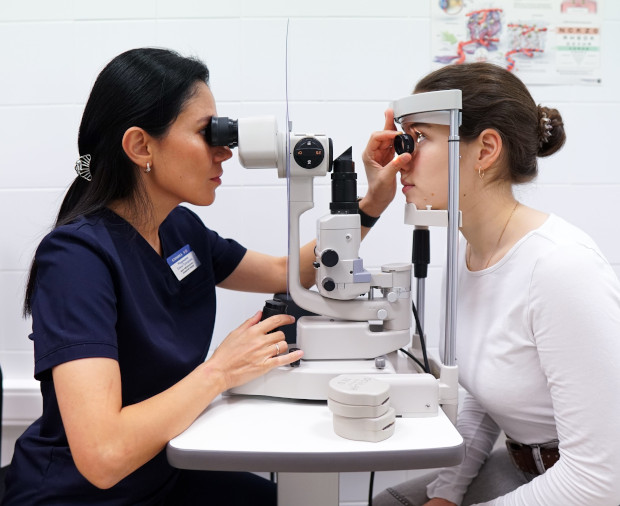
The examination begins with an assessment of the position and mobility of the eyelid: the doctor checks how far the edge moves away from the eye and how the eyelid returns to its original position. This is accomplished using functional tests and a slit-lamp examination.

Evaluation of the cornea and conjunctiva

Next, the specialist examines the cornea and conjunctiva. Using special dyes, areas of dryness and microdamage invisible to the naked eye can be seen. This indicates how urgently help is needed and whether protective measures are sufficient until the main treatment is initiated.

Searching for the cause and associated disorders

For effective treatment of ectropion, it is important to find the underlying cause. The doctor will determine whether there have been any injuries, surgeries, skin conditions, or problems with the facial nerve—these factors determine the type of eversion and the appropriate treatment. If necessary, the ophthalmologist will refer the patient to related specialists.

How does a doctor diagnose ectropion?

Treatment of Ectropion

Treatment of ectropion is always individualized and depends on the cause, the severity of the changes, and the condition of the cornea. There is no universal prescription, and it is determined by a doctor after an examination.

When Conservative Treatment is Possible

In mild ectropion or during preparation for surgery, protecting the ocular surface is paramount. Moisturizers, gels, and sometimes soft eyelid support at night are prescribed.

This reduces dryness and irritation, but conservative measures provide only temporary relief and rarely correct the ectropion itself. Therefore, treatment of ectropion with severe changes most often involves surgery.

When Surgical Correction is Needed

Surgical correction becomes the primary method when the eyelid is persistently misaligned, the cornea is compromised, or excessive lacrimation is a concern. Eyelid eversion surgery restores the correct position of the eyelid margin and ensures a tight seal. The technique depends on the condition: for age-related ectropion, the tissue is strengthened and tightened, while for scar-related ectropion, tension is relieved, sometimes with lid surgery.

How a Doctor Chooses a Treatment Approach

The treatment approach is determined by several factors: the cause, the degree of eversion, the condition of the cornea and tissues, and the patient's age and overall health. A good approach is to look beyond symptomatic relief and address the underlying cause of the eyelid eversion. Therefore, effective treatment for ectropion always involves a combination of accurate diagnosis and a tailored approach.

Treatment of Ectropion

How the surgery and recovery are performed

Many patients are apprehensive about the very thought of eyelid surgery, although eversion surgery is a proven procedure that is performed carefully and, as a rule, under local anesthesia.

Preparing for the procedure

Before surgery, the doctor conducts an examination, assesses the condition of the cornea and conjunctiva, prescribes tests if necessary, and provides clear preparation recommendations. This reduces risks and helps plan recovery.

Stages of eyelid correction

During the surgery, the surgeon restores the correct position of the eyelid margin: tightens and strengthens weakened structures, and relieves tissue tension in the case of scarring. If necessary, eyelid plastic surgery is performed. Sutures are placed carefully, with the cosmetic result in mind.

"In our practice, we see that time is of the essence when it comes to everted eyelids: the sooner the eyelid is correctly positioned, the lower the risk of chronic irritation and corneal damage. Therefore, we always begin with an accurate diagnosis and tailor treatment to your individual needs."

Recommendations during the recovery period

In the first few days, rest, eye protection, and strict adherence to prescriptions are essential. The doctor explains how to care for the area around the eye and when to return for follow-up appointments. Mild swelling and slight bruising in the first few days are normal. It takes longer for the result to fully stabilize. Therefore, it is important to keep up with your appointments.

Important: If your eyelid has become everted, do not attempt to correct it yourself, as this can increase eye irritation and damage the cornea. Do not use eye drops unless directed, especially if you experience pain, photophobia, or blurred vision. The right step is to see an ophthalmologist as soon as possible. Before your appointment, it's best to protect the ocular surface from drying out and avoid rubbing the eyelid.

How the surgery and recovery are performed

Frequently Asked Questions

Is it possible to treat eyelid eversion without surgery?

Sometimes, temporary relief can be achieved with moisturizers and ocular surface protection, but for severe eyelid eversion, surgical correction is often the primary treatment. The treatment strategy depends on the cause, the extent of the changes, and the condition of the cornea, so the decision is always made by a doctor after an examination.

Is ectropion dangerous to vision?

Yes, if left untreated. Incomplete eyelid adhesion compromises the eye's protection: dryness, irritation, chronic inflammation, and the risk of corneal damage, including ulcers, can occur, which directly threaten vision.

How long does recovery take after treatment?

The recovery period depends on the extent of the correction and the initial condition of the tissues. Rest, eye protection, and following the doctor's recommendations are usually important in the first few days, but final stabilization of the result takes longer—several weeks.

When should I urgently consult a doctor?

If you experience severe tearing, pain, photophobia, blurred vision, a foreign body sensation, or severe redness, don't delay a visit to your ophthalmologist. These signs may indicate corneal damage, and immediate assistance is needed.

Why patients choose K+31

Why patients choose K+31

Eyelid diseases require experience and attention to detail.

Accurate diagnosis and specialized expertise

Our specialists focus specifically on eyelid diseases, accurately determining the form and cause of eyelid eversion. We don't limit ourselves to relieving symptoms—we also seek out and treat the underlying cause.

Modern correction methods

We use modern diagnostic techniques and gentle surgical correction, choosing an individual approach based on the condition of the cornea and eyelid tissue.

Individualized treatment plan and support

We create a personalized treatment plan for each patient and support them throughout the entire process—from the initial consultation to full recovery. We help restore the protective function of the eyelid and provide clear recommendations.

Our doctors
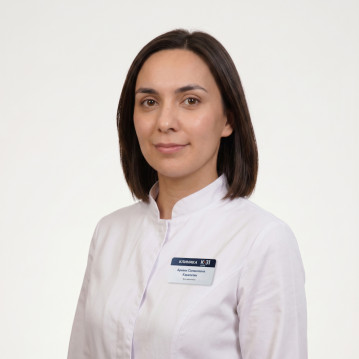
Karapetyan Arevik Samvelovna
Experience 12 years
Make an appointment
Karapetyan
Arevik Samvelovna
Ophthalmologist, Laser Surgeon
Batalina Larisa Vladimirovna
Experience 33 years
Make an appointment
Batalina
Larisa Vladimirovna
Deputy chief physician for ophthalmology, ophthalmic surgeon, leading specialist in laser vision correction
Amiryan Anush Gamletovna
Experience 28 years
Make an appointment
Amiryan
Anush Gamletovna
Ophthalmic oncologist surgeon
Medvedev Yulia Alexandrovna
Experience 11 years
Make an appointment
Medvedev
Yulia Alexandrovna
Ophthalmologist, Laser Surgeon
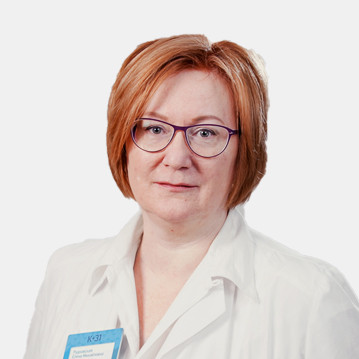
Rudkovskaya Elena Mikhailovna
Experience 38 years
Make an appointment
Rudkovskaya
Elena Mikhailovna
Ophthalmologist
Tegniryadnova Ekaterina Valerievna
Experience 20 years
Make an appointment
Tegniryadnova
Ekaterina Valerievna
Ophthalmologist, laser surgeon
Fadeeva Victoria Anatolievna
Experience 13 years
Make an appointment
Fadeeva
Victoria Anatolievna
Doctor ophthalmologist, laser surgeon
Shamsetdinova Leila Tagirovna
Experience 17 years
Make an appointment
Shamsetdinova
Leila Tagirovna
Pediatric ophthalmologist
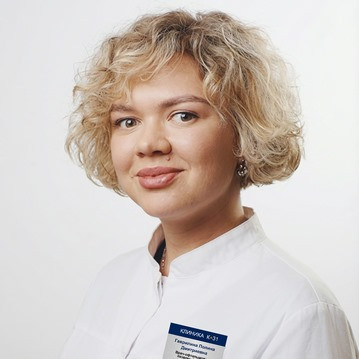
Gavrilina Polina Dmitrievna
Experience 8 years
Make an appointment
Gavrilina
Polina Dmitrievna
Ophthalmologist, laser surgeon
Sugonyaeva Olga Yurievna
Experience 26 years
Make an appointment
Sugonyaeva
Olga Yurievna
Ophthalmologist, laser surgeon
Khlunovskaya Anna Nikolaevna
Experience 8 years
Make an appointment
Khlunovskaya
Anna Nikolaevna
Ophthalmologist
Akhiyarova Azalia Azatovna
Experience 4 years
Make an appointment
Akhiyarova
Azalia Azatovna
Ophthalmologist
Putintseva Polina Andreevna
Experience 6 years
Make an appointment
Putintseva
Polina Andreevna
Ophthalmologist
Agafonova Oksana Sergeevna
Experience 21 year
Make an appointment
Agafonova
Oksana Sergeevna
Ophthalmologist, pediatric
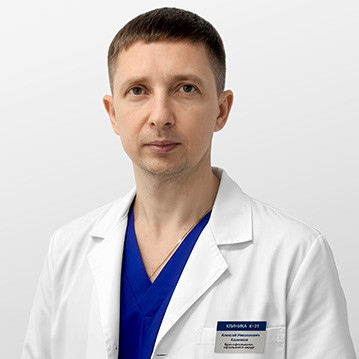
Kazennov Alexey Nikolaevich
Experience 19 years
Make an appointment
Kazennov
Alexey Nikolaevich
Ophthalmologist, ophthalmologist-surgeon
Petrova Maria Grigorievna
Experience 14 years
Make an appointment
Petrova
Maria Grigorievna
Ophthalmologist, ophthalmic surgeon
Mazmanyan Karen Akopovich
Experience 28 years
Make an appointment
Mazmanyan
Karen Akopovich
Ophthalmic surgeon
Suchkova Valeria Alekseevna
Experience 6 years
Make an appointment
Suchkova
Valeria Alekseevna
Ophthalmologist
Khubieva Salima Aslanbievna
Experience 7 years
Make an appointment
Khubieva
Salima Aslanbievna
Ophthalmologist, laser surgeon
Rytik Nina Petrovna
Experience 15 years
Make an appointment
Rytik
Nina Petrovna
Ophthalmologist
All specialists
2GIS Award
2GIS Award

This award is given to clinics with the highest ratings according to user ratings, a large number of requests from this site, and in the absence of critical violations.

«Good place» according to Yandex

This award is given to clinics with the highest ratings according to user ratings. It means that the place is known, loved, and definitely worth visiting.

Our doctors are laureates of the ProDoctors Award

The ProDoctors portal collected 500 thousand reviews, compiled a rating of doctors based on them and awarded the best. We are proud that our doctors are among those awarded.

Make an appointment at a convenient time on the nearest date

Price

Reception
Price
Initial Ophthalmologist Appointment
from 6 450 ₽
Repeat Ophthalmologist Appointment
from 5 700 ₽

Other services

Laser vision correction Phacoemulsification of cataract with IOL implantation of any complexity Vitreoretinal surgeries of any complexity (vitrectomy) Laser photocoagulation of the retina during tears and degenerative changes in the retina Laser photocoagulation for diabetic retinopathy Intravitreal administration of Anti-VEGF drugs, hormonal implants Antiglaucomatous operations using various drains YAG laser dissection of the posterior capsule for secondary cataract Cataract treatment Treatment of glaucoma Retinal dystrophic changes Vitreous pathology Injury to the eye Post-traumatic and postoperative complications Myopia treatment Farsightedness Treatment of astigmatism Retinal disinsertion Non-contact laser procedure SMARTSURFACE Keratoplasty Femto SUPER LASIK Laser coagulation of the retina of the eye treatment on Ellex Integre Pro Scan Treatment of the retina with the Navilas laser system Femtolaser Cataract Removal Selection of children's night lenses Laser vision correction Clear Офтальмолог-онколог в Москве Treatment of keratoconus Laser coagulation of the retina Refractometry Retrobulbar injections Restoration of vision Lacrimal ducts Eye wash Synoptophore Forbis ESOM Pediatric ophthalmologist Ophthalmologist Glasses Biomicroscopy Night lenses Photo of an eye Eyelid suturing Selection of lenses Retinal laser Vision test Vitrectomy Vitrectomy Vitrectomy Eye pressure Ophthalmoscopy Fundus Gonioscopy Discision Orbitotomy Ophthalmodiagnostics OCT of the optic disc Keratoplasty Crystalline lens replacement Lacrimal duct Eye biometrics Angle of strabismus Lacrimal point IOL implantation Heterophoria Refraction Needling pillows Sclerectomy Micropulse laser Eyelid massage Intravitreal injections Iridoplasty Accommodation Bacterial culture Ophthalmology Cyclophotocoagulation Laser trabeculoplasty Laser stimulation Makdel Iridotomy Goniopuncture Corneal crosslinking Perimetry Pachymetry Angio-OCT Tubular test Color vision Convergence test Autofluorescence Eye mobility Corneal diagnostics Corneal transplant Skiascopy Strabismus Injection in the eye Tonometry Schirmer's test Trabeculotomy Diaphanoscopy Foreign body Foreign body Eyelid neoplasms Retinal tear Pterygium Chalazion Pneumatic retinopexy Glaucoma Ultrasound of the eye Eye biometrics Improving vision Cataract removal An attack of glaucoma Night lenses Eyelid ptosis Vision correction Angiography of the eye Retinoblastoma Laser coagulation PRK Orbital exenteration Evisceration of the eye Exophthalmometry PresbyLasik Removal of the lens Retinal thrombosis Nystagmus Lacrimal duct Eye removal Optic nerve Eyelash removal Neoplasms of the eyelids Myopia PRP therapy Autorefractometry Anti-VEGF Iris melanoma Glaucoma treatment Megalocornea Macular degeneration AMVO-01 Visotronik Amblyopia Accommodation Ametropia Cataract Lagophthalmos Anisometropia Asthenopia The optic nerve Dry eye syndrome Strabismus Aphakia Retinal coagulation Eyesore Blepharitis Eyelid spasm Blepharochalasis Blepharophimosis Myopia Vitrectomy Presbyopia Glaucoma Cataract Glaucoma Conjunctivitis Secondary cataract Dislocation of the lens Keratoconus Keratoglobus Keratitis Night blindness Ocular herpes Farsightedness Retinopathy Hypoplasia Eye strain Visual syndrome Coloboma Keratopathy Glaucoma Keratoconjunctivitis
Make an appointment

Appointment to the doctor

Fill out the form, our managers will contact you within 15 minutes

Reviews

I was lucky to get an appointment with ophthalmologist E. M. Rudkovskaya, a pleasant and responsive person, an excellent specialist who explains in detail all the subtleties of examinations and treatment. Thank you so much, Elena Mikhailovna!
28.07.2026
Nadezhda A.
The reception was held at the highest level. I liked everything. The doctor is simply the best ophthalmologist in Moscow. The communication was pleasant, I listened to everything, conducted research and made recommendations. I'll come back more than once.
28.07.2026
Andrey P.

About doctor:

Rytik Nina Petrovna

Very pleasant Dr. Shamsetdinova L.T.
25.07.2026
Viktoriya D.
Everything is fine. She conducted a number of studies, listened attentively, was very pleasant in communication, explained everything clearly. I am satisfied.
21.07.2026
Svetlana S,
A great professional doctor, responsive, thoughtful, positive, attentive to the patient.
18.07.2026
Aleksandr K.
I signed up for a check-up and accidentally got to Azalea Azatovna and I am very happy that I got to her! He is a very sensitive and attentive doctor, the operation to restore vision was excellent and easy, for which thank you very much! After the operation, I realize that I shouldn't have waited and feared so much, with such a professional in his field, nothing is scary!thank you very much!!!
16.07.2026
Irina S,
The reception was professional and unobtrusive. Additional examinations and diagnostics were carried out using modern equipment. During the consultation and examination, Polina Dmitrievna explained everything in detail and intelligibly, gave me clear recommendations, and answered all questions in detail. Polina Dmitrievna is a polite, attentive and simply amazing doctor. The clinic as a whole enjoys the atmosphere, responsiveness of the staff and the professionalism of the specialists.
11.07.2026
Nikolay K.
Rudkovskaya E.M. is an excellent doctor, if you need an ophthalmologist, I go to her. A very competent specialist. Explains everything by diagnosis. Comprehensively evaluates the condition, checking all the parameters.
11.07.2026
Vera S.
Wonderful doctor!
10.07.2026
Natalya P.
An excellent specialist. I am very pleased with the reception. Thanks to the doctor
08.07.2026
Svetlana U.
Почему К+31?
К + 31 — full-cycle multidisciplinary medical centers, including the possibility of providing medical services of European quality level.
К + 31 — are leading doctors and diagnostics using high-tech equipment from world manufacturers (Karl Storz, Olympus, Siemens, Toshiba, Bausch&Lomb, Technolas, Zeiss, Topcon).
К + 31 — is ethical. The staff of K+31 clinics maintain open relationships with patients and partners. An individual approach to each patient is the basis of our service standards.
К + 31 — is modernity. On call 24/7: call center operators will answer your questions at any time and book you an appointment with doctors. Contact us by phone, through the feedback form on the website and Max.

Our clinics

Address K+31 Lobachevskogo 2

st. Lobachevskogo, 42/7

Contacts

+7 499 999-31-31

Opening hours

Mon-Fri: 08:00 – 21:00
Weekend: 09:00 – 19:00

Address K+31 on Lobachevskogo

st. Lobachevskogo, 42/4

Contacts

+7 499 999-31-31

Opening hours

Mon-Fri: 08:00 – 21:00
Weekend: 09:00 – 19:00

Address K+31 Petrovskie Vorota

1st Kolobovsky pereulok, 4

Contacts

+7 499 999-31-31

Opening hours

Mon-Fri: 08:00 – 21:00
Sat-Sun: 09:00 – 19:00

Address K+31 West

Orshanskaya, 16/2; Ak. Pavlova, 22

Contacts

+7 499 999-31-31

Opening hours

Mon-Fri: 08:00 – 21:00
Sat-Sun: 09:00 – 18:00
K+31 on Lobachevskogo
Didn't find the service you were looking for?

Экстренная помощь