
Lagophthalmos (incomplete closure of the eyelids): symptoms, causes, and treatment by an ophthalmologist
The health of our eyes directly depends on the proper and coordinated functioning of the protective structures surrounding them. In our ophthalmology practice, we regularly encounter situations where patients attribute severe discomfort for months to simple fatigue or excessively dry indoor air. However, trivial irritation may conceal a serious pathology that prevents the eye from closing completely. In medicine, this condition is called lagophthalmos.
The K+31 Clinic has all the necessary capabilities for accurate diagnosis and effective treatment of this problem. Our team of doctors helps quickly stop tissue damage and selects comprehensive therapy that restores comfort and preserves visual function.

specialists

equipment

treatment




What is lagophthalmos and why it shouldn't be ignored
This isn't just a cosmetic defect or temporary inconvenience, but a direct threat to vision. If the eyelids fail to perform their primary function, the anterior segment of the eye suffers, and especially its transparent window—the cornea.
Incomplete closure of the eyelids in simple words
In its simplest form, lagophthalmos is a condition in which a person is unable to fully close the eye. This can occur both while awake and during sleep. The condition can be unilateral or affect both eyes. When this physiological barrier is disrupted, the internal environment of the visual organ is exposed to the aggressive influence of the outside world. The cornea and conjunctiva are left exposed, triggering a cascade of unpleasant symptoms and dangerous changes.
How the ocular surface is normally protected
Every blink we make is a finely tuned mechanism. Normally, the eyelids close regularly and unconsciously. At this moment, they evenly distribute tear fluid across the entire anterior surface of the eyeball. The tear film performs vital functions:
- It nourishes the cornea
- Protects it from drying out
- Washes away small dust particles
- Contains antibacterial components that prevent the proliferation of pathogenic microorganisms
When incomplete eyelid closure develops, this natural shield ceases to function. Tears evaporate too quickly, the tissues dry out, and the eye loses its primary biological defense.
The main causes of lagophthalmos

Facial nerve damage
One of the most common medical causes of palpebral fissure failure is related to neurological disorders. The seventh cranial nerve is responsible for the orbicularis oculi muscle.
If a patient develops facial nerve paralysis or paresis, impulses to the muscle fibers are interrupted. As a result, the eyelid simply droops and cannot fully open or close. This condition often occurs suddenly after hypothermia, viral infections, vascular accidents, or inflammatory processes in the ear.

Trauma, burns, and post-surgical changes
The second major cause is mechanical or thermal damage to the delicate tissues around the eye. Scarring from severe trauma, chemical, or thermal burns tightens the skin, physically preventing the eyelids from closing.
In our practice, we also sometimes see similar consequences after unsuccessful plastic surgeries, such as excessive blepharoplasty, when too large a flap of skin is removed. Eyelid trauma or a rough scar require special attention, as they often require surgical intervention to restore proper anatomy.
Anatomical and age-related factors
Sometimes the causes of lagophthalmos are rooted in the structural features of the facial skeleton or severe forward protrusion of the eyeball—exophthalmos—which accompanies thyroid disease or orbital tumors. In older people, severe muscle and ligament atony can lead to this problem. The tissues lose their elasticity, and the lower eyelid begins to droop outward under the force of gravity, further compromising the seal of the palpebral fissure.
Why is incomplete eyelid closure dangerous?
Chronic exposure of the ocular surface never goes unnoticed. Constant exposure of the unprotected cornea to air triggers degenerative processes. If the eye does not close completely, a chain reaction begins, which without prompt medical attention can lead to irreversible vision loss.
Exposure keratopathy
The first and most common complication of lagophthalmos is exposure keratopathy. This is a specific lesion of the corneal epithelium caused by its constant drying and weathering. Areas of sloughing appear on the surface, and small erosions form. The tissue becomes vulnerable to any external factors, and the patient experiences constant, severe pain, as the cornea contains a large number of nerve endings.
Keratitis and corneal ulcer
Infection easily penetrates the damaged epithelial barrier, resulting in keratitis—a severe inflammation of the cornea. If the bacterial or fungal process is not stopped in time, a corneal ulcer forms at the site of the erosion. This is a severe, destructive condition, accompanied by purulent discharge, and can result in perforation of the ocular membranes or the formation of a thick, thick film that completely obscures vision.
Chronic discomfort and decreased quality of life
Besides the physical dangers to vision, this condition is psychologically debilitating. The inability to sleep normally, the constant burning sensation, the need to constantly monitor the condition of the eye, and avoid light severely limit daily activities, interfere with work, and impair overall quality of life.
How do we diagnose lagophthalmos?
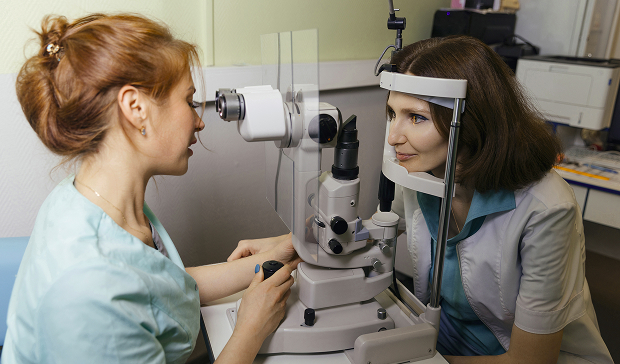
At the K+31 clinic, the diagnosis of this pathology is comprehensive. An experienced ophthalmologist never limits himself to a simple visual examination; developing an effective treatment plan requires accurately assessing the extent of the damage and identifying the underlying cause.
Ophthalmological examination and eyelid closure assessment
During the initial consultation, the doctor performs a detailed ophthalmological examination. We assess the width of the palpebral fissure, the degree of eyelid mobility, and measure the distance that remains open when the patient attempts to calmly close and firmly squeeze their eyes.
Corneal and tear film examination
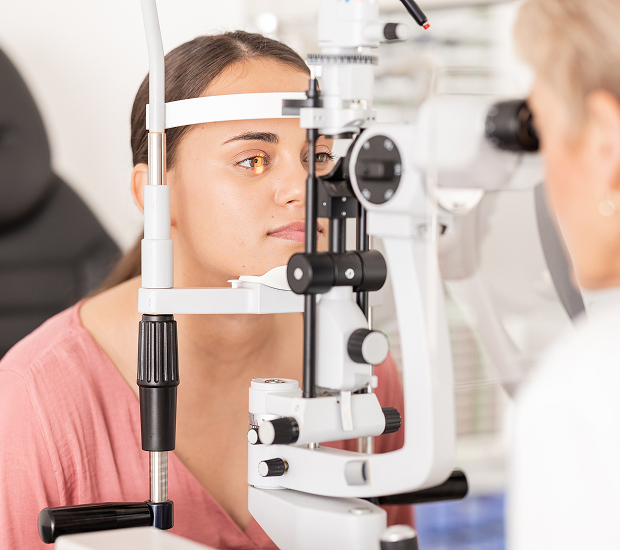
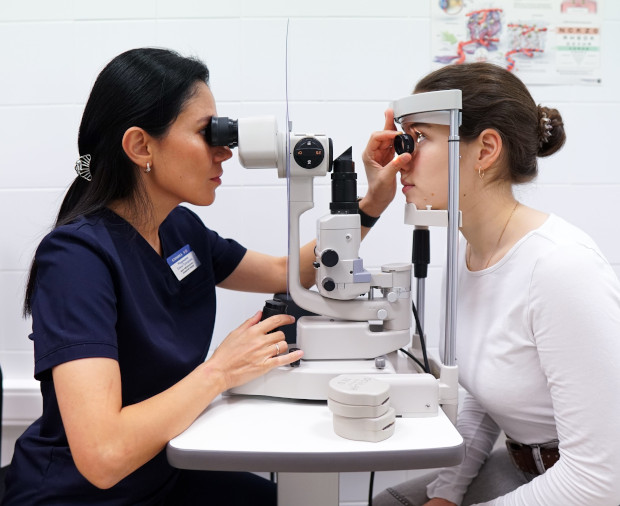
A mandatory diagnostic step is a slit lamp examination of the anterior segment of the eye (biomicroscopy). To detect even the smallest and most subtle damage, we use special safe dyes (such as fluorescein). Staining helps clearly visualize areas of the cornea damaged by dryness and promptly detect the early signs of exposure keratopathy or keratitis.
We also conduct tests to assess tear film stability and tear production volume.
When additional specialists are needed
Since incomplete eyelid closure is often a consequence of other systemic diseases, our clinic closely collaborates with doctors of various specialties. If we determine that facial nerve paralysis is the cause of the problem, a neurologist is immediately involved in the patient's care. If endocrine ophthalmopathy is suspected, the examination is supplemented by a consultation with an endocrinologist.
Treatment methods for lagophthalmos
The main goal of lagophthalmos treatment is to reliably protect the cornea from drying out and infection, as well as to restore maximum eyelid closure. Treatment is individualized and depends on the severity of the condition and its underlying cause.
Conservative therapy and eye protection
In the initial stages or as part of complex therapy for temporary conditions, medications form the basis of treatment:
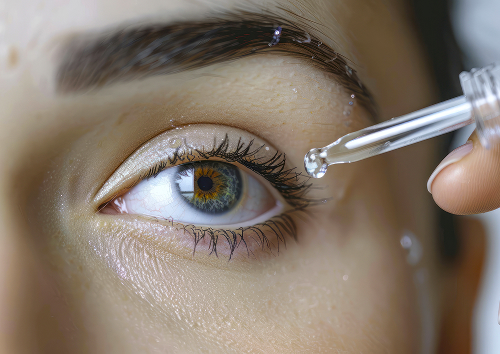
- Regular eye lubrication with preservative-free products. High-viscosity artificial tear drops, which create a stable protective coating, are used during the day.
- At night, when control over the eyelids is completely lost, a thick eye ointment or gel with regenerating components is essential. These stay on the tissues for a long time and prevent them from drying out during sleep.
- Antibacterial drops are prescribed strictly if there are signs of infectious inflammation.
Temporary measures for incomplete closure of the eyelids
If eyelid mobility is temporarily impaired, for example, during the recovery period for nerve conduction after a cold, we use special mechanical protection methods.
Professional eyelid taping at night or the use of special sealed eyelid patches (watch glasses) that create a closed, moist chamber inside the eye have proven effective. This overnight eye protection prevents corneal tissue from drying out overnight.
Surgical correction: when is it needed?
In cases where conservative treatments fail, as well as in cases of persistent scarring or irreversible nerve damage, surgical correction is the only reliable option. Our clinic performs gentle and highly effective procedures. These include tarsorrhaphy (partial or temporary suturing of the eyelid margins to reduce the palpebral fissure), eyelid surgery to eliminate scarring, or the implantation of special miniature gold or platinum weights in the upper eyelid, which help it droop under the influence of gravity.
| Method | When used | What it does |
|---|---|---|
| Conservative therapy | For mild and temporary forms | Reduces dryness, protects the cornea |
| Temporary eye protection | If there is a risk of corneal dryness and injury | Helps maintain moisture and reduce irritation |
| Surgical correction | For persistent incomplete eyelid closure | Improves closure and protection eyes |
General information
What can you do before your doctor's appointment
Safe measures to protect your eyes
If you notice that your eyelids aren't closing completely, the first thing you need to do is protect the ocular surface from harsh environmental factors. Until your appointment with an ophthalmologist, you can use over-the-counter moisturizing drops containing preservative-free hyaluronic acid. Apply them every 1-2 hours. While sleeping, you can gently cover your eyelid with a clean cloth and secure it with a hypoallergenic adhesive bandage to limit airflow. When outdoors, be sure to wear wide-brimmed sunglasses to protect your eyes from wind and dust.
What you shouldn't do
- It is strictly forbidden to buy or use eye drops containing hormones or antibiotics without a doctor's prescription.
- Contact lenses should not be used, as they will immediately cause severe damage and infection to the cornea due to a lack of tears.
- Don't try to rub your eyes with your hands, even if you feel severe itching or a gritty sensation. This will only aggravate microtrauma to the epithelium.
"In our practice, with lagophthalmos, it's important not just to relieve dryness with drops, but to quickly understand the cause of incomplete eyelid closure. Then we can protect the cornea during the first appointment and choose a treatment that truly works," says an ophthalmologist at the K+31 clinic.


FAQ
What is lagophthalmos in simple terms?
Is it possible to cure lagophthalmos without surgery?
What are the dangers of incomplete eyelid closure?
When should you urgently see an ophthalmologist?

Clinical Guidelines of the Ministry of Health of the Russian Federation
https://www.mediasphera.ru/journals/oftalmologiya
EyePress — Ophthalmology Portal
https://www.vidal.ru/patsientam/entsiklopediya/bolezni-glaz/sindrom-suhogo-glaza
https://www.vidal.ru/patsientam/entsiklopediya/bolezni-glaz/keratit
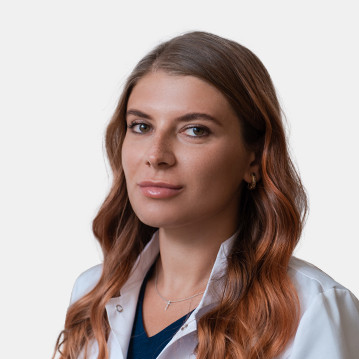
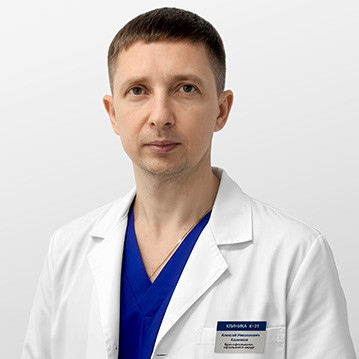
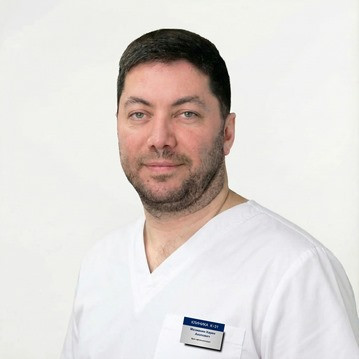
Our doctors


















This award is given to clinics with the highest ratings according to user ratings, a large number of requests from this site, and in the absence of critical violations.

This award is given to clinics with the highest ratings according to user ratings. It means that the place is known, loved, and definitely worth visiting.

The ProDoctors portal collected 500 thousand reviews, compiled a rating of doctors based on them and awarded the best. We are proud that our doctors are among those awarded.
Make an appointment at a convenient time on the nearest date
Price
Other services

Appointment to the doctor
Reviews



















Our clinics


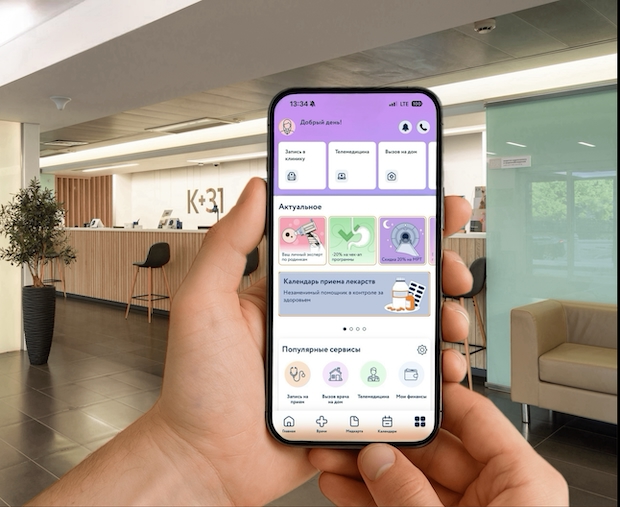
Application “Personal Account K+31”












Symptoms of lagophthalmos: What to look out for
Dryness, burning, and a gritty sensation in the eyes
When normal blinking is disrupted, the first signs of severe dehydration of the ocular surface become apparent. Patients describe the sensation as a constant foreign body. Severe dryness develops, not relieved by normal rest. The burning sensation becomes a near-constant companion, intensifying in the evening or after working at a computer, when blinking frequency naturally decreases.
Tearing, redness, and photophobia
Paradoxically, severe dryness can cause profuse lacrimation. This is the body's compensatory response: the brain receives a signal that the cornea is drying out and instructs the lacrimal gland to work at maximum capacity. However, these tears are thin, do not stay on the surface, and simply run down the cheeks, providing no relief.
Constant irritation causes persistent redness of the eye, as well as photophobia, making it difficult for a person to be in brightly lit rooms or outdoors in sunny weather.
When vision deteriorates
If the first symptoms of lagophthalmos are ignored, the pathological process inevitably affects the deep layers of the cornea. Due to chronic drying and microerosions, its optical surface loses its ideal smoothness and transparency. A person begins to notice that surrounding objects appear blurry, a fog appears before the eyes, and visual acuity decreases.