
Secondary cataract discission: how laser capsulotomy is performed
After cataract surgery, some patients experience blurred vision again. They begin to notice glare, blurred vision, decreased contrast, and difficulty reading. Often, the cause is not a new cataract, but rather clouding of the capsule that holds the artificial lens.
In this situation, we perform secondary cataract discision—a precise laser procedure that helps restore optical clarity and vision without repeat surgery.

specialists

equipment

treatment






When do we recommend laser discision?

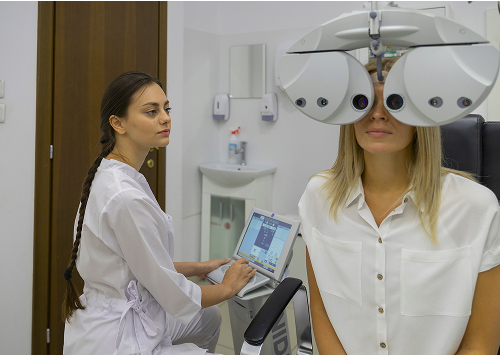
Before the procedure, we always conduct diagnostics and clarify the cause of vision loss. Not every deterioration is associated with secondary cataracts. Sometimes the problem occurs due to a condition of the retina, changes in the optic nerve, or other eye diseases.
Main symptoms of secondary cataract
The reasons for contacting an ophthalmologist are:
- Deterioration of vision after cataract surgery
- Feeling of a cloudy image
- Veil before eyes
- Glare and highlights
- Reducing text clarity
- Deterioration of vision in the evening or in bright light
If such complaints appear gradually, it is important to undergo a vision diagnosis and not delay the examination.
What data support the indications for the procedure?
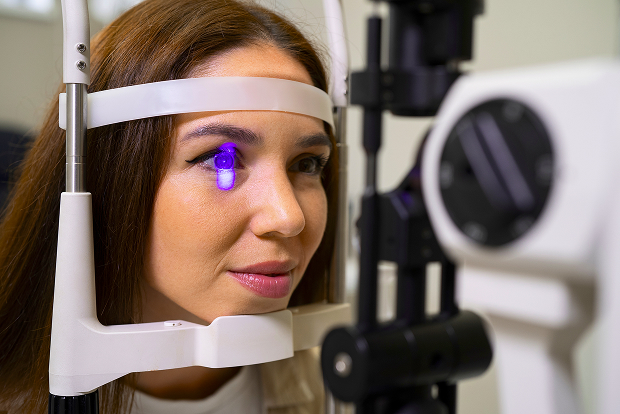
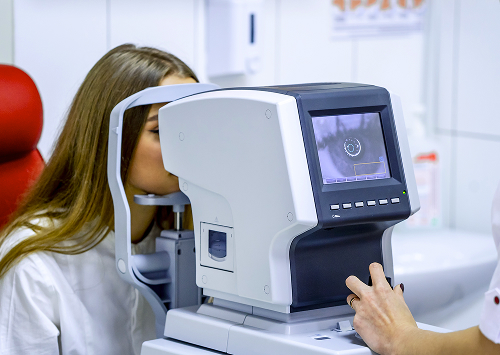
Before recommending secondary cataract treatment, we conduct a complete examination. The doctor evaluates:
- Capsule condition
- Visual acuity
- Intraocular pressure
- Position of the artificial lens
- Retina condition
The retina is also examined after pupil dilation. For this purpose, medicinal mydriasis is used. This approach helps rule out other causes of vision impairment.
What is sectoral laser coagulation of the retina?
This method involves targeted laser treatment of a limited area of the fundus. The laser forms coagulates—small areas of tissue adhesion around the defect or thinning.
This helps the doctor isolate the problem area. The decision is made after an in-person diagnosis.
How does the sectoral technique differ from the barrier and panretinal methods?
The sectoral method is chosen for localized changes. Barrier laser coagulation, or barrier coagulation, helps isolate the tear or edge of a localized detachment. Panretinal treatment is used for other purposes, such as ischemia due to diabetic retinopathy. The extent of the procedure depends on the diagnosis.
Before treatment, we explain the purpose of each method.
| Procedure Type | When Applied | Volume of Treatment | Purpose |
|---|---|---|---|
| Sectoral | Localized Dystrophy, Rupture, Thinning | Single Area | Strengthen Risk Area |
| Barrier | Rupture or Localized Detachment Along the Edge | Along the Defect | Limit the spread of the process |
| Panretinal | Diabetic retinopathy, ischemia | Large area, excluding the macula | Reduce the impact of ischemia |
The doctor selects a specific method after examination, imaging, and risk assessment.
What are the results of the procedure?
Laser coagulation of the retina does not reverse the structure of damaged tissue. The doctor uses a laser to create adhesion points around the damaged area to reduce the risk of widening the tear or worsening the thinning. After the procedure, the condition of the fundus is monitored dynamically.
General information
Recovery after discision
Full rehabilitation after the procedure is usually not required. However, in the first few days, it is important to follow your doctor's recommendations and monitor your eye condition.
What you can and cannot do in the first hours and days
After the procedure, we recommend:
- Avoid rubbing your eye
- Use drops only as directed
- Avoid strenuous physical activity during the first 24 hours
- Attend your postoperative examination at the appointed time
You should not stop taking medications or change your treatment regimen on your own.
You should see a doctor immediately if you experience the following symptoms:
- Sharp pain
- Sudden deterioration of vision
- Flashes of light
- A large number of floaters
- Severe redness of the eye
When vision improves after the procedure
For many patients, vision recovery begins within the first day. However, the rate of improvement depends on the condition of the retina, optic nerve, and associated diseases.
If vision loss is due specifically to capsule opacification, the effect after the procedure is usually noticeable quite quickly.

FAQ
What is secondary cataract discission?
Is laser discision painful?
When does vision improve after the procedure?
Are there any contraindications to discision?
Our doctors



















This award is given to clinics with the highest ratings according to user ratings, a large number of requests from this site, and in the absence of critical violations.

This award is given to clinics with the highest ratings according to user ratings. It means that the place is known, loved, and definitely worth visiting.

The ProDoctors portal collected 500 thousand reviews, compiled a rating of doctors based on them and awarded the best. We are proud that our doctors are among those awarded.
Make an appointment at a convenient time on the nearest date
Price
Other services

Appointment to the doctor
Reviews





















Our clinics


Application “Personal Account K+31”












What is discision and why is it needed?
Secondary cataract is a condition in which the posterior portion of the lens capsule becomes cloudy over time after previous surgery. The artificial lens itself remains clear. The problem occurs specifically in the capsule where the lens is attached.
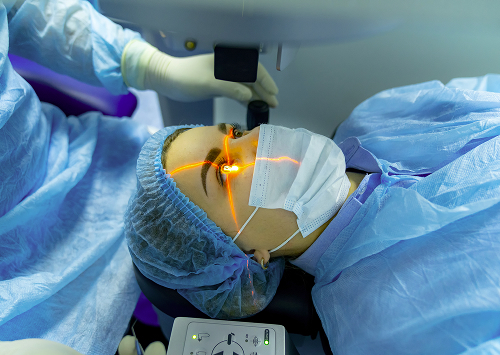
We use laser capsulotomy for treatment. During the procedure, the doctor creates a small opening in the clouded area. This allows light to pass freely to the retina, and vision becomes clearer.
Why vision may deteriorate again after cataract surgery
After cataract surgery, eye tissue continues to change. Sometimes epithelial cells begin to grow on the surface of the capsule. This causes opacification of the posterior capsule and decreased visual acuity.
Patients often describe the symptoms similarly:
It's important to understand that the cataract itself does not recur. It's a clouding of the posterior lens capsule.
How is discission different from revision surgery?
Many patients worry about needing another surgery. In practice, laser discission does not involve re-removing the lens. We do not replace the lens or make incisions.
The procedure is performed using a YAG laser. The laser only targets the clouded area. This is a targeted intervention that typically does not require hospitalization or lengthy rehabilitation.