Optical Biometrics
Accurate pre-operative calculations begin with measurements. Before replacing the lens, the doctor needs to know the length of the optic organ, the curvature of the cornea, and the depth of the anterior chamber.
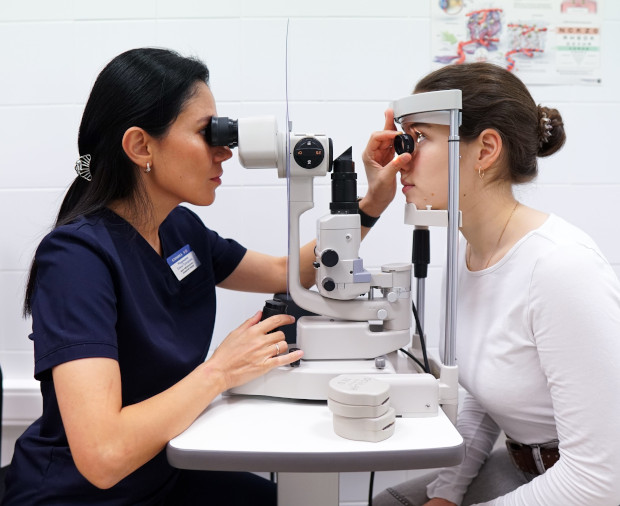
At "K+31," optical eye biometry is performed contactlessly and with data analysis.

specialists

equipment

treatment






What is optical biometrics?
This is a method of measuring eye parameters using a light signal. The device does not touch the cornea. Therefore, optical biometry is usually performed without anesthesia. The data is needed to calculate the size of an artificial lens and to choose further treatment strategies.
Ocular biometry is especially important when the patient has cataracts. This condition causes the lens to become cloudy. After the lens is removed, an artificial lens is inserted. The more accurate the initial measurements, the more reliable the implant calculation.
What parameters do we measure
During the appointment, the doctor receives several numerical indicators. They help prepare for surgery. They also make it clear why vision changes. Therefore, vision diagnostics before surgical treatment is not limited to checking using a table.
During the study, the following is assessed:
- Axial length of the eye
- Anterior chamber depth
- Corneal curvature
- Parameters for intraocular lens calculation
- Indicators influencing the accuracy of the result
After the measurements, the doctor evaluates the consistency of the data. Measuring the length of the eye shows the distance from the anterior surface of the cornea to the retina. Keratometry evaluates the curvature of the cornea. The anterior chamber and refraction - the ability of the visual organ to focus the image - are also taken into account.
How does optical biometrics differ from ultrasound?
The optical method is performed without contact with the visual organ. With ultrasound, the sensor can be in contact with the eyeball or operate through a special medium. The choice depends on the transparency of the medium and the signal quality.
| Criteria | Optical biometrics | Ultrasound biometrics | When is it preferable? | Advantages and limitations |
|---|---|---|---|---|
| Contact | Contactless method | Contact or immersion method | for transparent media | The optical option is more comfortable; ultrasound helps with opacities. |
| Measurement accuracy | high with stable fixation | good, but depends on the technique | for IOL calculation | for dense cataracts, the doctor may choose ultrasound |
| Anesthesia | usually not necessary | topical drops are often used | for standard examinations | ultrasound remains the backup method |
The table does not replace an in-person assessment. For transparent media, an optical option is more suitable. For severe opacities, the doctor chooses an alternative method.
General information
When we recommend testing
Eye biometry in Moscow at K+31 is performed before surgery. It is also recommended before complex lens selection and clarification of the visual organ's anatomy. The test is scheduled after an examination, when precise data is needed for calculations. A single parameter does not reflect the entire clinical situation.
Before cataract surgery
A cataract reduces the transparency of the crystalline lens and also impairs vision. If the doctor is discussing surgical treatment, a preoperative examination helps determine the parameters for calculating the artificial lens. At this stage, it is important to understand the specific features of the visual organ. After all, they can influence planning.
Before cataract surgery, biometrics are used in conjunction with:
- Corneal examination
- Retina
- Optic nerve
- Intraocular pressure measurement
Optical biometrics provides the doctor with data for more accurate calculations. If the method has limitations, additional testing is required.
Before intraocular lens selection
Intraocular lens selection depends on the structure of the eye and the goal of correction. The intraocular lens must correspond to:
- Length of the visual organ
- Corneal curvature
- Anterior chamber depth
Therefore, the doctor evaluates a combination of parameters, not a single number.
In "K+31," the selection of an intraocular lens is discussed after diagnosis. The patient is informed of the options and limitations. The decision is made after an in-person evaluation, without promises of a uniform result for everyone.
For decreased vision and refractive errors
Sometimes the examination is prescribed for reasons other than cataracts. A doctor may order an ophthalmological examination if:
- Vision is deteriorating
- Glasses quickly become unsuitable
- There is a significant difference between the visual organs
Ocular biometry helps assess high myopia, hyperopia, and unstable correction. It also allows for the identification of structural features of the visual organ. However, measurements are not a treatment. The data is compared with complaints, examination, and other tests.
Frequently Asked Questions
What does optical eye biometry reveal?
Do I need to prepare for optical biometry?
Is optical eye biometry painful?
How is optical biometry better than ultrasound?
The optical method is more comfortable because the device does not touch the visual organ. In many cases, it provides high accuracy for IOL calculations. If the signal is unstable, the doctor prefers the ultrasound method.
At "K+31," the test is performed as part of a precise preparation for treatment. We measure the parameters of the eye, explain the results, and explain why a vision diagnosis is necessary before making a decision.
You can book an appointment in advance by choosing a convenient time.
References
- Clinical Guidelines Portal of the Ministry of Health of the Russian Federation — https://cr.minzdrav.gov.ru/
- Russian Society of Ophthalmologists — https://roftalmology.ru/
- Ophthalmology Journal. Russian Ophthalmological Journal — https://www.mediasphera.ru/journal/oftalmologiya
- Ophthalmology Bulletin — https://www.vestnikoftalmologii.ru/
- Russian Medical Journal, Ophthalmology Section — https://www.rmj.ru/articles/oftalmologiya/
- Portal Ophthalmology / EyePress - https://eyepress.ru/
Our doctors
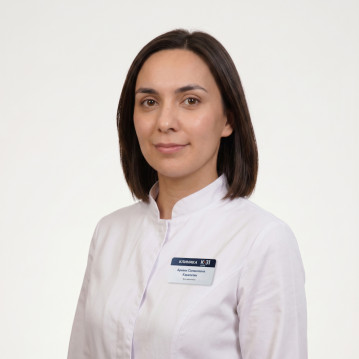





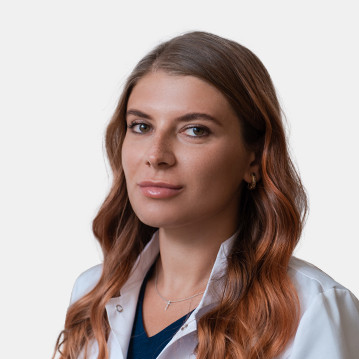






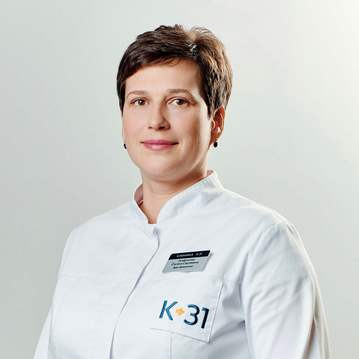



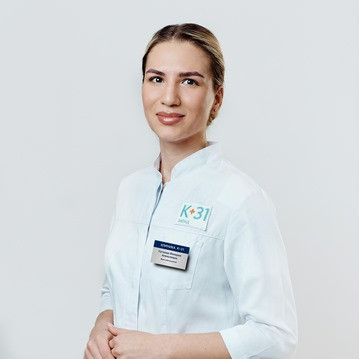



This award is given to clinics with the highest ratings according to user ratings, a large number of requests from this site, and in the absence of critical violations.

This award is given to clinics with the highest ratings according to user ratings. It means that the place is known, loved, and definitely worth visiting.

The ProDoctors portal collected 500 thousand reviews, compiled a rating of doctors based on them and awarded the best. We are proud that our doctors are among those awarded.
Make an appointment at a convenient time on the nearest date
Price
Other services

Appointment to the doctor
Reviews

















Our clinics


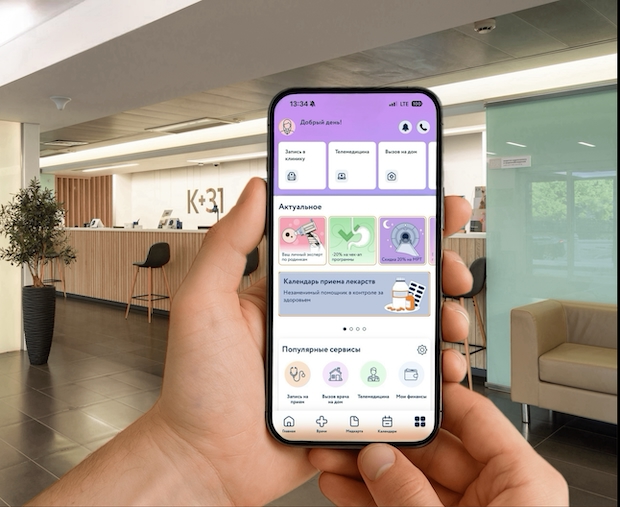
Application “Personal Account K+31”