Color Blindness: Causes, Signs, Diagnosis, and Color Vision Testing

To accurately determine the nature of color perception and rule out hidden visual system pathologies, a professional color vision test is necessary.

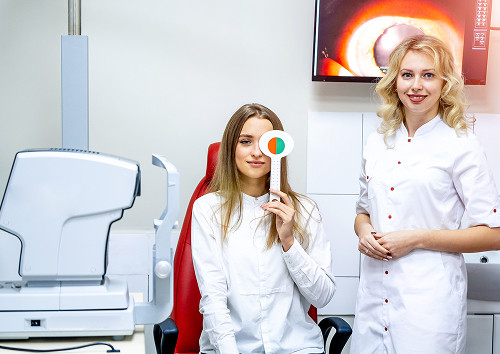
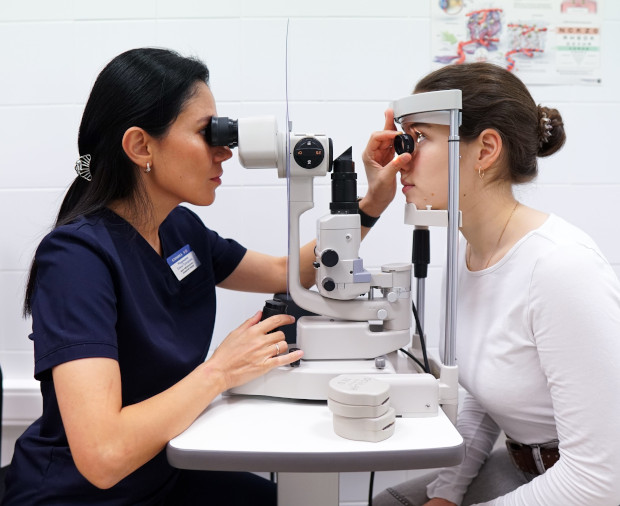
At K31 Clinic, we use advanced diagnostic methods that allow us to quickly assess your color perception and provide detailed recommendations for study, work, or everyday life. If you or your child requires a high-quality color blindness test, our experienced ophthalmologist will perform the procedure in a comfortable environment and thoroughly interpret the results.

Best specialists
Best
specialists
Expert equipment
Expert
equipment
Advanced diagnostic treatment
Advanced diagnostic
treatment
Download the application “Personal Account K+31”
Everything about your health in one click!
Subscribe to social networks K+31
To keep up to date with current offers and receive useful advice about your health.

What is color blindness and how is it different from other color vision deficiencies?

In ophthalmology, a condition in which the retina loses the ability to correctly recognize certain colors is called color blindness. Many people mistakenly believe that this condition turns everything around them into a black-and-white movie, but in fact, absolute color blindness is extremely rare. Most often, it involves a partial reduction in the perception of specific spectra, which a person may not even notice for a long time in everyday life. When such a color vision deficiency is discovered accidentally, it can come as a surprise to the patient.

Color blindness, color blindness, and color anomaly: what's the difference?

The correct perception of the palette is based on special light-sensitive receptors in the retina, called cones. Normally, a person has three types of these receptors, each responsible for a different primary color: red, green, or blue. When all three types function perfectly, vision is called trichromatic. If the activity of one type of receptor is reduced, a color vision anomaly occurs, which doctors call color anomaly or incomplete trichromacy. Complete color blindness means an absolute inability to distinguish colors, where a person sees the world exclusively in shades of gray, while classic color blindness encompasses any type of loss or weakening of perception of individual parts of the spectrum.

How a person with color blindness sees colors

Contrary to popular belief, most people with this condition see objects around them perfectly; some shades simply merge into a single tone. The way colorblind people see the world around them directly depends on the degree of involvement of specific receptors.

What is color blindness and how is it different from other color vision deficiencies?

Types of color blindness

Red-green deficiencies: protanopia and deuteranopia

When a person completely lacks the cones responsible for perceiving long-wavelength ranges, protanopia develops. With this form of the disorder, red appears dark, almost gray or brown, and green is perceived as light gray. If the receptors sensitive to mid-wavelength ranges fail, deuteranopia is diagnosed. In this condition, green hues merge with blue and red, greatly impeding spatial orientation in areas where these signal colors are used.

Blue-Yellow Color Deficiencies: Tritanopia

A condition in which the retina cannot correctly distinguish blue and yellow colors is called tritanopia. People with this condition see the world primarily in red-green tones, and blue appears green or dark gray.

Hereditary and Acquired Color Blindness

Classic hereditary color blindness is caused by genetic traits and is passed down from generation to generation, remaining unchanged throughout a person's life. Acquired color blindness, on the other hand, develops over the course of a person's life under the influence of external factors or associated pathologies. It can progress and often affects only one eye.

Symptom Hereditary Acquired
When it appears Since childhood Later
Cause Genetic characteristics Diseases, injuries, medications, etc.
How it manifests Usually stable May progress.
Is a checkup necessary? Yes Yes, urgently recommended.

Why does color vision deficiency occur?
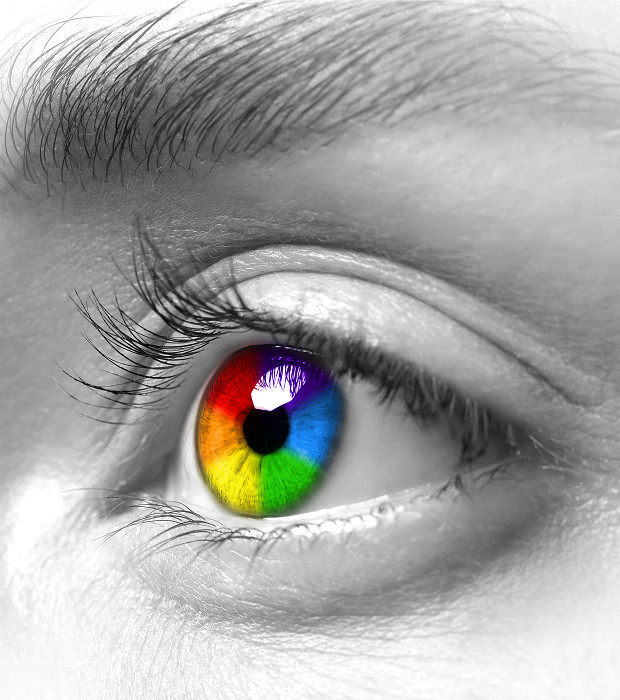
Why does color vision deficiency occur?

Hereditary Predisposition

Genetic factors play a key role in the development of most cases of color vision defects. The mutation responsible for red-green color blindness is linked to the X chromosome, so inherited color blindness is much more common in males. Women typically carry the defective gene and pass it on to their sons, although they themselves retain a completely normal perception of the entire color palette.

Eye and nervous system diseases, and certain medications

Developing acquired color blindness may indicate serious retinal disorders, such as macular degeneration, or lens clouding due to cataracts. Color perception can also be altered by inflammatory diseases of the optic nerve, traumatic brain injuries, brain tumors, or long-term use of certain potent medications that are toxic to the visual system.

When changes in color perception require urgent evaluation

If you notice that familiar objects have suddenly changed hue, or if one eye begins to see colors differently than the other, don't delay. A timely visit to the K31 Clinic will help identify the underlying cause of these changes, which may be serious neurological or vascular pathologies requiring immediate intervention.

General information

Who especially needs color vision testing?

Children and adolescents

Children often can't independently understand that they see the world differently than their peers, as they are accustomed from childhood to naming colors based on adult cues. The first vision screening in this area should be conducted in preschool to identify any special needs early.

Adults whose work involves color, safety, and accuracy

High-quality color vision testing is critical for future drivers, pilots, train drivers, and navigators, as well as doctors, chemists, designers, and the military. Misreading wire markings or signal lights in these areas can have tragic consequences.

If you notice sudden changes in color perception

We recommend getting tested if you regularly doubt your clothing color choices or have difficulty reading color charts at work.

5 signs that your color vision needs to be checked:

  • You regularly confuse red and green shades
  • You have difficulty distinguishing colors on transportation diagrams, maps, or product packaging
  • You frequently make color mistakes when choosing wardrobe items or interior decorations
  • You notice persistent difficulties in your child during educational games and color-based activities
  • Any changes in the perception of familiar colors and shades appeared suddenly

Who especially needs color vision testing?

How We Test Color Vision

When to Schedule an Appointment

You should avoid using images from the internet for self-diagnosis, as smartphone and computer screens can significantly distort color rendering, and poor lighting in the room can lead to erroneous results. A complete color blindness diagnosis should be performed in a specialized office under the supervision of a specialist.

Tests We Use: Rabkin Charts, Polychromatic Charts, and Additional Methods

Our primary and most reliable tool remains special Rabkin charts, which are sheets of paper with images of numbers or geometric shapes composed of many small colored circles of equal brightness. A patient with normal vision can easily see the hidden symbol, while someone with impaired vision perceives the image as a uniform field. We also use other modern polychromatic tables.

What the results show and what recommendations do you receive?

After the examination, our ophthalmologist will explain in detail all the features of your eyes. You will receive an official medical report clearly outlining all the parameters of your color vision.

How We Test Color Vision

Can color blindness be treated and how to live with it?

What really works: correction and adaptation

Currently, there are no methods in global medicine that can completely cure congenital retinal receptor pathology. However, this is no reason to despair, as modern color vision correction has made great strides and offers effective ways to compensate for this condition.

Glasses, Contact Lenses, Apps, and Home Solutions

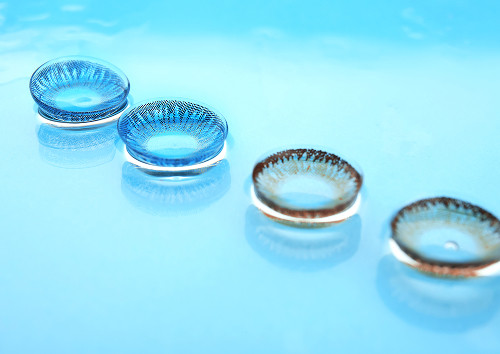
For people with color vision deficiency, there are special lenses and glasses with filters: they increase the contrast between complex shades and help them distinguish them better. You can also use mobile apps that detect colors through your phone's camera and display their names on the screen.

When additional diagnostics are needed

If the examination reveals that the patient has acquired color blindness, the treatment strategy changes dramatically. In this case, an extended color diagnostic is prescribed, which may include an examination of the fundus, measurement of intraocular pressure, or optical coherence tomography.

Can color blindness be treated and how to live with it?

Our Advantages

Clear Results Without Complex Terms

We value our patients' trust, so we never intimidate them with confusing medical terms or obscure Latin names. Our ophthalmologist will explain test results in simple and accessible language, clearly demonstrate your perception, and answer any questions you may have during the conversation.

Caring Treatment and Modern Diagnostics

K31 Clinic is equipped with high-precision equipment, and vision testing itself is conducted according to strict international standards. We create the most comfortable conditions for every visitor, eliminating lines and stressful situations, so that the examination process brings only positive emotions to both adults and children.

Individualized recommendations for children and adults

Our specialists develop personalized recommendations based on the patient's age, occupation, hobbies, and the severity of their visual impairment, helping to organize their daily life and work as efficiently as possible.

"In our practice, many patients first learn about color vision deficiency in adulthood. Therefore, we don't limit ourselves to testing: we explain the results in simple terms and provide clear recommendations on what to do next," says ophthalmologist.

Our Advantages

Frequently Asked Questions

Is it possible to be unaware of color blindness from childhood?

A person may not notice the problem for a long time until they encounter tests, school, work, or everyday situations where accurately distinguishing shades is important.

Is color blindness hereditary?

Most often, yes, for hereditary forms. These are often linked to genetics. However, acquired color blindness also exists.

Can color blindness be completely cured?

Hereditary forms are generally not completely curable. However, adaptation strategies can be found, and in acquired cases, it is important to find and treat the underlying cause.

When should you urgently consult an ophthalmologist?

If a person's color vision has suddenly become impaired, or if complaints arise following an injury, illness, or due to deteriorating vision.
When should you book a consultation?

When should you book a consultation?

Color perception issues shouldn't be a barrier to living a full life, as modern technology and professional support make it easy to overcome any challenges in your daily life or work. If you need an accurate color blindness test or want to ensure your eyes are healthy before getting your driver's license, we look forward to seeing you. Schedule a consultation with an ophthalmologist at the K31 Clinic for an examination in a comfortable environment and expert advice from leading specialists.

References

Our doctors

Karapetyan Arevik Samvelovna
Experience 12 years
Make an appointment
Karapetyan
Arevik Samvelovna
Ophthalmologist, Laser Surgeon
Batalina Larisa Vladimirovna
Experience 33 years
Make an appointment
Batalina
Larisa Vladimirovna
Deputy chief physician for ophthalmology, ophthalmic surgeon, leading specialist in laser vision correction
Amiryan Anush Gamletovna
Experience 28 years
Make an appointment
Amiryan
Anush Gamletovna
Ophthalmic oncologist surgeon
Medvedev Yulia Alexandrovna
Experience 11 years
Make an appointment
Medvedev
Yulia Alexandrovna
Ophthalmologist, Laser Surgeon
Rudkovskaya Elena Mikhailovna
Experience 38 years
Make an appointment
Rudkovskaya
Elena Mikhailovna
Ophthalmologist
Tegniryadnova Ekaterina Valerievna
Experience 20 years
Make an appointment
Tegniryadnova
Ekaterina Valerievna
Ophthalmologist, laser surgeon
Fadeeva Victoria Anatolievna
Experience 13 years
Make an appointment
Fadeeva
Victoria Anatolievna
Doctor ophthalmologist, laser surgeon
Shamsetdinova Leila Tagirovna
Experience 17 years
Make an appointment
Shamsetdinova
Leila Tagirovna
Pediatric ophthalmologist
Gavrilina Polina Dmitrievna
Experience 8 years
Make an appointment
Gavrilina
Polina Dmitrievna
Ophthalmologist, laser surgeon
Sugonyaeva Olga Yurievna
Experience 26 years
Make an appointment
Sugonyaeva
Olga Yurievna
Ophthalmologist, laser surgeon
Khlunovskaya Anna Nikolaevna
Experience 8 years
Make an appointment
Khlunovskaya
Anna Nikolaevna
Ophthalmologist
Akhiyarova Azalia Azatovna
Experience 4 years
Make an appointment
Akhiyarova
Azalia Azatovna
Ophthalmologist
Putintseva Polina Andreevna
Experience 6 years
Make an appointment
Putintseva
Polina Andreevna
Ophthalmologist
Agafonova Oksana Sergeevna
Experience 21 year
Make an appointment
Agafonova
Oksana Sergeevna
Ophthalmologist, pediatric
Kazennov Alexey Nikolaevich
Experience 19 years
Make an appointment
Kazennov
Alexey Nikolaevich
Ophthalmologist, ophthalmologist-surgeon
Petrova Maria Grigorievna
Experience 14 years
Make an appointment
Petrova
Maria Grigorievna
Ophthalmologist, ophthalmic surgeon
Mazmanyan Karen Akopovich
Experience 28 years
Make an appointment
Mazmanyan
Karen Akopovich
Ophthalmic surgeon
Suchkova Valeria Alekseevna
Experience 6 years
Make an appointment
Suchkova
Valeria Alekseevna
Ophthalmologist
Khubieva Salima Aslanbievna
Experience 7 years
Make an appointment
Khubieva
Salima Aslanbievna
Ophthalmologist, laser surgeon
Rytik Nina Petrovna
Experience 15 years
Make an appointment
Rytik
Nina Petrovna
Ophthalmologist
All specialists
2GIS Award
2GIS Award

This award is given to clinics with the highest ratings according to user ratings, a large number of requests from this site, and in the absence of critical violations.

«Good place» according to Yandex

This award is given to clinics with the highest ratings according to user ratings. It means that the place is known, loved, and definitely worth visiting.

Our doctors are laureates of the ProDoctors Award

The ProDoctors portal collected 500 thousand reviews, compiled a rating of doctors based on them and awarded the best. We are proud that our doctors are among those awarded.

Make an appointment at a convenient time on the nearest date

Price

Reception
Price
Initial Ophthalmologist Appointment
from 6 450 ₽
Repeat Ophthalmologist Appointment
from 5 700 ₽

Other services

Laser vision correction Phacoemulsification of cataract with IOL implantation of any complexity Vitreoretinal surgeries of any complexity (vitrectomy) Laser photocoagulation of the retina during tears and degenerative changes in the retina Laser photocoagulation for diabetic retinopathy Intravitreal administration of Anti-VEGF drugs, hormonal implants Antiglaucomatous operations using various drains YAG laser dissection of the posterior capsule for secondary cataract Cataract treatment Treatment of glaucoma Retinal dystrophic changes Vitreous pathology Injury to the eye Post-traumatic and postoperative complications Myopia treatment Farsightedness Treatment of astigmatism Retinal disinsertion Non-contact laser procedure SMARTSURFACE Keratoplasty Femto SUPER LASIK Laser coagulation of the retina of the eye treatment on Ellex Integre Pro Scan Treatment of the retina with the Navilas laser system Femtolaser Cataract Removal Selection of children's night lenses Laser vision correction Clear Офтальмолог-онколог в Москве Treatment of keratoconus Laser coagulation of the retina Refractometry Retrobulbar injections Restoration of vision Lacrimal ducts Eye wash Synoptophore Forbis ESOM Pediatric ophthalmologist Ophthalmologist Glasses Biomicroscopy Night lenses Photo of an eye Eyelid suturing Selection of lenses Retinal laser Vision test Vitrectomy Vitrectomy Vitrectomy Eye pressure Ophthalmoscopy Fundus Gonioscopy Discision Orbitotomy Ophthalmodiagnostics OCT of the optic disc Keratoplasty Crystalline lens replacement Lacrimal duct Eye biometrics Angle of strabismus Lacrimal point IOL implantation Heterophoria Refraction Needling pillows Sclerectomy Micropulse laser Eyelid massage Intravitreal injections Iridoplasty Accommodation Bacterial culture Ophthalmology Cyclophotocoagulation Laser trabeculoplasty Laser stimulation Makdel Iridotomy Goniopuncture Corneal crosslinking Perimetry Pachymetry Angio-OCT Tubular test Color vision Convergence test Autofluorescence Eye mobility Corneal diagnostics Corneal transplant Skiascopy Strabismus Injection in the eye Tonometry Schirmer's test Trabeculotomy Diaphanoscopy Foreign body Foreign body Eyelid neoplasms Retinal tear Pterygium Chalazion Pneumatic retinopexy Glaucoma Ultrasound of the eye Eye biometrics Improving vision Cataract removal An attack of glaucoma Night lenses Eyelid ptosis Vision correction Angiography of the eye Retinoblastoma Laser coagulation PRK Orbital exenteration Evisceration of the eye Exophthalmometry PresbyLasik Removal of the lens Retinal thrombosis Nystagmus Lacrimal duct Eye removal Optic nerve Eyelash removal Neoplasms of the eyelids Myopia PRP therapy Autorefractometry Anti-VEGF Iris melanoma Glaucoma treatment Megalocornea Macular degeneration AMVO-01 Visotronik Amblyopia Accommodation Ametropia Cataract Lagophthalmos Anisometropia Asthenopia The optic nerve Dry eye syndrome Strabismus Aphakia Retinal coagulation Eyesore Blepharitis Eyelid spasm Blepharochalasis Blepharophimosis Myopia Vitrectomy Presbyopia Glaucoma Cataract Glaucoma Conjunctivitis Secondary cataract Dislocation of the lens Eversion of the eyelid Keratoconus Keratoglobus Keratitis Night blindness Ocular herpes Farsightedness Retinopathy Hypoplasia Eye strain Visual syndrome Coloboma Keratopathy Glaucoma Optic glioma Keratoconjunctivitis Cataract Dacryocystitis Iritis
Make an appointment

Appointment to the doctor

Fill out the form, our managers will contact you within 15 minutes

Reviews

I was lucky to get an appointment with ophthalmologist E. M. Rudkovskaya, a pleasant and responsive person, an excellent specialist who explains in detail all the subtleties of examinations and treatment. Thank you so much, Elena Mikhailovna!
28.07.2026
Nadezhda A.
The reception was held at the highest level. I liked everything. The doctor is simply the best ophthalmologist in Moscow. The communication was pleasant, I listened to everything, conducted research and made recommendations. I'll come back more than once.
28.07.2026
Andrey P.

About doctor:

Rytik Nina Petrovna

Very pleasant Dr. Shamsetdinova L.T.
25.07.2026
Viktoriya D.
Everything is fine. She conducted a number of studies, listened attentively, was very pleasant in communication, explained everything clearly. I am satisfied.
21.07.2026
Svetlana S,
A great professional doctor, responsive, thoughtful, positive, attentive to the patient.
18.07.2026
Aleksandr K.
I signed up for a check-up and accidentally got to Azalea Azatovna and I am very happy that I got to her! He is a very sensitive and attentive doctor, the operation to restore vision was excellent and easy, for which thank you very much! After the operation, I realize that I shouldn't have waited and feared so much, with such a professional in his field, nothing is scary!thank you very much!!!
16.07.2026
Irina S,
The reception was professional and unobtrusive. Additional examinations and diagnostics were carried out using modern equipment. During the consultation and examination, Polina Dmitrievna explained everything in detail and intelligibly, gave me clear recommendations, and answered all questions in detail. Polina Dmitrievna is a polite, attentive and simply amazing doctor. The clinic as a whole enjoys the atmosphere, responsiveness of the staff and the professionalism of the specialists.
11.07.2026
Nikolay K.
Rudkovskaya E.M. is an excellent doctor, if you need an ophthalmologist, I go to her. A very competent specialist. Explains everything by diagnosis. Comprehensively evaluates the condition, checking all the parameters.
11.07.2026
Vera S.
Wonderful doctor!
10.07.2026
Natalya P.
An excellent specialist. I am very pleased with the reception. Thanks to the doctor
08.07.2026
Svetlana U.
Почему К+31?
К + 31 — full-cycle multidisciplinary medical centers, including the possibility of providing medical services of European quality level.
К + 31 — are leading doctors and diagnostics using high-tech equipment from world manufacturers (Karl Storz, Olympus, Siemens, Toshiba, Bausch&Lomb, Technolas, Zeiss, Topcon).
К + 31 — is ethical. The staff of K+31 clinics maintain open relationships with patients and partners. An individual approach to each patient is the basis of our service standards.
К + 31 — is modernity. On call 24/7: call center operators will answer your questions at any time and book you an appointment with doctors. Contact us by phone, through the feedback form on the website and Max.

Our clinics

Address K+31 Lobachevskogo 2

st. Lobachevskogo, 42/7

Contacts

+7 499 999-31-31

Opening hours

Mon-Fri: 08:00 – 21:00
Weekend: 09:00 – 19:00

Address K+31 on Lobachevskogo

st. Lobachevskogo, 42/4

Contacts

+7 499 999-31-31

Opening hours

Mon-Fri: 08:00 – 21:00
Weekend: 09:00 – 19:00

Address K+31 Petrovskie Vorota

1st Kolobovsky pereulok, 4

Contacts

+7 499 999-31-31

Opening hours

Mon-Fri: 08:00 – 21:00
Sat-Sun: 09:00 – 19:00

Address K+31 West

Orshanskaya, 16/2; Ak. Pavlova, 22

Contacts

+7 499 999-31-31

Opening hours

Mon-Fri: 08:00 – 21:00
Sat-Sun: 09:00 – 18:00
K+31 on Lobachevskogo
Didn't find the service you were looking for?

Экстренная помощь