
Hyperopia (farsightedness): symptoms, diagnosis, and correction
Quality perception of the surrounding world directly depends on the proper functioning of the eye's optical system. In our ophthalmology practice, we often encounter situations where patients experience visual discomfort for years but do not attribute it to refractive error. One of the most common optical defects is hyperopia, commonly known as farsightedness.

specialists

equipment

treatment






Main symptoms and signs

The clinical symptoms of hyperopia tend to change over time, so the manifestations of the pathology in children and adults differ significantly.
Hyperopia in Adults
In young adults, latent farsightedness may not manifest itself due to the elasticity of the crystalline lens. However, after age 30, the eye's reserves begin to decline. Patients notice that when reading books or viewing information on their phone, the text becomes blurry and their eyes begin to ache.
Hyperopia in Children
Unlike in adults, farsightedness in young children is a natural physiological norm associated with the small size of the eyeball. As a child grows, the eye lengthens, and by age seven or eight, the focusing reflex stabilizes.
When farsightedness may remain undetected for a long time
A mild optical defect can remain undetected for years. The body compensates for it through constant muscle tone. A person believes their vision is perfect, but suffers from periodic, pressing pain in the brow ridges or temples. This latent form is only discovered when the patient undergoes a targeted vision examination using drops that temporarily relax the eye muscles.
Why does hyperopia occur?

The development of this refractive error is determined by the anatomical parameters of the eye, which are established before birth or change throughout life.
Congenital eye structure features
A short anterior-posterior axis of the eye is a congenital feature. If the eye stops growing prematurely during puberty, the child's physiological refraction does not become proportionate, but remains hyperopic throughout life.
Heredity and visual stress
If one or both parents have been diagnosed with high farsightedness, the child is highly likely to inherit a shortened eyeball. However, excessive visual strain at close range does not cause farsightedness.
Age-Related Changes and Decreased Accommodation
After age 40, almost everyone develops age-related farsightedness, which is medically known as presbyopia. This is a natural aging process in which the lens gradually loses its former elasticity and hardens, while the muscle that holds it in place weakens.
What are the dangers of hyperopia without correction?
The lack of adequate optical support leads to chronic overstrain of the entire visual analyzer, which entails unpleasant health consequences.
Visual Fatigue and Headaches
Constant muscle activity within the eye inevitably causes severe visual fatigue (asthenopia). Patients complain of dull headaches localized in the forehead and orbital area.
Prolonged strain can lead to persistent spasm of accommodation, in which the eye loses its ability to relax.
Decreased quality of life and productivity
A person with farsightedness experiences decreased reading speed, impaired concentration, and a decline in overall productivity. Chronic eye discomfort causes irritability and fatigue.
Risks for Children: Strabismus and Amblyopia
To see objects up close, a child converges their eyes excessively, which over time develops into concomitant strabismus. If the brain constantly receives a blurry image from the blurred eye, it simply shuts it out of the visual process. Amblyopia, or lazy eye syndrome, develops.
General information
How is vision testing performed?
At the K31 Clinic, vision testing for suspected hyperopia is based on strict international protocols.
Visual Acuity Testing
The ophthalmologist assesses the patient's ability to see at distance and near without the use of additional aids. The test is performed first for each eye separately, and then binocularly.
Autorefractometry and refraction assessment
Autorefractometry is used to objectively measure the optical power of the eye. This computerized test determines the basic parameters of light refraction in just a few seconds. It allows us to determine the overall severity of the defect and the presence of associated astigmatism.
Additional examination methods by an ophthalmologist
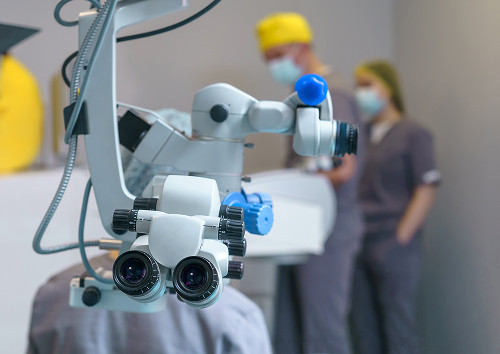
To rule out concomitant pathologies, our specialists examine the ocular structures using a slit lamp (biomicroscopy), measure intraocular pressure, and examine the fundus.
Individual correction selection
Based on the data obtained, an individual selection of optical aids is made. The doctor uses a trial frame and a special set of lenses, assessing not only the clarity of the image but also the patient's subjective comfort.


Frequently Asked Questions
What is hyperopia in simple terms?
How can I tell if I'm farsighted?
Can hyperopia be corrected without surgery?
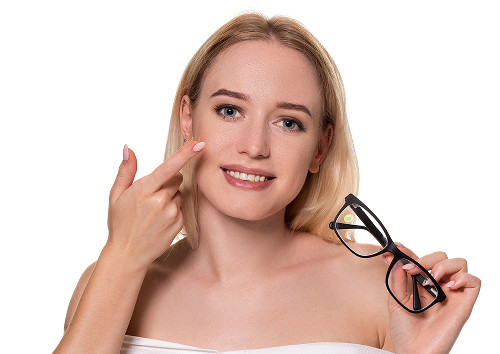
Yes, glasses or contact lenses can help in many cases. The corrective method is selected after diagnosis.
"In our practice, patients often seek help after prolonged visual fatigue. Therefore, we always begin with a comprehensive diagnosis: this helps not only confirm hyperopia but also select a truly convenient, safe, and predictable correction option," says an ophthalmologist at K31 Clinic.
Don't put off taking care of your vision. Take the first step toward clear and comfortable vision today—schedule a professional eyeglass fitting or comprehensive examination at the K31 Clinic.
References
- Register of Clinical Guidelines of the Ministry of Health of the Russian Federation — https://cr.minzdrav.gov.ru/
- Russian Medical Journal (RMJ) — https://www.rmj.ru/
- Ophthalmology Bulletin — https://www.mediasphera.ru/journals/vestnik-oftalmologii
- Ophthalmology Journal (Mediasphera) — https://www.mediasphera.ru/journals/oftalmologiya
- Eyepress Ophthalmologist Portal — https://eyepress.ru/
- eLIBRARY.RU — Scientific Library — https://www.elibrary.ru/
Our doctors




















This award is given to clinics with the highest ratings according to user ratings, a large number of requests from this site, and in the absence of critical violations.

This award is given to clinics with the highest ratings according to user ratings. It means that the place is known, loved, and definitely worth visiting.

The ProDoctors portal collected 500 thousand reviews, compiled a rating of doctors based on them and awarded the best. We are proud that our doctors are among those awarded.
Make an appointment at a convenient time on the nearest date
Price
Other services

Appointment to the doctor
Reviews





















Our clinics


Application “Personal Account K+31”












What is hyperopia?
Hyperopia is a structural feature of the eye in which the focal point of light rays, after passing through the cornea and lens, is located not on the retina itself, but in a plane behind it. Because of this optical defect, a person sees objects as blurry. Farsightedness does not always mean perfect vision at distances. In moderate and severe cases of this pathology, vision deteriorates at all distances.
How is an image formed in farsightedness?
Normally, the length of the eyeball is coordinated with the refractive power of its optical media, allowing rays to converge precisely on the retina. In hyperopia, the longitudinal axis of the eye is too short, or the cornea is excessively flat. To compensate for this defect, the eye is forced to constantly tense its internal muscle, which changes the curvature of the lens.
Degrees of hyperopia and their characteristics
Ophthalmologists divide the pathology into three main degrees: