
Autorefractometry with a small pupil: how computer refractometry is performed and what the results show
Autorefractometry with a small pupil is a modern method that helps screen vision and obtain objective data on eye health. The test is used during an initial consultation, before vision correction, and when complaints of decreased vision clarity are present. The method is based on an automatic analysis of how the eye refracts light. A special device, an autorefractometer, is used for this purpose.
Today, computer refractometry is considered one of the main stages of initial vision diagnostics. It helps the doctor determine parameters that are important for further examination, assessing visual acuity, and choosing a correction method. However, autorefractometry itself does not replace a full doctor's appointment. The final conclusion is always made by an ophthalmologist, as the device data must be compared with the patient's complaints and the results of other studies.

specialists

equipment

treatment






When do we recommend autorefractometry?
Before Fitting Eyeglasses
Automatic refractometry is most often performed before the doctor begins fitting eyeglasses. This test helps determine initial vision parameters and understand the extent of refractive changes.
Even if the patient already wears glasses, these parameters can change over time. This is especially common with constant visual strain, computer work, and prolonged use of gadgets.
Before Fitting Contact Lenses
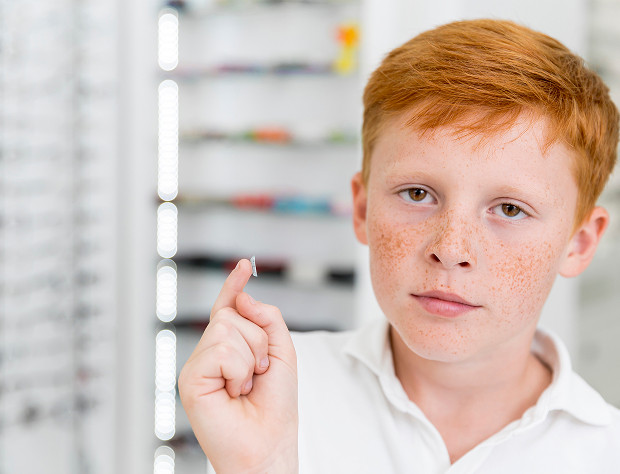
Before fitting contact lenses, it is important to undergo a comprehensive vision examination. Computerized refractometry helps determine the parameters the doctor considers when selecting lenses.
The final fitting is always made after the examination. Only an ophthalmologist can evaluate the condition of the ocular surface, tear film characteristics, and lens tolerance.

For complaints of blurred vision, eye fatigue, and eyestrain
We recommend this test for patients who notice decreased image clarity, rapid eye fatigue, and difficulty working at close range for long periods.
Autorefractometry with a small pupil is especially useful in the following situations:
- Those undergoing eyeglass fitting
- Patients choosing contact lenses
- People complaining of blurred vision
- For eyestrain and eyestrain
- For an initial refractive error assessment at an ophthalmologist appointment
How the procedure is performed in our practice
Preparing for the Exam
If you wear contact lenses, remove them several hours before your appointment.
Before the exam, tell your doctor about any eye diseases, injuries, and previous vision correction procedures.
Main Stages of Autorefractometry
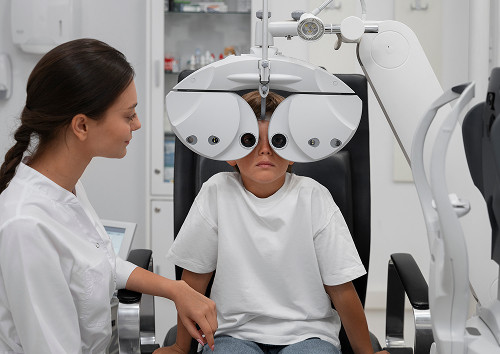
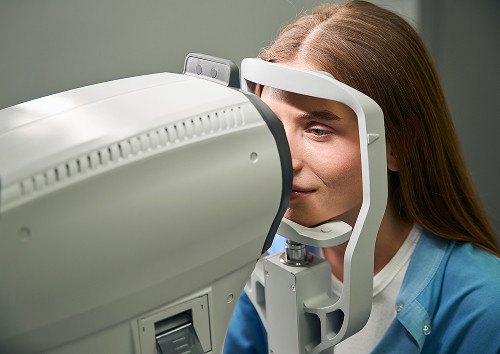
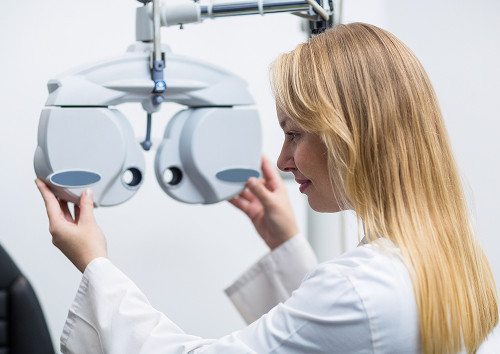
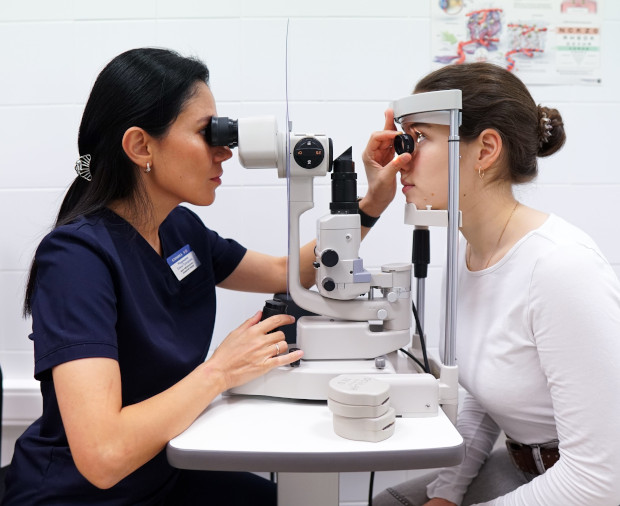
First, the patient is positioned in front of the device. The doctor helps to correctly position the patient's head. Then, the patient must look inside the device at a special light mark.
After this, the autorefractometer performs a series of automatic measurements. The procedure takes a few seconds for each eye. At the end of the examination, the doctor receives a printout with the main parameters.
At this stage, the following are assessed:
- Visual acuity
- Refraction characteristics
- Presence of astigmatism
- Signs of myopia or hyperopia
- Indicators related to accommodation
How long does the appointment take?
Autorefractometry takes a few minutes. If a comprehensive vision diagnosis is being performed, the appointment will take longer. This depends on the scope of the examination and the additional tests performed.
General information
What the results show and how we interpret them
Nearsightedness, farsightedness, and astigmatism
The main goal of the test is to determine how the eye focuses images. Based on the results, the doctor can diagnose nearsightedness, farsightedness, and astigmatism.
The degree of impairment and possible correction parameters are also assessed. However, it is important to understand that the device printout itself is not a ready-made prescription.
Why the results may differ
Sometimes the test result differs from the patient's perceptions. This is most often associated with eye strain, fatigue, accommodation spasm, or individual vision characteristics.
These results can be affected by:
- Prolonged computer work
- Insufficient eye rest
- Severe visual strain
- Unstable accommodation
- Recent illnesses
Therefore, the results are always interpreted by a doctor. Only an ophthalmologist can determine how well the data corresponds to the clinical picture.
When additional diagnostic methods are needed
If the results raise questions or do not match the patient's complaints, the doctor may order a more extensive eye examination. In some cases, post-cycloplegia testing is required.
Additional diagnostics help more accurately determine latent hyperopia, severe accommodation spasm, and complex astigmatism.
Frequently Asked Questions
What does a small-pupil autorefractometry test reveal?
Is any preparation necessary before the test?
Is autorefractometry painful?
Can glasses be prescribed immediately based on the results?
References
- Clinical Guidelines of the Ministry of Health of the Russian Federation — https://cr.minzdrav.gov.ru/
- Russian Medical Journal, Ophthalmology Section — https://www.rmj.ru/articles/oftalmologiya/
- Eyepress — Specialized Ophthalmology Publications — https://eyepress.ru/
- MNTK "Microsurgery" Eyes" — https://www.mntk.ru/
- Medportal, medical encyclopedia — https://medportal.ru/enc/
Our doctors

















This award is given to clinics with the highest ratings according to user ratings, a large number of requests from this site, and in the absence of critical violations.

This award is given to clinics with the highest ratings according to user ratings. It means that the place is known, loved, and definitely worth visiting.

The ProDoctors portal collected 500 thousand reviews, compiled a rating of doctors based on them and awarded the best. We are proud that our doctors are among those awarded.
Make an appointment at a convenient time on the nearest date
Price
Other services

Appointment to the doctor
Reviews

Our clinics


Application “Personal Account K+31”











What is small pupil autorefractometry?
What is the method?
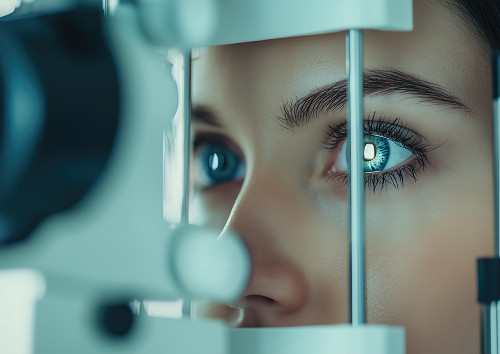
Autorefractometry is an objective method for assessing vision. During the procedure, the device measures how the eye focuses a beam of light. Based on this data, refraction of the eye is determined and indicators are calculated that may indicate nearsightedness, farsightedness, or astigmatism.
The examination is performed without eye contact. The patient sits in front of the device and looks at the image inside. At this point, the autorefractometer automatically records vision parameters and generates the results.
If the procedure is performed without medicated pupil dilation, the examination is performed under natural eye function. This option is called autorefractometry with a small pupil. This method allows for a quick assessment of vision without the use of eye drops or temporary impairment of near vision.
How does it differ from a pupillary dilation examination?
When examining through a small pupil, natural accommodation is preserved. The eye reacts to the image and attempts to focus independently.
If the doctor requires the most accurate data, a dilated pupil test is performed. Cycloplegic drops are used for this purpose. They temporarily relax the eye muscles and allow the true refraction of the eye to be determined without the influence of accommodation.
Despite this, small-pupil autorefractometry remains a popular technique. It is suitable for a quick vision check, takes minimal time, and requires no recovery period after the procedure.
"We begin our diagnostic workup with small-pupil autorefractometry because it is a quick and objective way to obtain initial vision data. We then compare the results with the patient's complaints and, if necessary, expand the examination. This allows us to achieve a more accurate and safe correction strategy."