Non-penetrating deep sclerectomy in Moscow: effective glaucoma treatment

With glaucoma, the danger isn't always immediately apparent. Vision may remain normal, there may be no pain, and few complaints. However, pressure inside the eye is already damaging the structures responsible for transmitting visual signals.

At K+31 in Moscow, we select glaucoma treatment strategies after diagnosis. If eye drops aren't effective enough, we may consider non-penetrating deep sclerectomy as a surgical option to reduce eye strain.

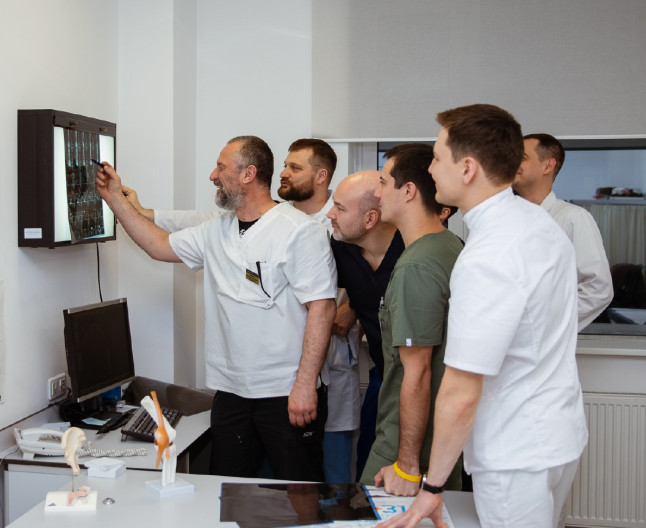
Best specialists
Best
specialists
Expert equipment
Expert
equipment
Advanced diagnostic treatment
Advanced diagnostic
treatment
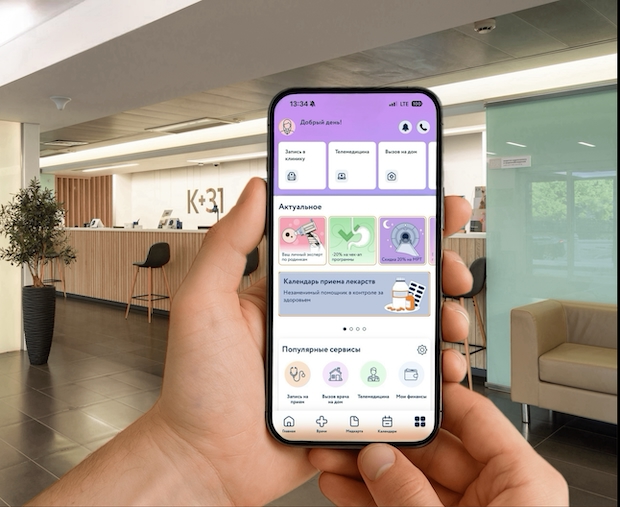
Download the application “Personal Account K+31”
Everything about your health in one click!
Subscribe to social networks K+31
To keep up to date with current offers and receive useful advice about your health.

What is non-penetrating deep sclerectomy?

This is a microsurgical procedure that improves the drainage of aqueous humor from the eye. The surgeon does not open the anterior chamber extensively, so this method is considered a more gentle procedure.

The main goal is to reduce intraocular pressure and relieve the strain on the optic nerves. The surgery does not restore lost visual functions, so monitoring remains mandatory.

Principle of the Method

Aqueous humor is constantly produced in the eye. Normally, it passes through the trabecular meshwork and drains through the drainage pathways. If the outflow of aqueous humor is impaired, pressure increases, and glaucoma can progress without pain or acute symptoms.

During the procedure, the ophthalmic surgeon creates a thin filtration zone in the sclera. The fluid begins to drain more gently, without a sharp pressure drop. After surgery, a filtration bleb may form—an area under the conjunctiva that helps distribute aqueous humor.

How does NDSE differ from other glaucoma surgeries?

It differs from penetrating procedures in that the anterior chamber of the eye is not fully opened. This allows for greater tissue stability, and early recovery is often more rapid. However, this method is not suitable for everyone. The decision depends on the severity of the disease, the level of pressure, the state of the anterior chamber angle, and previous surgeries.

Trabeculectomy is a penetrating procedure. It may be considered for more severe glaucoma, when a different level of pressure reduction is needed.

If the condition is stable, and the medications are well tolerated and maintain values ​​within the target range, drug therapy remains the mainstay of treatment. Stopping drops or changing the regimen is not permitted without a doctor's permission.

What is non-penetrating deep sclerectomy?

When we recommend NGSE

Surgery is considered after an in-person evaluation. We look at:

  • Pressure
  • Optic fibers
  • Visual field
  • Corneal thickness
  • Anterior chamber angle
  • Treatment tolerance

Sometimes the patient doesn't notice any deterioration, but the examination already shows negative dynamics. In this situation, glaucoma surgery helps keep the disease under control.

Main Indications

A reason for surgery arises when routine monitoring is no longer sufficient. For example, in open-angle glaucoma:

  • Pressure remains above the desired level
  • The optic nerve is changing
  • The visual field, according to perimetry data, gradually narrows

If drops do not provide a stable effect or cause significant discomfort, the doctor may suggest surgical treatment.

Glaucoma does not disappear after surgery. Therefore, the patient still needs examinations, pressure monitoring, and ongoing follow-up.

When this method may not be suitable

Not every case of glaucoma is suitable for microsurgical intervention. In cases of angle-closure, active inflammation, severe scarring, some secondary forms, and severe tissue changes, the doctor may choose another method. Sometimes, a more precise diagnosis or stabilization of the eye's condition is necessary first.

If eye drops are maintaining pressure well and examinations are stable, surgery may be premature. In advanced cases and very high pressure, a non-invasive approach is sometimes insufficient.

Therefore, glaucoma surgery is planned only after assessing the indications and risks.

General information

How the surgery is performed in our practice

We explain the patient's journey in advance. First, we confirm the diagnosis, then discuss the purpose of the procedure, restrictions, and post-operative care. The patient understands which examinations are needed and when follow-up appointments will be. This reduces anxiety and helps them adhere to recommendations.

Preparing for the procedure

A pre-operative examination is performed. The doctor also clarifies the patient's chronic illnesses, allergies, previous surgeries, and medications they are taking regularly. Preparation includes:

  • Ophthalmologist consultation
  • History collection
  • Tonometry
  • Pressure dynamics assessment
  • Optic nerve examination
  • Anterior chamber angle examination
  • Discussion of treatment, including eye drops
  • Preoperative regimen recommendations

After preparation, the patient receives instructions. If tests or consultations with other specialists are needed, the doctor explains the reason.

Main stages of the surgery

The procedure is performed under an operating microscope. The surgeon creates a superficial and deep scleral flap, working with the Schlemm's canal area and the trabeculodescemet membrane. A pathway is then created to facilitate the outflow of intraocular fluid.

After the procedure, the doctor evaluates the tightness and condition of the eye. If intraocular pressure is not reduced sufficiently, an additional laser procedure may sometimes be necessary.

Anesthesia and Procedure Duration

The procedure is performed under local anesthesia. The patient should not feel significant pain. However, they may feel light, touch, or irrigation. The duration depends on the anatomy of the eye and the extent of the procedure. Before the surgery, the doctor will explain what to expect.

After the procedure, the patient remains under observation. They can go home after receiving permission from the specialist. During the first 24 hours, the following are especially important:

  • Rest
  • Carefulness
  • Prescribed medications
How the surgery is performed in our practice

Advantages

The practical significance of the method is important to the patient: antiglaucoma surgery is needed to control pressure, not to promise a complete cure. Sclerectomy helps improve the outflow of intraocular fluid. This technique reduces the strain on the optic fibers.

This method is needed to monitor the process when the doctor sees medical reasons.

Less trauma

A gentle surgery means more careful handling of tissue. However, it is not without risks. With this technique, the anterior chamber of the eye is not opened widely. Therefore, early pressure fluctuations may be less pronounced. For the patient, this often means a more relaxed start to recovery.

Technique is of great importance. Microsurgery requires:

  • Precision
  • Good visualization
  • Experience

The small surgical area does not make the procedure simple. Therefore, we do not offer surgical interventions without compelling indications.

Intraocular Pressure Monitoring

The main goal of the surgery is to reduce intraocular pressure to a level that is less damaging to the optic fibers. The doctor evaluates:

  1. Stage
  2. Visual field
  3. Optic nerve head condition
  4. Response to medications and rate of progression

Therefore, glaucoma therapy is always tailored individually.

After surgery, intraocular pressure is monitored regularly. Fluctuations are possible. Therefore, early results are not considered final. Sometimes, adjustments to therapy or additional interventions are necessary. Such monitoring helps detect changes early.

A More Comfortable Recovery

After microsurgical intervention, the early period is often easier to tolerate than after more traumatic procedures. Patients adhere to restrictions, attend checkups, and use prescribed medications.

Avoid rubbing the eye, skipping appointments, and returning to activity prematurely.

Doctor's Quote:

"In our practice, non-penetrating deep sclerectomy is especially valuable when it is important to gently relieve pressure and maintain a gentle surgical approach. We emphasize accurate diagnosis, modern technology, and ongoing patient monitoring."

Advantages

Recovery after Non-Penetrating Deep Sclerectomy

Recovery after surgery begins in the first few hours. Moderate discomfort is possible. Other symptoms may include:

  • Tearing
  • Redness
  • Foreign body sensation
  • Temporary changes in visual acuity

Such symptoms are not always dangerous. However, they should be evaluated by a doctor. Follow-up visits are necessary even if you feel well.

Important in the First Days

In the early postoperative period, the patient administers the prescribed medications. A gentle regimen is also followed. The doctor checks the functioning of the filtration bag and evaluates the anterior chamber, tissue healing, and pressure. If necessary, the treatment regimen is adjusted.

During the first few days, it is especially important to:

  • Avoid touching your eyes with dirty hands
  • Use the drops strictly as prescribed
  • Avoid lifting heavy objects or bending sharply
  • Protect your eyes from dust, water, and injury
  • Attend your checkups on the scheduled dates

The timeframe for returning to work, driving, and screen time is discussed individually. The doctor will review the patient's blood pressure and occupation.

What should not be done after surgery

After the procedure, do not change your treatment on your own. Folk remedies are prohibited. Do not use eye washes based on someone else's advice. Stopping eye drops and returning to active sports early is prohibited. Use of saunas, swimming pools, heavy lifting, and work with dust are temporarily restricted.

Rehabilitation is safer when the patient doesn't rush their recovery. When they perceive the postoperative period as part of their treatment.

The duration of restrictions depends on the condition of the eye. Prescriptions are adjusted only after an examination.

When to see a doctor urgently

Contact the clinic before your scheduled appointment if you experience severe pain, sudden deterioration in vision, severe redness, nausea, increasing swelling, or heavy discharge.

You should not wait if your vision suddenly deteriorates or you experience severe photophobia. Self-medication after surgery is unacceptable.

Possible complications do not occur in every patient. The risk is reduced by:

  1. A careful examination
  2. Careful technique
  3. Monitoring

Complications cannot be completely ruled out. Therefore, we explain in advance which sensations are normal and which require immediate contact with a doctor.

Recovery after Non-Penetrating Deep Sclerectomy

Why patients choose us

At K+31, the treatment plan is built from the initial assessment to follow-up. We explain the diagnosis, treatment goals, and pressure-free recovery guidelines.

Experienced team of doctors

The ophthalmic surgeon evaluates the indications and explains the technique. The doctor is honest about the limitations of the method. If the data is insufficient, the diagnosis and risk profile are clarified first.

We consider the stage of the disease, the condition of the other eye, age, profession, and tolerance to medications. For some people, observation and drops are sufficient. For others, glaucoma surgery is a reasonable step.

Modern diagnostics and microsurgical approach

Before surgery, we use examinations that show more than just the pressure level.

  • Perimetry helps assess the visual field.
  • Gonioscopy - the anterior chamber angle
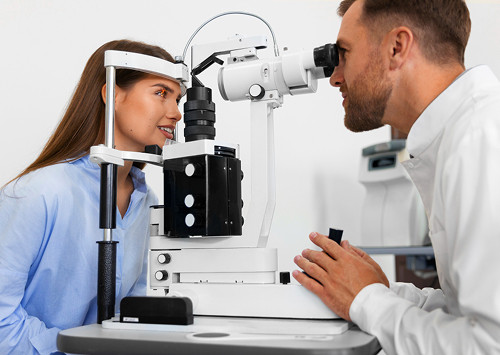
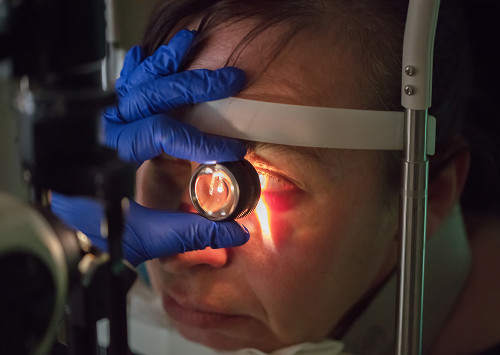
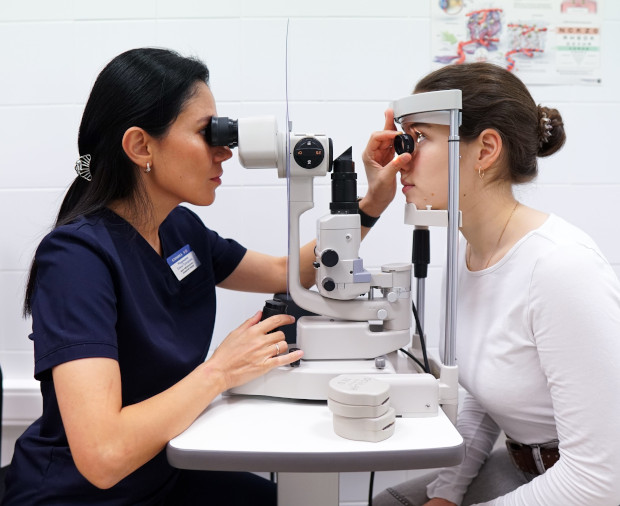
  • Slit lamp - eye structures

We examine the optic nerve and the dynamics of changes separately.

A brief comparison helps understand the differences, but does not replace a consultation.

Method Trauma When used Recovery features Doctor's comment
NDSE Low, without wide chamber opening Open-angle glaucoma, insufficient effect of drops Usually milder, but with mandatory examinations Suitable for pressure monitoring with correct readings
Trabeculectomy Higher, penetrating technique Severe and refractory cases May require more strict monitoring The choice depends on the stage and risks
Drug therapy Without surgical trauma Early stages, stable course Regular medications are required The effect depends on discipline and the response of the eye

Antiglaucoma surgery is chosen based on the condition of the eye. Sometimes it is safer to continue medications. Sometimes surgery offers a better chance of controlling the disease.

Postoperative Care

After the procedure, we monitor pressure, tissue healing, and filtration zone function. If indicators change, the doctor adjusts the plan. The patient receives instructions:

  1. Regime
  2. Drops
  3. Appointment times

Vision monitoring includes testing visual acuity, visual field, and optic nerve function. This approach helps monitor progress. This is especially important in chronic conditions: vision monitoring shows how stable eye function is.

Why patients choose us

Frequently Asked Questions

Before surgery, it's important for patients to understand what will be done and what to expect. The answers below are not intended to replace an in-person consultation.

Who is this surgery suitable for?

Surgery may be suitable for patients with confirmed open-angle glaucoma whose pressure is poorly controlled with medication. This method is also considered if there is progression based on examination data. A decision cannot be made based solely on diagnosis; an in-person examination is required.

How does non-penetrating DSE differ from trabeculectomy?

Non-penetrating DSE preserves greater stability of the anterior chamber. Penetrating surgery can be more effective in certain severe cases, but post-operative monitoring is usually more stringent. The choice depends on the type of disease, stage, and target pressure.

What is post-operative recovery like?

Post-operative recovery includes drops, examinations, and time restrictions. Rehabilitation during this period is supervised by a doctor. In the first few days, avoid rubbing the eye, lifting heavy objects, overheating, and skipping appointments. The doctor makes the final decision based on pressure dynamics and tissue condition.

If you need a consultation about glaucoma in Moscow, contact "K+31." We will conduct an examination, explain the results, and select a safe course of action.

When glaucoma surgery or surgical treatment is indicated, the doctor will explain in detail the preparation, procedure, and follow-up. The goal is to preserve visual function as much as the eye's condition allows.

References

Our doctors

Batalina Larisa Vladimirovna
Experience 33 years
Make an appointment
Batalina
Larisa Vladimirovna
Deputy chief physician for ophthalmology, ophthalmic surgeon, leading specialist in laser vision correction
Amiryan Anush Gamletovna
Experience 28 years
Make an appointment
Amiryan
Anush Gamletovna
Ophthalmic oncologist surgeon
Medvedev Yulia Alexandrovna
Experience 11 years
Make an appointment
Medvedev
Yulia Alexandrovna
Ophthalmologist, Laser Surgeon
Rudkovskaya Elena Mikhailovna
Experience 38 years
Make an appointment
Rudkovskaya
Elena Mikhailovna
Ophthalmologist
Tegniryadnova Ekaterina Valerievna
Experience 20 years
Make an appointment
Tegniryadnova
Ekaterina Valerievna
Ophthalmologist, laser surgeon
Fadeeva Victoria Anatolievna
Experience 13 years
Make an appointment
Fadeeva
Victoria Anatolievna
Doctor ophthalmologist, laser surgeon
Shamsetdinova Leila Tagirovna
Experience 17 years
Make an appointment
Shamsetdinova
Leila Tagirovna
Pediatric ophthalmologist
Gavrilina Polina Dmitrievna
Experience 8 years
Make an appointment
Gavrilina
Polina Dmitrievna
Ophthalmologist, laser surgeon
Kovaleva Olesya Alexandrovna
Experience 7 years
Make an appointment
Kovaleva
Olesya Alexandrovna
Ophthalmologist, laser surgeon
Sugonyaeva Olga Yurievna
Experience 26 years
Make an appointment
Sugonyaeva
Olga Yurievna
Ophthalmologist, laser surgeon
Khlunovskaya Anna Nikolaevna
Experience 8 years
Make an appointment
Khlunovskaya
Anna Nikolaevna
Ophthalmologist
Akhiyarova Azalia Azatovna
Experience 4 years
Make an appointment
Akhiyarova
Azalia Azatovna
Ophthalmologist
Putintseva Polina Andreevna
Experience 6 years
Make an appointment
Putintseva
Polina Andreevna
Ophthalmologist
Agafonova Oksana Sergeevna
Experience 21 year
Make an appointment
Agafonova
Oksana Sergeevna
Ophthalmologist, pediatric
Kazennov Alexey Nikolaevich
Experience 19 years
Make an appointment
Kazennov
Alexey Nikolaevich
Ophthalmologist, ophthalmologist-surgeon
Petrova Maria Grigorievna
Experience 14 years
Make an appointment
Petrova
Maria Grigorievna
Ophthalmologist, ophthalmic surgeon
Mazmanyan Karen Akopovich
Experience 28 years
Make an appointment
Mazmanyan
Karen Akopovich
Ophthalmic surgeon
Suchkova Valeria Alekseevna
Experience 6 years
Make an appointment
Suchkova
Valeria Alekseevna
Ophthalmologist
Khubieva Salima Aslanbievna
Experience 7 years
Make an appointment
Khubieva
Salima Aslanbievna
Ophthalmologist, laser surgeon
Rytik Nina Petrovna
Experience 15 years
Make an appointment
Rytik
Nina Petrovna
Ophthalmologist
All specialists
2GIS Award
2GIS Award

This award is given to clinics with the highest ratings according to user ratings, a large number of requests from this site, and in the absence of critical violations.

«Good place» according to Yandex

This award is given to clinics with the highest ratings according to user ratings. It means that the place is known, loved, and definitely worth visiting.

Our doctors are laureates of the ProDoctors Award

The ProDoctors portal collected 500 thousand reviews, compiled a rating of doctors based on them and awarded the best. We are proud that our doctors are among those awarded.

Make an appointment at a convenient time on the nearest date

Price

Reception
Price
Initial Ophthalmologist Appointment
from 6 450 ₽
Corneal Collagen Crosslinking with Ultraviolet Irradiation
from 52 500 ₽
Femtosecond Laser-Assisted Intrastromal Segment Implantation
from 200 000 ₽

Appointment to the doctor

Fill out the form, our managers will contact you within 15 minutes

Reviews

A great doctor, explained everything, checked everything. I highly recommend a high-level specialist.
13.06.2026
Matvey S.
Everything is fine, thanks again.
09.06.2026
Vladimir S.
A great doctor!!!
03.06.2026
Darya N.
We are patients of the clinic aged K+31, 89 and 85. The YUI clinic recommended cataract surgery. Of course, unrest and fears began. Everything started well and correctly with a call to Diana, the manager of the ophthalmology department. In a soft, calm voice, Diana explained everything clearly and provided real help and support when arranging medical services. Diana's attention and, one might say, her care have been very supportive. Diana made an appointment for YUI with a very good doctor Petrova Maria Grigoryevna. We are grateful to Diana for this attitude and her clear work!
01.06.2026
Yuriy B.
Tegniryadnova is an excellent doctor, we have done a lot of research, but the clinic is cold and uncomfortable
27.05.2026
Yu. Mir.
Excellent doctor Podshchekoldina E.N., Tegniryadnova E.V. the best ophthalmologist
It helped a lot with the eye! The dog implicitly touched the cornea, everything was done quickly and after a day the redness and swelling went away
21.05.2026
Anush D.
The best ophthalmology appointment of my life! He is very pleasant, polite and, importantly, a competent specialist. We conducted an inspection on various equipment, gave recommendations) I'm incredibly pleased, thank you!
19.05.2026
Elena T.
A wonderful, sensitive, very competent specialist, I was very pleased with the visit.
14.05.2026
Yuliya T.
Почему К+31?
К + 31 — full-cycle multidisciplinary medical centers, including the possibility of providing medical services of European quality level.
К + 31 — are leading doctors and diagnostics using high-tech equipment from world manufacturers (Karl Storz, Olympus, Siemens, Toshiba, Bausch&Lomb, Technolas, Zeiss, Topcon).
К + 31 — is ethical. The staff of K+31 clinics maintain open relationships with patients and partners. An individual approach to each patient is the basis of our service standards.
К + 31 — is modernity. On call 24/7: call center operators will answer your questions at any time and book you an appointment with doctors. Contact us by phone, through the feedback form on the website and Max.

Our clinics

Address K+31 Lobachevskogo 2

st. Lobachevskogo, 42/7

Contacts

+7 499 999-31-31

Opening hours

Mon-Fri: 08:00 – 21:00
Weekend: 09:00 – 19:00

Address K+31 on Lobachevskogo

st. Lobachevskogo, 42/4

Contacts

+7 499 999-31-31

Opening hours

Mon-Fri: 08:00 – 21:00
Weekend: 09:00 – 19:00

Address K+31 Petrovskie Vorota

1st Kolobovsky pereulok, 4

Contacts

+7 499 999-31-31

Opening hours

Mon-Fri: 08:00 – 21:00
Sat-Sun: 09:00 – 19:00

Address K+31 West

Orshanskaya, 16/2; Ak. Pavlova, 22

Contacts

+7 499 999-31-31

Opening hours

Mon-Fri: 08:00 – 21:00
Sat-Sun: 09:00 – 18:00
K+31 on Lobachevskogo
Didn't find the service you were looking for?

Экстренная помощь