
Visometry: what is it and how is visual acuity tested?
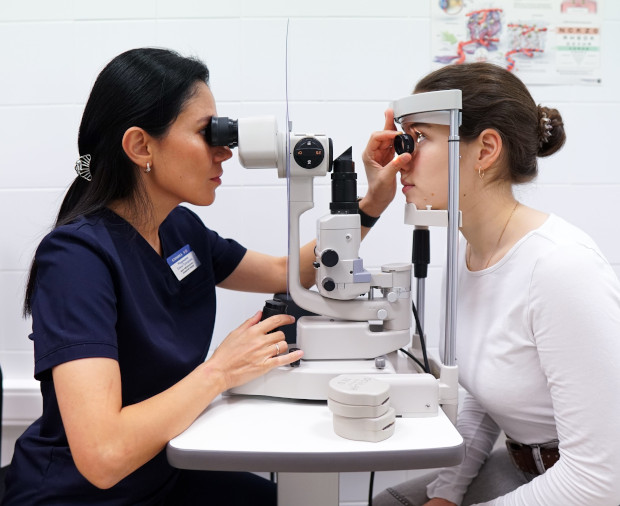
At our clinic, we care for your eye health every day and help you maintain clear vision for years to come. A basic visual acuity test allows us to quickly detect even the slightest changes and prevent the development of pathologies.
This procedure is officially called visometry in medicine, and it is the first step to proper treatment. We perform it quickly, comfortably, and with maximum accuracy for each patient.
Many people put off visiting a doctor, fearing complex or lengthy medical procedures. However, a timely vision diagnosis is completely painless and comfortable. We explain each step in simple language so you feel confident and at ease. As a result, you get a clear understanding of your eye health in a single visit.

specialists

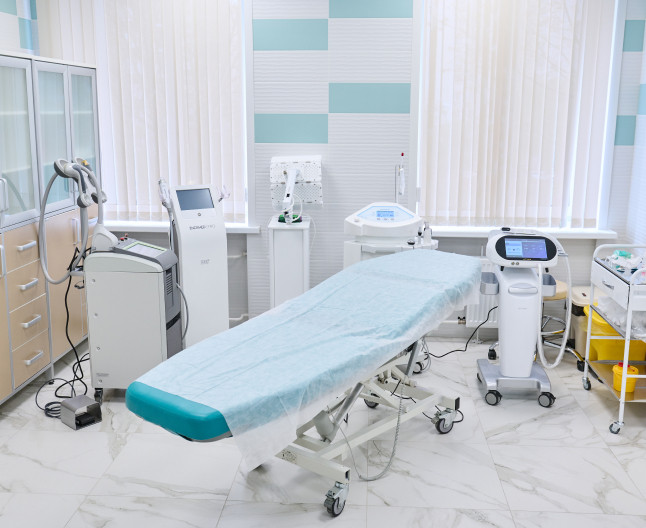
equipment

treatment



When we recommend the procedure
There are certain situations when a visit to a specialist absolutely cannot be postponed. We always emphasize the importance of promptly seeking medical attention if any discomfort is felt. Below is a list of situations when visometry is especially necessary.
- If you complain of decreased near or far vision clarity
- Before starting to select glasses or other corrective measures
- To monitor current indicators over time during treatment
- As part of a routine preventive examination
These recommendations help maintain reliable eye health. We are always ready to conduct an examination and answer any questions that arise.
Complaints of deteriorating vision
If you're having trouble seeing text on your phone or license plates, it's a clear reason to see a doctor. Decreased clarity may indicate developing myopia or other changes.
In such cases, a visual acuity test helps document current readings. The sooner we identify the problem, the easier it will be to resolve.
Selection of glasses and contact lenses
Choosing the right vision enhancement is impossible without accurate data. We determine the required prescription based on strict medical standards. Properly fitted contact lenses will ensure comfort and safety during daily wear. We do not recommend purchasing lenses based on online tests, as this may yield inaccurate results.
Preventive examination
Even in the absence of complaints, regular vision screenings are essential for adults and children. The eye muscles can adapt to minor changes, concealing the problem from the patient.
Prevention allows for the detection of such hidden defects at the earliest stages. This is especially important for people who spend a lot of time at the computer.
How is visometry performed?
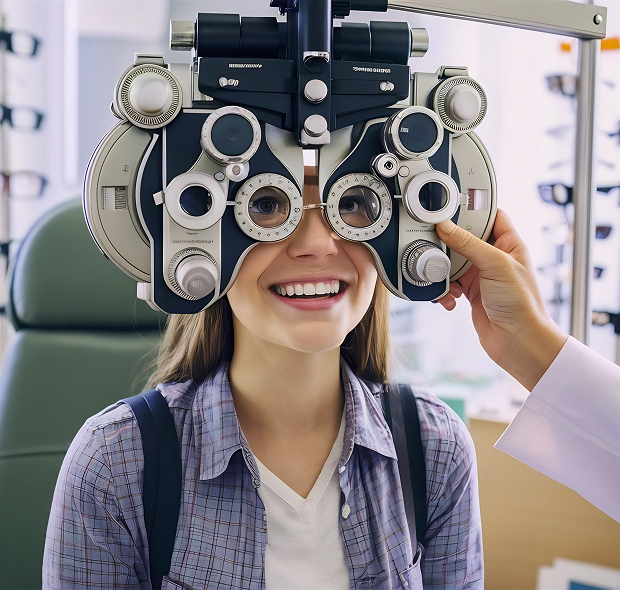
First, we evaluate your ability to see without any aids. The patient sits at a certain distance from the screen with symbols and covers one eye at a time with a special shield.
This basic visual acuity test reveals the natural state of your optical system. The results are recorded separately for the right and left eyes.
Test with correction
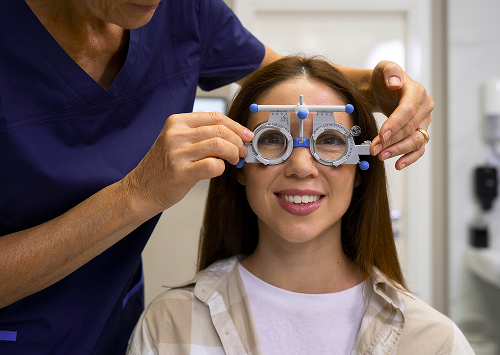
If any deviations are detected, we place the patient in a trial frame. Lenses with different refractive powers are inserted into it, one by one. The doctor changes the lenses until visual acuity reaches its maximum value. This determines the degree of assistance needed for your eyes.
Sivtsev chart and Orlova chart
In our work, we use tools that have been proven for decades. The standard Sivtsev chart with letters of varying sizes is used to diagnose adult patients.
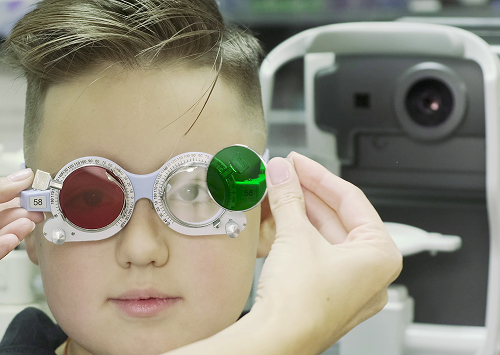
For children who cannot yet read, the Orlova chart with clear pictures is used. Both tools provide extremely accurate and reliable clinical data.
General information
What the test results show
These numbers reflect your eyes' true ability to distinguish details. A score of 1.0 is considered normal, meaning 100% vision.
If the result is lower, we analyze the reasons for this decrease in detail. This could be:
- Farsightedness
- Spasm of accommodation
- Other functional disorders
When additional examinations are needed
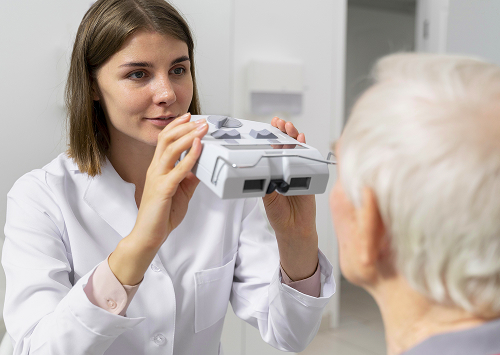
Sometimes basic tests are not enough to make a definitive diagnosis. For example, if a patient is suspected of having astigmatism or a lazy eye (amblyopia).
In such cases, we prescribe a comprehensive set of procedures. This ensures that no hidden pathologies are overlooked.
FAQ
What does visometry show?
Is the procedure painful?
Do I need to prepare for my appointment?
Is this method suitable for children?

Clinical Guidelines of the Ministry of Health of the Russian Federation — https://cr.minzdrav.gov.ru/
Ministry of Health of the Russian Federation — https://minzdrav.gov.ru/
Russian Medical Journal — https://www.rmj.ru/
CyberLeninka — https://cyberleninka.ru/
eLIBRARY - https://www.elibrary.ru/
EyePress / ophthalmological portal - https://eyepress.ru/
Our doctors
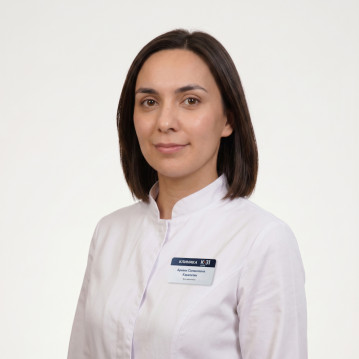



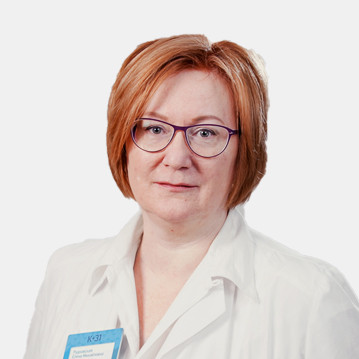

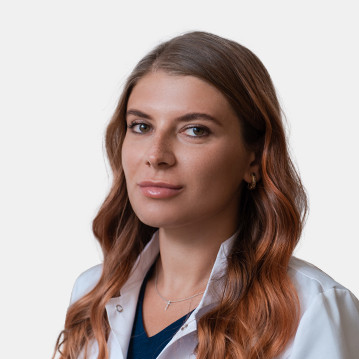
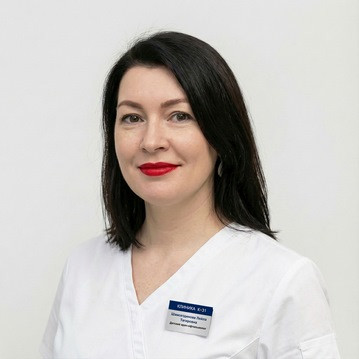

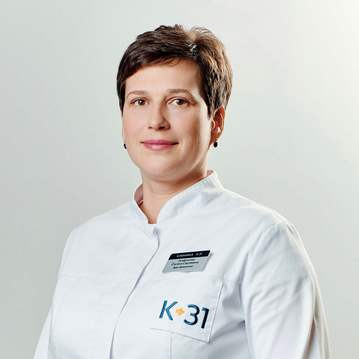
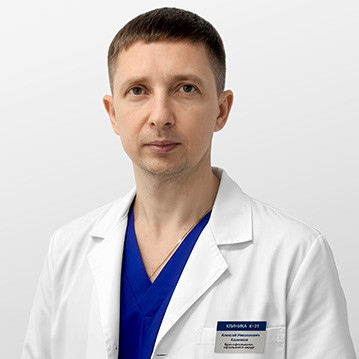

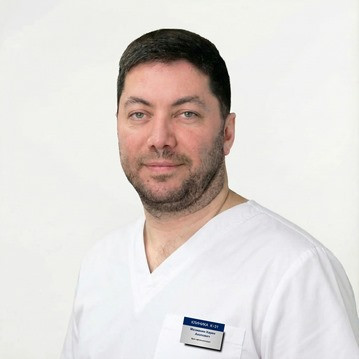
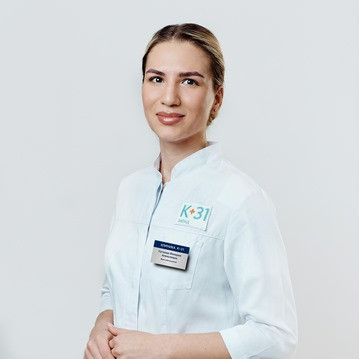

This award is given to clinics with the highest ratings according to user ratings, a large number of requests from this site, and in the absence of critical violations.

This award is given to clinics with the highest ratings according to user ratings. It means that the place is known, loved, and definitely worth visiting.

The ProDoctors portal collected 500 thousand reviews, compiled a rating of doctors based on them and awarded the best. We are proud that our doctors are among those awarded.
Make an appointment at a convenient time on the nearest date
Price
Other services

Appointment to the doctor
Reviews
Our clinics

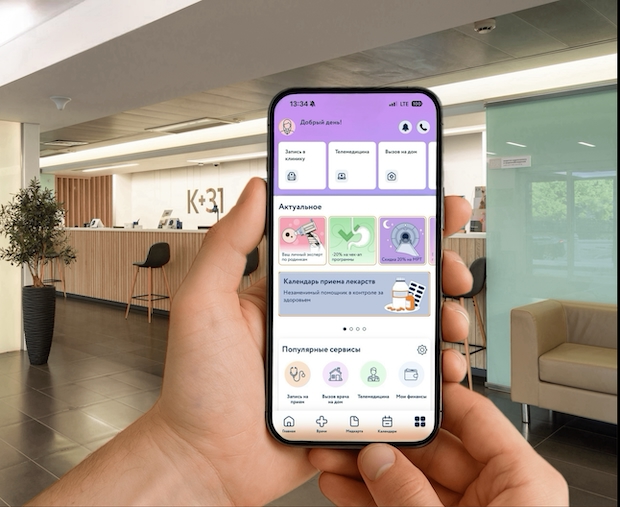
Application “Personal Account K+31”









What is visometry and why is it needed?
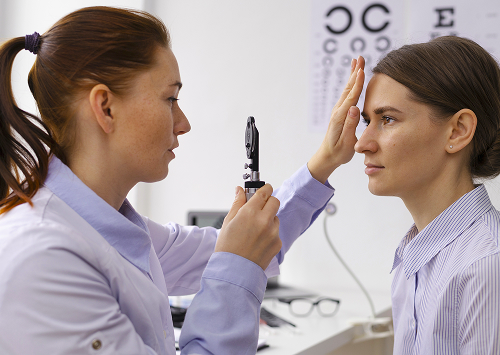
This is a standardized medical procedure. It objectively evaluates how well your visual function functions at different distances. This vision test is necessary to identify deviations from the physiological norm. This method provides the doctor with initial information about the health of the optical system.
Regular ophthalmological examinations allow us to monitor changes over time. We use the data obtained to determine whether the patient currently requires vision correction.
This is a basic procedure, without which it is impossible to develop a sound plan for further action. Based on this data, we decide whether a more comprehensive examination is necessary.