Convergent Strabismus (Esotropia): Causes, Symptoms, and Correction Methods

Convergent strabismus is visible by the position of the eyes: one or both eyes deviate toward the nose. But esotropia is not only an external symptom. It can impair binocular vision, lead to amblyopia, double vision, or persistent eyestrain. Therefore, strabismus correction begins not with choosing a method, but with diagnosing the cause and angle of deviation.

Best specialists
Best
specialists
Expert equipment
Expert
equipment
Advanced diagnostic treatment
Advanced diagnostic
treatment
Download the application “Personal Account K+31”
Everything about your health in one click!
Subscribe to social networks K+31
To keep up to date with current offers and receive useful advice about your health.
What is this?

What is this?

Convergent strabismus is a form of strabismus in which the visual axis of one eye shifts inward, toward the nose. The medical term is esotropia. This disorder occurs in children and adults, can be constant or intermittent, and is associated with refraction, oculomotor muscle function, and binocular function.

An ophthalmologist evaluates the severity of the squint angle, as well as the presence of hyperopia, astigmatism, amblyopia, diplopia, and impaired stereoacuity. This information is important for choosing treatment options.

Why does esotropia develop?

Why does esotropia develop?

In Children

In children, esotropia is often associated with farsightedness. With hyperopia, the child strains accommodation to see more clearly, and this can exacerbate the convergent deviation. This is how accommodative strabismus develops. Heredity, prematurity, interocular differences, and amblyopia also play a role.

In Adults

In adults, convergent strabismus can persist from childhood or develop after injury, vascular disorders, neurological diseases, or surgery. If strabismus develops suddenly, especially with double vision and a sharp deterioration in vision, an urgent consultation with an ophthalmologist is necessary.

How does convergent strabismus manifest itself?
How does convergent strabismus manifest itself?

Main Symptoms

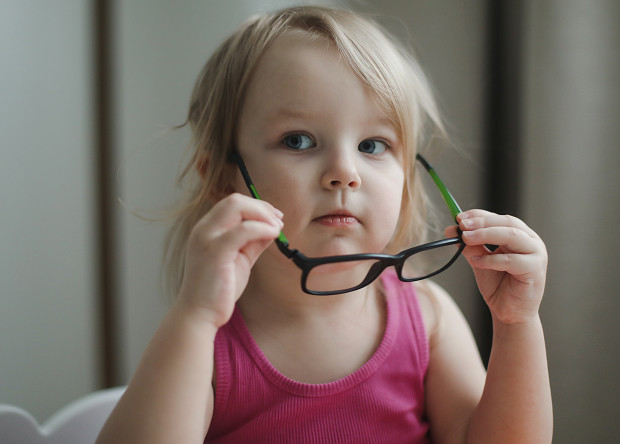
The main sign is a noticeable retraction of the eye toward the nose. In children, this can be seen in photographs, when tired, ill, or trying to look at an object up close. Adults are more likely to experience double vision, headaches, eye strain, and a feeling of unstable vision.

The Dangers of Without Treatment

Without strabismus treatment, a child's binocular vision may be impaired and the risk of amblyopia may increase. The brain suppresses the image from the deviating eye to prevent double vision. The longer the eye is deprived of full function, the more difficult it is to restore function.

In adults, persistent esotropia interferes with reading, driving, screen time, and spatial orientation. Therefore, strabismus treatment is important not only for appearance but also for visual function.

General information

How We Diagnose

Initial Ophthalmological Examination

The ophthalmological examination begins with an assessment of the eye position, complaints, and medical history. The doctor determines when the convergent strabismus developed, whether it is constant or intermittent, and whether there is any trauma, double vision, or neurological symptoms.

Visual Acuity and Refraction Test

The doctor checks the visual acuity of each eye and refraction. In children, a dilated pupil test is often required to accurately assess hyperopia and astigmatism. Without this, glasses selection may be inaccurate.

Measuring the Angle of Deviation

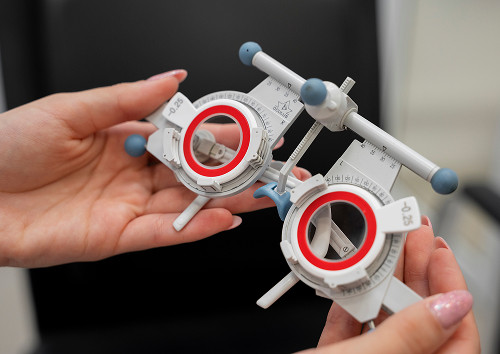
The angle of strabismus is measured using special tests and prisms. This helps determine the severity of the deviation and how the eye position changes when looking at distance and near. Data is needed to select a correction and assess its progress.

Stereoscopic Vision Assessment

Binocular vision, stereo vision, and the ability to fuse images are assessed separately. If functions are impaired, cosmetic correction alone is insufficient. It is important to understand how the visual system functions as a whole.

How We Diagnose

Correction and Treatment Methods

Now let's look at the main methods for solving this problem.

Eyeglasses and Contact Lenses

Eyeglasses are often the first step if there is a refractive error or hyperopia. Properly selected vision correction can reduce the deviation in the accommodative form. Contact lenses are considered on an individual basis, most often in adolescents and adults.

Hardware Treatment, Pleoptics, and Orthoptics

Hardware treatment, pleoptics, and orthoptics are used according to indications. They help train visual connections, support the weak eye, and develop binocular functions. Occlusion may be prescribed for amblyopia, but the regimen is determined by the doctor.

Surgical correction according to indications

Surgical correction is considered for persistent deviations, when glasses and functional methods fail to achieve the desired eye position. The surgery affects the extraocular muscles. The decision is made after diagnosing strabismus, taking into account age, angle, and visual function.

Methods for Correcting Convergent Strabismus

Method When used What it provides
Glasses or contact lenses For refractive errors, hyperopia Help reduce eye deviation and improve focus
Hardware treatment, pleoptics, orthoptics For impaired binocular functions Trains visual connections and helps in Comprehensive correction
Surgical correction For persistent deviations, as indicated Helps align the eyes

"In our practice, early diagnosis yields the best results: when we understand the cause of convergent strabismus, we can choose a truly effective solution rather than a standard one. We begin with an examination, evaluate binocular vision, and offer a personalized correction plan—from glasses and hardware techniques to surgical intervention as indicated." — ophthalmologist

Correction and Treatment Methods

When to see a doctor

Signs that require urgent attention

You should make an appointment with an ophthalmologist if your eye position has changed or if you experience visual complaints. It's especially important not to delay an examination in children.

  • The eye noticeably shifts toward the nose
  • Double vision appears
  • One eye tires quickly
  • Vision deteriorates when reading or working close
  • A child's eye position noticeably changes in a photo

A sudden change in strabismus in an adult, an injury, a severe headache, weakness, or speech impairment requires urgent eye care.

Why is early diagnosis especially important in children?

Pediatric ophthalmology works with the developing visual system. If amblyopia develops over a long period of time, vision restoration is more difficult. Early correction of strabismus helps preserve more functional abilities.

When to see a doctor

Our Advantages

At K+31, we assess not only eye position but also refraction, binocular vision, strabismus angle, amblyopia, and the state of the visual system.

Individual Correction Plan

The plan is developed after an examination. One patient needs glasses, another requires hardware treatment and orthoptics, and a third requires a consultation on surgical correction.

Working with Children and Adults

We consider the patient's age, complaints, visual stress, and psychological comfort. We explain to parents the purpose of each stage and how to monitor the results.

Clear Recommendations After the Appointment

After the examination, the patient receives a clear plan: what was checked, which methods are appropriate, when follow-up is needed, and which symptoms require urgent attention.

Our Advantages

How to understand which method is right for you

The method is chosen based on diagnosis, not on the eye's appearance. For accommodative strabismus, glasses may be a key step. For amblyopia, it's important to engage the weaker eye. With a persistently wide angle, surgery is sometimes considered. The same diagnosis of esotropia is treated differently in different patients.

We explain to the patient or parents the objectives of each step. Glasses help focusing, occlusion addresses amblyopia, orthoptics and pleoptics train visual functions, and surgical correction affects eye alignment. This analysis makes treatment understandable and reduces anxiety.

Control after the start of correction

After selecting glasses or a hardware program, it's important to have a follow-up appointment. The doctor evaluates whether the angle of squint has decreased, whether the eye is contributing more effectively to vision, and whether fatigue has increased. Monitoring is especially important in children because the visual system changes rapidly.

If surgical correction is prescribed, monitoring continues after the surgery. It's important to evaluate eye position, binocular function, and the need for glasses, hardware training, or recalibration. Surgery can be an important step, but it doesn't always complete the entire process.

Frequently Asked Questions

Is it possible to correct convergent strabismus without surgery?

In many cases, correction is possible without surgery—with properly fitted glasses, contact lenses, hardware treatment, and orthoptic techniques. The treatment strategy depends on the cause, age, and severity of the deviation.

How does esotropia differ from regular strabismus?

Esotropia is the medical term for convergent strabismus, in which one or both eyes deviate toward the nose. The term "strabismus" is more general.

Why is convergent strabismus dangerous for a child?

Constant deviation of the eye can reduce the development of binocular vision and increase the risk of amblyopia. The earlier correction is started, the higher the chance of preserving visual function.

What is an ophthalmologist's examination like?

The doctor evaluates visual acuity, refraction, the angle of deviation of the eye, and binocular function, and, based on the results, determines further treatment.

Can nutrition affect strabismus?

Nutrition itself doesn't cause strabismus. However, if a child has deficiencies, general weakness, or vision problems associated with other disorders, this can hinder recovery. Therefore, we always look at the overall situation, not just the eye alignment.

Is strabismus likely to recur after surgery?

There is a risk, as with any treatment. To reduce it, it's important not just to align the eyes, but to understand the cause of the disorder, correct the vision, and continue monitoring after surgery. This usually results in more lasting results.

Do schoolwork and gadgets affect treatment?

Yes, visual strain can increase eye fatigue, especially if binocular vision is already impaired. This doesn't mean that using a phone or reading will ruin everything, but the schedule is indeed important. We usually recommend taking breaks and not overexerting the eyes.

How can I tell if my child's treatment is working?

We focus not only on the appearance of the eyes, but also on how the child sees with each eye, how well they use both eyes together, and whether the angle of deviation is decreasing. These changes are what indicate that the treatment is working.

Why you shouldn’t postpone your visit?

Don't delay a consultation with an ophthalmologist if your eye is moving toward your nose, your child is squinting, your adult complains of double vision, or your vision has worsened. Convergent strabismus requires an accurate diagnosis, not just waiting.

What you can get at your initial consultation

During your initial consultation at K+31, the doctor will assess your vision, refraction, angle of deviation, and risk of amblyopia, and explain correction options. This way, the patient receives a clear next step, rather than a set of general advice.
Why you shouldn’t postpone your visit?

References

Our doctors

Karapetyan Arevik Samvelovna
Experience 12 years
Make an appointment
Karapetyan
Arevik Samvelovna
Ophthalmologist, Laser Surgeon
Batalina Larisa Vladimirovna
Experience 33 years
Make an appointment
Batalina
Larisa Vladimirovna
Deputy chief physician for ophthalmology, ophthalmic surgeon, leading specialist in laser vision correction
Amiryan Anush Gamletovna
Experience 28 years
Make an appointment
Amiryan
Anush Gamletovna
Ophthalmic oncologist surgeon
Medvedev Yulia Alexandrovna
Experience 11 years
Make an appointment
Medvedev
Yulia Alexandrovna
Ophthalmologist, Laser Surgeon
Rudkovskaya Elena Mikhailovna
Experience 38 years
Make an appointment
Rudkovskaya
Elena Mikhailovna
Ophthalmologist
Tegniryadnova Ekaterina Valerievna
Experience 20 years
Make an appointment
Tegniryadnova
Ekaterina Valerievna
Ophthalmologist, laser surgeon
Fadeeva Victoria Anatolievna
Experience 13 years
Make an appointment
Fadeeva
Victoria Anatolievna
Doctor ophthalmologist, laser surgeon
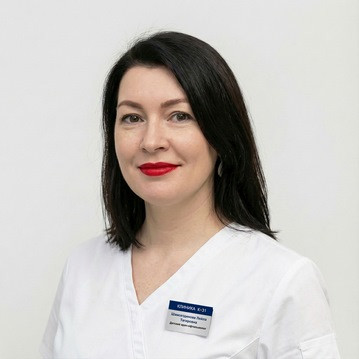
Shamsetdinova Leila Tagirovna
Experience 17 years
Make an appointment
Shamsetdinova
Leila Tagirovna
Pediatric ophthalmologist
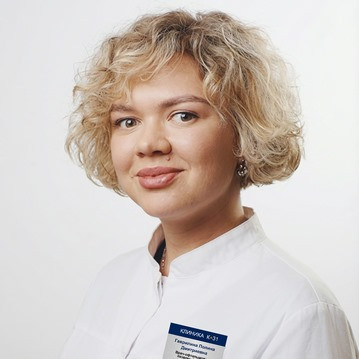
Gavrilina Polina Dmitrievna
Experience 8 years
Make an appointment
Gavrilina
Polina Dmitrievna
Ophthalmologist, laser surgeon
Sugonyaeva Olga Yurievna
Experience 26 years
Make an appointment
Sugonyaeva
Olga Yurievna
Ophthalmologist, laser surgeon
Khlunovskaya Anna Nikolaevna
Experience 8 years
Make an appointment
Khlunovskaya
Anna Nikolaevna
Ophthalmologist
Akhiyarova Azalia Azatovna
Experience 4 years
Make an appointment
Akhiyarova
Azalia Azatovna
Ophthalmologist
Putintseva Polina Andreevna
Experience 6 years
Make an appointment
Putintseva
Polina Andreevna
Ophthalmologist
Agafonova Oksana Sergeevna
Experience 21 year
Make an appointment
Agafonova
Oksana Sergeevna
Ophthalmologist, pediatric
Kazennov Alexey Nikolaevich
Experience 19 years
Make an appointment
Kazennov
Alexey Nikolaevich
Ophthalmologist, ophthalmologist-surgeon
Petrova Maria Grigorievna
Experience 14 years
Make an appointment
Petrova
Maria Grigorievna
Ophthalmologist, ophthalmic surgeon
Mazmanyan Karen Akopovich
Experience 28 years
Make an appointment
Mazmanyan
Karen Akopovich
Ophthalmic surgeon
Suchkova Valeria Alekseevna
Experience 6 years
Make an appointment
Suchkova
Valeria Alekseevna
Ophthalmologist
Khubieva Salima Aslanbievna
Experience 7 years
Make an appointment
Khubieva
Salima Aslanbievna
Ophthalmologist, laser surgeon
Rytik Nina Petrovna
Experience 15 years
Make an appointment
Rytik
Nina Petrovna
Ophthalmologist
All specialists
2GIS Award
2GIS Award

This award is given to clinics with the highest ratings according to user ratings, a large number of requests from this site, and in the absence of critical violations.

«Good place» according to Yandex

This award is given to clinics with the highest ratings according to user ratings. It means that the place is known, loved, and definitely worth visiting.

Our doctors are laureates of the ProDoctors Award

The ProDoctors portal collected 500 thousand reviews, compiled a rating of doctors based on them and awarded the best. We are proud that our doctors are among those awarded.

Make an appointment at a convenient time on the nearest date

Price

Reception
Price
Initial Ophthalmologist Appointment
from 6 450 ₽
Repeat Ophthalmologist Appointment
from 5 700 ₽

Other services

Laser vision correction Phacoemulsification of cataract with IOL implantation of any complexity Vitreoretinal surgeries of any complexity (vitrectomy) Laser photocoagulation of the retina during tears and degenerative changes in the retina Laser photocoagulation for diabetic retinopathy Intravitreal administration of Anti-VEGF drugs, hormonal implants Antiglaucomatous operations using various drains YAG laser dissection of the posterior capsule for secondary cataract Cataract treatment Treatment of glaucoma Retinal dystrophic changes Vitreous pathology Injury to the eye Post-traumatic and postoperative complications Myopia treatment Farsightedness Treatment of astigmatism Retinal disinsertion Non-contact laser procedure SMARTSURFACE Keratoplasty Femto SUPER LASIK Laser coagulation of the retina of the eye treatment on Ellex Integre Pro Scan Treatment of the retina with the Navilas laser system Femtolaser Cataract Removal Selection of children's night lenses Laser vision correction Clear Офтальмолог-онколог в Москве Treatment of keratoconus Laser coagulation of the retina Refractometry Retrobulbar injections Restoration of vision Lacrimal ducts Eye wash Synoptophore Forbis ESOM Pediatric ophthalmologist Ophthalmologist Glasses Biomicroscopy Night lenses Photo of an eye Eyelid suturing Selection of lenses Retinal laser Vision test Vitrectomy Vitrectomy Vitrectomy Eye pressure Ophthalmoscopy Fundus Gonioscopy Discision Orbitotomy Ophthalmodiagnostics OCT of the optic disc Keratoplasty Crystalline lens replacement Lacrimal duct Eye biometrics Angle of strabismus Lacrimal point IOL implantation Heterophoria Refraction Needling pillows Sclerectomy Micropulse laser Eyelid massage Intravitreal injections Iridoplasty Accommodation Bacterial culture Ophthalmology Cyclophotocoagulation Laser trabeculoplasty Laser stimulation Makdel Iridotomy Goniopuncture Corneal crosslinking Perimetry Pachymetry Angio-OCT Tubular test Color vision Convergence test Autofluorescence Eye mobility Corneal diagnostics Corneal transplant Skiascopy Strabismus Injection in the eye Tonometry Schirmer's test Trabeculotomy Diaphanoscopy Foreign body Foreign body Eyelid neoplasms Retinal tear Pterygium Chalazion Pneumatic retinopexy Glaucoma Ultrasound of the eye Eye biometrics Improving vision Cataract removal An attack of glaucoma Night lenses Eyelid ptosis Vision correction Angiography of the eye Retinoblastoma Laser coagulation PRK Orbital exenteration Evisceration of the eye Exophthalmometry PresbyLasik Removal of the lens Retinal thrombosis Nystagmus Lacrimal duct Eye removal Optic nerve Eyelash removal Neoplasms of the eyelids Myopia PRP therapy Autorefractometry Anti-VEGF Iris melanoma Glaucoma treatment Megalocornea Macular degeneration AMVO-01 Visotronik Amblyopia Accommodation Ametropia Cataract Lagophthalmos Anisometropia Asthenopia The optic nerve Dry eye syndrome Strabismus Aphakia Retinal coagulation Eyesore Blepharitis Eyelid spasm Blepharochalasis Blepharophimosis Myopia Vitrectomy Presbyopia Glaucoma Cataract Glaucoma Conjunctivitis Secondary cataract Dislocation of the lens Eversion of the eyelid Keratoconus Keratoglobus Keratitis Night blindness Ocular herpes Farsightedness Retinopathy Hypoplasia Eye strain Visual syndrome Coloboma Keratopathy Glaucoma Optic glioma Keratoconjunctivitis Cataract Dacryocystitis Color blindness Retinal dystrophy Flies Retinopathy Iritis Iridocyclitis Glaucoma Retinal dystrophy Phlegmon Uveitis Corneal dystrophy Retinitis Trachoma Accommodation spasm Retinoblastoma Retinopathy Refraction (Visual Impairments) Strabismus Dry eye Scleritis
Make an appointment

Appointment to the doctor

Fill out the form, our managers will contact you within 15 minutes

Reviews

I was lucky to get an appointment with ophthalmologist E. M. Rudkovskaya, a pleasant and responsive person, an excellent specialist who explains in detail all the subtleties of examinations and treatment. Thank you so much, Elena Mikhailovna!
28.07.2026
Nadezhda A.
The reception was held at the highest level. I liked everything. The doctor is simply the best ophthalmologist in Moscow. The communication was pleasant, I listened to everything, conducted research and made recommendations. I'll come back more than once.
28.07.2026
Andrey P.

About doctor:

Rytik Nina Petrovna

Very pleasant Dr. Shamsetdinova L.T.
25.07.2026
Viktoriya D.
Everything is fine. She conducted a number of studies, listened attentively, was very pleasant in communication, explained everything clearly. I am satisfied.
21.07.2026
Svetlana S,
A great professional doctor, responsive, thoughtful, positive, attentive to the patient.
18.07.2026
Aleksandr K.
I signed up for a check-up and accidentally got to Azalea Azatovna and I am very happy that I got to her! He is a very sensitive and attentive doctor, the operation to restore vision was excellent and easy, for which thank you very much! After the operation, I realize that I shouldn't have waited and feared so much, with such a professional in his field, nothing is scary!thank you very much!!!
16.07.2026
Irina S,
The reception was professional and unobtrusive. Additional examinations and diagnostics were carried out using modern equipment. During the consultation and examination, Polina Dmitrievna explained everything in detail and intelligibly, gave me clear recommendations, and answered all questions in detail. Polina Dmitrievna is a polite, attentive and simply amazing doctor. The clinic as a whole enjoys the atmosphere, responsiveness of the staff and the professionalism of the specialists.
11.07.2026
Nikolay K.
Rudkovskaya E.M. is an excellent doctor, if you need an ophthalmologist, I go to her. A very competent specialist. Explains everything by diagnosis. Comprehensively evaluates the condition, checking all the parameters.
11.07.2026
Vera S.
Wonderful doctor!
10.07.2026
Natalya P.
An excellent specialist. I am very pleased with the reception. Thanks to the doctor
08.07.2026
Svetlana U.
Почему К+31?
К + 31 — full-cycle multidisciplinary medical centers, including the possibility of providing medical services of European quality level.
К + 31 — are leading doctors and diagnostics using high-tech equipment from world manufacturers (Karl Storz, Olympus, Siemens, Toshiba, Bausch&Lomb, Technolas, Zeiss, Topcon).
К + 31 — is ethical. The staff of K+31 clinics maintain open relationships with patients and partners. An individual approach to each patient is the basis of our service standards.
К + 31 — is modernity. On call 24/7: call center operators will answer your questions at any time and book you an appointment with doctors. Contact us by phone, through the feedback form on the website and Max.

Our clinics

Address K+31 Lobachevskogo 2

st. Lobachevskogo, 42/7

Contacts

+7 499 999-31-31

Opening hours

Mon-Fri: 08:00 – 21:00
Weekend: 09:00 – 19:00

Address K+31 on Lobachevskogo

st. Lobachevskogo, 42/4

Contacts

+7 499 999-31-31

Opening hours

Mon-Fri: 08:00 – 21:00
Weekend: 09:00 – 19:00

Address K+31 Petrovskie Vorota

1st Kolobovsky pereulok, 4

Contacts

+7 499 999-31-31

Opening hours

Mon-Fri: 08:00 – 21:00
Sat-Sun: 09:00 – 19:00

Address K+31 West

Orshanskaya, 16/2; Ak. Pavlova, 22

Contacts

+7 499 999-31-31

Opening hours

Mon-Fri: 08:00 – 21:00
Sat-Sun: 09:00 – 18:00
K+31 on Lobachevskogo
Didn't find the service you were looking for?

Экстренная помощь