
Choroiditis (inflammation of the choroid): symptoms, diagnosis, and treatment
Between the sclera and the retina is the choroid, a membrane that nourishes the outer layers of the retina. When inflammation occurs, doctors speak of choroiditis.
A characteristic feature of this disease is that it rarely causes pain. More often, a person notices deteriorating vision, fog, or "floaters" and does not immediately associate it with a process inside the eye. However, without examination and treatment, there is a risk of visual acuity loss, sometimes permanent. Therefore, a seemingly harmless "fog" can sometimes conceal an illness that requires specialist attention.
In our practice, examinations for such complaints are structured to confirm choroidal inflammation, evaluate the fundus, and determine the cause. Below, we will discuss in detail the symptoms of choroiditis, modern diagnostics, and treatment approaches.

specialists

equipment

treatment






What is choroiditis and why shouldn't it be ignored?
The choroid is responsible for nourishing the retina, so its inflammation affects vision. The lesion disrupts the blood supply to adjacent layers, causing changes to form in this area. If the process affects the central part of the retina, the most valuable asset—clear central vision—is compromised. This is why choroidal inflammation should not be considered a harmless irritation.
The Role of the Choroid in Eye Function
The choroid acts as a kind of nutritional network for light-sensitive cells. It supplies oxygen and nutrients to the outer part of the retina, where the visual signal is generated. If this system fails, image quality deteriorates:
- Fog appears
- Distortions
- Dark areas
This close connection to the retina explains why inflammation in the choroid so quickly affects vision. Its rich blood supply makes this membrane vulnerable: pathogens from other organs can easily be introduced into it through the bloodstream.
How does choroiditis differ from uveitis and chorioretinitis?
These terms are closely related, but not identical. Uveitis is a broad term encompassing inflammation of the entire vascular tract of the eye. When only the choroid is affected, it is called choroiditis; if the retina is also inflamed, it is called chorioretinitis. This distinction is not important for terminology: an accurate diagnosis determines the examination and treatment plan.
| Condition | What is inflamed | Features |
|---|---|---|
| Choroiditis | Choroid | Often affects vision and requires investigation of the cause. |
| Chorioretinitis | Choroid and retina | Has a greater impact on vision. |
| Uveitis | The vascular tract as a whole | A broader concept with different forms |
The table simplifies the picture, but an accurate diagnosis is only made after an examination.
Why does choroiditis develop?
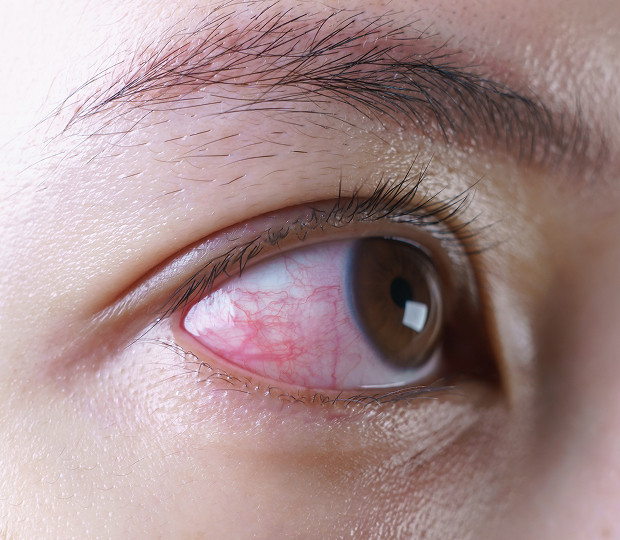
There are many causes, and they are divided into infectious and non-infectious. The choice of treatment directly depends on this, so finding the source is an essential part of the doctor's work.
Infectious Causes
Tuberculosis, toxoplasmosis, syphilis, and viral infections can trigger inflammation. The pathogen is carried into the mucosa by the bloodstream from a source in another organ, rather than entering from the outside.
In people with weakened immune systems, the list of possible pathogens is longer, and the course of the disease is more severe. Therefore, if an infectious cause is suspected, the examination extends beyond the eye. In some patients, a lesion in the choroid is the first sign of a hidden, systemic infection that the person was previously unaware of.
Non-infectious and Autoimmune Causes
The second large group is autoimmune diseases, in which the immune system attacks its own tissues. Sarcoidosis, rheumatic diseases, and a number of systemic conditions can cause inflammation of the posterior segment of the eye. Sometimes the choroid is involved as part of a general process in the body, and treatment is then carried out in collaboration with related specialists.

Some cases remain unexplained—these are called idiopathic. In these cases, treating the eye without controlling the underlying disease only provides temporary improvement.
Risk Factors and Patient Groups
The risk is higher in people with weakened immunity, chronic infections, and autoimmune diseases. Exacerbations of a general illness, hypothermia, and contact with a source of infection can trigger the disease. These circumstances alone do not guarantee the disease, but they do increase the risk. This is why, during relapses, the doctor carefully inquires about the patient's overall health.
A separate group are patients with a known autoimmune or infectious disease: their eyes should be examined at the first sign of complaints.
General information
Diagnosing Choroiditis in Our Practice
Diagnosing choroiditis answers two questions: is there active inflammation and what caused it. The diagnosis is based on a combination of data, not a single symptom, so the examination is usually multi-step.
Ophthalmologist Examination and Visual Acuity Test
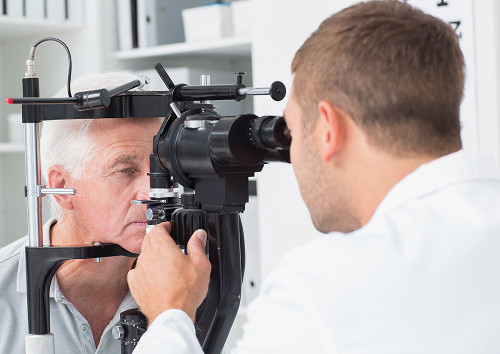
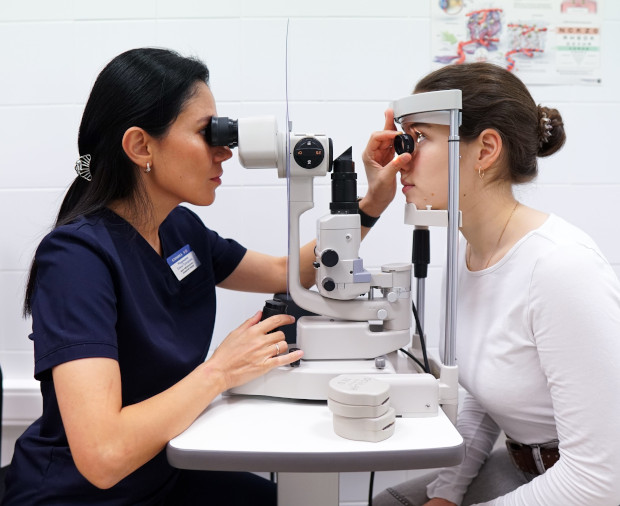
The appointment begins with a conversation and a visual acuity test. This alone shows the extent of damage to the central zone and how quickly the process is progressing. Next, the ophthalmologist moves on to examining the fundus with the pupil dilated. Dilating the pupil with drops allows access to the periphery of the retina, where the lesion is easily missed with normal vision.
Ophthalmoscopy, OCT, and Other Methods
Ophthalmoscopy allows one to visualize the lesion in the fundus, assessing its size, boundaries, and activity. OCT complements the picture with layer-by-layer scanning of the retina and reveals edema hidden from routine examination. If necessary, fluorescein angiography is used to evaluate the vessels, and ocular ultrasound is performed when the media are cloudy and the fundus is poorly visible. The set of methods is tailored to the specific case. Repeated images over time show whether the lesion is responding to treatment and help promptly change the treatment plan if there is no improvement.
Tests and Search for the Cause of Inflammation
To determine the nature of the process, tests for infections are prescribed and, if indicated, examinations by related specialists—a general practitioner, a phthisiatrician, or a rheumatologist. This examination determines the treatment type: targeted against the pathogen or anti-inflammatory.
Without an established cause, therapy risks remaining a symptomatic treatment. Therefore, sometimes the examination takes more than one visit, but the treatment is then precisely targeted.



Frequently Asked Questions
What is choroiditis in simple terms?
What symptoms should you be concerned about?
How is the diagnosis confirmed?
Can choroiditis be cured without adverse effects on vision?
References
- Clinical Guidelines of the Ministry of Health of the Russian Federation — https://cr.minzdrav.gov.ru/
- MSD Manuals, Russian version, section on uveitis — https://www.msdmanuals.com/ru/professional/zabolvaniya-glaz/uveit/uveit
- MSD Manuals, Russian version for patients — https://www.msdmanuals.com/ru/home/glaznye-rassrustva/uveit/uveit
- Russian Medical Journal — https://www.rmj.ru/search/?q=увеит
- EyePress — https://eyepress.ru/
Our doctors





















This award is given to clinics with the highest ratings according to user ratings, a large number of requests from this site, and in the absence of critical violations.

This award is given to clinics with the highest ratings according to user ratings. It means that the place is known, loved, and definitely worth visiting.

The ProDoctors portal collected 500 thousand reviews, compiled a rating of doctors based on them and awarded the best. We are proud that our doctors are among those awarded.
Make an appointment at a convenient time on the nearest date
Price
Other services

Appointment to the doctor
Reviews





Our clinics


Application “Personal Account K+31”












Symptoms of choroiditis: how to recognize the disease
Manifestations depend on the location and size of the lesion. Minor peripheral inflammation may remain unnoticed for a long time, while central inflammation manifests itself quickly and persistently.
Main Signs
Most common symptoms include decreased vision, fog, spots before the eyes, and image distortion. If the anterior segment is involved, eye pain and photophobia may also occur.
If the lesion is located in the center of the retina, visual acuity noticeably decreases, and straight lines may appear curved. Less commonly, a person may notice flashes or dark spots in the field of vision.
The nature of the complaints will tell the doctor the approximate location of the lesion, but this can only be confirmed by examining the fundus.
When to See an Ophthalmologist Urgently
Certain complaints require a prompt visit. Below are the ones that require immediate attention.
Any of these symptoms is a signal to see a specialist. If you suspect choroiditis, don't wait for the symptoms to resolve on their own: self-medication blurs the picture and complicates diagnosis. Randomly administering hormonal or antimicrobial medications is especially risky. Without a diagnosis, they don't so much cure as hide the symptoms, which in turn allows the disease to progress.