
Endophthalmitis (intraocular inflammation): symptoms, diagnosis, and treatment
Most eye inflammations remain on the surface and resolve almost without a trace. Endophthalmitis is an exception. This is the name given to severe intraocular inflammation. It affects the internal environment and membranes. Importantly, without prompt treatment, it threatens vision.
This condition is rare. However, each case is considered an emergency. Most often, the process is triggered by an infection that enters the eye after:
- Surgeries
- Trauma
- Injection
It develops rapidly. Therefore, the speed of treatment is very important. This is why doctors treat any suspicion with caution and do not delay examination.
Below, we explain how to recognize dangerous signs. We explain what an examination includes and how care is provided. The goal is not to scare you, but to show you why you shouldn't waste time with this type of inflammation.

specialists

equipment

treatment






Causes and risk factors

The pathogen enters the eye in two ways: from the outside, through a wound, or through the bloodstream from another site. The route of infection determines both the clinical picture and the treatment strategy. Let's examine the main variants separately.
Postoperative Endophthalmitis
The most common variant is postoperative endophthalmitis. The acute form develops in the first days after surgery, most often after cataract surgery. Less commonly, inflammation occurs weeks or months later and is milder—this delayed form is more difficult to recognize.
The main warning sign is one: if pain, redness, and cloudiness increase after surgery instead of improving, this cannot be attributed to "it's supposed to be that way."
Posttraumatic Endophthalmitis
Posttraumatic endophthalmitis occurs after a penetrating wound, especially if a foreign body is present. A contaminated wound is a direct gateway for germs.
The risk is significantly higher with injuries at home, at work, or in the garden.
The longer the wound is treated, the higher the likelihood of infection. Therefore, any penetrating eye injury requires examination, even if the pain seems bearable.

Additional risk factors and comorbid conditions
The endogenous route is a separate issue. This occurs when the pathogen is carried in the blood from a source in another organ. This is facilitated by:
- Decreased immunity
- Diabetes
- Long-term intravenous infusions
- Severe systemic infections
- Blood poisoning
In this case, both eyes are sometimes affected. However, both the eye itself and the primary source must be treated. It's less common, but requires no less attention.
A bloodborne infection can be suspected if it's associated with a recent serious illness, surgery on another organ, or prolonged hospitalization. In this case, the ophthalmologist works in collaboration with other specialists.
Symptoms that require an urgent ophthalmologist examination
Pain, redness, and swelling of the eye
The main complaints are eye pain, severe redness, and eyelid swelling. The pain is often deep and throbbing, and is poorly relieved by conventional painkillers.
The eye becomes painful, even with light touch. The eyelids may swell and be difficult to open. This pain usually does not subside with rest and is poorly responsive to conventional eye drops.
Sudden vision loss and photophobia
An alarming sign is vision loss that worsens literally by the hour. Photophobia is also present: bright light causes intense discomfort and a desire to close the eye. This combination can no longer be attributed to fatigue or lack of sleep. The rate of progression is more important than the severity: a slight morning haze can develop into a serious vision loss by evening.
Cloudiness, purulent discharge and floaters
Patients describe blurred vision, floaters and floaters, and sometimes purulent discharge. The picture seems to be covered with a veil, and the outlines of objects are lost. Any of these signs after surgery or injury is a signal for an immediate visit.
We have collected a short list of warning signs. In these cases, an examination is necessary without delay.
- Sharp pain in the eye
- Rapid decrease in vision
- Pronounced redness
- Photophobia
- Blurred vision
- Purulent discharge
None of the points should be “waited out” at home. The sooner a person sees a specialist, the greater the chance of saving vision.
General information
What's included in a consultation for suspected endophthalmitis?
Endophthalmitis is diagnosed on the same day as the initial consultation. Delays are unacceptable, so the examination is conducted quickly and to the point.
The goal is to confirm the intraocular process, assess its severity, and identify the causative agent. The more accurately and quickly this stage is completed, the more confident the doctor will be in choosing a treatment.
Complaints and examination
First, the doctor asks whether there has been any recent surgery, injury, or injection, how quickly the complaints are worsening, and what is bothering you most. Then, the doctor examines the eye under magnification, assessing the transparency of the eye membranes, the pupil's response, and the condition of the membranes. This information immediately directs the search.
Diagnostics on the same day
If the internal environment is cloudy and the fundus is not visible, ultrasound can be helpful—it reveals the condition of the vitreous and retina behind the cloudiness.
If necessary, a sample of intraocular fluid is taken for culture to determine the pathogen and its sensitivity to medications. This sampling is often combined with the start of treatment to avoid wasting time. Cultures do not always provide an immediate answer, so initial medications are selected based on the most likely pathogens, and the treatment plan is refined once the results are available.
Determining the treatment strategy
Based on the examination, the team decides what and how quickly to proceed. The strategy depends on the severity, visual acuity, and the suspected cause. The decision is made by the ophthalmologist, and it is made without delay. Often, the first step in providing assistance is taken immediately after the examination, without waiting for all the results.


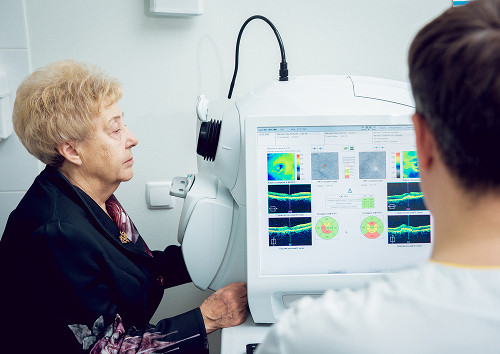


In this condition, the organization of care is as important as the medications themselves. We focus on speed and precision.
Urgent examination and rapid decision-making
We refer patients with complaints for an urgent examination without waiting in line. A quick decision on treatment in the first few hours directly impacts the outcome. We don't keep you waiting when every minute counts.
Modern diagnostics and a comprehensive approach
Magnification examination, ultrasound, and culture collection are available in one location. The team works in a coordinated manner, without wasting time sending materials between offices. This allows us to begin treatment on the same day.
A clear treatment plan and recovery monitoring
We explain what is happening to the eye, what steps are ahead, and why. After therapy begins, the patient remains under observation until stabilization, with progress monitored and prescriptions adjusted.
We discuss in advance what results can realistically be expected and within what timeframe, so that the patient has a clear picture rather than anxious uncertainty.
Frequently Asked Questions
Short answers are not a substitute for an examination, but they can help you understand why the condition requires attention.
What is endophthalmitis and why is it dangerous?
How can you tell if it's not ordinary conjunctivitis?
How is endophthalmitis treated?
Can vision be saved?
References
- Category of Clinical Guidelines of the Ministry of Health of the Russian Federation — https://cr.minzdrav.gov.ru/
- CyberLeninka, search for "endophthalmitis" — https://cyberleninka.ru/search?q=эндофталмит
- eLIBRARY, search for "endophthalmitis" — https://elibrary.ru/query_results.asp?query=эндофталмит
- Russian Medical Journal, search by topic "endophthalmitis" — https://www.rmj.ru/search/?q=эндофталмит
- Mediasphera, search by topic "endophthalmitis" — https://www.mediasphera.ru/search?text=эндофталмит
Our doctors





















This award is given to clinics with the highest ratings according to user ratings, a large number of requests from this site, and in the absence of critical violations.

This award is given to clinics with the highest ratings according to user ratings. It means that the place is known, loved, and definitely worth visiting.

The ProDoctors portal collected 500 thousand reviews, compiled a rating of doctors based on them and awarded the best. We are proud that our doctors are among those awarded.
Make an appointment at a convenient time on the nearest date
Price
Other services

Appointment to the doctor
Reviews
















Our clinics


Application “Personal Account K+31”












What is endophthalmitis and why is it dangerous?
The inside of the eye is filled with transparent fluids—the aqueous humor of the anterior chamber and the vitreous humor. Normally, this area is sterile and less protected from microbes than the surface. If a pathogen penetrates here, a vigorous purulent inflammation ensues. The transparent structures become cloudy. It is the damage to the internal fluids that distinguishes this condition from common diseases of the ocular surface.
How does endophthalmitis differ from a common eye inflammation?
Common conjunctivitis affects the mucous membrane and has little effect on vision. However, in this case, the deep structures that transmit light to the retina are affected. Therefore, an infection inside the eye manifests not as mild discomfort, but rather as a rapid decline in vision and severe pain.
A layer of pus is often visible behind the pupil. This is a sure sign that the infection has spread deeper. The eye may appear mildly red externally, while a vigorous process is already underway internally, and this deceptiveness is particularly insidious.
Why the first hours of endophthalmitis are important
Microbes in a confined space multiply rapidly, and internal tissues are extremely sensitive to inflammation. Toxins damage the retina, and every hour without treatment reduces the chance of a good outcome. Therefore, acute endophthalmitis is considered an emergency, requiring treatment on the day of presentation, and sometimes within a few hours.