
Ankle Fracture Treatment in Children: Symptoms, Diagnosis, and Recovery
Lower extremity injuries are one of the most common reasons for seeking pediatric trauma care. Children's activity, sports, and natural curiosity often lead to falls.
If your child has injured their foot, ankle fracture treatment in children should be promptly sought, as this area is responsible for foot mobility and weight-bearing capacity.

specialists

equipment

treatment






Why do ankle fractures occur?

The child's skeleton is designed to withstand significant loads, but certain force vectors can lead to critical injuries. The ankle joint bears the weight of the entire body, and when balance is lost, the ligaments cannot always hold the bones in a physiological position.
Everyday Falls and Ankle Sprains
Most injuries occur in everyday life: jumping awkwardly from a sofa, falling on level ground, or twisting an ankle on the sidewalk.
The foot suddenly turns sideways, putting pressure on the ankle, causing the bone to crack or break.
Sports Injuries
Football, roller skating, skateboarding, and gymnastics are activities with a high risk of injury. During sports, an ankle fracture is often accompanied by high-energy impact, which can cause a sprain or dislocation.
When is the risk of complications higher?
Children with poor nutrition or appetite are at risk. Children who eat little protein and calcium-rich foods, don't get enough vitamin D, and have weak bones. Any incorrect fall or twisting of the shin can cause microfractures. Complications can also arise when parents attempt to reset the joint themselves or force the child to walk through pain.
How to recognize a fracture: main symptoms
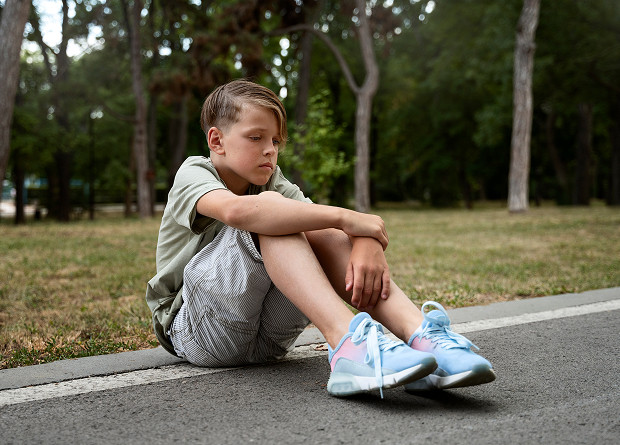
Everything is very individual. Some children experience severe leg pain, while others experience minor discomfort.
Swelling, Hematoma, and Limping
After a fall, swelling appears almost immediately. A hematoma (bruise) develops a few hours later.
The main symptom of a fracture is pain when putting weight on the leg. The child refuses to put weight on it, and if they try to walk, they limp.
How to Distinguish a Fracture from a Contusion or Sprain
Only a doctor can distinguish a contusion of the ankle from a fracture. However, there are still some differences between these injuries: with a contusion, the pain usually subsides after 15-20 minutes of rest, and the swelling does not interfere with toe movement. With a fracture, the pain is throbbing and intensifies with any movement.

When to see a doctor urgently
Parents should be vigilant. There are conditions in which delay is unacceptable, as it can lead to a disruption of the blood supply to the foot tissues.
Worrying Signs in a Child
You should immediately call an ambulance or take your child to the emergency room yourself if you observe:
- Visible joint deformity
- The skin on the foot has become pale or bluish
- The toes are cold to the touch
- The child complains of numbness or a "pins and needles" sensation
- An open wound has developed in the area of the injury
What to do before seeing a specialist
Before seeing a traumatologist-orthopedist, ensure the foot is completely rested. Do not remove shoes; if they are tight, cut the laces. Apply cold with a cloth for 10-15 minutes and immobilize the leg with whatever means are available (a cardboard splint or a bandage to the healthy leg) to prevent unnecessary movement.
General information
Diagnosing an Ankle Fracture
In a clinical setting, diagnosing an ankle fracture is a comprehensive process. The doctor must rule out damage to nerve endings and blood vessels.
Examination by a Traumatologist-Orthopedist
A pediatric traumatologist palpates, identifies points of maximum tenderness, and checks skin sensitivity. The doctor evaluates the range of passive motion and checks the pulse in the arteries of the foot.
X-rays and additional methods
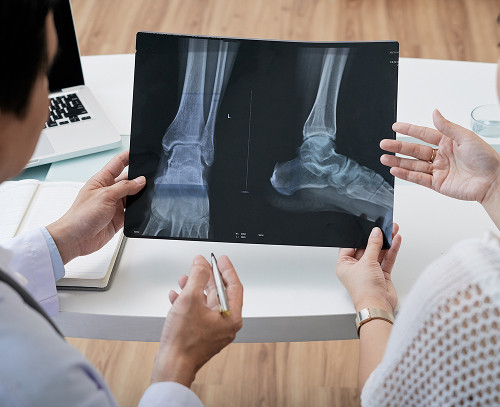
The gold standard for diagnosis is an X-ray of the ankle in two projections (AP and lateral). This image allows the doctor to see the fracture line and the presence of displaced fragments. In complex cases, if the growth plate is affected or intra-articular damage is suspected, a CT scan or MRI may be prescribed.
Why it's important not to self-diagnose
Self-medication is dangerous because it's impossible to see the dislocation without an X-ray. If the bones heal incorrectly, this will lead to joint deformity, early osteoarthritis, and persistent pain when walking. Only a professional diagnosis of an ankle fracture can guarantee the correct treatment.

It's impossible to 100% prevent an ankle fracture in a child, but you can minimize the risks.
Safety at home and during exercise
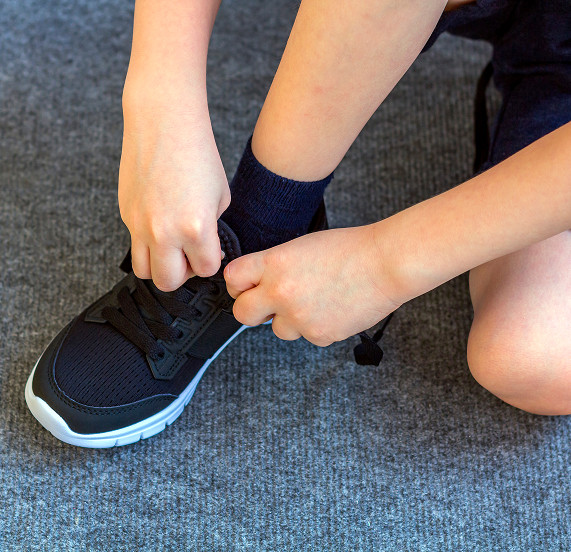
Wear high-quality athletic shoes with a rigid heel counter. When engaging in active sports, don't neglect protective equipment. Make sure the floor at home is free of slippery rugs and scattered toys.
Strengthening muscles and coordination
Regular balance exercises and strengthening the calf muscles make the joint more stable. Swimming and cycling are excellent for developing ligaments without overloading the bones.
"In my practice, the best results for children are achieved not by treatment itself, but by timely bracing, swelling control, and proper rehabilitation." The sooner parents consult a traumatologist, the easier it is to avoid complications," says a pediatric traumatologist and orthopedist.
Frequently Asked Questions
How long does it take for a child's ankle fracture to heal?
Can a cast be avoided?
When is surgery necessary?
How can I tell if it's not a bruise?



This award is given to clinics with the highest ratings according to user ratings, a large number of requests from this site, and in the absence of critical violations.

This award is given to clinics with the highest ratings according to user ratings. It means that the place is known, loved, and definitely worth visiting.

The ProDoctors portal collected 500 thousand reviews, compiled a rating of doctors based on them and awarded the best. We are proud that our doctors are among those awarded.
Make an appointment at a convenient time on the nearest date
Price
Other Services

Appointment to the doctor


















Our clinics


Application “Personal Account K+31”












What is a broken ankle in a child?
An ankle fracture is a disruption of the integrity of the bones of the ankle joint. Most often, the distal (lower) portions of the fibula and tibia are affected.
In children, such injuries occur with a sharp inward or outward rotation of the foot, as well as with a direct blow. An ankle fracture in a child requires special attention, as the bone structures are still in the process of formation.
How do childhood fractures differ from adult fractures?
The main difference is the presence of growth plates (epiphyseal plates). These are cartilaginous areas that allow the bone to lengthen. In children, bones are more elastic, and the periosteum (bone shell) is thick and well-perfused. Therefore, a "greenstick" fracture, where the bone breaks but is held in place by the periosteum, is common. However, damage to the growth plate in the ankle is more dangerous than in adults, as it can lead to slowed or deformed growth of the limb.
What types of fractures are there?
Doctors classify injuries based on the mechanism of injury and location:
The type of injury directly determines the treatment strategy for an ankle fracture in children.