Eye Hematoma in a Child: Treatment, First Aid, and When to See a Doctor

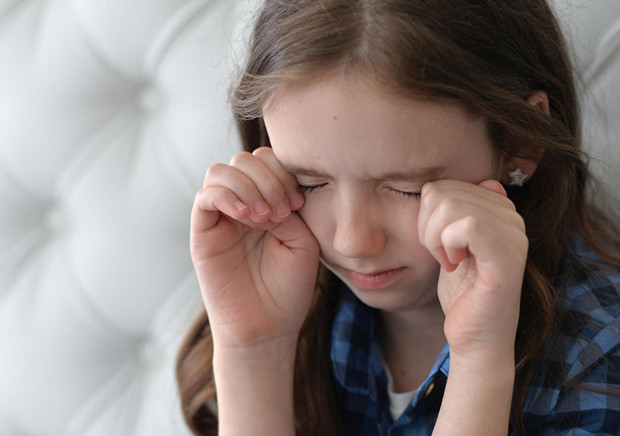
An eye injury is always alarming. Often, parents only see a bruise under their child's eye, but the exact extent of the injury cannot be determined by external signs. It is important to understand whether the damage involves the internal structures of the eye or just the soft tissues of the face.

In such a situation, patience is required. Proper first aid for an eye injury can help quickly reduce swelling and promptly detect signs of serious vision impairment.

Best specialists
Best
specialists
Expert equipment
Expert
equipment
Advanced diagnostic treatment
Advanced diagnostic
treatment
Sign up
Fill out the entry form on the page and we will call you back
Sign up Позвонить
Download the application “Personal Account K+31”
Everything about your health in one click!
Subscribe to social networks K+31
To keep up to date with current offers and receive useful advice about your health.

What is an eye hematoma and how is it different from a regular bruise?

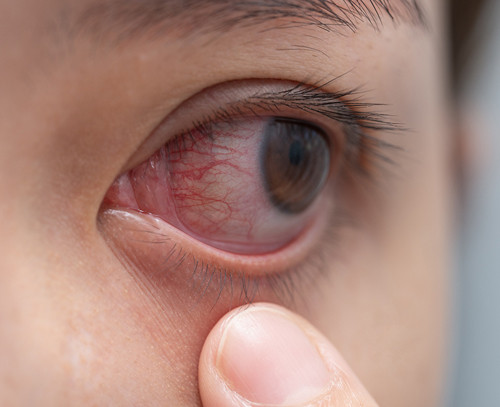
Most often, this is a bruise of the tissue around the eye. A hematoma of the eyelid appears, the skin changes color, the eyelid swells rapidly after the impact, and there may be tenderness to the touch. If the eyelid swelling increases rapidly after the impact, there's no need to wait at home. With a minor injury, the eyeball is not affected, and vision is unaffected.

However, if the bruise is accompanied by redness, tearing, photophobia, or the child complains of eye pain after the impact, the situation is no longer harmless. In this situation, the doctor must rule out hemorrhage, corneal abrasion, and other possible eye injuries.

A common bruise under the eye in a child is usually limited to the skin and subcutaneous tissue. A deeper eye injury may be accompanied by complaints of light sensitivity, pain when blinking, and blurred vision. This is why even a noticeable bruise cannot be assessed solely by color and size.

What is an eye hematoma and how is it different from a regular bruise?

Why do children develop a hematoma around the eye?

Why do children develop a hematoma around the eye?

Most often, this type of hematoma appears after a fall, a hit with a ball, a toy, or an elbow during play. The eyelids have a good blood supply, so even a moderate blow quickly causes swelling and a dark mark. Sometimes a bright bruise under a child's eye becomes more noticeable not immediately, but after several hours. A similar picture can occur after a blow to the forehead or bridge of the nose, when the blood shifts downward.

The danger lies elsewhere: a seemingly obvious bruise can sometimes conceal a bruised eye, an eye contusion, or an orbital injury in a child. With a strong blow, the following are possible:

  • Double vision
  • Nausea
  • Vomition
  • Pain when moving the eyes

These signs require an in-person assessment without waiting until the next day.

How to recognize minor injuries and dangerous symptoms

It's important for parents to quickly understand whether it's safe to observe at home or whether it's time to go to the doctor.

Signs that warrant home observation

Home observation is possible when the blow was moderate, the child calms down quickly, and complaints remain minimal. Typically, in such cases, only bruising and moderate swelling are present.

Symptom What it could mean What to do
Minor bruising and moderate swelling Mild soft tissue injury Cool, rest, observation
Pain only when touching the eyelid Bruising of tissues around the eye Monitor well-being
Child sees normally Deep injury is less likely. Reassess the condition after a few hours.

If the child opens the eye, looks at objects calmly, and does not complain of vision problems, the injury is most often superficial. In this situation, treatment is usually limited to cold and gentle application.

Symptoms that require urgent medical attention

Not every injury can be treated at home. There are symptoms that should not be ignored to prevent complications. Pay attention to this list of warning signs:

  • Severe pain or persistent aching when the eye hurts after a blow
  • Burst blood vessels, visible blood inside the eye
  • Blurred vision, visual impairment has begun
  • The eye cannot be opened independently due to pain
  • General condition has worsened, vomiting and lethargy have developed
  • Visible eyelid injury that masks a serious eye injury

If at least one of these conditions is met, the child needs to see a doctor. Typically, the initial consultation is conducted in the emergency room, but the final diagnosis should be made by an experienced pediatric ophthalmologist.

First Aid for a Blow to the Eye

First Aid for a Blow to the Eye

A simple and safe approach is important. First aid for a blow to the eye should not aggravate the injury.

What can be done in the first 10-15 minutes

Steps to follow in the first few minutes:

  • Calm the child
  • Apply a cold compress through a cloth for 10-15 minutes.
  • Avoid pressing on the eye.
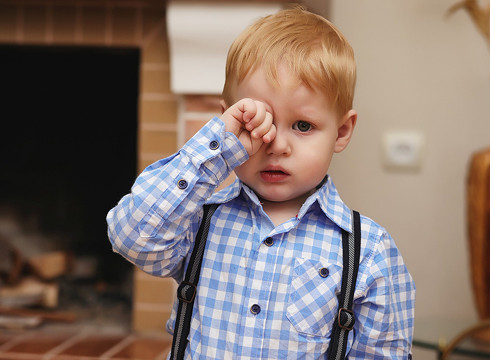
  • Avoid rubbing the affected area.
  • Ask the child to look at familiar objects.
  • Assess for pain, double vision, photophobia, and blurred vision.

Afterward, reassess the condition. If the pain subsides and the swelling does not increase, you can continue monitoring at home.

What not to do.

Mistakes are common in the first few hours. Therefore, the following prohibitions are stated separately:

  • Do not warm the eye
  • Do not massage the affected area
  • Do not attempt to relieve swelling with ointments or heat
  • Do not use medications at random
  • Do not cover the eye tightly with a bandage

The American Academy of Ophthalmology specifically recommends avoiding rubbing the eye. Pressure should also be avoided. Do not apply medications without a doctor's prescription. Parents often search for quick home remedies when searching for "eye hematoma treatment." However, such haste is dangerous in the case of an eye injury.

General information

How a Doctor Evaluates an Eye Injury in a Child

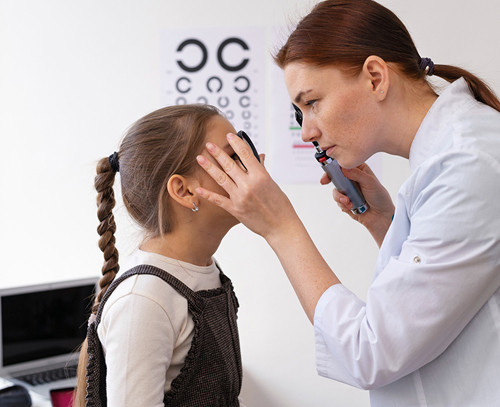
Even when only a bruise is visible externally, the doctor always examines not only the eyelid but the entire eye.

Collecting Complaints and Examining the Eyelid and Tissue Around the Eye

During the examination, the doctor will determine the specific injury, how quickly the swelling developed, whether there was vomiting, and whether the child can open the eye. If a child's eye contusion is suspected, the examination is especially thorough.

The doctor then assesses the size of the hematoma, examines the skin condition, pain, and the severity of the swelling. If severe swelling interferes with the examination, an urgent consultation with a specialist is necessary.

Vision Examination and Ruling Out Injuries

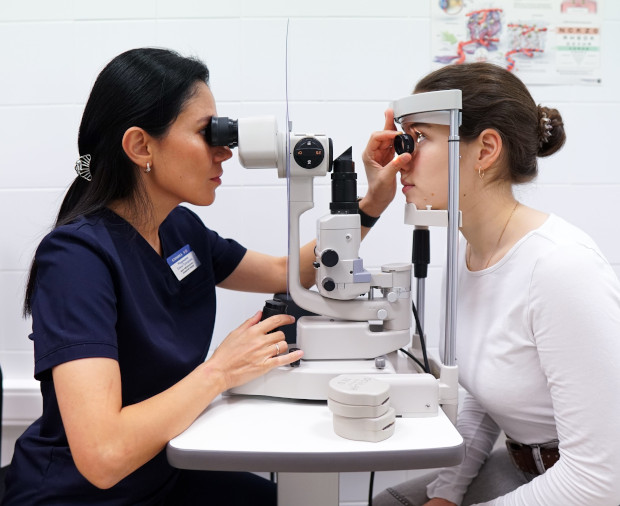
The next step is checking vision, pupil reactivity, and eye movements. If an abrasion or internal injury is suspected, the ophthalmologist will look for signs that are not visible to parents at home. This examination is especially important for eye pain, photophobia, and redness.

When additional diagnostics are prescribed

Additional diagnostics are not always necessary. They are prescribed in cases of a severe blow, suspected eye contusion, orbital fracture, or internal hematoma. If you complain of double vision and pain with eye movement, your doctor may order a CT scan of the orbits.

How a Doctor Evaluates an Eye Injury in a Child

Treatment of an Eye Hematoma in a Child

Parents are most often interested in how an eye hematoma will be treated in real-life situations. It's important to understand that treatment for an eye hematoma depends not on the color of the bruise, but on the depth of the injury.

Observation and Gentle Treatment

If only soft tissue is affected, rest is essential. It's also important to limit active play during the first few hours. It's important for the child to avoid rubbing the eye and not immediately return to contact activities. In many cases, this is the basic treatment for an eye hematoma in children.

Drug Treatment as Prescribed by a Doctor

If corneal damage or other eye injury is confirmed, the doctor will prescribe drops or ointment. You should not choose medications on your own. Parents expect a universal medication, but in pediatric ophthalmology, treatment is selected only after an in-person examination.

When a follow-up examination is required

A child should be seen again by a doctor if the swelling increases, the pain persists, and the bruise does not diminish but gets larger. A separate reason for a visit is persistent redness of the eye and any new vision complaints. At first, the injury may not appear too serious. Then the picture changes. And at such a time, it's best not to delay.

"In my experience, a childhood eye injury often looks like a normal bruise only in the first few hours. That's why it's important not to miss a hidden injury. Pain, photophobia, and any changes in vision are compelling reasons to take your child to a doctor without delay."

Treatment of an Eye Hematoma in a Child

How long does it take for an eye hematoma to heal in children?

Usually, an eye hematoma in a child begins to shrink within a few days and most often resolves within one to two weeks. Much depends on the severity of the blow and the depth of the tissue damage. If the swelling persists or new complaints arise, the child should be seen by a doctor again.

How long does it take for an eye hematoma to heal in children?

Possible Complications and Consequences of Injury

Most household bruises heal without incident. But even a significant eyelid hematoma does not rule out a deeper injury. A seemingly ordinary bruise can sometimes conceal an eye contusion, corneal abrasion, or internal hemorrhage. The main risk is not the color of the bruise, but the underlying injury that affects vision. Therefore, an eye contusion in a child with pain, photophobia, and vision complaints should not be ignored.

Possible Complications and Consequences of Injury

When you need to see a doctor urgently

When you need to see a doctor urgently

It's best not to rely on intuition here. Urgent care is needed for blood in the eye, pain, photophobia, double vision, vomiting, weakness, a deep eyelid wound, and any noticeable deterioration in vision. If swelling is severe and there are vision complaints, the question of when to see a doctor should be decided immediately: on the day of the injury, without waiting at home.

Frequently Asked Questions

What should you do immediately after a blow to a child's eye?

First, it's best to calm the child down, then apply a cold compress through a cloth for 10-15 minutes. Avoid applying pressure to the eye. Next, check for changes in vision. If swelling increases in the eye, there's bleeding, or severe pain, you can't wait at home—the child should be examined by a doctor.

When is a bruise under a child's eye dangerous?

It's dangerous if the bruise is accompanied by eye pain, photophobia, tearing, blood in the eye, or vision complaints. In this case, it may not just be a bruised eyelid.

How long does it take for a hematoma to heal in a child's eye?

If only soft tissue is affected, such an injury usually resolves within one to two weeks. However, the exact time frame always depends on the severity of the blow and the depth of the tissue damage.

Can a hematoma be treated at home?

Home observation is only appropriate for a mild injury without vision complaints. In all doubtful cases, treatment for an eye hematoma in children should be determined by a doctor. It's especially dangerous to independently decide whether to administer eye drops after a blow.

If the blow only affects soft tissue, cooling, rest, and routine observation are usually sufficient. However, as soon as pain, bleeding, photophobia, or vision complaints appear, delaying treatment is no longer an option. In such situations, the condition usually resolves more peacefully when parents take their child to a doctor promptly rather than attempting treatment themselves.

Our doctors

Polovnikova (Kroshkina) Valeria Alexandrovna
Experience 15 years
Make an appointment
Polovnikova (Kroshkina)
Valeria Alexandrovna
Traumatologist-orthopedist, pediatric
Lopatin Kirill Alexandrovich
Experience 16 years
Make an appointment
Lopatin
Kirill Alexandrovich
Traumatologist-orthopedist, pediatric
All specialists
2GIS Award
2GIS Award

This award is given to clinics with the highest ratings according to user ratings, a large number of requests from this site, and in the absence of critical violations.

«Good place» according to Yandex

This award is given to clinics with the highest ratings according to user ratings. It means that the place is known, loved, and definitely worth visiting.

Our doctors are laureates of the ProDoctors Award

The ProDoctors portal collected 500 thousand reviews, compiled a rating of doctors based on them and awarded the best. We are proud that our doctors are among those awarded.

Make an appointment at a convenient time on the nearest date

Price

Initial appointment with a pediatric traumatologist-orthopedist
from 8 950 ₽
Follow-up appointment with a pediatric traumatologist-orthopedist
from 7 950 ₽

Other Services

Treatment of hip sprain in a child Ankle injury in a child: treatment and recovery Calf muscle strain in children: symptoms and treatment Treatment of sprains in children: symptoms, first aid and recovery Treatment of pectoral muscle strain in children Treatment of muscle strains in children Hip sprain in children: symptoms and treatment Sprained Foot in Children: Treatment, Symptoms, First Aid, and Recovery Treatment of Achilles tendon strain in children First aid for bleeding in children: how to act quickly and safely Neck Strain in Children: Symptoms, Treatment, and Recovery Subungual hematoma in children: symptoms, first aid, and treatment in Moscow Wrist sprain in a child: symptoms, treatment, and recovery Subcutaneous hematoma in a child: symptoms, treatment, and first aid Treatment of the consequences of trauma in children Orthopedic rehabilitation for children in Moscow: recovery from injuries, surgeries, and musculoskeletal disorders Reduction of subluxations and dislocations in children Plaster cast application for a child: procedure, types of casts, and care Treatment for a child's shoulder sprain Soft tissue hematoma in a child: symptoms, first aid, and treatment Application of an immobilization bandage to children Swelling after a bruise in a child: treatment and first aid Hip contusion in a child: symptoms, first aid, and treatment Head injury in children: treatment, symptoms, and first aid Chest contusion in a child: symptoms, first aid, and treatment A child's post-injury hematoma: how to treat it, when to see a doctor, and what to do in the first few hours Hematoma on a child's arm: causes, symptoms, and treatment Treatment of a child's hand contusion: symptoms, first aid, and recovery Hematoma on a child's finger: first aid, treatment, and when to see a doctor Knee contusion in a child: treatment, symptoms, and first aid Bruised tailbone in a child: symptoms, first aid, and treatment in Moscow Elbow bruise in a child: symptoms, first aid and treatment Bruised leg in a child: symptoms, first aid and treatment Hematoma on a child's leg: causes, symptoms, first aid, and treatment Hematoma on a child's face: causes, first aid, and treatment in Moscow Treatment of groin strain in children Bruised nail in a child: treatment, first aid, symptoms, and recovery Hematoma on the head of a child: treatment and symptoms Bruised ribs in children: treatment, symptoms, and first aid Back strain in children: symptoms, treatment, and recovery Soft tissue contusion in a child: symptoms, first aid, and treatment Treatment of a joint contusion in a child in Moscow: symptoms, first aid, diagnosis, and recovery Bruised nose in a child: treatment, first aid, and when to see a doctor Bruised Foot in a Child: Symptoms, First Aid, and Treatment in Moscow Bruised finger in a child: treatment, first aid, and when to see a doctor Back injury in a child: symptoms, first aid, and treatment in Moscow Bruised arm in a child: symptoms, first aid, and treatment Shoulder contusion in a child: symptoms, first aid and treatment Bruised ribs in children: symptoms, treatment, and first aid Zygomatic bone fracture in a child: symptoms, diagnosis, treatment and recovery Emergency traumatology for children: urgent care for injuries
Make an appointment

Appointment to the doctor

Fill out the form, our managers will contact you within 15 minutes
Почему К+31?
К + 31 — full-cycle multidisciplinary medical centers, including the possibility of providing medical services of European quality level.
К + 31 — are leading doctors and diagnostics using high-tech equipment from world manufacturers (Karl Storz, Olympus, Siemens, Toshiba, Bausch&Lomb, Technolas, Zeiss, Topcon).
К + 31 — is ethical. The staff of K+31 clinics maintain open relationships with patients and partners. An individual approach to each patient is the basis of our service standards.
К + 31 — is modernity. On call 24/7: call center operators will answer your questions at any time and book you an appointment with doctors. Contact us by phone, through the feedback form on the website and Max.

Our clinics

Address K+31 on Lobachevskogo

st. Lobachevskogo, 42/4

Contacts

+7 499 999-31-31

Opening hours

Mon-Fri: 08:00 – 21:00
Weekend: 09:00 – 19:00
Didn't find the service you were looking for?

Экстренная помощь