
Treatment of sprains in children: symptoms, first aid and recovery
Ligament sprains are one of the most common reasons for visiting pediatric trauma centers. An active lifestyle, active games, and sports inevitably involve falls and awkward movements. Although children's bodies have a high capacity for regeneration, ligament damage requires a competent approach to avoid future complications.

specialists

equipment

treatment



Symptoms of a sprain in a child
Parents can recognize the injury using characteristic clinical signs, which usually appear immediately after the incident or within the first few hours.
Key signs: pain, swelling, limited motion
The first sign is sharp pain that occurs at the moment of injury. Depending on the severity of the injury, it can be short-lived or progressive. Swelling soon appears in the joint area, visually increasing the size of the limb and softening its contours. A hematoma (bruise) may form at the site of the rupture of the blood vessels supplying the ligaments. Pain and swelling always limit movement: the child may have difficulty bending their leg, turning their wrist, or fully extending their arm. A noticeable limp often occurs with lower extremity injuries.
How to distinguish a sprain from a bruise
Only a doctor can make a diagnosis. However, parents should also be aware of the differences in injury symptoms.
Here are the key differences:
| Symptom | Sprain | Bruise | Fracture |
|---|---|---|---|
| Pain Type | Sharp at the moment of injury, then aching. Intensifies with movement. | Dull, localized. The pain is most intense when pressing on the site of the injury. | Sharp, unbearable. Often does not subside even with complete rest. |
| Swelling and hematoma | Swelling increases rapidly. Bruising may appear within 24 hours. | Swelling is minor. Bruising (hematoma) appears almost immediately. | Severe, massive swelling. Limb deformity is often noticeable. |
| Putting weight on the leg/arm | Difficulty; the child spares the limb, but can step gently. | Usually preserved, although it causes discomfort. | Practically impossible due to severe pain. |
| Mobility | Limited due to pain and swelling of the joint. | Almost fully preserved. | Severely limited or, conversely, abnormal mobility is observed. |
| First Steps | Rest, cold, and immobilization of the joint with a bandage. | Cold and observation. | Immobility (splint) and urgent call for an ambulance. |
When to see a doctor urgently
You should see a doctor urgently if:
- The child cannot put weight on the foot or support themselves with the hand
- The joint is swollen or in an unnatural position
- The skin in the area of the injury is pale and cold
- There is a loss of sensation at the site of the injury
- The pain is preventing the child from sleeping
First aid for sprained ligaments
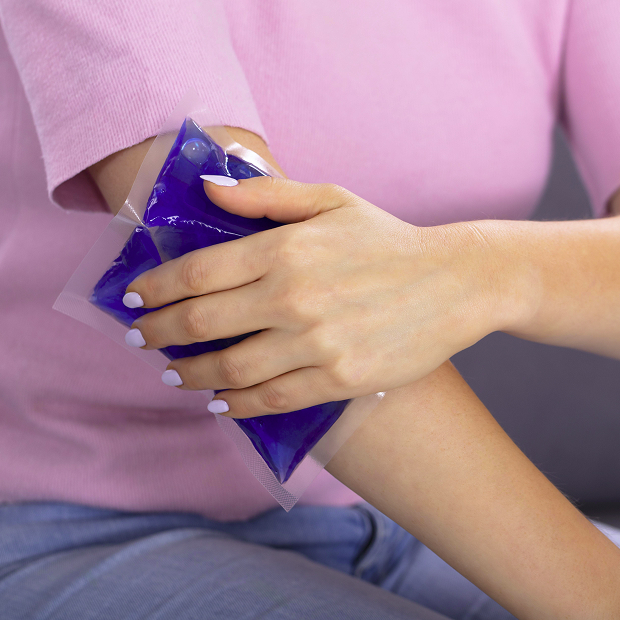
Providing timely first aid for a sprained ligament significantly reduces the subsequent recovery time and reduces the severity of pain. The main goal is to minimize the spread of swelling and prevent further damage to the fibers.
What to do in the first hours after an injury
To improve the child's condition, you should:
- Ensure rest: stop all play and exercise
- Apply cold or an ice pack wrapped in a cloth to the affected area
- Immobilize the joint: it should not move
- Elevate the injured limb above heart level
What not to do: heat, massage, or strain
There are a number of mistakes that can worsen tissue damage. It is strictly forbidden to use warming ointments, hot compresses, or take baths in the first 48-72 hours after the injury. Heat dilates blood vessels, increasing internal bleeding. Massage of the joint area is also prohibited, as this can increase inflammation. The child should not "work" the joint through pain, as this can increase the size of the rupture.
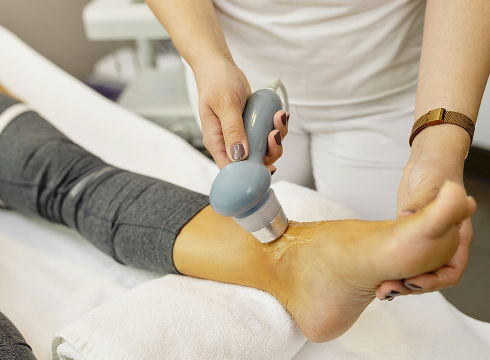
Diagnosing ligament sprains in children
Accurate diagnosis of ligament sprains is only possible in a medical facility, as it requires professional skills and, in some cases, specialized equipment.
Examination by a traumatologist-orthopedist
The examination is performed by a traumatologist-orthopedist. They assess the range of active and passive motion and check the joint stability. Tell the doctor how exactly your child sustained the injury: a fall, a twisted ankle, or an awkward jump.
When X-rays, ultrasound, or other tests are needed
To rule out more serious pathologies, instrumental tests are prescribed. X-rays are necessary to ensure that the child does not have a fracture or avulsion fracture (when a ligament is torn along with a bone fragment). If the bone structures are intact but severe swelling persists, an ultrasound may be performed. This allows visualization of the soft tissue, detection of fluid accumulation in the joint cavity, and assessment of the extent of fiber damage. In complex cases involving the knee or shoulder joints, an MRI may be required.
General information
How to treat a sprained ligament in a child
Treatment of sprained ligaments in children primarily involves pain relief. Only after the primary symptom has been relieved can joint function be restored.
Rest, Immobilization, and Limiting Load
First, ensure rest. Immobilizing the joint limits movement and helps the joint recover faster. Sometimes, the doctor recommends wearing a rigid brace or using crutches.
Medical Support as Prescribed by the Doctor
Pain is relieved with nonsteroidal anti-inflammatory drugs (NSAIDs). The dosage is determined by the doctor based on the child's age and weight.
Gels and ointments are also used. They reduce swelling and eliminate hematoma.
Rehabilitation: Physical therapy, restoration of mobility, and prevention of re-injury
Once swelling and pain subside, rehabilitation begins. This includes:
- Physical therapy: stretching exercises
- Physical therapy: magnetic therapy, UHF, or electrophoresis
- Balance exercises that help the body regain a sense of joint position
Rehabilitation under the supervision of a specialist is an opportunity to quickly reactivate the joint.


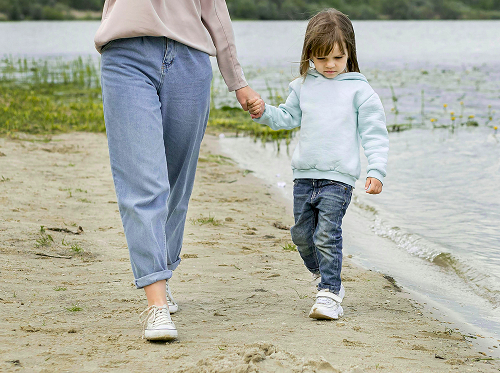
If muscles aren't exercised, childhood injuries can recur. To prevent this, we recommend:
- Warm up before exercise or active play
- Choose shoes with good ankle support and non-slip soles
- Gradually increase physical activity
- Properly organize the play area
Frequently asked questions
Can I use an elastic bandage permanently?
Is it necessary to get an X-ray every time a child falls?
Does swimming help with recovery?
Treating a sprain is a complex process. Give your child time; don't rush into returning to sports. Increased activity levels should only be achieved after completing physical therapy. Self-medication for children's health can be costly.



This award is given to clinics with the highest ratings according to user ratings, a large number of requests from this site, and in the absence of critical violations.

This award is given to clinics with the highest ratings according to user ratings. It means that the place is known, loved, and definitely worth visiting.

The ProDoctors portal collected 500 thousand reviews, compiled a rating of doctors based on them and awarded the best. We are proud that our doctors are among those awarded.
Make an appointment at a convenient time on the nearest date
Price
Other Services

Appointment to the doctor







Our clinics


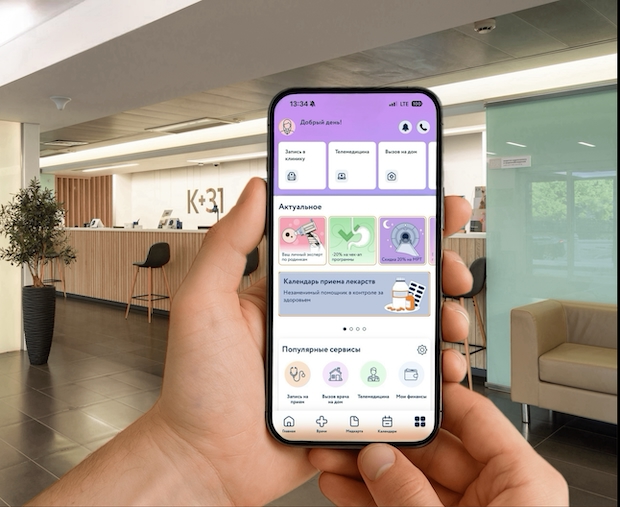
Application “Personal Account K+31”










What is a sprained ligament and why is it common in children?
A sprained ligament is a partial tear or damage to the connective tissue fibers that hold a joint stable and connect bones together. In children, ligaments and tendons are more elastic than in adults, but their skeletal system is not yet fully formed. Often, the ligaments are stronger than the bone growth plates, creating specific risks when subjected to mechanical stress.
Which ligaments are most often affected?
Depending on the type of activity, different parts of the musculoskeletal system are susceptible to injury. The ankle joint is considered the most vulnerable—damage occurs when the foot twists inward or outward while running or jumping.
The second most common joint for visits to the doctor is the knee joint, whose ligaments can be damaged by sudden turns of the body on a fixed foot or by direct blows.
Wrist sprains are common in young children, often caused by falling on an outstretched arm, or by injuring the elbow with a sudden jerk of the arm (known as "nurse's elbow").
Why a childhood injury may look "Minor" but require an examination
Children don't immediately feel pain. They continue to play even after the injury, despite the developing swelling. The insidiousness of this situation is that a common sprain can actually be a case of epiphysiolysis—damage to the bone's growth plate.
If you don't seek medical attention promptly, this injury can lead to developmental problems in the limb in the future. Therefore, if your child experiences pain or limited movement, consult a doctor immediately.