
Ankle injury in a child: treatment and recovery
The ankle joint is very often injured in children. The reason is simple: the ligaments cannot bear all the weight, so ankle injuries in children often affect the bone growth plates.
Treatment of an ankle injury in a child is only performed in a hospital. It is unlikely that this problem can be resolved at home.

specialists

equipment

treatment




How to recognize an ankle injury
Action must be taken within the first few minutes after the injury. The parent's job is to correctly assess the situation and the child's condition.
When falling, children may cry out of fright. Crying makes it difficult to objectively assess the level of pain. Parents should pay attention to the mechanism of injury: whether the foot is twisted inward (inversion) or outward (eversion). This will help the doctor quickly determine which tissues are damaged.
Signs of a contusion and sprain
With a contusion, a child's ankle pain is usually dull and localized precisely at the site of the impact. The child may limp. This occurs because they are afraid to put weight on the injured leg.
Swelling appears within a few hours, and a hematoma (the bruise) appears the next day.
A sprained ankle presents differently in a child. Pain occurs immediately when the ankle is twisted. A characteristic symptom is increased pain when attempting to repeat the movement that led to the injury. Swelling of the child's ankle gradually increases, localized in the area of the outer or inner malleolus. If the child can take four steps with weight on the ankle, the likelihood of a fracture is lower, but this does not rule out ligament damage.

Signs of a dislocation and fracture
These conditions are considered severe injuries. With a dislocation, the joint appears abnormal: the foot may be displaced to the side or forward, with a clear deformity. Any active movement in the joint is impossible, and passive movement causes a sharp cry.
An ankle fracture in a child can be recognized by a characteristic crunching sound. After a while, swelling appears, spreading to the ankle and sometimes the foot. A hematoma doesn't always appear, but if it does, be on guard—the bruise may increase significantly in size the next day.
The main symptom of a fracture is the inability to put weight on the heel due to a shooting, sharp pain. Sometimes the symptoms can be vague: the pain is minor, the swelling is barely noticeable, and there is no hematoma. In this case, you need to consult a doctor: only he or she can make a correct diagnosis.
When might a growth plate injury be suspected?
The growth plate (epiphyseal plate) is located at the ends of long tubular bones. It is composed of cartilage and is weaker than the surrounding bones and ligaments.
An ankle injury in a child should be considered a suspected growth plate injury if:
- Only the bony prominence of the ankle (not below, above, or to the side) hurts.
- Swelling is located around the ankle.
- The child complains of bone pain.
- The injury occurred during active puberty.
Injury to this area (Salter-Harris fracture) requires pinpoint accuracy in treatment, as impaired cartilage nutrition can cause the leg to stop growing or become crooked.
First aid for ankle injuries
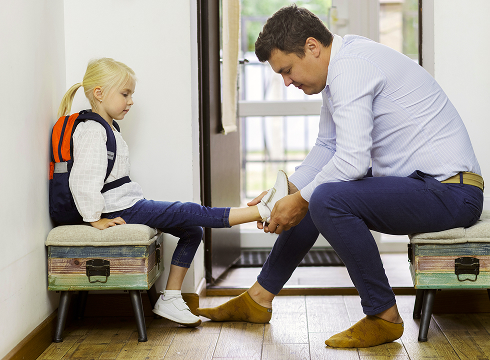
Proper first aid for an injury cuts subsequent treatment time in half. The main goal is to stop the spread of swelling and prevent further tissue damage from bone fragments or sprained ligaments.
Actions to take before seeing a doctor
Doctors worldwide use the R.I.C.E. (Rest, Ice, Compression, Elevation) protocol, adapted for children.
What to do before seeing a doctor:
- Rest your leg. Remove shoes and socks (unless doing so causes severe pain) and lay the child down. Your child should not walk now: if you need to go to the hospital, carry them to the car.
- Apply cold with a cloth. Use ice, a hypothermic pack, or frozen vegetables. Be sure to wrap the cold source in a towel. Apply for 15 minutes every 2 hours on the first day. Cold constricts blood vessels and slows the production of inflammatory mediators.
- Immobilize the ankle. Use an elastic bandage or splint. Do not pinch the toes or bandage them.
- Elevate the leg. Place the foot on a bolster or pillow so that the foot is above the level of the hip and heart. This promotes lymphatic and venous blood flow, reducing swelling in the child's ankle.
- Consult a doctor. Even if the child no longer complains of pain, a consultation with a pediatric traumatologist is still necessary.
What not to do if there is pain and swelling
- Do not apply heat. Hot water baths, warming ointments, blue lamps, and compresses are contraindicated in the first 48-72 hours. Heat dilates blood vessels, increases swelling, and increases inflammation.
- Do not massage the injured area. This will only increase blood flow and increase swelling and pain.
- Do not attempt to reset the bone yourself. Doing so can turn a closed fracture into an open one.
- Do not feed or give the child anything to drink. If emergency surgery under general anesthesia is required, the stomach should be empty.
Diagnosing an ankle injury in a child
Modern treatment of ankle injuries begins with a highly accurate diagnosis. It is important for the doctor to rule out combined injuries, where both the bone and ligaments are affected simultaneously.
Traumatologist examination
The doctor begins with a questionnaire: how exactly the child fell, whether they felt a click, and when the swelling appeared. This is followed by a visual examination and palpation. The pediatric traumatologist uses special manual tests (for example, the anterior drawer test) to check the integrity of the anterior talofibular ligament. The doctor also checks Westminster points (localization of pain when pressing on certain areas of the ankle), which allows a high probability of a fracture.
When are X-rays, ultrasound, or MRI needed?
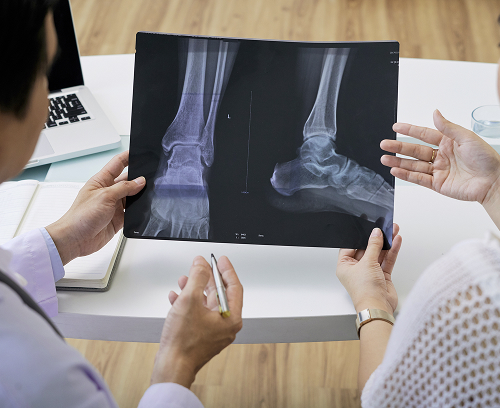
An ankle X-ray is the initial and mandatory diagnostic test for any serious injury. Images are taken in at least two projections (AP and lateral), and sometimes an additional oblique projection is required. X-rays are excellent at detecting fractures, but are ineffective against ligament and cartilage damage.
A joint ultrasound is prescribed to assess the volume of fluid (blood) in the joint cavity and the condition of the soft tissues. MRI is the most accurate method, allowing one to detect microcracks, bone marrow edema, and ligament damage in the early stages. MRI is especially valuable when there is a suspicion of growth plate involvement, as cartilage is transparent on conventional X-rays.
General information
Treatment of ankle injuries in children
The treatment strategy is always individualized. The main principle in pediatrics is maximum preservation of function with minimal intervention. Ankle injuries in children heal more quickly than in adults due to the high metabolic activity of the tissues.
Conservative treatment
Most ankle injuries are treated non-surgically. A conservative approach includes rest, medication, and proper immobilization. In the first few days, the main goal is to eliminate inflammation. The doctor may recommend semi-bed rest and the use of crutches to completely eliminate weight-bearing on the leg.
Immobilization: bandage, orthosis, cast
The choice of immobilization is critical.
- An elastic bandage is used only for minor bruises and first-degree sprains.
- An ankle brace (or bandage) is the modern standard. Rigid or semi-rigid braces with plastic inserts securely immobilize the joint, preventing lateral movement of the foot while maintaining forward and backward flexion. This prevents muscle atrophy.
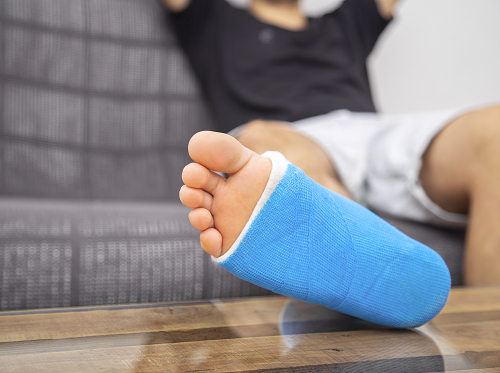
- A cast (or its modern polymer equivalent, a plastic cast) is applied to fractures, dislocations, and severe ligament tears. A plaster cast provides complete immobility, which is necessary for bone fusion and the formation of a dense scar at the site of the ligament tear.
Comparison table of injury types for parents
| Sign | Bruise | Sprained ligament | Dislocation | Fracture |
|---|---|---|---|---|
| Pain | Moderate, only when pressed | Sharp at the time of injury, aching afterwards | Unbearable, constant | Sharp, "shooting" |
| Swelling | Minor, local | Moderate, increases over 2-4 hours | Severe, deforming | Severe, diffuse, hematoma |
| Weighing on the leg | Possible, almost unlimited | Difficult, causes pain | Practically impossible | Completely impossible |
| Deformation | Absent | Absent | The joint appears displaced | Possible (curvature of the tibia) |
| What to do | Rest, cold, observation | Orthosis, visit to | Go to the emergency room immediately | Immediate hospitalization |
Pain relief and swelling control
The doctor prescribes nonsteroidal anti-inflammatory drugs (NSAIDs) for children in the form of syrups, tablets, or topical gels. Do not change the dosage or stop treatment at the slightest improvement.
Swelling must be controlled: excess fluid in the joint compresses blood vessels, slowing recovery from injury. Furthermore, swelling can prevent you from walking normally or bending your leg.
When is surgical treatment required?
Surgery is a last resort. It is necessary for:
- Comminuted fractures
- Displaced fractures that cannot be repositioned using closed techniques
- Tears of the tibiofibular syndesmosis (the ligament that connects the bones of the lower leg)
- Damage to the growth plate with the risk of its premature closure.
During surgery, the doctor may use bioabsorbable screws or pins to securely fix the bones during the healing period.


Some situations can't wait until morning. Seek immediate medical attention if:
- The child can't take a single step on the leg.
- The foot is pale, cold to the touch, or has a bluish tint.
- The pain isn't relieved by regular pediatric painkillers.
- Numbness or tingling sensations have developed in the joint area (a sign of nerve compression).
- Swelling is rapidly spreading up the leg.
"In my experience, ankle injuries in children aren't always limited to a bruise. Our goal is not only to relieve pain but also to promptly prevent damage to the growth plate so the child can recover without complications," notes an experienced pediatric traumatologist.
Frequently asked questions
How can you tell if your child has more than just a bruise, but a more serious injury?
Should an X-ray be taken for an ankle injury?
How long does it take to recover from an ankle injury?
Is it okay to walk if your leg hurts but there's only minor swelling?
Treating a child's ankle involves more than just ointment and bandages; it also involves limiting activity. Don't rush your child back to active life; give their foot time to recover. Even if there's no pain, consult a doctor. A traumatologist will discuss recovery from the injury and prescribe conservative treatment.



This award is given to clinics with the highest ratings according to user ratings, a large number of requests from this site, and in the absence of critical violations.

This award is given to clinics with the highest ratings according to user ratings. It means that the place is known, loved, and definitely worth visiting.

The ProDoctors portal collected 500 thousand reviews, compiled a rating of doctors based on them and awarded the best. We are proud that our doctors are among those awarded.
Make an appointment at a convenient time on the nearest date
Price
Other Services

Appointment to the doctor




Our clinics


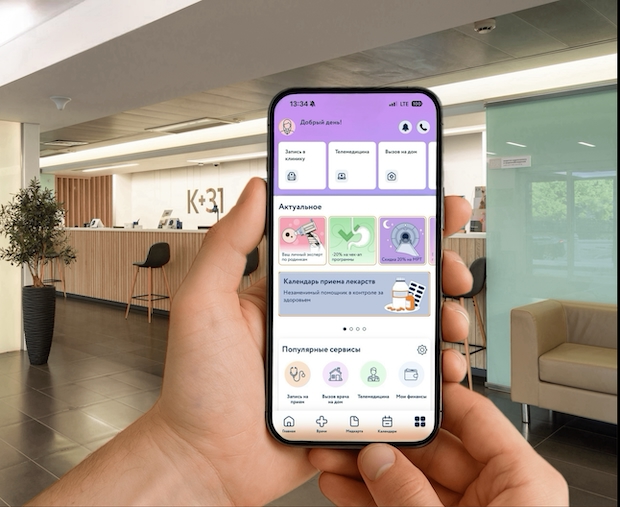
Application “Personal Account K+31”










What is an ankle injury in a child?
By the term "ankle injury," doctors mean any mechanical damage to the bone structures, ligaments, tendons, or soft tissues that form the ankle joint. In children, the joint consists of the tibia, fibula, and talus, connected by a complex system of ligaments.
A characteristic of childhood is that the bones are not yet fully ossified, and the ligaments are highly elastic. However, this elasticity can sometimes play a cruel joke: a ligament can withstand tension, while the fragile bone at the attachment site cannot.
What are the types of injuries?
The clinical classification of ankle injuries in children is extensive. The most common ankle injury in children is a contusion—damage to soft tissues (skin, subcutaneous tissue, muscles) without disrupting their structure.
The second most common ankle sprain in children. In fact, the term "sprain" in medicine is relative, as ligaments barely stretch; it always refers to micro-tears of the fibers. More severe impacts result in a partial or complete rupture.
An ankle dislocation in a child is a complete and persistent separation of the articular surfaces of the bones, which is always accompanied by a rupture of the joint capsule and ligaments. An ankle fracture in a child can be either closed or open, affecting the malleolus or the talus itself. Avulsion fractures, when a ligament tears off a piece of bone, constitute a special category.
Why do children injure their ankles more often?
The increased incidence of injuries in childhood is due to several factors. Firstly, poor motor coordination. A child's cerebellum and proprioceptive system (the brain's ability to sense the position of body parts in space) are in the process of being adjusted. Secondly, the ratio of body mass to muscle strength in children constantly changes during growth spurts, making gait and running less stable.
Ankle injuries in children often occur because the bones grow too quickly. The ligaments and muscles can't keep up.
During periods of active growth (ages 5-7 and 11-14), soft tissue tension increases, and joint cushioning decreases. Any unevenness on the playground or a sharp turn while playing soccer can cause the foot to twist incorrectly.