
Treatment of pectoral muscle strain in children
Chest muscle strains are a common injury in childhood. An active lifestyle, sports, and poor motor coordination make children vulnerable to musculoskeletal injuries. Although children's bodies have high compensatory capabilities, any muscle injury requires careful attention and proper rehabilitation.

specialists

equipment

treatment



Why do children get a pectoral muscle strain?
There are several causes of such injuries.
Sports and active games
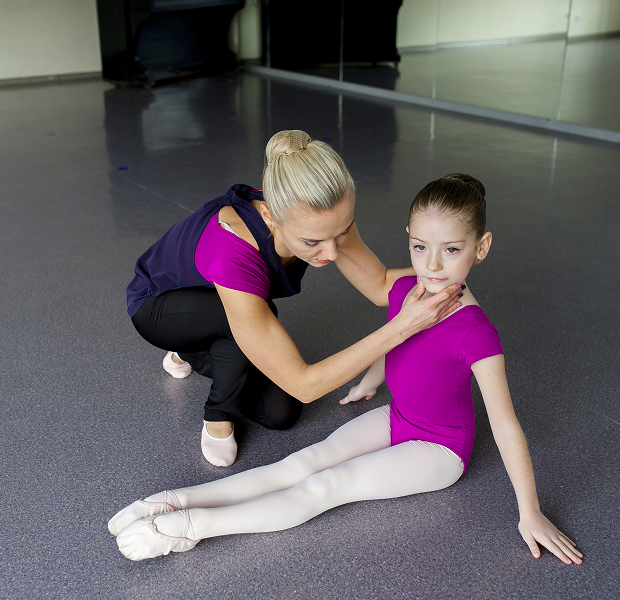
Children most often get strains during gymnastics, swimming, wrestling, or team games (basketball, volleyball). Failure to warm up increases the risk of muscle injury.
A sudden movement, fall, or jerk
At home or on the street, children get injured by falling on an outstretched arm or trying to hold on to a handrail when transport suddenly stops. A strain can also be caused by jerking a heavy object (such as a heavy school backpack) with one hand.
Muscle strain and poor technique
Sometimes a strain develops gradually. This is typical for children who started participating in sports clubs and perform exercises with weights or bodyweight (push-ups, pull-ups) without proper supervision from a trainer. Poor technique leads to uneven distribution of the load, causing overexertion and the accumulation of microtraumas.
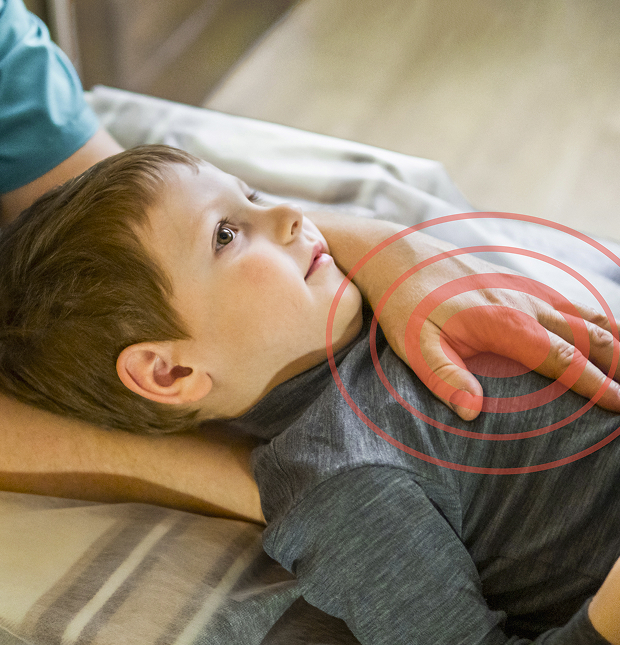
Symptoms of a chest muscle strain
Signs of injury may appear immediately or several hours later, when swelling begins to compress the nerve endings.
Pain with movement and inhalation
The main complaint is chest pain during movement. It intensifies when attempting to bring the arms together in front of the body, raise them up, or move them behind the back. In some cases, pain is observed during inhalation, as the intercostal and pectoral muscles participate in the expansion of the chest.
Swelling, tension, bruising
Swelling and bruising may appear at the site of the injury. Pain and spasm develop as the muscles tense to limit the movement of the injured area.
When symptoms require urgent medical attention
Parents should closely monitor their child's condition. You should see a doctor if:
- Your child has shortness of breath
- The pain does not subside with cold application
- Chest deformity is visible to the naked eye
- Your child experiences weakness, dizziness, or paleness
Comparison table
| Symptom | Strain | Bruise | Rupture |
|---|---|---|---|
| Pain with movement | Severe, worsens with movement | Moderate, may not be affected by movement | Sharp, sharp, often with a crunching sound |
| Swelling | Moderate, localized | Severe, may spread | Rapidly growing, large |
| Bruise | Appears after 1-2 days | Occurs quickly, may be extensive | Large hematoma immediately |
| Limited motion | Partial, due to pain | Minor or moderate | Significant or complete |
| Need for examination | For moderate to severe cases | For severe pain/hematoma | Always urgent |

How a doctor diagnoses an injury
Accurate diagnosis is the key to successful treatment. When visiting a clinic, your child should be examined by a pediatric traumatologist or orthopedist.
Examination and collection of complaints
The doctor begins with a questionnaire: how exactly the injury occurred, when the pain began, and which movements cause the most discomfort. During the physical examination, the specialist performs palpation, assesses muscle tone, and checks the range of motion in the shoulder joint. The doctor's examination helps determine the location of the injury and rule out rib fractures.
When additional examinations are needed
Soft tissue ultrasound is a diagnostic method that can detect the presence of hematomas within the muscle and assess the integrity of the fibers. Sometimes an X-ray is needed to rule out damage to the chest bones.
How to rule out more serious injuries
An important task for the doctor is differential diagnosis. Chest pain in children can be related not only to muscles but also to heart or lung function. The traumatologist evaluates the breathing pattern and the symmetry of chest movements to ensure that muscle injury is not accompanied by damage to internal organs.
How to treat a pectoral muscle strain
The main goal of therapy is pain relief, reducing inflammation, and creating conditions for muscle fiber fusion.
First aid in the first hours
First aid for a pectoral muscle strain should be provided immediately after the injury. Parents or a coach should:
- Immediately stop activity
- Sit or lay the child down in a comfortable position
- Apply ice or a bag of frozen food to the sore area, wrapping it in a thin towel
- Immobilize the arm on the affected side with a support bandage (sling)
Rest and pain relief
Treatment for a pectoral muscle strain primarily involves limiting activity. Avoid lifting heavy objects, doing pull-ups, or playing vigorously. A doctor may prescribe pain medication.
Recovery and physical therapy
Next, rehabilitation begins. At this stage, physical therapy is prescribed, including stretching and breathing exercises.

General information
Treatment features in children
Childhood imposes certain restrictions on the use of medications and physical therapy methods.
Safety of Medications and Exercises
Many warming ointments contain ingredients (snake venom, pepper extract) that can cause a severe allergic reaction or burn delicate skin in children. Therefore, pectoral muscle strains in children are treated with the gentlest possible methods. The primary focus is on natural tissue healing under conditions of functional rest.
When Can I Return to Sports
Return to training is possible only after the pain has completely disappeared and full range of motion has been restored. This typically takes 1–2 weeks for a mild strain. If the injury was moderate, recovery from a pectoral muscle strain can take up to a month.
What is important for parents to monitor at home
Parents should ensure that their child adheres to their routine. Children often become active as soon as the initial acute pain subsides, which can lead to re-injury. It's important to monitor the child's posture and ensure there are no complaints of discomfort during normal breathing.

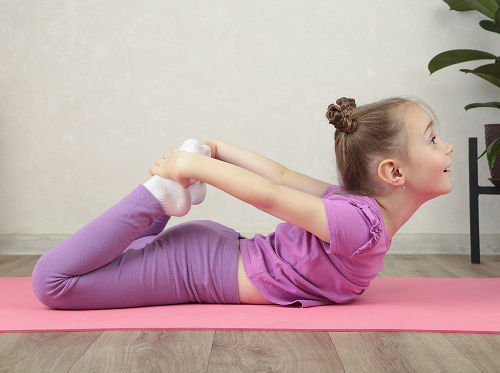
Preventing injury is much easier than treating its consequences.
Warm-up and movement technique
Any training session should begin with a warm-up: this is the only way to warm up the muscles and prepare them for the load. Physical education teachers and coaches should ensure proper movement technique.
Gradual increase in load
When returning to training after a break or when starting a new sport, the load should be increased gradually. The child's muscles and ligaments must have time to adapt to the new demands.
Monitoring the child's condition after recovery
Even after full recovery, it's important to pay attention to your child's complaints for 2-3 weeks of active training. Injury prevention also includes a balanced diet rich in protein and vitamins necessary for tissue regeneration.
FAQ from parents
How long does it take for a child's pectoral muscle strain to heal?
When should you see a doctor?
Can I have massages and warming treatments?
Pectoral muscle strains are common in children. The main rule is to avoid self-medication if the pain is severe. Rest and rehabilitation under the supervision of a specialist ensure a full recovery.



This award is given to clinics with the highest ratings according to user ratings, a large number of requests from this site, and in the absence of critical violations.

This award is given to clinics with the highest ratings according to user ratings. It means that the place is known, loved, and definitely worth visiting.

The ProDoctors portal collected 500 thousand reviews, compiled a rating of doctors based on them and awarded the best. We are proud that our doctors are among those awarded.
Make an appointment at a convenient time on the nearest date
Price
Other Services

Appointment to the doctor

Our clinics


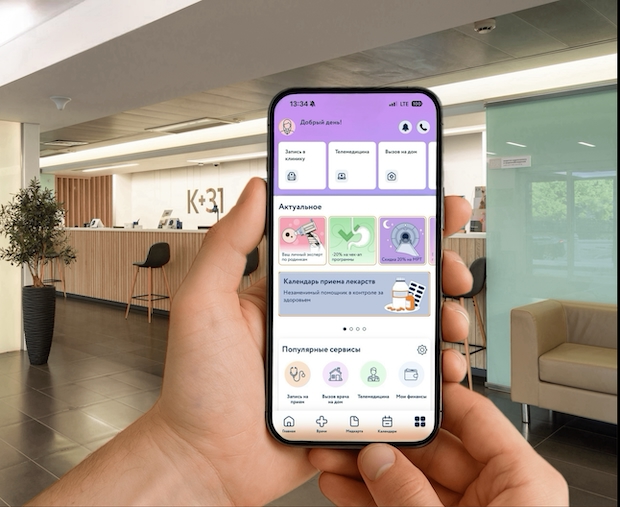
Application “Personal Account K+31”











What is a pectoral muscle strain?
A strain is a microscopic tear of muscle fibers or ligaments that occurs when a force exceeds the tissue's elasticity.
The thoracic region includes the pectoralis major and minor muscles, as well as the intercostal muscles. They are responsible for arm movement, shoulder adduction, and breathing. Therefore, an injury in this area causes discomfort not only during physical activity but also during deep inhalation.
How injury occurs
The mechanism of injury is always associated with excessive tissue tension. In children, muscle fibers are more elastic than in adults, but ligaments and muscle attachment points to bones may be more vulnerable during periods of active growth.
An injury occurs when a muscle is forced to contract sharply while it is stretched. This leads to disruption of individual muscle fibers, leading to local inflammation and spasm.
How is a muscle strain different from a contusion or rupture?
It's important for parents to understand the difference between these types of injuries, as this determines first aid tactics. A chest contusion occurs from a direct blow with a blunt object or a fall onto a flat surface. In this case, damage primarily affects the skin and subcutaneous fat, while the muscle suffers from compression.
A pectoral muscle strain in children is an internal injury caused by traction. A muscle rupture is an extreme form of strain, where the muscle belly is completely disrupted or separated from the tendon. A rupture is characterized by complete loss of function and requires immediate surgical exploration.