
Knee contusion in children: Treatment, symptoms, and first aid
Children rarely sit still, so scrapes, bruises, and falls are common. Knees are the most common injuries. Parents often take a normal fall while walking lightly, but sometimes an injury develops after a simple fall on a walk, requiring medical attention and not just a bandage.
It's important to recognize when a common everyday situation develops into a condition where a knee injury can affect joint mobility in the future.
After a fall, a child usually immediately feels sharp pain and becomes frightened. However, this reaction can be caused by injuries of varying severity.
In this article, we'll discuss how to tell the difference between a simple bruise and a more serious injury, what to do immediately after an injury, and how to treat a child's knee contusion to prevent complications.

specialists

equipment

treatment



Medically, a knee contusion is a mechanical injury to soft tissue without breaking the bones or skin. The primary injuries are the skin, subcutaneous tissue, muscles, and sometimes even the synovial bursa of the joint. Blood vessels rupture, causing blood to leak into the tissue, which causes the characteristic external signs.
Unlike adults, children's tissues are more elastic, but their skeletal system is in a phase of active growth, so any strong impact requires close attention.
How contusions occur in children
The mechanics of a child's injury are usually simple: either a direct fall on the kneecap or a blow from a blunt object. Knee contusions in children most often occur during active play, running, cycling, or scootering. Young children can trip due to poor coordination, while teenagers sustain such injuries during sports activities such as soccer, volleyball, or martial arts.
A particular characteristic of childhood is that children cannot always accurately describe their sensations, so parents must rely on visual signs and the injured person's behavior.
Why it's important not to confuse a bruise with a sprain or fracture
The main danger lies in self-diagnosis. A seemingly ordinary knee bruise can mask a meniscus injury, a torn ligament, or even a bone fracture. While a bruise only affects soft tissue, a fracture affects the skeletal structure, requiring a cast and prolonged immobilization.
Mistaking a serious injury for a simple blow can lead to a loss of time. This can lead to improper tissue healing or the development of chronic inflammation in the joint.
For clarity, we've provided a table. It will help you understand the symptoms of various knee joint injuries.
| Symptom | Bruise | Sprain | Fracture |
|---|---|---|---|
| Pain | Moderate or severe | Worsens with movement | Sharp, throbbing, severe |
| Swelling | Possible, gradually increasing | Often present, localized | Can progress rapidly, the joint increases in size |
| Weight-bearing on the leg | Usually possible, but painful | Difficulty, the child protects the leg | Often impossible due to severe pain |
| Deformity | Absent | Absent | A change in the shape of the joint may be noticeable. |
This table is only for guidance. situations. Even if the symptoms seem mild, the child should still be examined by a doctor to rule out hidden injuries.
Symptoms of a knee contusion in a child
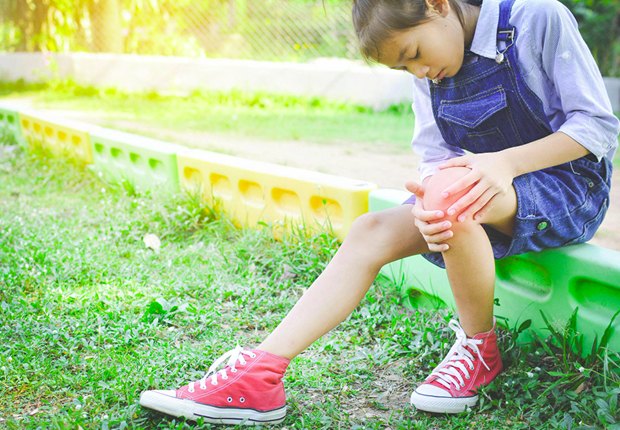
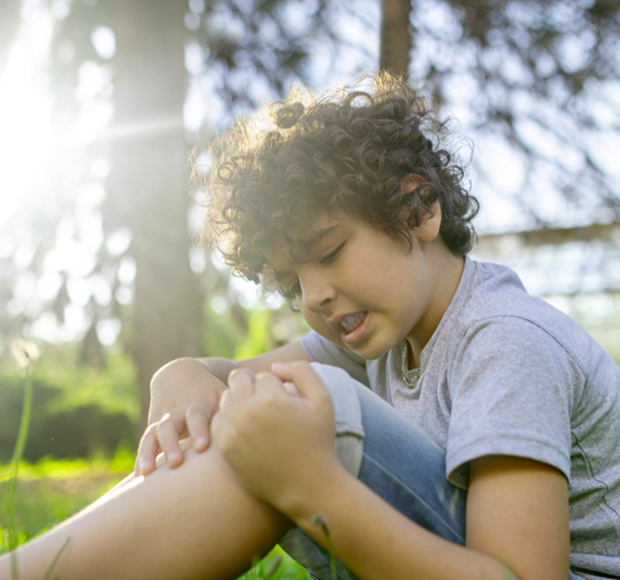
The first signs appear almost immediately. After the impact, pain in the knee develops, which may cause the child to cry or freeze. A little later, swelling appears in the area of the injury. It is important for parents not only to reassure the child but also to carefully examine the knee, paying attention to the skin color and the temperature of the tissues around the joint.
Pain, swelling, bruising, and limited movement
The main signs that typically accompany a knee injury in children are pain, swelling, and hematoma. Due to damaged capillaries, a bruise appears on the knee, and over time, its color changes from purple-blue to greenish-yellow.
Severe swelling of the knee can appear as early as 20-30 minutes after the fall. This leads to a noticeable limitation of movement: the child finds it difficult to fully bend or straighten the leg. This reduces the load on the injured area.
Limping and refusal to put weight on the leg
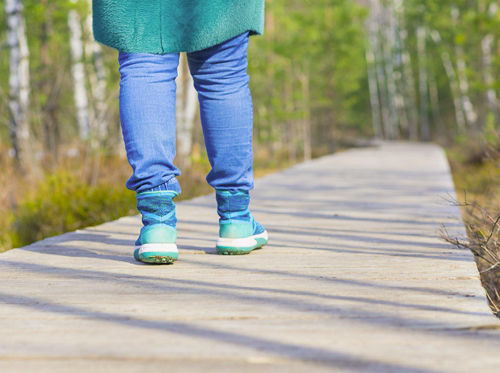
If the injury is severe, the child will inevitably develop a limp. They will try to shift their weight onto the healthy leg, limping to one side when walking.
In more severe cases, a complete refusal to put weight on the leg is observed. This is an alarming sign, often indicating that damage extends beyond the skin to deeper structures, such as the periosteum or ligaments.
In this situation, forcing the child to "walk" can only worsen the situation.
Signs that require urgent medical attention
Home treatment isn't always sufficient. There are conditions in which delay can lead to the development of hemarthrosis, a collection of blood in the joint or infection. You should go to the emergency room immediately if the joint appears deformed or if the knee feels hot to the touch. Or if the pain persists even with complete rest. Joint "locking" is also a suspicious symptom. In this case, the child is unable to move their leg due to a sharp mechanical impediment inside the knee.
First Aid for a Knee Contusion
The first thing to do is ensure the child remains completely calm. If the fall occurred outdoors, carefully sit or lay the victim down, preventing them from continuing to play or run. Any physical activity at this point increases blood circulation, which can lead to a potential hematoma.
It's important to immobilize the limb in a comfortable, slightly bent or straight position. This ensures that the muscles are as relaxed as possible.
Cold in the First Hours after an Injury
The most effective way to constrict blood vessels is cold. Use cold on a bruise: this can be ice, a bag of frozen vegetables, or a special cooling pack from a car first aid kit.
A simple rule: don't apply cold directly to the skin; wrap it in a cloth or towel. Keep the compress on for 10-15 minutes, then take a 20-minute break and reapply. This regimen helps reduce soft tissue contusion and relieve pain.
Immobilization, Elevation, and Observation
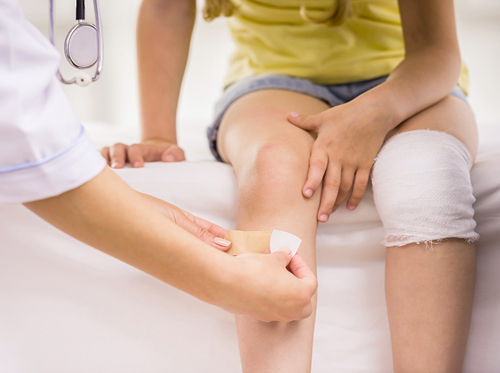
After cooling, an elastic bandage can be applied to the joint. However, this must be done very carefully. The bandage should not compress the blood vessels. It should not cause numbness in the fingers. Its purpose is only to slightly stabilize the knee.
Place the child's leg on a pillow or bolster. This should position it slightly above the heart. This position promotes fluid drainage and also reduces pulsation in the area of the injury.
During the first few hours, carefully monitor the skin condition. Also, monitor the child's general well-being. If the body temperature begins to rise or the pain becomes unbearable, it's time to call a doctor.
Doctor's quote:
"In my practice, knee contusions in children usually resolve without sequelae. If you provide rest in the first few hours, apply cold, and avoid trying to "work" the joint. However, if the child is unable to put weight on the leg, an in-person examination is necessary. If necessary, additional diagnostics are also performed," the pediatric traumatologist emphasizes.
General information
Treatment of a Knee Contusion in Children
After diagnosis, appropriate treatment for a knee contusion is prescribed. In most cases, hospitalization is not required. Recovery occurs at home (non-surgical treatment) under the periodic supervision of a pediatrician or traumatologist.
The main goal of therapy is to eliminate inflammation and accelerate the resorption of the hematoma.
Conservative Treatment and Regime
The basis of therapy is activity restriction. For the first 2-3 days, the child is recommended to stay in bed or semi-bed rest. Avoid forcing the child to lie still. Jumping, running, and squatting should be completely avoided.
Treatment of a knee contusion in a child also includes the use of topical ointments and gels. These have an anti-inflammatory effect. However, these treatments are only possible if there are no open wounds or abrasions on the skin.
Pain relief and anti-edema measures
If pain interferes with the child's sleep or normal functioning, the doctor will prescribe pain relief. Typically, these are ibuprofen- or paracetamol-based medications in an age-appropriate dosage.
You should not self-prescribe medications. Some can affect blood clotting, which is undesirable in the case of a bruise. Heparin or troxerutin ointments can be used to combat swelling. They strengthen the blood vessel walls and speed up the disappearance of the bruise.
How long does recovery take?
Healing time depends on the severity of the injury and individual characteristics. A mild knee bruise in a child usually resolves within 3-5 days. If the injury is moderate, discomfort with physical activity may persist for up to two weeks.
During this period, it is important to ensure that re-injury does not occur, as fragile joint tissues are more vulnerable to repeated mechanical stress.
FAQ
In conclusion, we will answer the questions that mothers and fathers most often ask during appointments with a pediatric traumatologist.
How can you tell the difference between a knee bruise and a fracture in a child?
How long does it take for a child's knee bruise to heal?
When is it necessary to see a doctor immediately?
Can I exercise after a knee contusion?
Take care of your children and remember that timely assistance is the key to their future health and vitality. A professional examination after an injury and a clear recovery plan will help you cope quickly and without unnecessary stress.



This award is given to clinics with the highest ratings according to user ratings, a large number of requests from this site, and in the absence of critical violations.

This award is given to clinics with the highest ratings according to user ratings. It means that the place is known, loved, and definitely worth visiting.

The ProDoctors portal collected 500 thousand reviews, compiled a rating of doctors based on them and awarded the best. We are proud that our doctors are among those awarded.
Make an appointment at a convenient time on the nearest date
Price
Other Services

Appointment to the doctor






Our clinics


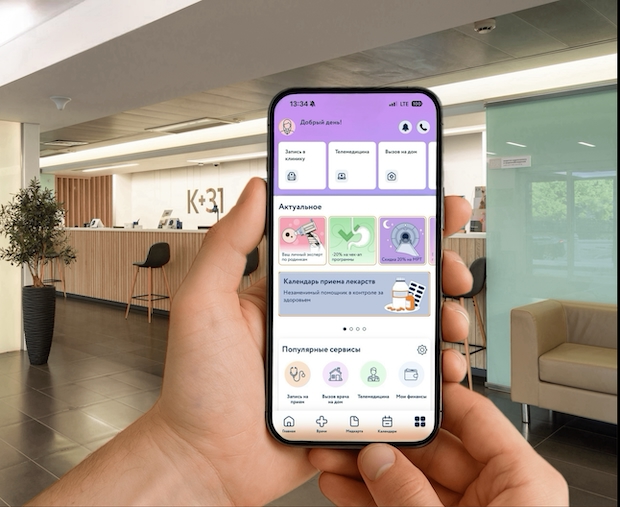
Application “Personal Account K+31”










How does a doctor diagnose an injury?
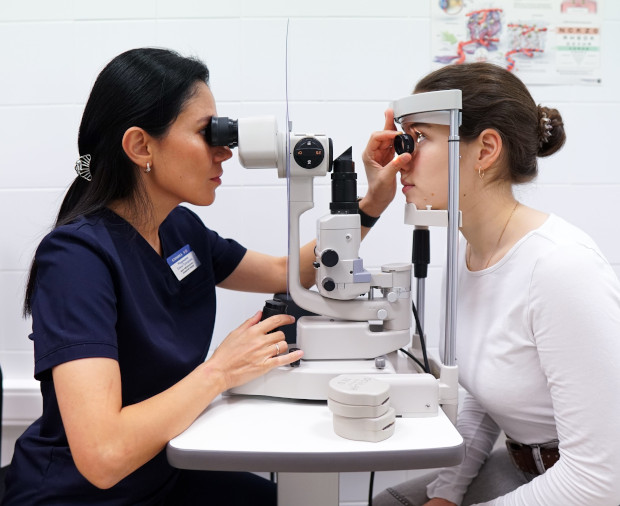
First, the doctor performs a visual examination and palpation. They assess the degree of joint mobility. They check the integrity of the ligaments using special tests. They also examine the skin. Be prepared to answer questions:
It's important for the doctor to understand the direction of the impact. This is crucial. This allows them to predict which internal structures may have been damaged.
When are X-rays, ultrasound, or MRI needed?
If the specialist has any doubts, additional tests are ordered. The fastest and most accessible method is a knee X-ray. It clearly shows the condition of the bones and also helps rule out fractures or cracks. However, soft tissues are not visible on X-rays.
In cases where ligament or meniscus damage is suspected, a knee ultrasound is prescribed. This is a safe and painless method and is 100% suitable for children. If the situation is complex and a detailed layer-by-layer image of the joint is required, the doctor may refer the child for an MRI of the knee. This procedure provides the most comprehensive information. However, it requires the child to remain still for 15-20 minutes, which sometimes requires special preparation.