
Wrist Sprain in Children: Symptoms, Treatment, and Recovery
Children are constantly on the move, so falls and bruises happen to everyone. But if a child falls on the playground and now complains of sharp pain in the wrist, this is cause for concern. It's likely a wrist sprain.
Many parents don't take this injury seriously, as it's not a fracture, but without proper care, ligaments can take a long time to heal.
It's important to start treating a wrist sprain promptly to prevent chronic inflammation. Let's look at how to recognize the injury and what to do first.

specialists

equipment

treatment





Why does a child get a wrist sprain?

The causes of injuries in childhood are predictable, but that doesn't make them any less dangerous. Traumatologists identify several typical scenarios in which ligaments fail to withstand the applied force.
Falling on an outstretched arm
This most often occurs when a child is learning to rollerblade or ride a bike. When falling, they instinctively extend their arms forward to protect themselves. As a result, the entire body weight presses on the wrist, and the tissues can't withstand such a sudden load. This is how a wrist sprain occurs, because the joint absorbs the entire impact, which it is unprepared for.
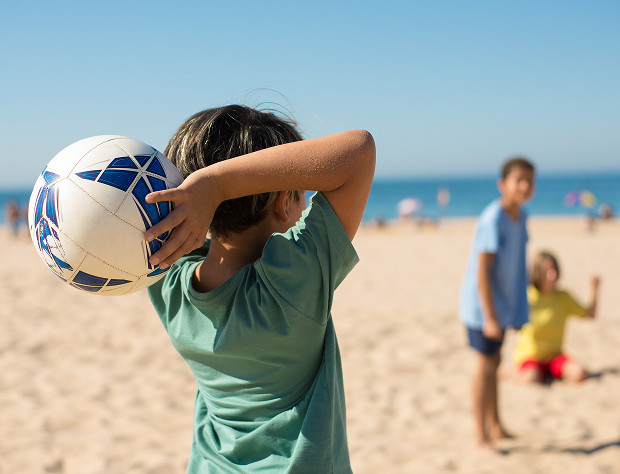
Sports and Games
In sports, such as volleyball or gymnastics, the wrists are always under a lot of strain. A child might make a poor catch or fall after a jump if something goes wrong during practice. If a child hasn't yet learned to properly tuck, any collision on the field often results in doctors diagnosing a wrist strain. This is especially common on the uneven bars or with sudden arm movements in basketball.
Everyday Causes of Injury
Sometimes an injury happens where you least expect it—within the walls of your own home. For example, if an adult yanks a child's arm too hard while trying to keep them from falling off the couch or quickly helping them cross the street. A sudden jerk on the wrist can cause micro-tears in the ligaments just as often as a hard fall. It's also not uncommon for children to get their hands caught in doors or play awkwardly with heavy objects, which can lead to wrist sprains.
Symptoms of a wrist strain
To understand what's wrong, simply examine the hand and watch how the child is acting. Almost always, the symptoms of a wrist sprain are immediately noticeable, but sometimes the pain and swelling only worsen after a couple of hours. It's best not to jump to conclusions and observe the condition for a while.
Pain, Swelling, and Bruising
At first, the child feels a sharp pain, which then becomes constant and aching. Swelling of the hand appears almost immediately, causing the joint to appear swollen and lose its normal shape. If small blood vessels have burst, a bruise or hematoma will appear. The skin at the site of the injury may initially turn red and eventually turn blue.
Limited movement and weakness in the arm
The child stops using their arm and tries to hold it still, clasping it close to their body. They may refuse to play or pick up a spoon. A clear limitation of movement appears: if you try to bend or straighten their palm, the child will start crying.
Often, the hand simply loses strength—the child cannot make a fist or hold even a light toy.
How to distinguish between a bruise, dislocation, and fracture
It's difficult to figure out exactly what's wrong, but there are clear signs. If it's a common wrist bruise, the pain is usually dull and subsides quickly, and the child can move their fingers normally. With an injury like a wrist dislocation, the joint appears displaced or oddly bent, and the hand feels locked—unable to move.
If a wrist fracture has occurred, the pain will be sharp and very severe, swelling will quickly spread to the entire palm, and the hand may begin to move in areas where there is no joint.
Table: How a Wrist Sprain Differences from a Bruise and a Fracture
| Symptom | Sprain | Bruise | Fracture |
|---|---|---|---|
| Pain | Worsens with movement | Usually moderate | Often sharp and constant |
| Edema | Possible, localized | Possible | Often pronounced, increasing |
| Wrist movement | Limited | Usually preserved | Severely limited or impossible |
| Deformity | Usually none | None | May be visible visually |
| What to do | Rest, immobilization, medical examination | Observation and rest | See a doctor immediately |
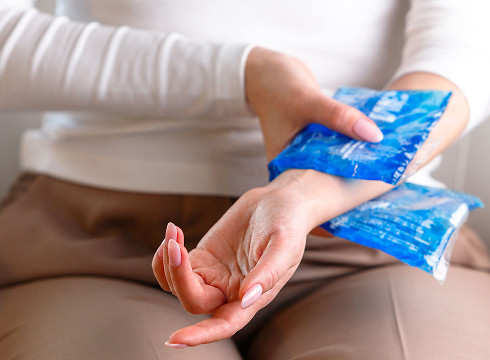
First Aid for a Wrist Sprain
Your actions in the first 30-60 minutes after the incident largely determine how long the treatment will last. Proper first aid for a wrist sprain should be consistent and calm.
Rest and Immobilization
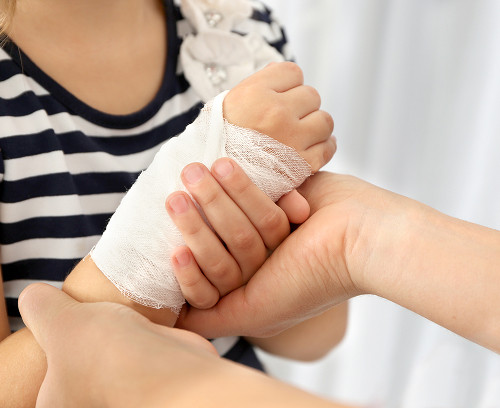
Immediately stop any play or activity. Remove any unnecessary items from your wrist: clothing, watches, and bracelets. If the joint begins to swell significantly, they will put pressure on the wrist and interfere with blood circulation. To prevent the joint from moving and causing more pain, immobilize the wrist. The easiest way is to wrap the wrist with an elastic bandage in a figure-eight pattern. The key is not to over-tighten the fingers, so they don't turn blue and stay warm.
Cold in the First Hours
Apply a cold compress to the most painful area. You can use ice in a towel or any freezer bag. The cold will help constrict blood vessels, so the pain in your hand will subside and swelling will decrease. It's best to apply cold for 10-15 minutes, then take a 10-15 minute break. Repeat this for the first two hours after the injury.
What not to do
For the first two days, avoid any heat. Heating pads and alcohol compresses will only increase inflammation and blood flow to the injured area. If you feel like the joint has become dislocated, don't try to straighten or reset it yourself—it's dangerous. Also, avoid rubbing the wrist or applying warming ointments until the child has seen an orthopedist.
General information
Diagnosis by a Pediatric Orthopedic Traumatologist
Even if you think the injury is minor and will "resolve on its own," it's better to be on the safe side and take your child to a specialist. An experienced traumatologist or orthopedist can accurately determine the extent of ligament damage.
Examination and Collection of Complaints
During the appointment, the doctor will assess the range of passive and active motion, check for points of maximum pain, and be sure to monitor sensitivity and blood flow to the fingers. A pediatric specialist knows how to conduct the examination as gently as possible to avoid causing unnecessary stress to the child.
When an X-ray is Needed
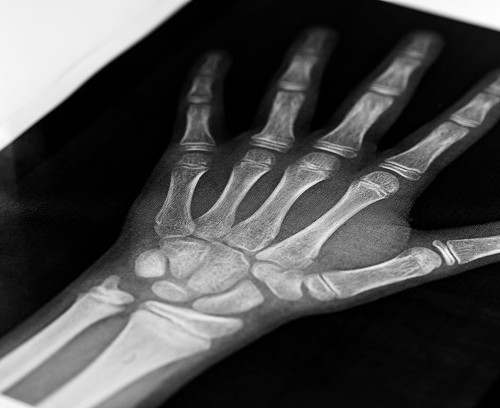
In pediatric traumatology, X-rays are very often ordered. This is because children's bones are softer and contain growth plates. Sometimes, what looks like a simple sprain turns out to be a marginal fracture or crack. A multi-projection image allows us to rule out bone damage and continue conservative treatment with peace of mind.
Additional Examination Methods
In rare, clinically complex cases where standard imaging is insufficient, a joint ultrasound may be necessary. This safe method allows us to visualize the condition of the soft tissues, the presence of blood in the joint cavity, and the extent of ligament fiber rupture in more detail.
It's impossible to completely insure a child against falls, and it's not necessary—it's part of learning about the world. However, parents can minimize the risks.
Home Safety
Make sure active play areas are free of slippery mats or small building blocks scattered around that could easily cause slips. Ensure all corners are protected and furniture is stable.
Protection during training and play
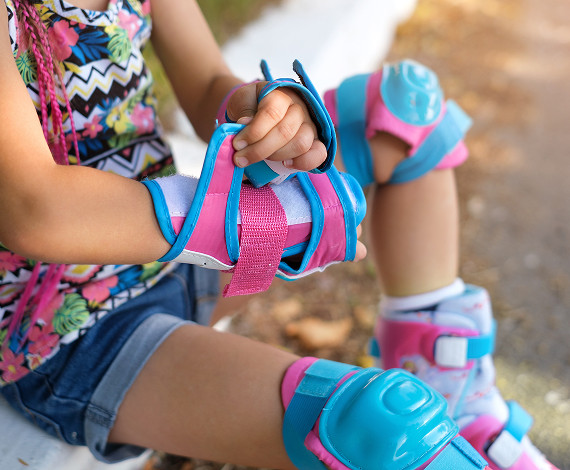
If your child enjoys rollerblading, skateboarding, or scootering, the use of special wrist guards should be a must. Professional protection significantly reduces the risk of a serious wrist sprain, even with hard contact with asphalt.
Frequently Asked Questions
This article is for informational purposes only and does not constitute direct medical advice. If your child has been injured, the most appropriate action is to seek medical attention in person for a specialist examination.
How can I tell if my child has a wrist sprain and not a fracture?
Should I warm my wrist after an injury?
How many days should a child keep their hand in good condition?
When can I return to sports?



This award is given to clinics with the highest ratings according to user ratings, a large number of requests from this site, and in the absence of critical violations.

This award is given to clinics with the highest ratings according to user ratings. It means that the place is known, loved, and definitely worth visiting.

The ProDoctors portal collected 500 thousand reviews, compiled a rating of doctors based on them and awarded the best. We are proud that our doctors are among those awarded.
Make an appointment at a convenient time on the nearest date
Price
Other Services

Appointment to the doctor








Our clinics


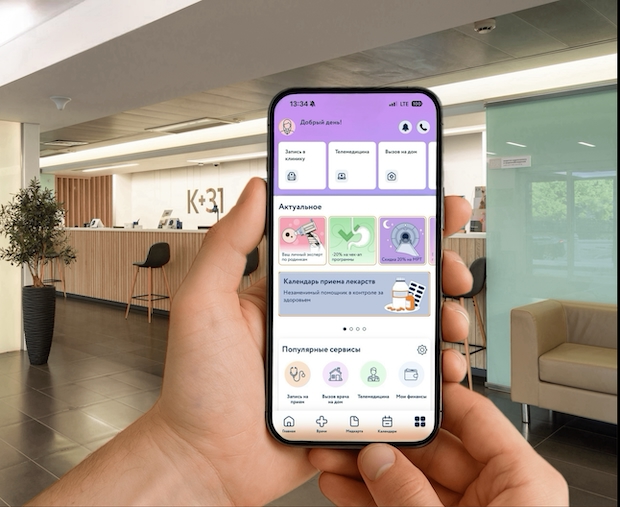
Application “Personal Account K+31”











What is a wrist sprain and how is it different from other injuries?
In reality, ligaments barely stretch. By the term "sprain," doctors mean microscopic tears in the fibers that support the joint. When a child's hand experiences a strain greater than the tissues can withstand, damage occurs. These small tears immediately trigger inflammation.
It turns out that during an injury, the tissues are not lengthened, but rather damaged, which interferes with normal hand function.
Which tissues are most often damaged?
The wrist joint contains many small bones and the ligaments that hold them in place. During a blow or fall, these bones bear the brunt of the impact. Sometimes the lining of the joint is also damaged, causing fluid to accumulate inside.
If a child has a serious hand injury, the tendons that allow the fingers to bend, as well as the nerve endings, may be damaged. In this case, the pain will be especially severe.
Why injuries may manifest more clearly in children
Children's tissues and bones are structured differently than adults. Ligaments are more flexible, but they receive much more blood flow. Therefore, even a minor tear can cause swelling in the hand very quickly, and the bruise can be severe. A child may cry loudly not only because of the severity of the injury, but also because their nervous system is more sensitive.
It's also important to remember that children's bones are still soft and continue to grow, especially in the joint area, so such injuries should not be treated lightly.