
Application of an immobilization bandage to children
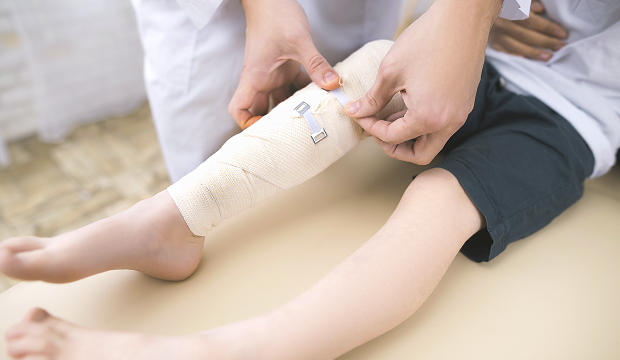
Applying an immobilization cast is necessary if a bone or ligament injury is suspected. The main goal of this procedure is to immobilize the injured segment, relieve pain, and create conditions for proper tissue fusion.
We explain how to apply a cast to a child, what materials are used, and how to properly organize daily life during the recovery period.

specialists

equipment

treatment



When does a child need immobilization?
The decision regarding the need for fixation is made by a pediatric traumatologist after an initial examination. Children are often unable to accurately localize pain or describe the nature of the injury, so doctors rely on clinical signs and instrumental diagnostic data.
Bone fractures and cracks
A child's fracture often occurs as a "greenstick" fracture, where the periosteum remains intact but the bone inside breaks. Even if there is no external deformity, if a bone crack is detected, immobilization of the limb is mandatory. This is necessary to prevent a complete fracture and displacement, which occurs very quickly in children due to severe muscle tone.
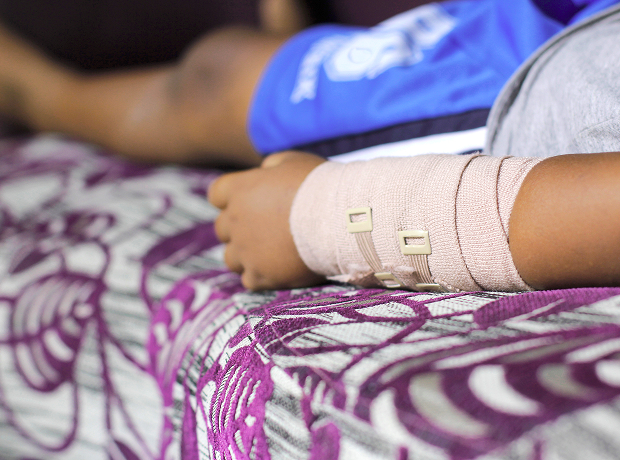
Dislocations and Subluxations
A dislocation is a complete separation of the articular surfaces, accompanied by a rupture of the joint capsule. After the joint is repositioned, the doctor must immobilize the limb for a certain period of time to allow the ligaments to regain their integrity and prevent future habitual dislocations. Subluxations, common in preschool-aged children in the wrist or elbow joints, also require short-term rest.
Sprains and Soft Tissue Injuries
Sprains and severe bruises are accompanied by a rupture of some of the fibers, causing significant swelling and pain. Immobilization in this case is protective. It relieves stress on the injured joint, accelerating hematoma resolution and tissue healing.
Contraindications and when urgent re-evaluation is needed
There are situations when a standard hard bandage cannot be applied immediately. The doctor must assess the condition of the skin and the vascular-nerve bundle before beginning the procedure.
Severe swelling and circulatory impairment
If the child's swelling is rapidly increasing, a hard bandage should not be applied. This will only compress the tissue and may lead to impaired blood flow.
In this case, a splint (an open strip of plaster) is first applied, secured with a soft bandage and allowing the tissue to expand.
Open wounds and suspected complications
If there are abrasions or wounds, rigid fixation will complicate treatment. A re-evaluation of the injury is necessary if damage to a major vessel or nerve is suspected.
Types of immobilization bandages
Modern traumatology offers several options for immobilization materials. The choice depends on the location of the injury, the patient's age, and the expected duration of treatment.
Plaster cast
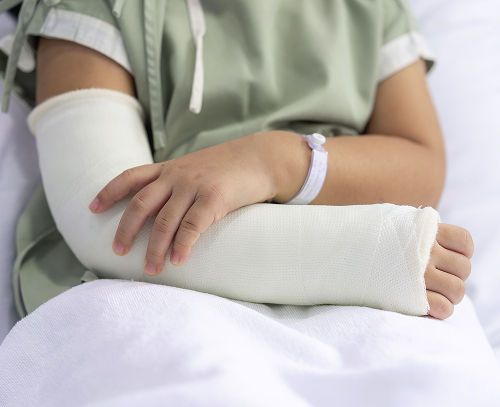
A traditional plaster cast is made from gauze bandages soaked in medical plaster. It remains the most accessible and common method for treating fractures. A plaster cast is easily molded to the shape of the limb, ensuring a secure fit, which is extremely important in the first few days after a child's fracture.
Polymer cast
A polymer cast (plastic plaster) is made of synthetic fiber. It is significantly lighter than a traditional plaster cast, is highly durable, and has an aesthetically pleasing appearance. Its main advantage is that it "breathes," reducing the risk of itching and skin irritation. This method is often chosen for active children after the main swelling has subsided.
Temporary immobilization with a splint or soft material
A metal or plastic splint, as well as sling bandages or soft orthoses, are used as a temporary measure. This is an ideal option when transporting a patient.
The table below compares the characteristics of the main fixation methods.
| Fixation type | When to use | Advantages | Limitations |
|---|---|---|---|
| Plaster cast | For most fractures and bone cracks | Reliable fixation, inexpensive, readily available | Moisture-sensitive, heavy, uncomfortable |
| Polymer cast | For uncomplicated fractures when lightness is needed | Lightweight, durable, waterproof, breathable | More expensive than plaster, not recommended in all cases |
| Temporary splint/soft material | During the initial examination, before X-rays, during transportation | Quick fixation, useful for swelling | Not suitable for long-term immobilization |
How is the bandage applied?
The procedure requires precision and adherence to a specific sequence of actions by medical personnel.
Examination, X-ray, and selection of method
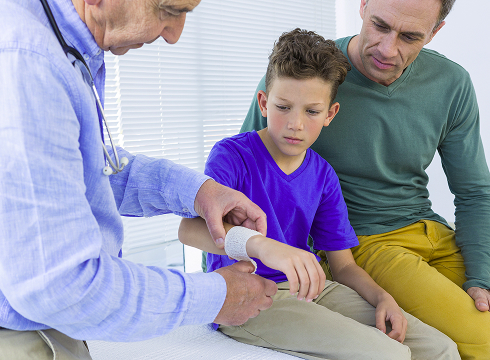
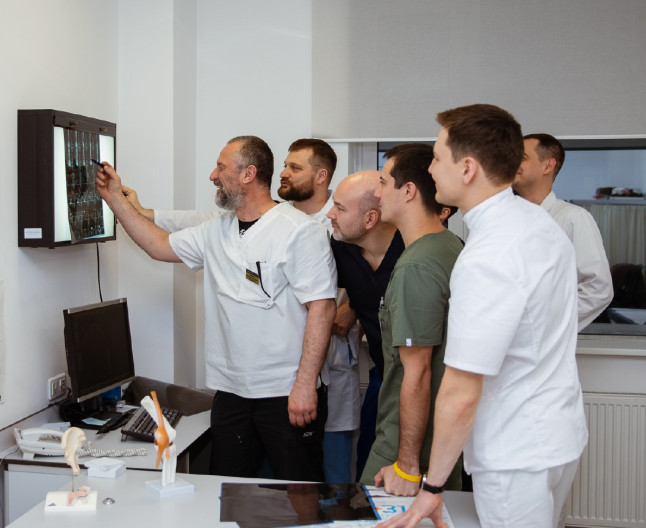
The first step is always diagnosis. The doctor performs an examination, checks the peripheral pulsation, and checks the sensitivity of the fingers. An X-ray in two projections is required to confirm the diagnosis. Based on these images, a decision is made on the optimal immobilization bandage for the specific case.
Limb preparation and application
First, the skin must be cleaned. If a plaster cast is used, a special knitted stocking or a layer of cotton wool is applied to protect the bony prominences from pressure. Next, the doctor rolls out the bandages, shaping the bandage to follow the contours of the body.
Checking the fingers, sensation, and skin color
After completing the procedure, the doctor always leaves the fingers exposed. This is necessary to monitor the child's circulation. The doctor asks the child to move their fingers, checking their temperature and the rate at which the skin returns to color after pressure. This is the key step in completing the immobilization procedure.
General information
Characteristics of treating children
Treating children in traumatology differs from adult practice due to physiological factors.
How is the child's age and height taken into account?
In young children, bones heal significantly faster. However, due to active growth, regular checkups are necessary to ensure that the cast has not become too tight. A pediatric traumatologist always takes into account the possibility of "self-correction" of certain types of displacement, which helps avoid complex surgeries.
Why is it important to monitor swelling?
Swelling after an injury in a child can increase during the first 48-72 hours. Since the cast does not stretch, the increase in tissue volume within the rigid frame can lead to critical compression of the blood vessels.
How to explain the procedure to a child
Children over 7 years old usually understand why they are being bandaged. Preschoolers will need some explanation. Explain that it's a protective device that will help the bone heal faster. Emphasize that it's not painful.




There are critical symptoms that prevent a scheduled visit. Take your child to the doctor immediately if:
- The fingers on the injured limb have become cold or have lost sensation.
- The skin has become bluish, purple, or white.
- The child complains of numbness or severe throbbing pain under the cast.
- An unpleasant odor has appeared from under the cast.
- The cast has broken, become very wet, or has shifted.
FAQ
How long should a child wear an immobilization cast?
Can a plaster cast get wet?
What should I do if I feel pain under the bandage?
How can you tell if a bandage is too tight?
Applying an immobilization bandage is only part of the treatment process. Recovery depends on adherence to the regimen and the parents' attentiveness to the child's complaints and the condition of the immobilization material.



This award is given to clinics with the highest ratings according to user ratings, a large number of requests from this site, and in the absence of critical violations.

This award is given to clinics with the highest ratings according to user ratings. It means that the place is known, loved, and definitely worth visiting.

The ProDoctors portal collected 500 thousand reviews, compiled a rating of doctors based on them and awarded the best. We are proud that our doctors are among those awarded.
Make an appointment at a convenient time on the nearest date
Price
Other Services

Appointment to the doctor





Our clinics


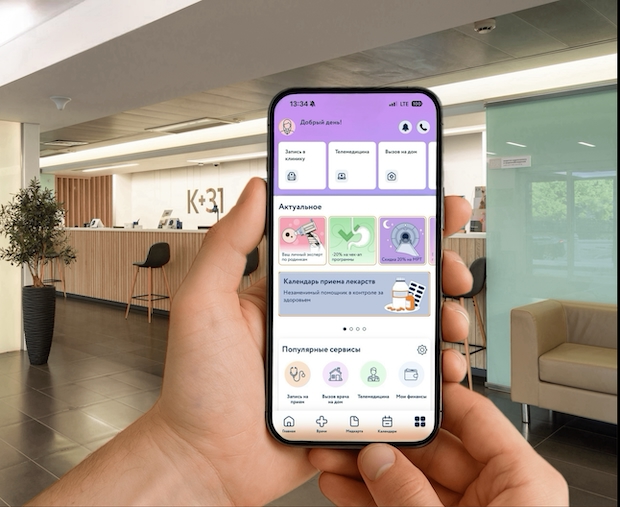
Application “Personal Account K+31”











What is an immobilization bandage and why does a child need one?
An immobilization bandage is a medical device designed to immobilize a limb or other body part in a specific position. Children's skeletons are highly elastic and have growth plates, so even a slight displacement during an injury can lead to future limb deformity. Immobilization limits joint mobility above and below the injury site, preventing further damage to soft tissues, blood vessels, and nerve endings from the sharp edges of bone fragments.
Immobilization of a limb is necessary if: