
Foot Sprain in a Child: Treatment, Symptoms, First Aid, and Recovery
A child may have sprained their foot on the stairs, in the yard, or during exercise, and within minutes, their foot becomes painful to step on, swelling appears, and their gait changes. This symptom may seem familiar, but it's not considered mild.
Foot sprains in children often disguise themselves as a simple bruise in the first few hours, although in childhood, it's important for a doctor to promptly rule out bone damage and growth plate injury. For this reason, treating a foot sprain in a child shouldn't be reduced to random advice from the internet. A child needs a clear path, not general advice: help at home, an examination, and a calm recovery.

specialists

equipment

treatment






What are some signs that might indicate a problem?
It's best to assess the condition based on several symptoms at once. Parents should observe how the child places their foot, whether their stride changes, and whether the complaints worsen over time.
Main Signs of a Sprained Foot
One of the first signs is pain when moving and putting weight on the foot. Symptoms of a sprained foot typically include:
- Pain at the site of the sprain
- Increased discomfort when trying to turn the foot
- Swelling and limited activity
In many cases, a child develops foot pain, especially when shifting body weight forward or trying to walk faster. Additional signs include swelling of the foot and a noticeable limp.
Parents should monitor the condition of the foot during the first hour after the injury. It's important to understand:
- Can the child put at least a little weight on the foot?
- Does the pain increase with walking?
- Does the swelling become more noticeable?
- Does the ankle still move?
A child's foot sprain doesn't always resolve immediately. Initially, the child can still walk independently, but later begins to protect the foot, steps carefully, and tries to put less weight on the affected side.
How to distinguish an injury from a bruise or fracture
It's impossible to make a precise diagnosis on your own, but parents can still use some guidelines. A foot bruise is most often caused by a direct blow. With a bruise, pain is usually associated with the specific area of impact, and weight-bearing ability on the foot is often better preserved.
A different situation arises when a child may have a sprained foot. Here, the mechanism itself is important—a twist, an awkward turn, or a sudden shift in support. However, even in this case, a doctor should always rule out a foot fracture. Bone damage is indicated by sharp pain, an inability to put weight on the foot, rapidly increasing swelling, severe tenderness along the bone, and deformity.
| Symptom | Ligament Injury | Bruise | Fracture |
|---|---|---|---|
| Pain | worse with movement and support | localized, after a blow | sharp, persists even at rest |
| Swelling | increases gradually or rapidly | possible | often pronounced |
| Weight bearing | painful | usually preserved | often severely limited |
| Tactics | cold, rest, examination | cold, observation | urgent medical attention |
What to do immediately after an injury

First aid for a sprained foot is based on protecting the injured area, reducing pain, and preventing unnecessary strain.
Step-by-step actions in the first hours
The most common mistake after such an injury is to encourage the child to "try walking." This is not recommended. While the pain is fresh, any strain on the foot can exacerbate the tissue reaction. It's best to immediately have the child sit up, remove any support from the injured leg, and take things slowly.
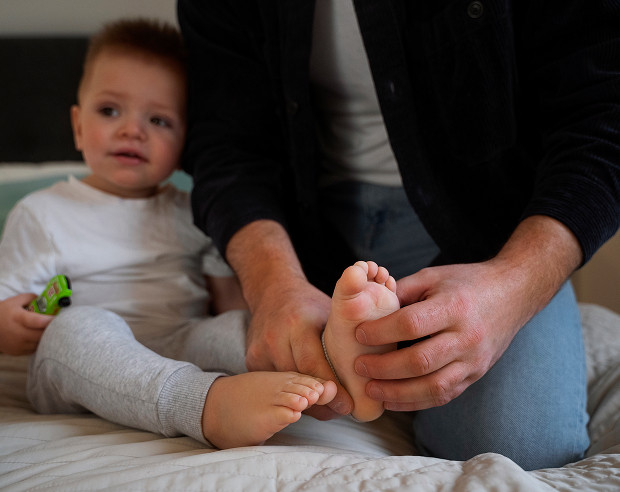
In the first few hours, it's most important not to fuss. Apply cold to the painful area through a cloth, keep the leg elevated and at rest, and then observe what happens at rest. When the foot is not jerked unnecessarily, it becomes clearer whether the pain is decreasing or, conversely, worsening. If necessary, gently immobilize the foot to prevent the child from accidentally twisting the foot again.
An elastic bandage is suitable for temporary support. Apply it carefully, without tightening it too tightly. If the toes become pale, cold, or numb, loosen the bandage. This approach is reasonable in any situation where a foot injury has occurred and a definitive diagnosis has not yet been made.
What not to do during the acute phase
In the first hours after an injury, avoid applying warming agents to the foot, taking hot baths, rubbing the sore area, or massaging the foot. It's also a bad idea to test whether the child can "get going" by forcing them to put weight on the foot through the pain. Such attempts can make the condition worse.
Parents often struggle to figure out how to treat a sprained foot at home, on the very first day, without a doctor. Until the diagnosis is clear, it's safest to take the most cautious approach:
- Remove weight
- Apply cold
- Rest the foot
- Calmly observe the condition
When the pain intensifies, the swelling increases, the child is reluctant to put weight on the foot, or there is even the slightest suspicion of a bone fracture, there's no point in delaying the procedure—an in-person examination by a doctor is necessary.
General information
How the doctor clarifies the diagnosis
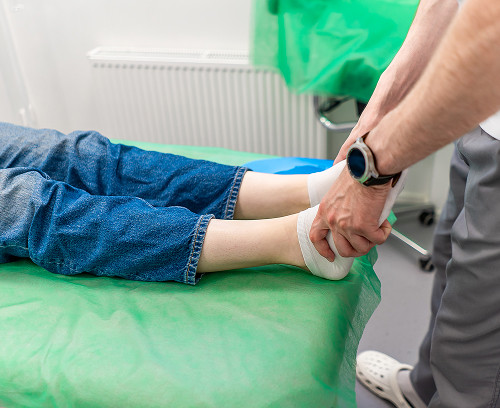
At the appointment, the doctor first asks how exactly it happened. It's important to know when the pain began, whether the child was able to take a few more steps, how quickly the leg began to swell, and whether it worsened after an hour or two. These details already indicate what to look for.
Then comes the routine examination. The pediatric traumatologist:
- Looks at where exactly the pain is most intense
- How the foot moves
- Is there pain when pressing
- Can the child put any weight on the foot?
The doctor almost always also pays attention to the child's gait: it clearly shows how much the child is sparing the affected side. When complaints persist longer than expected, or questions remain about the position of the foot, an orthopedist is called in. After such an examination, the doctor can more easily determine whether the pain resembles a sprained foot or whether another cause should be sought.
When X-rays and additional tests are needed
X-ray diagnostics are needed when indicated. If the doctor sees significant pain along the bone, significant limitation of support, rapid swelling, or other alarming signs, they rule out a foot fracture.
It's also helpful for the family to remember: the symptoms of a sprained foot in the first few hours can partially overlap with those of a bruise or fracture.
Doctor's response: "In my experience, soft tissue injuries in children's feet often appear more subtle than the child feels. The family's main goal in the first few hours is to reduce stress, support the foot, and maintain a relaxed walking pattern."



Frequently Asked Questions
How can you tell if your child has a ligament injury and not a fracture?
What should you do in the first hours after a sprained ankle?
When can I run and exercise again?
Why shouldn't you rely solely on home remedies?



This award is given to clinics with the highest ratings according to user ratings, a large number of requests from this site, and in the absence of critical violations.

This award is given to clinics with the highest ratings according to user ratings. It means that the place is known, loved, and definitely worth visiting.

The ProDoctors portal collected 500 thousand reviews, compiled a rating of doctors based on them and awarded the best. We are proud that our doctors are among those awarded.
Make an appointment at a convenient time on the nearest date
Price
Other Services

Appointment to the doctor


















Our clinics


Application “Personal Account K+31”












Why foot injuries in childhood require attention
When a foot twists suddenly, the structures that support the joint and help the foot maintain stability are damaged. Ligaments play a key role here. With a sudden movement, they become overstretched, causing microdamage to some of the fibers, which leads to pain, swelling, and limited mobility. A sprained foot in a child requires special attention: after a short break, the child may attempt to run or jump again, but putting weight on the foot too early interferes with normal healing.
The doctor looks at the point where the pain is most intense, whether there are any signs of bone damage, and how well the foot maintains its motion without excessive mobility. Even a moderate sprained foot in a child can take longer to heal if weight-bearing is reintroduced too early and the foot is not allowed to recover properly.