Hematoma on a Child's Arm: Causes, Symptoms, and Treatment

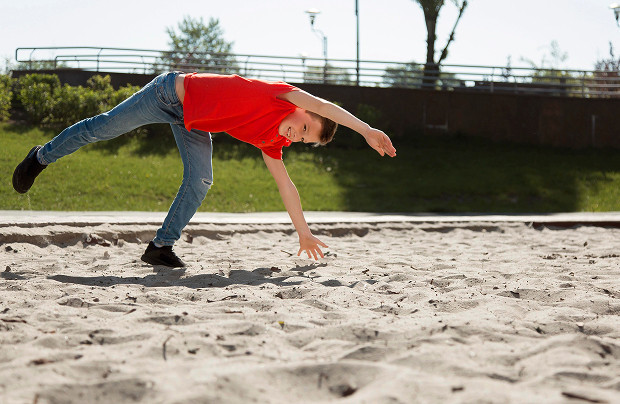
Childhood is always fun, but a hematoma on a child's arm can ruin their mood. In most cases, it's just a cosmetic defect, but there are situations when a simple bruise conceals more serious injuries.

Best specialists
Best
specialists
Expert equipment
Expert
equipment
Advanced diagnostic treatment
Advanced diagnostic
treatment
Sign up
Fill out the entry form on the page and we will call you back
Sign up Позвонить
Download the application “Personal Account K+31”
Everything about your health in one click!
Subscribe to social networks K+31
To keep up to date with current offers and receive useful advice about your health.

What is a hematoma on the arm and how is it different from a regular bruise?

In everyday conversation, the words "bruise" and "hematoma" are often considered synonyms, but doctors differentiate these terms based on the depth and extent of the injury. A bruise is a microscopic injury to the capillaries located in the upper layers of the skin. The blood saturates the tissue without forming a cavity.

A hematoma on the arm is a hemorrhage under the skin or in the muscles. When a vessel ruptures, blood accumulates in the tissue, creating a cavity filled with liquid or clotted blood. A hematoma always causes swelling, while a bruise is always flat.

What is a hematoma on the arm and how is it different from a regular bruise?

Why do children develop hematomas on their hands?

Why do children develop hematomas on their hands?

Children's skin is thin, the blood vessels are close to the surface, and the subcutaneous fat is loose. Even minor blows can bruise a child's hand.

Common causes: falls, impacts, sports, active games

The main factor is mechanical trauma. Children are injured due to:

  • Falling on the hands while running or jumping
  • Direct impact with the corners of furniture, sports equipment, or while playing with friends
  • Excessive sports activities
  • Simple everyday problems, such as getting a hand caught in a door
Why do children develop hematomas on their hands?

What factors increase the risk of a large hematoma?

Hematomas come in different sizes. It all depends on:

  • Location: in areas where blood vessels are adjacent to bone (elbow, forearm), hematomas form more quickly.
  • Individual characteristics of the vascular wall and blood clotting.
  • Taking certain medications.
  • The speed with which first aid (cold) is administered in the first minutes after the incident.
What does a hematoma on a child's arm look like: main symptoms

What does a hematoma on a child's arm look like: main symptoms

The clinical picture depends on the strength of the mechanical impact and the depth of the damaged vessel. In the first minutes after the injury, the skin may simply turn red, but symptoms quickly worsen.

Pain, swelling, puffiness, and skin discoloration

A hematoma is characterized by a triad of symptoms:

  • Arm pain: it is bursting in nature due to the pressure of accumulated blood on the nerve endings
  • Arm swelling and puffiness: the tissue increases in volume, the site of the injury becomes dense and hot to the touch
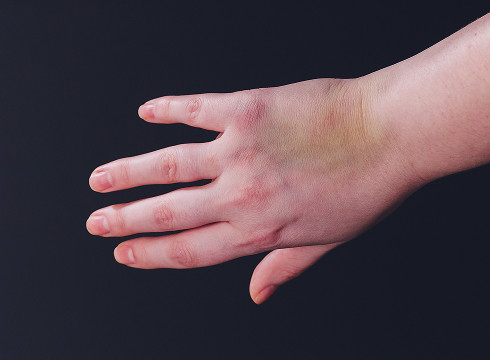
  • Color change: at first, the site of the injury appears purple or blue, eventually acquiring a purple tint

Stages of hematoma healing

The color of the hematoma changes during the healing process:

  • Days 1–2: blue-purple or black
  • Days 3–5 Day: The hematoma turns greenish-brown
  • Days 7–10: The spot takes on a yellowish tint and gradually fades
  • In children, due to their rapid metabolism, complete healing usually occurs within 10–14 days.

Worrying signs that shouldn't be ignored

Monitor not only the color of the spot but also how the child moves their arm or leg. Look for the following symptoms:

  • Limited movement: the child can't clench a fist or bend their arm at the elbow.
  • The pain hasn't subsided, but has actually intensified.
  • Fingers often go numb, and there's a tingling sensation.
  • The skin has become pale.

First aid for a hematoma on a child's arm

Proper care in the first two hours after injury can help limit the area of ​​bleeding and significantly reduce subsequent swelling. First aid for a hematoma should be consistent.

What to do in the first hours after an injury

The limb should be given complete rest. If the hand or forearm is injured, it's advisable to keep the arm elevated—this promotes blood flow and reduces pressure in the vessels. The child should be seated or laid down, minimizing their activity.

When to apply cold and for how long

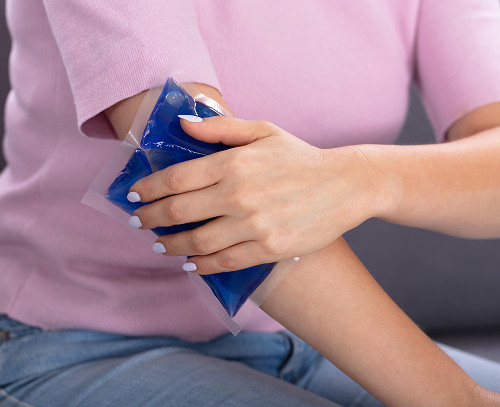
A cold compress is the most effective remedy. Cold causes vascular constriction and stops internal bleeding.

Use an ice pack, frozen food, or a special hypothermic pack. Be sure to wrap the ice in a towel or cloth to prevent frostbite. Apply cold for 10-15 minutes, then take a break for 20 minutes.

What not to do: heat, massage, or puncture

Avoid heating the injury site for the first 48 hours: heat dilates blood vessels and increases swelling.

Don't massage or rub the hematoma—this can break up the existing clot and trigger new bleeding.

Don't puncture the skin over the hematoma to "release the blood." This is a direct route to infection.

General information

When Diagnosis and Examination by a Doctor Are Needed

Not every hematoma in a child requires a hospital visit, but in some cases, a professional examination is vital to rule out hidden injuries.

How a Doctor Assesses an Injury

A pediatric traumatologist performs a visual examination, evaluates joint range of motion, checks finger sensation, and checks the radial artery pulse. It is important to determine whether there are any signs of damage to nerve trunks or major vessels.

When an X-ray or ultrasound may be prescribed

If the impact was severe, the clinical picture may be blurred due to swelling. In such situations, instrumental examinations are prescribed:

  • X-ray: mandatory if a bone fracture or crack is suspected
  • Soft tissue ultrasound: allows you to assess the volume of accumulated blood, identify muscle or ligament damage, and distinguish a hematoma from other neoplasms

When is emergency care needed?

Sometimes the situation requires immediate intervention. To assess the condition, use the following list of signs.

When should you urgently take your child to the doctor:

  • The pain quickly intensifies and is not relieved by conventional means
  • The hand is noticeably swollen, and the swelling extends far beyond the site of the blow
  • The child does not move the hand or fingers
  • There is a visual deformation, an unusual position of the hand
  • Severe pallor, numbness, or coldness of the hand
  • A bruise on the child's hand is rapidly increasing in size before our eyes
When Diagnosis and Examination by a Doctor Are Needed

How to Treat a Hematoma on the Arm in Children

Treatment tactics depend on the severity of symptoms and diagnostic results.

Home Care for an Uncomplicated Hematoma

If a child's arm hematoma is small and mobility is preserved, home observation is sufficient. During the first 24 hours, apply cold and rest. From the second or third day, when the bleeding has completely stopped, topical absorbable agents (gels with heparin or troxerutin) can be used, but only after consulting a doctor and if there is no skin damage.

Medical Treatment for Severe Swelling and Pain

If the soft tissue contusion is extensive, the doctor may apply a splint to immobilize the limb. This reduces pain and prevents re-injury to the blood vessels. Physiotherapy (UHF, magnetic therapy) may also be recommended during the resorption phase.

When specialist intervention is required

In exceptional cases, if the blood in the hematoma does not resolve, begins to fester, or compresses vital structures, surgery is performed. The surgeon performs a puncture (removal of blood through a puncture) or drainage of the cavity. Such procedures should not be performed independently.

How to Treat a Hematoma on the Arm in Children

Treatment Considerations in Children of Different Ages

The patient's age dictates its own rules for treating and diagnosing injuries.

In Infants

In infants, hematomas can result from a fall from a changing table or crib. Babies' bones are very flexible, so even without a fracture, a hematoma in a child under one year of age requires a mandatory medical examination, as the risk of systemic reactions is higher.

In Preschool-Age Children

During this period, children are extremely active but cannot yet accurately describe the nature of pain. Parents should be guided by their behavior: if a child protects their hand, cries when trying to dress it, or refuses to pick up toys with the injured hand, this is cause for concern.

In School-Age Children and Teenagers

Teenagers often hide injuries sustained during sports or active play. Here, a visual examination becomes paramount. Treatment for hematomas in adolescents is not much different from that for adults, but it is important to rule out damage to the bone growth plates.

Treatment Considerations in Children of Different Ages

How to distinguish a hematoma from a fracture, dislocation, or sprain

Correctly differentiating an injury helps avoid disabling consequences. A hematoma often accompanies more severe injuries.

Symptom Hematoma (soft tissue contusion) Fracture Sprain/Dislocation
Pain Moderate, worsens with pressure Severe, sharp, diffuse Acute in the joint area
Swelling Localized, moderate Severe, rapidly increasing Moderate, in the joint projection
Mobility Maintained, slight soreness possible Severely limited, often in an unnatural position Limited due to joint pain
Emergency care Not always, home observation Immobilization is mandatory Desirable to rule out a fracture
Examinations Not usually required X-ray, possibly CT scan X-ray, ultrasound of the joint
How to distinguish a hematoma from a fracture, dislocation, or sprain
How long does it take for a hematoma on a child's arm to heal?

Everything is individual. A small hematoma on a child's arm will resolve in 7-12 days. If the muscles are affected, it will take 3-4 weeks.

If first aid for a hematoma is provided promptly, the recovery time is shortened.

Prevention of household and sports injuries

It's impossible to completely protect a child from injuries, but you can reduce the risk.

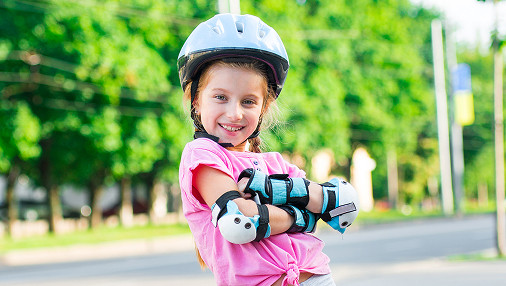
  • Use elbow pads when rollerblading, skateboarding, or biking.
  • Teach your child safety rules at home (how to properly close doors, why it's not safe to run with objects in your hands).
  • Create a safe space at home (pads for sharp corners, non-slip surfaces).

When to seek urgent medical attention

It's important for parents not to panic, but to remain vigilant.

"In my practice, most minor hematomas in children resolve without complications if I apply cold and rest the hand in the first few hours. However, if the child is unable to move the hand, the pain increases, or the swelling becomes severe, an in-person examination is necessary to rule out a fracture or joint injury," notes the pediatric traumatologist.

Frequently Asked Questions

Can a child's arm hematoma be treated at home?

Yes, if the bruise on the child's arm is small, they can move their fingers and hand freely, and the pain is moderate. In this case, only cold and rest are needed.

How long does it take for a child's arm hematoma to heal?

On average, it takes 1-2 weeks. The time frame depends on the force of the blow, the extent of the injury, and individual physiology.

When are bruises and swelling after a contusion dangerous?

You should see a doctor if the pain intensifies, numbness increases, the skin turns pale, and throbs.

Do I need an X-ray or ultrasound for a hematoma on the arm?

You should see a doctor if you suspect bone or ligament damage, or if the hematoma is extensive.

Hematomas should be treated promptly. The main thing is to remember the restrictions (no heating, no massaging) and don't hesitate to seek medical help if you have any doubts.

Our doctors

Polovnikova (Kroshkina) Valeria Alexandrovna
Experience 15 years
Make an appointment
Polovnikova (Kroshkina)
Valeria Alexandrovna
Traumatologist-orthopedist, pediatric
Lopatin Kirill Alexandrovich
Experience 16 years
Make an appointment
Lopatin
Kirill Alexandrovich
Traumatologist-orthopedist, pediatric
All specialists
2GIS Award
2GIS Award

This award is given to clinics with the highest ratings according to user ratings, a large number of requests from this site, and in the absence of critical violations.

«Good place» according to Yandex

This award is given to clinics with the highest ratings according to user ratings. It means that the place is known, loved, and definitely worth visiting.

Our doctors are laureates of the ProDoctors Award

The ProDoctors portal collected 500 thousand reviews, compiled a rating of doctors based on them and awarded the best. We are proud that our doctors are among those awarded.

Make an appointment at a convenient time on the nearest date

Price

Initial appointment with a pediatric traumatologist-orthopedist
from 8 950 ₽
Follow-up appointment with a pediatric traumatologist-orthopedist
from 7 950 ₽

Other Services

Treatment of hip sprain in a child Ankle injury in a child: treatment and recovery Calf muscle strain in children: symptoms and treatment Treatment of sprains in children: symptoms, first aid and recovery Treatment of pectoral muscle strain in children Treatment of muscle strains in children Hip sprain in children: symptoms and treatment Sprained Foot in Children: Treatment, Symptoms, First Aid, and Recovery Treatment of Achilles tendon strain in children First aid for bleeding in children: how to act quickly and safely Neck Strain in Children: Symptoms, Treatment, and Recovery Subungual hematoma in children: symptoms, first aid, and treatment in Moscow Wrist sprain in a child: symptoms, treatment, and recovery Subcutaneous hematoma in a child: symptoms, treatment, and first aid Treatment of the consequences of trauma in children Orthopedic rehabilitation for children in Moscow: recovery from injuries, surgeries, and musculoskeletal disorders Reduction of subluxations and dislocations in children Plaster cast application for a child: procedure, types of casts, and care Treatment for a child's shoulder sprain Soft tissue hematoma in a child: symptoms, first aid, and treatment Application of an immobilization bandage to children Swelling after a bruise in a child: treatment and first aid Hip contusion in a child: symptoms, first aid, and treatment Head injury in children: treatment, symptoms, and first aid Chest contusion in a child: symptoms, first aid, and treatment A child's post-injury hematoma: how to treat it, when to see a doctor, and what to do in the first few hours Treatment of a child's hand contusion: symptoms, first aid, and recovery Hematoma on a child's finger: first aid, treatment, and when to see a doctor Knee contusion in a child: treatment, symptoms, and first aid Bruised tailbone in a child: symptoms, first aid, and treatment in Moscow Elbow bruise in a child: symptoms, first aid and treatment Bruised leg in a child: symptoms, first aid and treatment Hematoma on a child's leg: causes, symptoms, first aid, and treatment Hematoma on a child's face: causes, first aid, and treatment in Moscow Treatment of groin strain in children Bruised nail in a child: treatment, first aid, symptoms, and recovery Hematoma on the head of a child: treatment and symptoms Eye hematoma in a child: treatment, first aid, and when to see a doctor Bruised ribs in children: treatment, symptoms, and first aid Back strain in children: symptoms, treatment, and recovery Soft tissue contusion in a child: symptoms, first aid, and treatment Treatment of a joint contusion in a child in Moscow: symptoms, first aid, diagnosis, and recovery Bruised nose in a child: treatment, first aid, and when to see a doctor Bruised Foot in a Child: Symptoms, First Aid, and Treatment in Moscow Bruised finger in a child: treatment, first aid, and when to see a doctor Back injury in a child: symptoms, first aid, and treatment in Moscow Bruised arm in a child: symptoms, first aid, and treatment Shoulder contusion in a child: symptoms, first aid and treatment Bruised ribs in children: symptoms, treatment, and first aid Zygomatic bone fracture in a child: symptoms, diagnosis, treatment and recovery Emergency traumatology for children: urgent care for injuries
Make an appointment

Appointment to the doctor

Fill out the form, our managers will contact you within 15 minutes
Почему К+31?
К + 31 — full-cycle multidisciplinary medical centers, including the possibility of providing medical services of European quality level.
К + 31 — are leading doctors and diagnostics using high-tech equipment from world manufacturers (Karl Storz, Olympus, Siemens, Toshiba, Bausch&Lomb, Technolas, Zeiss, Topcon).
К + 31 — is ethical. The staff of K+31 clinics maintain open relationships with patients and partners. An individual approach to each patient is the basis of our service standards.
К + 31 — is modernity. On call 24/7: call center operators will answer your questions at any time and book you an appointment with doctors. Contact us by phone, through the feedback form on the website and Max.

Our clinics

Address K+31 on Lobachevskogo

st. Lobachevskogo, 42/4

Contacts

+7 499 999-31-31

Opening hours

Mon-Fri: 08:00 – 21:00
Weekend: 09:00 – 19:00
Didn't find the service you were looking for?

Экстренная помощь