
Spinal Fracture Treatment in Children
Spinal fracture treatment in children is aimed at restoring the anatomical integrity of the vertebrae, preserving spinal cord function, and preventing complications. Any spinal injury in childhood requires a careful approach, as the spine continues to grow and develop.
If a spinal fracture is suspected in a child, relying solely on the severity of pain is inappropriate. Even minimal complaints can conceal serious vertebral damage. Therefore, timely diagnosis and appropriate treatment are essential.
Modern spinal fracture treatment includes immobilization, fusion monitoring, and phased rehabilitation. This approach ensures full recovery from a spinal fracture and reduces the risk of deformities.

specialists

equipment

treatment






Causes and types of injury
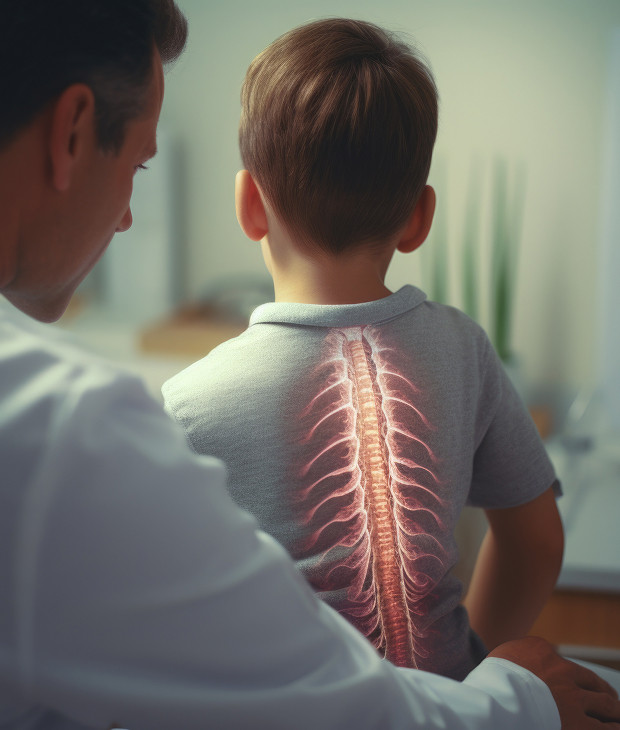
The main causes of injuries are falls from heights, athletic activities, sudden axial impacts, and road traffic accidents. In most cases, spinal trauma occurs when loads are transferred along the spinal column.
Compression Fracture
Compression fractures are the most commonly diagnosed fractures, especially in the winter months, when children actively sled and slide down large hills. They occur when the vertebral body is compressed, resulting in a decrease in its height.
In practice, compression fractures of the spine are the most frequently diagnosed fractures in children. In most cases, they are classified as "stable fractures," meaning there is no significant displacement.
Despite this, such a compression fracture requires monitoring. Without control, the vertebra can gradually change shape, leading to a pathological spinal curvature.
Unstable Injuries
An unstable fracture is an injury in which the integrity of a spinal segment is disrupted, creating a risk of vertebral displacement.
This is a dangerous condition. Such injuries can lead to spinal cord damage. The child develops neurological symptoms, weakness, sensory impairment, and movement disorders.
In such cases, treatment requires a more proactive approach and may involve a neurosurgeon.
Symptoms of a spinal fracture in children
Symptoms of a spinal fracture in children can be subtle, especially with mild injuries. This is one reason for late diagnosis.
Pain and limited mobility
The main symptom is back pain. It intensifies with movement or bending. The child becomes more cautious, afraid to take an extra step, and avoids twisting their body.
Gradually, severe limited mobility develops, which may persist even at rest.
Neurological Symptoms
Neurological symptoms occur when nerve structures are involved. These include numbness, weakness in the limbs, and decreased sensation.
If your child exhibits these symptoms, there's a high probability that their spinal cord is damaged. Call an ambulance immediately; an injury diagnosis is needed.
When to Seek Urgent Care
There are signs that require urgent care, as they may indicate a serious spinal injury.
Symptoms that require immediate medical attention include:
- Severe pain after a fall or blow
- Limited movement
- Tingling and cold fingers
- Weakness in the arms or legs
- Gait disturbance
- Urination problems
These symptoms of a spinal fracture require immediate medical attention.
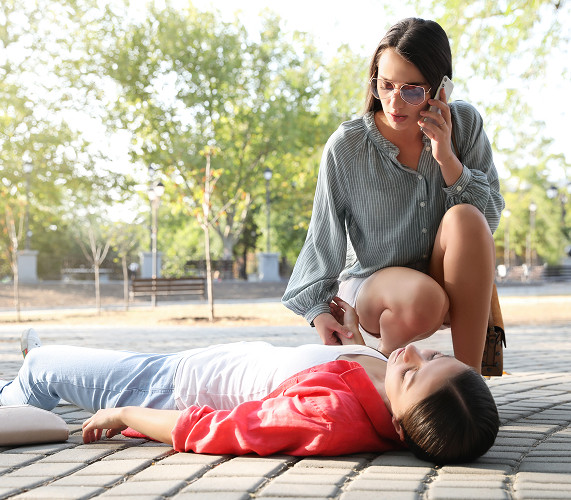
If your child has had a bad fall or been in an accident, you need to act confidently and quickly. The main goal is to ensure immobilization.
Place your child on a hard surface (the floor or pavement if the injury occurred outdoors) and stabilize their body. Ask them not to move.
Important:
- Do not attempt to set the fracture yourself.
- Do not forcibly lift your child or ask them to sit up.
- Do not massage the area of impact.
- Avoid any movement, even the slightest.
Even if your child isn't experiencing severe pain, a compression fracture of the spine in children cannot be ruled out. Call an ambulance and go to the emergency room.
General information
Diagnosis of a Spinal Fracture
Accurate diagnosis is a key step, directly affecting the treatment and prognosis of a spinal fracture. If a spinal fracture is suspected in a child, an examination should be performed as soon as possible.
Examination and Neurological Assessment
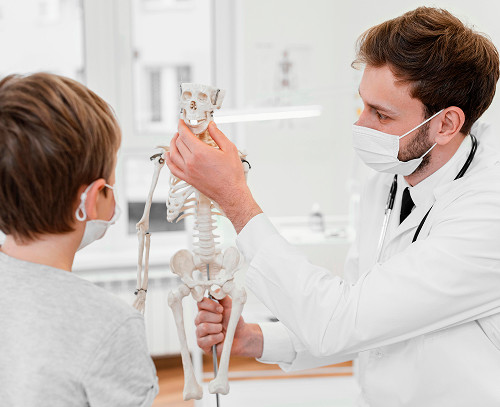
First, the child is examined by a pediatric traumatologist. They determine the exact nature of the injury, listen to the child's complaints, and assess the child's general condition.
A neurological assessment is a mandatory part of the examination. Sensation, muscle strength, and coordination are tested. This allows for the detection of even minimal neurological symptoms.
If necessary, a pediatric orthopedist is involved in the examination, and if complications are suspected, a neurosurgeon is involved.
X-rays, CT scans, and MRI
A spinal X-ray remains the primary diagnostic method. It can detect changes in the shape of the vertebra, a decrease in its height, and signs of compression.
X-rays don't always provide an accurate picture. If the image shows no abnormalities, but the child is unable to move or is experiencing severe pain, a traumatologist or neurosurgeon may prescribe:
- CT scan of the spine. This is an emergency diagnostic method. The image can show damage to bone structures and the type of fracture.
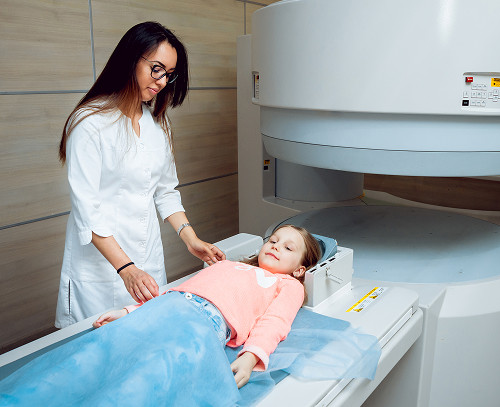
- MRI of the spine. Provides information on the condition of soft tissues.
A comprehensive diagnosis is especially important if an unstable fracture or neurological impairment is suspected.


Possible complications
Even with proper treatment, there is a risk of complications, especially if diagnosis is delayed or recommendations are not followed.
The most common problems parents face are:
- Back deformity
- Chronic back pain
- Limited mobility
- Neurological deficit
The risk is higher in cases of severe injuries and vertebral displacement.

Preventing Recurrent Injuries
After treatment, it is important to minimize the risk of recurrence.
Prevention includes monitoring physical activity, strengthening core muscles, and following safety precautions. Properly organizing sports activities is especially important.
If a child has already suffered a spinal fracture, regular follow-up with a specialist is necessary.

Frequently Asked Questions
Can a spinal fracture in a child be treated without surgery?
What symptoms are considered dangerous?
How long does recovery take?
What tests are needed if an injury is suspected?
If an injury is suspected, a doctor's examination and neurological assessment are first performed: the specialist checks sensation, muscle strength, movement in the arms and legs, the presence of pain, and signs of neurological deficit. After this, an X-ray is usually ordered to detect deformity or loss of vertebral height.
If X-ray data is insufficient or a complex injury is suspected, the doctor may refer the child for a CT or MRI. CT scans help assess bone structures in detail, while MRIs are used to assess the condition of the spinal cord, ligaments, intervertebral discs, and soft tissues. This approach allows for a precise determination of the nature of the injury and the selection of a safe treatment strategy.
Comparison of Treatment Methods
| Parameter | Conservative Treatment | Surgical Treatment |
|---|---|---|
| When used | For a stable fracture | For instability, displacement, or risk to nerve structures |
| What is included | Immobilization, monitoring, pain relief, Physical therapy | Immobilization, observation, rehabilitation |
| Goal | Ensure proper fusion of the vertebrae | Stabilization and reduction of the risk of complications |
Doctor's opinion
"In my practice with children with spinal injuries, it is especially important not to underestimate even vague symptoms: sometimes a child only complains of pain, but this may conceal a serious injury. Therefore, the approach is always based on an accurate diagnosis and assessment of the neurological status," says a pediatric traumatologist and orthopedist.



This award is given to clinics with the highest ratings according to user ratings, a large number of requests from this site, and in the absence of critical violations.

This award is given to clinics with the highest ratings according to user ratings. It means that the place is known, loved, and definitely worth visiting.

The ProDoctors portal collected 500 thousand reviews, compiled a rating of doctors based on them and awarded the best. We are proud that our doctors are among those awarded.
Make an appointment at a convenient time on the nearest date
Price
Other Services

Appointment to the doctor



Our clinics


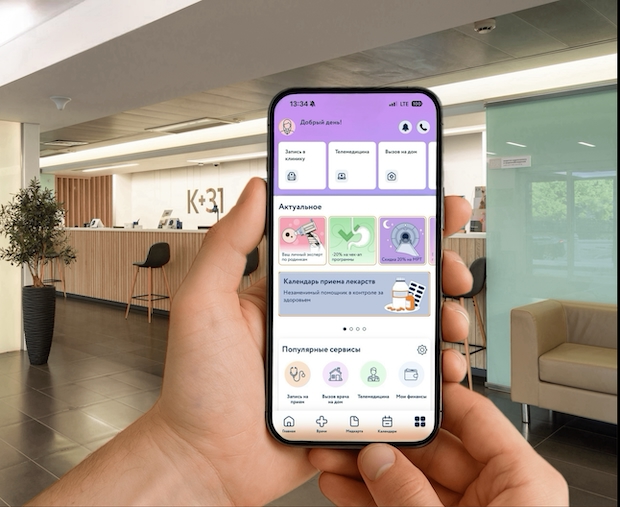
Application “Personal Account K+31”












What is a spinal fracture in a child?
Such injuries in children and adolescents most often occur due to a fall or a sudden blow. Unlike in adults, compression fractures of the spine are more common in children, where the vertebral body is compressed without completely collapsing.
Children recover more quickly from such injuries. This is because bone tissue is more elastic and the ligaments are more flexible. This means that a compression fracture can occur with minimal external manifestations.
Even if a stable fracture is diagnosed, this does not mean there is no risk. Malunion can lead to kyphotic deformity, poor posture, and chronic back pain.
Any spinal injury requires an assessment of the spinal cord, as there is a risk of neurological complications.