
Broken toe in a child: symptoms, treatment and recovery
Lower extremity injuries in children are one of the most common reasons for emergency room visits. Due to increased mobility, active play, and still-developed motor coordination, childhood injuries remain high. Among all foot injuries, a broken toe in a child is the most common. It is important for parents to understand how to distinguish a serious injury from a simple bruise and what steps to take to ensure proper bone healing.

specialists

equipment

treatment






How to recognize a broken toe
Making a diagnosis on your own can be difficult, as pain thresholds vary from child to child. However, there are classic signs that indicate a broken toe.
Main symptoms of a fracture
Parents should pay attention to a combination of symptoms. Typical symptoms of a broken toe include:
- Sharp pain at the time of injury that does not subside within 15-20 minutes
- Rapidly increasing swelling and pain radiating to adjacent areas of the foot
- Bruise on the toe or extensive hematoma (subungual or subcutaneous)
- Severe limitation of motion (the child cannot move the toe or curl it)
When pain and swelling may indicate a dislocation
If the toe appears abnormally curved or shortened, this is a clear sign of a dislocation of the phalanx. In such cases, the pain becomes unbearable with the slightest attempt to touch the foot. If swelling extends to the entire forefoot and the skin becomes taut and shiny, this may indicate serious vascular damage and misalignment of bone fragments.
| Symptom | Contusion | Non-displaced fracture | Displaced fracture |
|---|---|---|---|
| Pain | Moderate, subsiding | Severe, stable | Severe, increases with movement |
| Swelling | Possible slight | Often present, localized | Usually noticeable, extensive |
| Deformity | None | Rare | May be pronounced |
| Weight bearing | More often possible | Painful | Severely difficult or impossible |
| Diagnosis | Doctor's examination | Examination and X-ray | Examination and X-ray |
Diagnosis of a fracture in a child
Even if you are confident in the diagnosis, a visit to a medical facility is essential. Only a qualified pediatric traumatologist-orthopedist can assess the extent of the injury and develop a treatment plan.
Examination by a traumatologist-orthopedist
During the appointment, the doctor will perform a visual examination, palpation, and check for intact sensation and circulation in the toes. The specialist will collect a medical history: how exactly the foot injury occurred, from what height the object fell, or how the child was hit. This will help determine the type of bone injury.
X-ray: why is it needed?
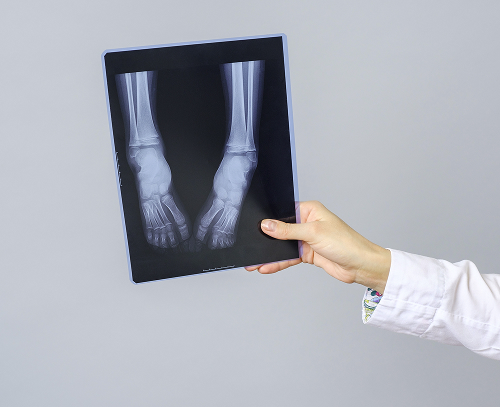
If a fracture is suspected, an X-ray of the toe is ordered. From the x-ray, the doctor will be able to:
- See exactly where the bone is broken
- Detect the presence of small fragments
- Precisely determine whether there is displacement
- Assess the condition of the growth plates in children
When additional tests might be needed
Sometimes a fracture can also affect a joint. There are also situations when a child has damaged ligaments. In such situations, the doctor may order a CT or MRI.
But if a child has fallen at home or on the street, an x-ray is quite sufficient.
General information
Treatment of a broken toe in a child
Treatment of a broken toe in a child begins immediately after diagnosis. The most important thing now is to immobilize the broken bone: without movement, a callus forms.
Rest and fixation
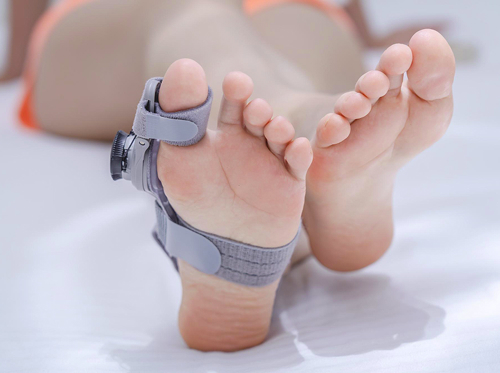
Immobilization is the mainstay of treatment. Unlike fractures of larger bones, a child's toe is not always placed in a cast. Adhesive bandage is often used: the injured toe is bandaged to the healthy adjacent toe, which serves as a splint. A soft material (gauze) is always placed between the toes to prevent diaper rash. For a big toe fracture or multiple fractures, a plaster splint or special orthosis may be applied.
Pain relief and care in the first days
To enable the child to lead a normal life, swelling and pain must be reduced. For this purpose, ibuprofen or paracetamol-based medications are used in age-appropriate dosages.
You can apply ice or any frozen food from the refrigerator to the foot through a cloth for 10-15 minutes.
When more active treatment is required
If a displaced fracture is diagnosed, the doctor performs a reduction—returning the fragments to their correct position under local or general anesthesia (depending on the age and complexity). In exceptional cases, when the bone cannot be held in place by fixation, pin fixation may be required, which is removed after the bone has begun to heal.
Why you shouldn't self-medicate
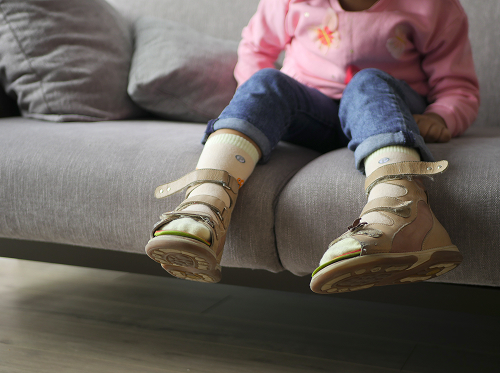
Many people believe that "the toe will heal on its own." However, a lack of adequate care can lead to chronic pain. Treatment for a broken toe should be supervised by a specialist, as in children, the bones may heal very quickly but in an incorrect position, which can cause problems with shoe fitting and gait in the future.

Frequently asked questions (FAQ)
How can you tell if your child has a broken toe and not a bruise?
Should an X-ray be taken if a finger fracture is suspected?
How long does it take for a child's broken toe to heal?
What should you avoid doing if you have a broken toe?



This award is given to clinics with the highest ratings according to user ratings, a large number of requests from this site, and in the absence of critical violations.

This award is given to clinics with the highest ratings according to user ratings. It means that the place is known, loved, and definitely worth visiting.

The ProDoctors portal collected 500 thousand reviews, compiled a rating of doctors based on them and awarded the best. We are proud that our doctors are among those awarded.
Make an appointment at a convenient time on the nearest date
Price
Other Services

Appointment to the doctor



Our clinics


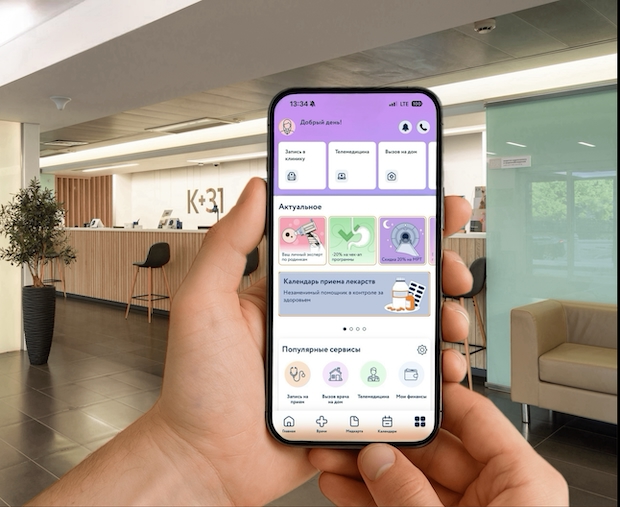
Application “Personal Account K+31”












What is a broken toe?
A fracture is a break in the integrity of bone tissue. Children's bones are more elastic, and the periosteum (bone membrane) is thicker than in adults. Therefore, when a fracture occurs, fragments of the broken bone remain within the periosteum.
However, this doesn't mean a broken toe can go untreated: if a child experiences foot pain after a blow or fall, be sure to consult a traumatologist.
Why are such injuries common in children?
A child's skeleton is constantly growing, and the growth plates of the bones are the most vulnerable areas. Any childhood foot injury can affect these areas.
Most often, a leg fracture in children occurs due to:
Since a child's foot is still developing, the ligaments may be elastic, but the phalanges themselves remain fragile when subjected to sudden mechanical impact.
How is a broken toe different from a bruise?
A bruise or fracture of a toe always hurts. With this type of injury, only soft tissue is damaged, so the pain usually subsides within a few hours. With a fracture, the discomfort does not go away even the next day.
The main difference lies in the nature of the pain and the dynamics of swelling: with a fracture, the condition often worsens over time, rather than improves.
Types of finger phalanx fractures
Traumatologists classify injuries based on several criteria. It's important to understand the specific type of injury the child has suffered: