Knee Sprains in Children: Symptoms, Treatment, and Recovery

Children lead extremely active lifestyles, so their musculoskeletal system is regularly exposed to high stress. Under these conditions, the knee joint bears the brunt of the impact during running or accidental falls.

It is crucial for parents to recognize the symptoms of a knee sprain promptly to avoid serious consequences. Professional treatment of knee sprains in children ensures a full recovery without loss of natural leg function.

Best specialists
Best
specialists
Expert equipment
Expert
equipment
Advanced diagnostic treatment
Advanced diagnostic
treatment
Sign up
Fill out the entry form on the page and we will call you back
Sign up Позвонить
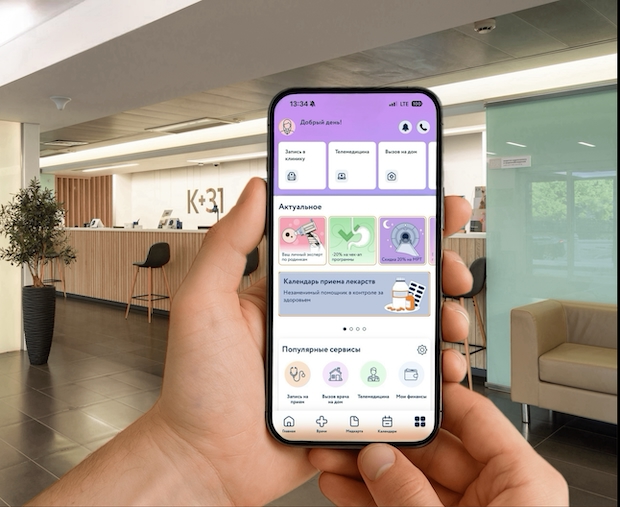
Download the application “Personal Account K+31”
Everything about your health in one click!
Subscribe to social networks K+31
To keep up to date with current offers and receive useful advice about your health.

What is a knee sprain?

This pathological condition is characterized by the development of microscopic tears in the connective fibers that hold the bones together. Anatomically, the knee joint has a complex, multi-level stabilization system that may not withstand sudden overload.

When the elastic limit of the tissues is significantly exceeded, the knee ligaments are stretched. This causes localized aseptic inflammation and significantly disrupts the normal function of the entire lower limb.

What structures are damaged?

The knee ligaments, which provide lateral and frontal stability to the leg, primarily bear the mechanical impact. Quite often, the joint capsule and surrounding muscle fibers are involved in the inflammatory process.

Any such knee injury requires close attention, as the damaged tissues temporarily lose their physical strength. If detected promptly, a knee ligament sprain can be successfully treated without surgery.

How is a sprain different from a bruise or ligament tear?

Visually, these injuries can be very similar, but their underlying nature is radically different. A common knee bruise affects only the soft superficial tissues without disrupting their anatomical integrity.

A complete ligament tear, on the other hand, signifies a critical separation of the fibers from the underlying bone or a rupture in the middle. A sprain occupies an intermediate position, maintaining overall structural continuity despite multiple microtraumas.

To better understand the differences between these conditions, we have prepared a visual chart. It will help you quickly identify the initial signs immediately after an incident. Carefully review these key points.

Symptom Sprain Bruise Ligament Torn
Pain increases with movement usually superficial severe, sharp
Swelling moderate may be moderate often severe
Weight-bearing possible with pain usually possible often difficult
Mobility limited moderately limited severely reduced
What is a knee sprain?

Why do children get traumatized?
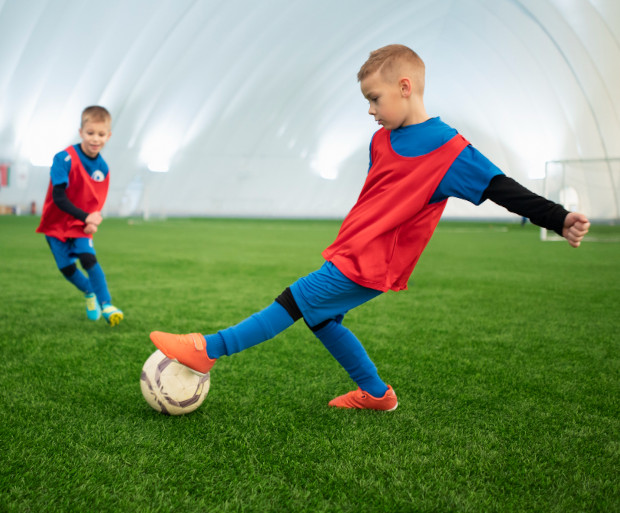
A healthy knee joint can easily withstand normal loads. However, children's motor activity is unpredictable, creating a constant risk of accidental injuries outdoors or at home. Most often, a child's knee is sprained at home due to careless movements. The main causes are a mismatch between the external load and the current capabilities of the developing musculoskeletal system.

Sports and active games

Intense training without a proper warm-up often leads to muscle strain. A typical sports injury occurs during:

  • Football
  • Gymnastics
  • Running

Insufficiently warmed-up muscles poorly absorb shock, leaving the joint without the necessary support. As a result, all the kinetic energy falls on the fragile connective tissues of the limb.
Falls, Jumps, and Sharp Turns

The natural biomechanics of a joint are designed for a strictly defined vector of movement in space. An unsuccessful jump or a sudden change in direction leads to severe twisting of the supporting leg. Sudden pain after a fall often indicates that the foot remained rigidly fixed, while the body continued to move due to inertia. This is a classic biomechanical mechanism for causing painful micro-tears.

Characteristics of a Child's Body

In childhood, bones and the entire ligamentous apparatus are in a state of continuous active development. Natural tissue elasticity is high, but neuromuscular coordination of movement is not yet fully developed. Because of this, protective muscle control is sometimes delayed, simply failing to stabilize the leg at the moment of a fall.

This physiological characteristic makes children and adolescents highly vulnerable to mechanical overloads.

Symptoms of a knee sprain

The overall clinical picture always directly depends on the number of damaged connective fibers. Basic symptoms of a knee sprain appear almost immediately after the traumatic incident. Parents need to carefully assess the current condition of the injured leg. Doctors identify several key signs of this orthopedic problem.

Pain, Swelling, and Bruising

The first warning sign is always acute knee pain, which rarely subsides with complete rest. Swelling quickly develops around the kneecap, visually increasing its size.

If small blood vessels are damaged, a noticeable hematoma may form under the skin. Severe knee pain always requires careful handling of the leg.

Limping and Limited Mobility

The body reflexively attempts to protect the affected area from further mechanical damage. A limp is immediately noticeable in young patients, as they instinctively avoid putting full weight on the affected leg. Any attempt to fully flex or extend the limb causes discomfort, leading to a marked limitation of mobility.

When to suspect a more serious injury

Some clinical manifestations clearly go beyond a simple microtear of tissue. Intense pulsation, visible anatomical deformation of the contours, or a loud snapping sound indicate critical damage. A complete ligament tear is rarely diagnosed, but it cannot be ruled out without an examination.

Doctor's quote:

"In pediatric traumatology, it is important not to underestimate even 'minor' swelling. In a child, a sprain may appear to be a bruise, but if there is pain, limping, and limited movement, it is best to have the knee examined by a specialist as soon as possible."
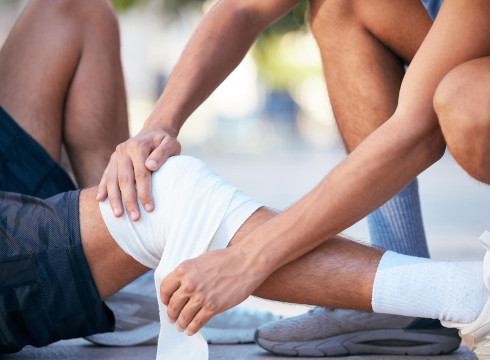
First Aid for a Knee Sprain

First Aid for a Knee Sprain

The speed of subsequent tissue healing directly depends on the absolute correctness of actions in the first minutes. Proper first aid for a knee sprain significantly reduces the risk of developing a severe inflammatory process. A parent's primary task is to minimize the negative consequences of a blow or an unsuccessful twist. After all, proper first aid for a knee sprain will alleviate the condition until you arrive at the hospital.

What to do in the first minutes and hours

Immediately after an unpleasant incident, it is necessary to completely stop all physical activity. Reliable immobilization will prevent further divergence of damaged microfibers. Local cold applied to an injury quickly constricts blood vessels and effectively prevents the development of a large hematoma.

For the convenience of parents, we have compiled a short and clear checklist. It will help you act as consistently as possible in a stressful situation. Save this list for quick response.

What to do in the first 24 hours after a knee injury:

  • Stop straining
  • Apply cold through a cloth
  • Keep the leg resting and comfortable
  • Do not massage or apply heat to the joint
  • See a doctor if pain, swelling, or lameness occurs

General information

Diagnosis in a Child

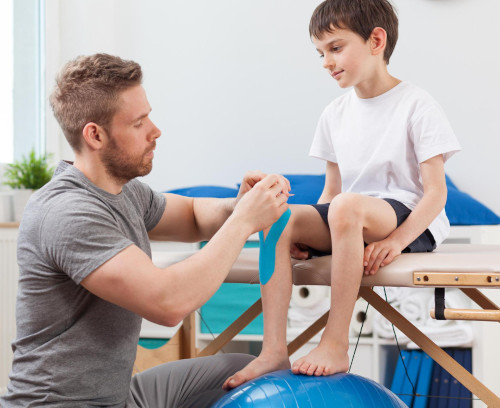
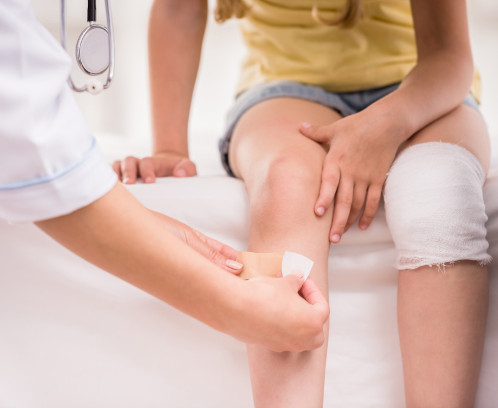
If pain develops after a fall, the knee is swollen, and the child has difficulty putting weight on the leg, it's best not to wait. Even a seemingly ordinary knee bruise can be accompanied by damage to the ligaments or bone structures. In such a situation, a traumatologist-orthopedist is needed. They will carefully:

  1. Examine the knee joint
  2. Check movement
  3. Check stability and painful areas

A complete diagnosis helps determine whether there is a knee sprain, a fracture, or the consequences of a sports injury. If necessary, the doctor prescribes knee immobilization to reduce stress and properly develop a recovery plan after a knee injury.

Examination and Functional Tests

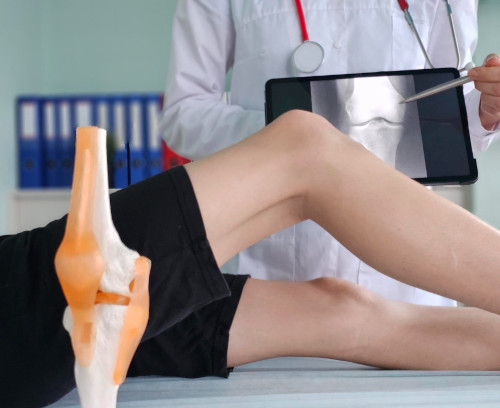
During the appointment, the doctor carefully palpates the area around the kneecap, pinpointing the exact location of discomfort. Special painless movement tests allow an objective assessment of the stability of the ligamentous apparatus. Even minor knee pain during such careful testing provides the specialist with important information.

When are X-rays, ultrasound, or MRI needed?

A routine clinical examination is not always sufficient to make an accurate, definitive diagnosis. A standard X-ray is always prescribed to rule out hidden fractures in the bones. Ultrasound or high-precision MRI is used for a detailed examination of soft tissues, cartilage, and synovial fluid accumulation.
Diagnosis in a Child

Treatment of Knee Sprains in Children

The general therapeutic approach is always aimed at creating ideal conditions for natural fiber fusion. Comprehensive treatment of knee sprains in children requires discipline and strict adherence to recommendations from parents. The entire treatment process is consistently divided into several key stages. And remember, effective treatment of knee sprains in children excludes self-medication.

Rest and Immobilization

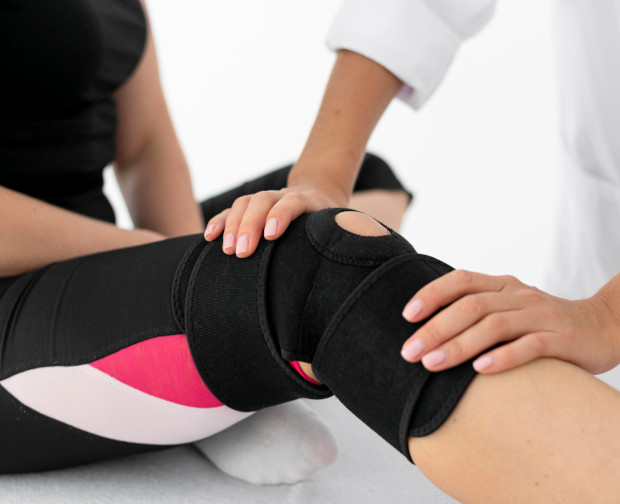
The fundamental basis for successful healing is the complete absence of mechanical irritation to the injured area. Rigid immobilization of the knee with an elastic bandage or a special splint reliably holds the tissues in the correct physiological position. In some cases, a modern medical orthosis is used to provide optimal support. Proper immobilization prevents accidental leg movement.

Cold and Elevation

During the first days of therapy, soft temperature compresses must be continued. Regular cold compresses should be applied carefully in short sessions to avoid accidentally causing localized frostbite. Elevating the limb on a soft pillow promotes blood flow, which significantly speeds up the reduction of knee swelling. If knee swelling persists, the doctor will adjust the treatment plan.

Pain Relief and Therapy as Prescribed by the Doctor

If the discomfort is severe, the young patient requires adequate medication support. If knee pain interferes with restful sleep, a specialist will prescribe safe pediatric anti-inflammatory medications. Properly selected treatment for a knee sprain completely eliminates the need for unintentional prescription of pills or warming ointments. This type of treatment for knee sprains requires 100% strict dosage control.

Characteristics of Treatment in Children

Children's physiology is distinguished by an extremely high rate of natural cell regeneration. However, any knee sprain in a child should absolutely not be left without specialized medical supervision. Conservative methods used must be as gentle as possible to avoid accidentally damaging sensitive bone growth zones. Treatment must be timely.

Treatment of Knee Sprains in Children

Recovery and Rehabilitation

After the acute phase of inflammation has completely subsided, the crucial stage of returning to normal function begins. Complete recovery from a knee injury reliably prevents the development of chronic patellar instability.

Proper rehabilitation effectively strengthens the weakened leg muscles. Timely rehabilitation restores the joint's former strength.

Remedial Therapy and Exercises

New physical activity is always introduced in a strictly measured manner under the personal supervision of an instructor. Specialized therapeutic exercise gently stimulates the production of synovial fluid and improves the elasticity of healed tissues. Regular exercise permanently eliminates residual mobility limitations, restoring full anatomical range of motion. Proper therapeutic exercise is the key to health.

Recovery and Rehabilitation

Frequently Asked Questions

How long does a knee sprain take to heal in a child?

The recovery time directly depends on the severity of the injury. Mild injuries heal significantly faster, while more severe micro-tears take longer. The exact recovery time is always determined by the treating physician after an examination and diagnosis. Typically, a mild knee sprain in a child resolves within a couple of weeks.

How to distinguish a sprain from a fracture

A sprain typically involves tolerable pain with movement, moderate swelling, and limping, but the shape of the joint itself remains unchanged. With an occult fracture, the pain is often much more severe, and deformity may occur, making the child unable to put weight on the leg at all. In any case, an in-person examination by a qualified physician is always necessary. Self-diagnosis is inappropriate.

What to do if your knee is swollen after a fall

Immediately stop any weight-bearing activity, rest the leg, and apply cold with a clean cloth for 10-15 minutes. Elevate the leg slightly and never attempt to forcefully move the joint. If pain or swelling is severe, a doctor is essential. Protect your child's health from the very beginning.

Our doctors

Polovnikova (Kroshkina) Valeria Alexandrovna
Experience 15 years
Make an appointment
Polovnikova (Kroshkina)
Valeria Alexandrovna
Traumatologist-orthopedist, pediatric
Lopatin Kirill Alexandrovich
Experience 16 years
Make an appointment
Lopatin
Kirill Alexandrovich
Traumatologist-orthopedist, pediatric
All specialists
2GIS Award
2GIS Award

This award is given to clinics with the highest ratings according to user ratings, a large number of requests from this site, and in the absence of critical violations.

«Good place» according to Yandex

This award is given to clinics with the highest ratings according to user ratings. It means that the place is known, loved, and definitely worth visiting.

Our doctors are laureates of the ProDoctors Award

The ProDoctors portal collected 500 thousand reviews, compiled a rating of doctors based on them and awarded the best. We are proud that our doctors are among those awarded.

Make an appointment at a convenient time on the nearest date

Price

Initial appointment with a pediatric traumatologist-orthopedist
from 8 950 ₽
Follow-up appointment with a pediatric traumatologist-orthopedist
from 7 950 ₽

Other Services

Treatment of hip sprain in a child Ankle injury in a child: treatment and recovery Calf muscle strain in children: symptoms and treatment Treatment of sprains in children: symptoms, first aid and recovery Treatment of pectoral muscle strain in children Treatment of muscle strains in children Hip sprain in children: symptoms and treatment Sprained Foot in Children: Treatment, Symptoms, First Aid, and Recovery Treatment of Achilles tendon strain in children First aid for bleeding in children: how to act quickly and safely Neck Strain in Children: Symptoms, Treatment, and Recovery Subungual hematoma in children: symptoms, first aid, and treatment in Moscow Wrist sprain in a child: symptoms, treatment, and recovery Subcutaneous hematoma in a child: symptoms, treatment, and first aid Treatment of the consequences of trauma in children Orthopedic rehabilitation for children in Moscow: recovery from injuries, surgeries, and musculoskeletal disorders Reduction of subluxations and dislocations in children Plaster cast application for a child: procedure, types of casts, and care Treatment for a child's shoulder sprain Soft tissue hematoma in a child: symptoms, first aid, and treatment Application of an immobilization bandage to children Swelling after a bruise in a child: treatment and first aid Hip contusion in a child: symptoms, first aid, and treatment Head injury in children: treatment, symptoms, and first aid Chest contusion in a child: symptoms, first aid, and treatment A child's post-injury hematoma: how to treat it, when to see a doctor, and what to do in the first few hours Hematoma on a child's arm: causes, symptoms, and treatment Treatment of a child's hand contusion: symptoms, first aid, and recovery Hematoma on a child's finger: first aid, treatment, and when to see a doctor Knee contusion in a child: treatment, symptoms, and first aid Bruised tailbone in a child: symptoms, first aid, and treatment in Moscow Elbow bruise in a child: symptoms, first aid and treatment Bruised leg in a child: symptoms, first aid and treatment Hematoma on a child's leg: causes, symptoms, first aid, and treatment Hematoma on a child's face: causes, first aid, and treatment in Moscow Treatment of groin strain in children Bruised nail in a child: treatment, first aid, symptoms, and recovery Hematoma on the head of a child: treatment and symptoms Eye hematoma in a child: treatment, first aid, and when to see a doctor Bruised ribs in children: treatment, symptoms, and first aid Back strain in children: symptoms, treatment, and recovery Soft tissue contusion in a child: symptoms, first aid, and treatment Treatment of a joint contusion in a child in Moscow: symptoms, first aid, diagnosis, and recovery Bruised nose in a child: treatment, first aid, and when to see a doctor Bruised Foot in a Child: Symptoms, First Aid, and Treatment in Moscow Bruised finger in a child: treatment, first aid, and when to see a doctor Back injury in a child: symptoms, first aid, and treatment in Moscow Bruised arm in a child: symptoms, first aid, and treatment Shoulder contusion in a child: symptoms, first aid and treatment Bruised ribs in children: symptoms, treatment, and first aid Treatment of fractures in children in Moscow Correcting Bowed Legs in Children: When to See an Orthopedist Leg fracture in a child: treatment, symptoms, and recovery Treatment after a fracture in children: how recovery and rehabilitation proceed Treatment of a closed fracture in a child: symptoms, first aid, diagnosis, treatment and recovery Treatment of a jaw fracture in a child Compression fracture of the thoracic spine in children: treatment, diagnosis and recovery Humeral neck fracture in children: treatment, symptoms, and recovery Treatment of radius fracture in children Coccyx fracture in children: symptoms, treatment, and recovery Treatment of a broken nose in a child Patella fracture: treatment in children Sacral fracture in children: symptoms, diagnosis and treatment Treatment of a broken little finger in children: symptoms and recovery Treatment of metatarsal fractures in children Zygomatic bone fracture in a child: symptoms, diagnosis, treatment and recovery Ulna fracture in children: treatment, symptoms and recovery Humeral tubercle fracture in children: treatment and recovery Conservative treatment of fractures in children: how is treatment performed without surgery? Functional method of treating fractures in children 24-hour trauma care for children: when urgent help is needed Clavicle fracture in a child Fracture of the tibial condyles in children Emergency traumatology for children: urgent care for injuries Ankle fracture in children: symptoms, treatment and recovery Treatment of spinal fractures in children Pubic bone fracture in a child Hip fracture in children: treatment, diagnosis and recovery Pelvic bone fracture in children: treatment, symptoms, and recovery Traumatic brain injury in children: treatment, symptoms, and recovery Sciatic bone fracture: treatment in children Olecranon fracture in children: treatment, symptoms, recovery Treatment of humeral fracture in children Scapula fracture in children: symptoms, diagnosis and treatment Calcaneal fracture in a child: treatment, symptoms, and recovery Broken toe in a child: symptoms, treatment and recovery Sternal fracture in children Treatment of tibia fracture in children Foot fracture in a child Cervical vertebrae fractures in children
Make an appointment

Appointment to the doctor
Fill out the form, our managers will contact you within 15 minutes
Почему К+31?
К + 31 — full-cycle multidisciplinary medical centers, including the possibility of providing medical services of European quality level.
К + 31 — are leading doctors and diagnostics using high-tech equipment from world manufacturers (Karl Storz, Olympus, Siemens, Toshiba, Bausch&Lomb, Technolas, Zeiss, Topcon).
К + 31 — is ethical. The staff of K+31 clinics maintain open relationships with patients and partners. An individual approach to each patient is the basis of our service standards.
К + 31 — is modernity. On call 24/7: call center operators will answer your questions at any time and book you an appointment with doctors. Contact us by phone, through the feedback form on the website and Max.

Our clinics

Address K+31 on Lobachevskogo

st. Lobachevskogo, 42/4

Contacts

+7 499 999-31-31

Opening hours

Mon-Fri: 08:00 – 21:00
Weekend: 09:00 – 19:00
Didn't find the service you were looking for?

Экстренная помощь