Calcaneal fracture in a child: treatment, symptoms, and recovery

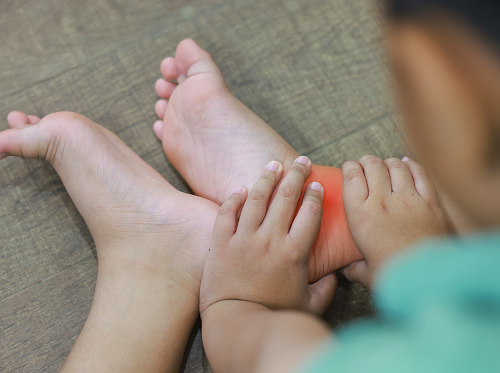
Foot injuries are common in children. The calcaneus is the largest and strongest bone in the foot, bearing most of the body's weight when walking and jumping. If a child jumps incorrectly or falls awkwardly, the bone can be damaged.

Best specialists
Best
specialists
Expert equipment
Expert
equipment
Advanced diagnostic treatment
Advanced diagnostic
treatment
Sign up
Fill out the entry form on the page and we will call you back
Sign up Позвонить
Download the application “Personal Account K+31”
Everything about your health in one click!
Subscribe to social networks K+31
To keep up to date with current offers and receive useful advice about your health.

What is a calcaneus fracture and why is it dangerous in childhood?

A calcaneal fracture is a break in the integrity of the bone structure caused by a blow or injury. In children, fractures occur due to falls from a height (even a short one) onto straightened legs, car accidents, or strong impacts.

Characteristics of children's bones and growth plates

Children's bones are very elastic due to their high organic content, and the periosteum is thick and well-supplied with blood. However, the complexity of such injuries lies in the fact that the growth plates (apophyses) are located in the heel.

If the fracture line passes through the growth plate, this can lead to premature closure of this zone and subsequent foot deformity. A calcaneal fracture in a child is insidious because fragile cartilaginous structures can sometimes be difficult to distinguish from fracture lines on an X-ray. Therefore, diagnosis should be performed by an experienced orthopedic traumatologist with an understanding of age-related anatomy.

Why a child's heel injury shouldn't be underestimated

Many parents confuse a heel injury with a simple bruise. However, the heel bone plays a role in the formation of the arch of the foot. Incorrect healing or microcracks are a direct path to the development of flat feet, subtalar joint arthrosis, and persistent pain.

Treatment of a child's heel fracture should be started immediately to maintain proper biomechanics of movement.

What is a calcaneus fracture and why is it dangerous in childhood?

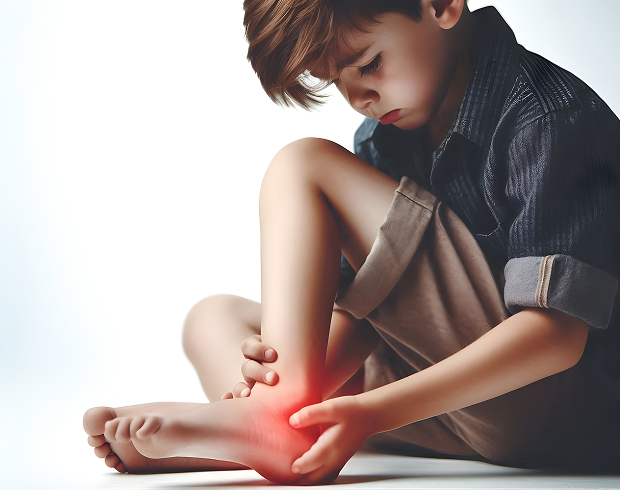
How to recognize a heel fracture in a child
How to recognize a heel fracture in a child

Timely diagnosis of the injury is the key to successful recovery. Unlike adults, children cannot always accurately describe their sensations, so parents need to pay attention to the appearance of the foot and the child's behavior.

Main symptoms: pain, swelling, limping, limited weight-bearing

The clinical picture of a heel injury is usually quite pronounced. The main symptoms of a calcaneus fracture include:

  • Sharp heel pain in a child, which intensifies with walking
  • Swelling affecting the ankle and foot
  • Hematoma (bruise) on the sole or sides of the heel
  • The heel appears blurry
  • Inability to stand on the foot: the child limps, jumps, or crawls
How does a fracture differ from a bruise or sprain?

How does a fracture differ from a bruise or sprain?

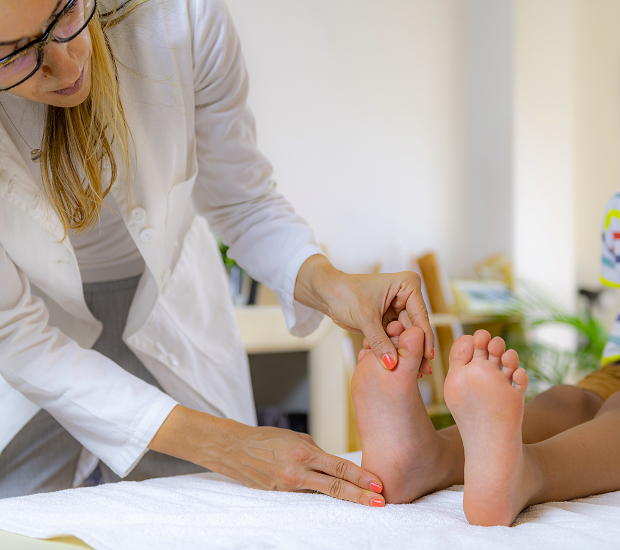
The question often arises: is this a serious fracture or just a severe heel bruise? With a bruise, the pain is usually dull and gradually subsides with rest. Swelling with a bruise is localized and does not cause bone deformation. However, if a child experiences axial load on the heel (pain when tapping the heel from bottom to top), this is a clear sign of a bone fracture. It is impossible to distinguish between these conditions on your own; a professional diagnosis of a calcaneus fracture is required.

When should you urgently seek medical attention?

You should go to the emergency room immediately if:

  1. The child cannot step on the heel 30-60 minutes after the injury.
  2. The foot is severely deformed.
  3. It is enlarging, and the skin has turned blue.
  4. There is a loss of sensation in the toes.
First aid before a visit to the orthopedic traumatologist

First aid before a visit to the orthopedic traumatologist

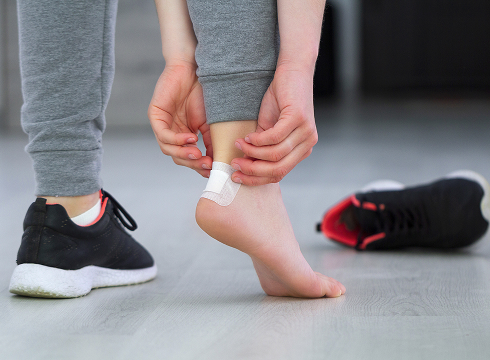
The first minutes after an injury are the most critical. Your child should be taken to the doctor immediately; they will be able to advise you on how to relieve pain and swelling specifically for your case.

What can you do at home before the examination

First aid for a heel fracture is very important. Before going to the emergency room:

  • Remove shoes and socks: try not to hurt your child.
  • Apply ice wrapped in a towel (do not use compresses for more than 10-15 minutes).
  • Prop the foot on a pillow or other soft surface: it is important to elevate the leg above heart level.
  • Wrap the foot at a 90-degree angle to the shin.

What not to do: weight bearing, massage, or heat.

Don't walk around the foot. This will only increase swelling. Warming the heel or rubbing it with ointments is also not recommended until a diagnosis is made. Any heel fracture in a child requires immobilization, not stimulation of blood circulation in the acute phase.

Diagnosis of calcaneal fracture

In a clinical setting, the doctor conducts a comprehensive examination to develop a precise treatment plan for the specific calcaneus fracture.

Examination and history taking

The traumatologist-orthopedist determines the mechanism of injury (height of fall, surface). During the examination, the doctor checks the pulse in the arteries of the foot and skin sensitivity to rule out damage to the nerves and blood vessels.

X-rays, CT scans, and other examinations

The gold standard is an X-ray of the foot in several projections (AP, lateral, and axial). However, due to the peculiarities of pediatric anatomy, a standard X-ray may not be sufficient.

  • CT (computed tomography) scan — prescribed if an intra-articular fracture is suspected or if it is necessary to examine fragment displacement in detail.
  • MRI scan — rarely used, primarily to assess the condition of ligaments and soft tissues.
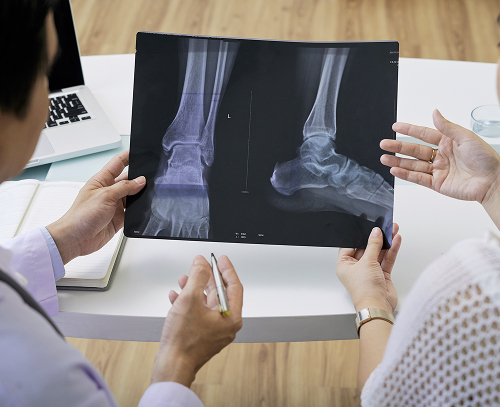
Diagnosis of calcaneal fracture

General information

Treatment of a calcaneus fracture in a child

The choice of treatment strategy depends on the severity of the injury. In children, the priority is always preserving the growth plate and minimizing surgical intervention.

Conservative treatment for a non-displaced fracture

If a non-displaced calcaneus fracture is diagnosed, hospitalization may not be required. The primary method is the application of a plaster cast or modern polymer "plastic" splint from the toes to the upper third of the leg. Treatment of a calcaneus fracture in a child in this case is aimed at creating conditions for natural bone healing.

Treatment for a displaced fracture

If a displaced calcaneus fracture is diagnosed, the treatment strategy changes. There are two options for resolving this problem:

  1. Closed reduction: the doctor manually or using special devices realigns the bone parts.
  2. Open reduction: this is surgery with the insertion of pins or screws, which are removed after a few weeks.

Reduction is most often performed under general anesthesia.

Immobilization, pain relief, and fusion monitoring.

Foot immobilization lasts for several weeks. Explain to your child that during this period, they need to:

  1. Rest more and avoid putting weight on the foot.
  2. Take painkillers if the pain becomes too severe (usually ibuprofen or paracetamol-based medications are given in age-appropriate doses).
  3. Take a follow-up X-ray 7-10 days after the injury.
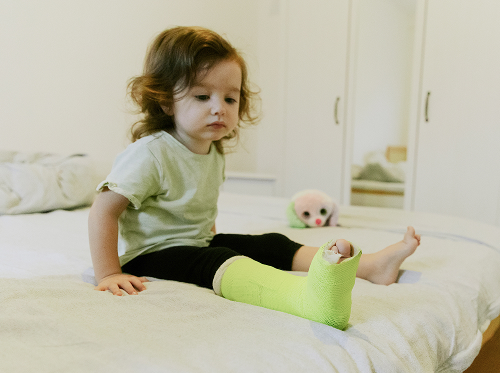
Treatment of a calcaneus fracture in a child

Recovery and rehabilitation after a fracture

Removing the cast is only the halfway point. Proper rehabilitation after a calcaneus fracture is essential for restoring foot function.

How long does it take for a calcaneus fracture to heal in children?

Every case is individual:

  • For simple fractures, the cast is removed after 3-4 weeks.
  • For complex fractures, after 6-8 weeks.

You can return to sports no sooner than 4-6 months. The exact time frame depends on the child's age and bone strength.

Physical exercises, exercise, and return to normal activity

After the cast is removed, rehabilitation begins. During the cast removal, the child's muscles weakened, and their joints became locked.

Load-weight restrictions are lifted gradually. First, the child is allowed to walk on his heel, and after 1-2 weeks, he is given the go-ahead for full walking.

Physical therapy specialists recommend:

  • Perform ankle exercises (rotation, flexion)
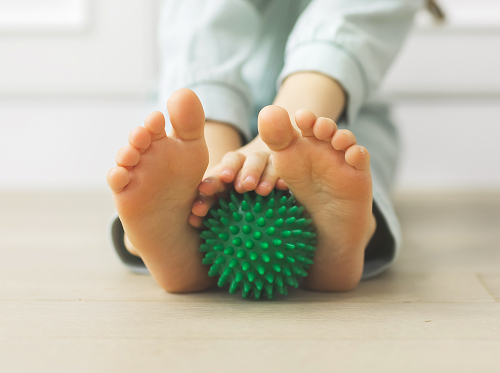
  • Massage the heel with balls and rollers
  • Swimming in a pool (the best way to restore muscle tone without impact)

When can I return to sports?

Resumption of active training (football, gymnastics, jumping) is possible no earlier than 3-5 months after the injury and only after the doctor's approval. Premature loading can cause microcracks in the fragile callus.

Recovery and rehabilitation after a fracture

Possible complications and signs of malunion

If a child's calcaneus fracture is treated incorrectly or the treatment regimen is disrupted, long-term consequences may occur.

Chronic pain and gait disorder

A malunion affects gait, which over several years can lead to spinal curvature and knee pain. Constant aching heel pain is a reason to return to the orthopedist.

Limited foot mobility

Intra-articular fractures can cause stiffness (contracture). The foot can no longer move fully up and down, resulting in a stiff gait and difficulty fitting shoes. In such cases, a long course of physical therapy and orthopedic insoles may be required.

Possible complications and signs of malunion

Preventing recurrent injuries in children

Preventing an injury is always easier than treating its consequences. The foundation of safety is proper footwear and proper behavior during active play.

If you want to keep your child healthy:

  • Choose shoes with good heel support and a rigid back: this is especially important if your child runs or jumps.
  • Place anti-slip surfaces on stairs and in the bathroom at home.
  • Wear protective clothing for your child if they ride a bike, skateboard, or rollerblade.

How to reduce the risk of recurrent injury

Monitor your child's diet: give them foods rich in calcium and vitamin D every day. This will strengthen their bones.

Explain to your child the benefits of exercise: regular physical activity strengthens muscles and makes the foot more resilient to sudden impacts.

Comparison of types of calcaneal fractures

Below is a table to help you better understand the differences in injury severity and treatment options.

SignNon-displaced fractureDisplaced fractureWhat the doctor usually does
PainModerate, worsens with weight-bearingSevere, constant, sharpPain assessment, analgesia if needed
Swelling and hematomaLocal swelling, possible hematomaSevere swelling, extensive hematoma, deformityCold, elevation, immobilization
Possibility Partial support is possible, but painfulSupport is impossible, sharp painComplete exclusion of weight-bearing, plaster cast/orthosis
Treatment tacticsConservative: plaster immobilizationRepositioning is often required, surgical treatment is possibleChoice of method after X-ray/CT scan
Recovery time3–6 weeks to fusion, full recovery up to 2–3 months6–8 weeks and longer, longer rehabilitationControl X-ray, staged rehabilitation

"By "In my experience, when children have a heel bone injury, it's especially important not only to relieve pain but also to accurately assess the position of the fragments: this determines how the foot will function after recovery," says traumatologist-orthopedist.

Preventing recurrent injuries in children

FAQ

How is a heel bone fracture treated in a child?

It all depends on the type of fracture and whether there is displacement. The child's age is also important: the younger the child, the faster the healing process will be. For complex injuries, treatment may require more serious interventions.

How long does it take for a heel bone fracture to heal in children?

On average, bone healing takes 2-4 weeks. Then comes the rehabilitation phase, which is an important part of treatment.

When is surgery necessary for a calcaneus fracture?

Surgery may be necessary in cases of significant displacement, instability of the fracture fragments, intra-articular damage, or if conservative treatment fails.

Can I put weight on my foot after a heel fracture?

No, a doctor will give me permission to walk fully. Putting weight on my foot too early can impair healing, increase pain, and increase the risk of complications.

A heel bone fracture in a child is a serious challenge. If you notice your child limping after a blow or fall, be sure to get an X-ray and consult a traumatologist.


Our doctors

Polovnikova (Kroshkina) Valeria Alexandrovna
Experience 15 years
Make an appointment
Polovnikova (Kroshkina)
Valeria Alexandrovna
Traumatologist-orthopedist, pediatric
Lopatin Kirill Alexandrovich
Experience 16 years
Make an appointment
Lopatin
Kirill Alexandrovich
Traumatologist-orthopedist, pediatric
All specialists
2GIS Award
2GIS Award

This award is given to clinics with the highest ratings according to user ratings, a large number of requests from this site, and in the absence of critical violations.

«Good place» according to Yandex

This award is given to clinics with the highest ratings according to user ratings. It means that the place is known, loved, and definitely worth visiting.

Our doctors are laureates of the ProDoctors Award

The ProDoctors portal collected 500 thousand reviews, compiled a rating of doctors based on them and awarded the best. We are proud that our doctors are among those awarded.

Make an appointment at a convenient time on the nearest date

Price

Initial appointment with a pediatric traumatologist-orthopedist
from 8 950 ₽
Follow-up appointment with a pediatric traumatologist-orthopedist
from 7 950 ₽

Other Services

Treatment of hip sprain in a child Ankle injury in a child: treatment and recovery Calf muscle strain in children: symptoms and treatment Treatment of sprains in children: symptoms, first aid and recovery Treatment of pectoral muscle strain in children Treatment of muscle strains in children Hip sprain in children: symptoms and treatment Sprained Foot in Children: Treatment, Symptoms, First Aid, and Recovery Treatment of Achilles tendon strain in children First aid for bleeding in children: how to act quickly and safely Neck Strain in Children: Symptoms, Treatment, and Recovery Subungual hematoma in children: symptoms, first aid, and treatment in Moscow Wrist sprain in a child: symptoms, treatment, and recovery Subcutaneous hematoma in a child: symptoms, treatment, and first aid Treatment of the consequences of trauma in children Orthopedic rehabilitation for children in Moscow: recovery from injuries, surgeries, and musculoskeletal disorders Reduction of subluxations and dislocations in children Plaster cast application for a child: procedure, types of casts, and care Treatment for a child's shoulder sprain Soft tissue hematoma in a child: symptoms, first aid, and treatment Application of an immobilization bandage to children Swelling after a bruise in a child: treatment and first aid Hip contusion in a child: symptoms, first aid, and treatment Head injury in children: treatment, symptoms, and first aid Chest contusion in a child: symptoms, first aid, and treatment A child's post-injury hematoma: how to treat it, when to see a doctor, and what to do in the first few hours Hematoma on a child's arm: causes, symptoms, and treatment Treatment of a child's hand contusion: symptoms, first aid, and recovery Hematoma on a child's finger: first aid, treatment, and when to see a doctor Knee contusion in a child: treatment, symptoms, and first aid Bruised tailbone in a child: symptoms, first aid, and treatment in Moscow Elbow bruise in a child: symptoms, first aid and treatment Bruised leg in a child: symptoms, first aid and treatment Hematoma on a child's leg: causes, symptoms, first aid, and treatment Hematoma on a child's face: causes, first aid, and treatment in Moscow Treatment of groin strain in children Bruised nail in a child: treatment, first aid, symptoms, and recovery Hematoma on the head of a child: treatment and symptoms Eye hematoma in a child: treatment, first aid, and when to see a doctor Bruised ribs in children: treatment, symptoms, and first aid Back strain in children: symptoms, treatment, and recovery Soft tissue contusion in a child: symptoms, first aid, and treatment Treatment of a joint contusion in a child in Moscow: symptoms, first aid, diagnosis, and recovery Bruised nose in a child: treatment, first aid, and when to see a doctor Bruised Foot in a Child: Symptoms, First Aid, and Treatment in Moscow Bruised finger in a child: treatment, first aid, and when to see a doctor Back injury in a child: symptoms, first aid, and treatment in Moscow Bruised arm in a child: symptoms, first aid, and treatment Shoulder contusion in a child: symptoms, first aid and treatment Bruised ribs in children: symptoms, treatment, and first aid Treatment of fractures in children in Moscow Treatment after a fracture in children: how recovery and rehabilitation proceed Treatment of a closed fracture in a child: symptoms, first aid, diagnosis, treatment and recovery Treatment of a jaw fracture in a child Compression fracture of the thoracic spine in children: treatment, diagnosis and recovery Humeral neck fracture in children: treatment, symptoms, and recovery Treatment of radius fracture in children Coccyx fracture in children: symptoms, treatment, and recovery Treatment of a broken nose in a child Patella fracture: treatment in children Sacral fracture in children: symptoms, diagnosis and treatment Treatment of a broken little finger in children: symptoms and recovery Treatment of metatarsal fractures in children Zygomatic bone fracture in a child: symptoms, diagnosis, treatment and recovery Ulna fracture in children: treatment, symptoms and recovery Humeral tubercle fracture in children: treatment and recovery Conservative treatment of fractures in children: how is treatment performed without surgery? Functional method of treating fractures in children 24-hour trauma care for children: when urgent help is needed Clavicle fracture in a child Fracture of the tibial condyles in children Emergency traumatology for children: urgent care for injuries Ankle fracture in children: symptoms, treatment and recovery Treatment of spinal fractures in children Pubic bone fracture in a child Hip fracture in children: treatment, diagnosis and recovery Pelvic bone fracture in children: treatment, symptoms, and recovery Traumatic brain injury in children: treatment, symptoms, and recovery Sciatic bone fracture: treatment in children Olecranon fracture in children: treatment, symptoms, recovery Treatment of humeral fracture in children Scapula fracture in children: symptoms, diagnosis and treatment Broken toe in a child: symptoms, treatment and recovery Sternal fracture in children Treatment of tibia fracture in children Foot fracture in a child Cervical vertebrae fractures in children
Make an appointment

Appointment to the doctor
Fill out the form, our managers will contact you within 15 minutes
Почему К+31?
К + 31 — full-cycle multidisciplinary medical centers, including the possibility of providing medical services of European quality level.
К + 31 — are leading doctors and diagnostics using high-tech equipment from world manufacturers (Karl Storz, Olympus, Siemens, Toshiba, Bausch&Lomb, Technolas, Zeiss, Topcon).
К + 31 — is ethical. The staff of K+31 clinics maintain open relationships with patients and partners. An individual approach to each patient is the basis of our service standards.
К + 31 — is modernity. On call 24/7: call center operators will answer your questions at any time and book you an appointment with doctors. Contact us by phone, through the feedback form on the website and Max.

Our clinics

Address K+31 on Lobachevskogo

st. Lobachevskogo, 42/4

Contacts

+7 499 999-31-31

Opening hours

Mon-Fri: 08:00 – 21:00
Weekend: 09:00 – 19:00
Didn't find the service you were looking for?

Экстренная помощь