Humeral Tubercle Fracture in Children: Treatment and Recovery

Upper shoulder girdle injuries are common in children. Among these, humeral tubercle fractures deserve special attention, as this area is the attachment site for the most important muscles responsible for arm rotation and abduction.

Proper treatment of a humeral tubercle fracture allows for full restoration of limb function and the return of the child to their normal lifestyle.

Best specialists
Best
specialists
Expert equipment
Expert
equipment
Advanced diagnostic treatment
Advanced diagnostic
treatment
Sign up
Fill out the entry form on the page and we will call you back
Sign up Позвонить
Download the application “Personal Account K+31”
Everything about your health in one click!
Subscribe to social networks K+31
To keep up to date with current offers and receive useful advice about your health.

What is a humeral tubercle fracture and why does it occur in children?

The largest part of the humerus is the greater tubercle of the humerus. It is located on the lateral surface and serves as an attachment point for the supraspinatus, infraspinatus, and teres minor muscles.

How the greater tubercle of the humerus is structured

The greater tubercle of the humerus is the area where tendons attach. In children, this area is closely connected to the growth plates (epiphyseal plates), which are responsible for bone growth.

How this injury differs in childhood

In children, the bones are more elastic, and the periosteum is thick and strong. Often, a humerus fracture in a child is a "greenstick" or avulsion fracture. Since the ligaments in children are often stronger than the bones themselves, a sharp jerk or impact causes the muscle to "tear" a piece of the bony protrusion rather than tearing it. Another important feature is a high metabolic rate, which allows bone fusion to occur more quickly than in adults.

What is a humeral tubercle fracture and why does it occur in children?

Causes and mechanisms of injury

Causes and mechanisms of injury

A child's shoulder injury can result from a direct blow or indirect impact through the muscles.

Falling on the Arm or Shoulder

Most often, such injuries occur due to a fall on an outstretched arm or on the outer surface of the shoulder joint. This causes a sharp impact of the head of the humerus on the acromion.

Sports Injury and Sudden Muscle Contraction

A sudden contraction of the rotator cuff muscles causes a bone fragment to break off. This occurs with sudden throws, powerlifting, or falls during competitions.

Fracture Associated with Shoulder Dislocation

A fracture of the humeral tubercle often accompanies an anterior shoulder dislocation. When the head of the humerus leaves the glenoid cavity, the tubercle strikes the edge of the scapula and breaks off.

Symptoms and first signs
Symptoms and first signs

Symptoms of a humeral tuberosity fracture aren't immediately apparent. Children can't always explain exactly what's hurting them. Therefore, parents need to pay attention to external signs and their child's mood.

Pain and limited movement

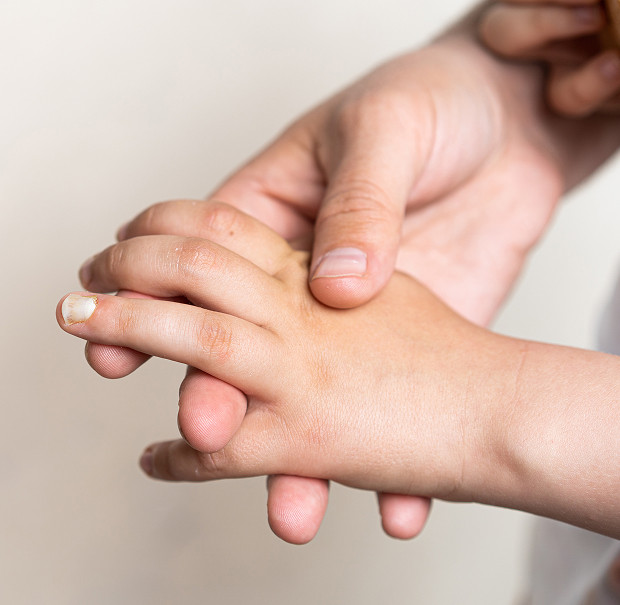
Sharp shoulder pain is the first symptom. It intensifies when attempting to raise the arm to the side or rotate it inward.

Swelling, bruising, and tenderness to the touch

Swelling in this area increases rapidly. The muscles tense, and after a few hours, bruising may appear, gradually moving lower toward the elbow.

When should you urgently take your child to the doctor?

Take your child to the emergency room if the following signs are observed:

  • Severe deformity of the shoulder joint
  • Numbness of the hand or fingers
  • Coldness of the skin of the injured limb
  • No pulse in the wrist
  • Increasing, intractable pain
First Aid Before Seeing a Doctor

First Aid Before Seeing a Doctor

The quality of first aid directly affects the subsequent treatment of a humeral tubercle fracture.

Parents should:

  • Immobilize the arm: secure it to the body with a sling.
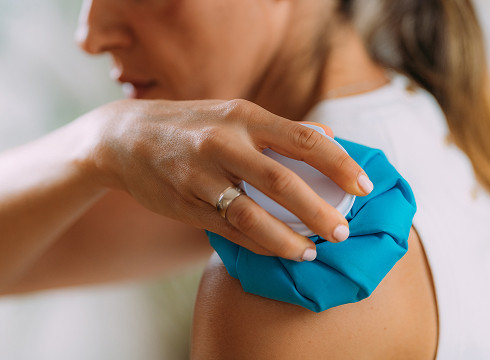
  • Apply ice to the injured area for 15–20 minutes.
  • Give the child an age-appropriate dose of pain reliever (paracetamol or ibuprofen).
  • Reassure the child and limit their movements until the doctors arrive.

How to safely immobilize the arm.

For immobilization A triangular piece of cloth (sling) is best. The arm is bent at the elbow at a 90-degree angle, the forearm is placed in the loop of the sling, and the ends are tied around the neck. Proper immobilization reduces the risk of increased displacement of the fracture fragments during transport.

What can be done to reduce pain and swelling

Cold is the most effective way to reduce swelling in the first few hours. It causes vasospasm, which reduces internal bleeding in the fracture area. Painkillers help relieve general stress in the body.

What should not be done on your own

If there is a shoulder dislocation in combination with a fracture, rough manipulation can damage the axillary nerve or main artery. Do not use warming ointments, alcohol compresses, or massage.

General information

Diagnosis

Accurate diagnosis is the key to successful treatment of a shoulder fracture in children and does not lead to disability.

Examination by a traumatologist-orthopedist

A pediatric traumatologist-orthopedist performs an initial examination. They evaluate vascular pulsation and finger and skin sensitivity. The doctor checks the symmetry of the joints and identifies characteristic bony protrusions.

X-ray of the shoulder

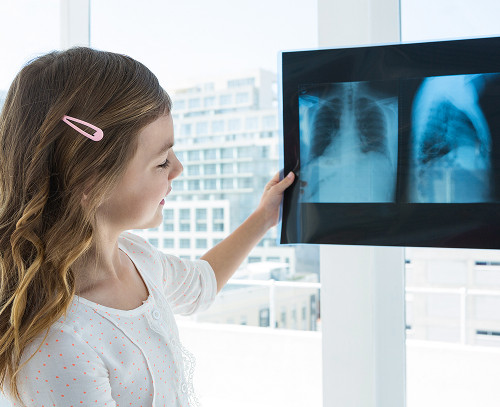
The primary imaging method is an X-ray of the shoulder. Images are taken in at least two projections (AP and axial). On the X-ray, the doctor can see the fracture line and determine the distance the bone fragment has traveled.

When is a CT or MRI needed?

X-rays do not always provide a complete picture of the injury. In such situations, the doctor prescribes additional tests:

  • CT scan: needed to examine bone fragments and plan surgery
  • MRI: needed if there is a suspected ligament or muscle rupture or labral damage
Diagnosis

Treatment of a Humeral Tubercle Fracture in Children

The choice of treatment method depends on the type of fracture. If a non-displaced humeral tubercle fracture is diagnosed in children, conservative treatment is preferred.

Conservative management: rest, immobilization, pain relief

The arm is immobilized with a Desault sling for 3 to 4 weeks. During this time, the child is advised to rest. The doctor schedules follow-up imaging in 7-10 days.

When is surgery considered?

If the displacement of the fragments is more than 5 mm (more than 3 mm in adolescents), surgical treatment is considered. Surgery is necessary to return the bone fragment to its anatomical position and stabilize it. Fracture surgery in children is often performed minimally invasively through small incisions.

How bone healing is monitored

Throughout the treatment period, a follow-up examination by a specialist is performed. The doctor assesses the swelling's subsidence and whether there is any soft tissue compression from the bandage. A follow-up X-ray of the shoulder can help visualize the formation of callus. Only after confirming that bone healing is progressing properly should active exercises be initiated.

Comparison of Treatment Approaches:

Approach When to Use What Includes Characteristics
Conservative Treatment For Minor Displacement Body, Rest, Observation Suitable for Many Children, Requires Discipline
Surgical Treatment For Significant Displacement or Instability Surgical correction, metal osteosynthesis Allows ideal tissue alignment
Treatment of a Humeral Tubercle Fracture in Children

Recovery and Rehabilitation

Completing the fixation period is only half the battle. Proper rehabilitation after a fracture plays a crucial role in restoring hand function.

Healing and Return to Activity Time

On average, callus formation in children takes 3-5 weeks. A child returns to light everyday activities within a month. Complete bone structure restoration takes 6 to 12 months.

Physical Therapy and Gradual Increase in Load

After removing the cast, physical therapy is prescribed. Exercises begin with gentle movements. After this, the child gradually progresses to active swings and rotations. Then, light resistance exercises are added.

What to avoid during the recovery period

During rehabilitation, avoid:

  • Lifting heavy objects (backpacks, bags)
  • Hanging from horizontal bars or doing pull-ups
  • Engaging in contact sports
  • Making sudden, jerky movements with your arm

Even if the pain has gone away, bone healing is not yet complete at the microscopic level, and excessive strain can cause the tubercle to tear again.

Recovery and Rehabilitation

Possible Complications and How to Avoid Them

Ignoring a doctor's recommendations often leads to unpleasant consequences.

Malocclusion and Pain

If the fracture fragment heals in an abnormal position, it can mechanically impede the arm's ability to rise by striking the scapular process. This causes chronic shoulder pain and tendon inflammation.

Limited Motion

Without proper rehabilitation and exercise therapy, limited motion (contracture) develops. The joint capsule shrinks, and the arm cannot be raised above the horizon.

Why Follow-up Examinations Are Important

Each follow-up examination is an opportunity to promptly adjust the recovery program. Constant monitoring by a specialist ensures that a child's shoulder injury will heal without a trace.

"In my practice, children with a slight dislocation can often avoid surgery if diagnosed promptly and their recovery is properly managed. The most important thing is to avoid excessive strain and to keep up with follow-up appointments," emphasizes the experienced specialist.

Possible Complications and How to Avoid Them

Frequently Asked Questions

How is a humeral tuberosity fracture treated in children?

The treatment strategy depends on the child's age, the degree of displacement, and any accompanying injuries. Most often, the arm is simply immobilized with a special sling, the child is prescribed rest, and a follow-up examination by a doctor is recommended. If the displacement is significant, surgery is prescribed.

How long does it take for a humeral tuberosity fracture to heal in a child?

The healing time is always individual and depends on the severity of the injury. Typically, the period of rigid immobilization lasts 3-4 weeks. After this, rehabilitation from the fracture begins, which can take another 1-2 months.

When is surgery necessary for this type of fracture?

Surgical treatment is considered if the bone fragment has displaced more than a few millimeters, if there is a concomitant shoulder dislocation, or if conservative methods fail to hold the fragment in the desired position. The decision is always made by a pediatric orthopedic traumatologist based on X-ray or CT scan data.

Can I return to sports after treatment?

Yes, but only after the doctor confirms bone healing and the child has regained muscle tone. Typically, exercise is not permitted until 3-6 months after the injury.

A humeral tubercle fracture in children is not a particularly serious injury. But this doesn't mean you can ignore the doctor's orders.

Treatment of a humeral tubercle fracture and a responsible approach to rehabilitation are the key to quickly restoring a child's health.


Our doctors

Polovnikova (Kroshkina) Valeria Alexandrovna
Experience 15 years
Make an appointment
Polovnikova (Kroshkina)
Valeria Alexandrovna
Traumatologist-orthopedist, pediatric
Lopatin Kirill Alexandrovich
Experience 16 years
Make an appointment
Lopatin
Kirill Alexandrovich
Traumatologist-orthopedist, pediatric
All specialists
2GIS Award
2GIS Award

This award is given to clinics with the highest ratings according to user ratings, a large number of requests from this site, and in the absence of critical violations.

«Good place» according to Yandex

This award is given to clinics with the highest ratings according to user ratings. It means that the place is known, loved, and definitely worth visiting.

Our doctors are laureates of the ProDoctors Award

The ProDoctors portal collected 500 thousand reviews, compiled a rating of doctors based on them and awarded the best. We are proud that our doctors are among those awarded.

Make an appointment at a convenient time on the nearest date

Price

Initial appointment with a pediatric traumatologist-orthopedist
from 8 950 ₽
Follow-up appointment with a pediatric traumatologist-orthopedist
from 7 950 ₽

Other Services

Treatment of hip sprain in a child Ankle injury in a child: treatment and recovery Calf muscle strain in children: symptoms and treatment Treatment of sprains in children: symptoms, first aid and recovery Treatment of pectoral muscle strain in children Treatment of muscle strains in children Hip sprain in children: symptoms and treatment Sprained Foot in Children: Treatment, Symptoms, First Aid, and Recovery Treatment of Achilles tendon strain in children First aid for bleeding in children: how to act quickly and safely Neck Strain in Children: Symptoms, Treatment, and Recovery Subungual hematoma in children: symptoms, first aid, and treatment in Moscow Wrist sprain in a child: symptoms, treatment, and recovery Subcutaneous hematoma in a child: symptoms, treatment, and first aid Treatment of the consequences of trauma in children Orthopedic rehabilitation for children in Moscow: recovery from injuries, surgeries, and musculoskeletal disorders Reduction of subluxations and dislocations in children Plaster cast application for a child: procedure, types of casts, and care Treatment for a child's shoulder sprain Soft tissue hematoma in a child: symptoms, first aid, and treatment Application of an immobilization bandage to children Swelling after a bruise in a child: treatment and first aid Hip contusion in a child: symptoms, first aid, and treatment Head injury in children: treatment, symptoms, and first aid Chest contusion in a child: symptoms, first aid, and treatment A child's post-injury hematoma: how to treat it, when to see a doctor, and what to do in the first few hours Hematoma on a child's arm: causes, symptoms, and treatment Treatment of a child's hand contusion: symptoms, first aid, and recovery Hematoma on a child's finger: first aid, treatment, and when to see a doctor Knee contusion in a child: treatment, symptoms, and first aid Bruised tailbone in a child: symptoms, first aid, and treatment in Moscow Elbow bruise in a child: symptoms, first aid and treatment Bruised leg in a child: symptoms, first aid and treatment Hematoma on a child's leg: causes, symptoms, first aid, and treatment Hematoma on a child's face: causes, first aid, and treatment in Moscow Treatment of groin strain in children Bruised nail in a child: treatment, first aid, symptoms, and recovery Hematoma on the head of a child: treatment and symptoms Eye hematoma in a child: treatment, first aid, and when to see a doctor Bruised ribs in children: treatment, symptoms, and first aid Back strain in children: symptoms, treatment, and recovery Soft tissue contusion in a child: symptoms, first aid, and treatment Treatment of a joint contusion in a child in Moscow: symptoms, first aid, diagnosis, and recovery Bruised nose in a child: treatment, first aid, and when to see a doctor Bruised Foot in a Child: Symptoms, First Aid, and Treatment in Moscow Bruised finger in a child: treatment, first aid, and when to see a doctor Back injury in a child: symptoms, first aid, and treatment in Moscow Bruised arm in a child: symptoms, first aid, and treatment Shoulder contusion in a child: symptoms, first aid and treatment Bruised ribs in children: symptoms, treatment, and first aid Treatment of fractures in children in Moscow Treatment after a fracture in children: how recovery and rehabilitation proceed Treatment of a closed fracture in a child: symptoms, first aid, diagnosis, treatment and recovery Treatment of a jaw fracture in a child Compression fracture of the thoracic spine in children: treatment, diagnosis and recovery Humeral neck fracture in children: treatment, symptoms, and recovery Treatment of radius fracture in children Coccyx fracture in children: symptoms, treatment, and recovery Treatment of a broken nose in a child Patella fracture: treatment in children Sacral fracture in children: symptoms, diagnosis and treatment Treatment of a broken little finger in children: symptoms and recovery Treatment of metatarsal fractures in children Zygomatic bone fracture in a child: symptoms, diagnosis, treatment and recovery Ulna fracture in children: treatment, symptoms and recovery Conservative treatment of fractures in children: how is treatment performed without surgery? Functional method of treating fractures in children 24-hour trauma care for children: when urgent help is needed Clavicle fracture in a child Fracture of the tibial condyles in children Emergency traumatology for children: urgent care for injuries Ankle fracture in children: symptoms, treatment and recovery Treatment of spinal fractures in children Pubic bone fracture in a child Hip fracture in children: treatment, diagnosis and recovery Pelvic bone fracture in children: treatment, symptoms, and recovery Traumatic brain injury in children: treatment, symptoms, and recovery Sciatic bone fracture: treatment in children Olecranon fracture in children: treatment, symptoms, recovery Treatment of humeral fracture in children Scapula fracture in children: symptoms, diagnosis and treatment Calcaneal fracture in a child: treatment, symptoms, and recovery Broken toe in a child: symptoms, treatment and recovery Sternal fracture in children Treatment of tibia fracture in children Foot fracture in a child Cervical vertebrae fractures in children
Make an appointment

Appointment to the doctor

Fill out the form, our managers will contact you within 15 minutes
Почему К+31?
К + 31 — full-cycle multidisciplinary medical centers, including the possibility of providing medical services of European quality level.
К + 31 — are leading doctors and diagnostics using high-tech equipment from world manufacturers (Karl Storz, Olympus, Siemens, Toshiba, Bausch&Lomb, Technolas, Zeiss, Topcon).
К + 31 — is ethical. The staff of K+31 clinics maintain open relationships with patients and partners. An individual approach to each patient is the basis of our service standards.
К + 31 — is modernity. On call 24/7: call center operators will answer your questions at any time and book you an appointment with doctors. Contact us by phone, through the feedback form on the website and Max.

Our clinics

Address K+31 on Lobachevskogo

st. Lobachevskogo, 42/4

Contacts

+7 499 999-31-31

Opening hours

Mon-Fri: 08:00 – 21:00
Weekend: 09:00 – 19:00
Didn't find the service you were looking for?

Экстренная помощь