Treatment of metatarsal fractures in children

Foot injuries in children are one of the most common reasons for emergency department visits. Among all foot skeletal injuries, metatarsal fractures are particularly important, requiring special attention due to the ongoing growth of bone structures. Timely and competent treatment of metatarsal fractures in children can help prevent arch deformities and gait problems in the future.

It is important to recognize the injury promptly and refer the child to a pediatric traumatologist-orthopedist.

Best specialists
Best
specialists
Expert equipment
Expert
equipment
Advanced diagnostic treatment
Advanced diagnostic
treatment
Sign up
Fill out the entry form on the page and we will call you back
Sign up Позвонить
Download the application “Personal Account K+31”
Everything about your health in one click!
Subscribe to social networks K+31
To keep up to date with current offers and receive useful advice about your health.

What is a metatarsal fracture and why is it especially important in children?

These are the five tubular bones located between the tarsus and the phalanges of the toes. They are the bones that support the body when walking. Children's bones are more elastic than adults' due to their higher organic content, and the periosteum (bone shell) is thicker and better supplied with blood.

However, it is precisely this active growth that makes treating metatarsal fractures in children a specific process. This area contains growth plates (epiphyseal plates). If a fracture line passes through this zone, it can lead to premature closure of the growth plate and subsequent shortening or deformity of the foot. Therefore, if any injury is suspected, it is important to immediately consult a specialist to rule out a serious metatarsal fracture.

What is a metatarsal fracture and why is it especially important in children?

Causes of foot injury in children
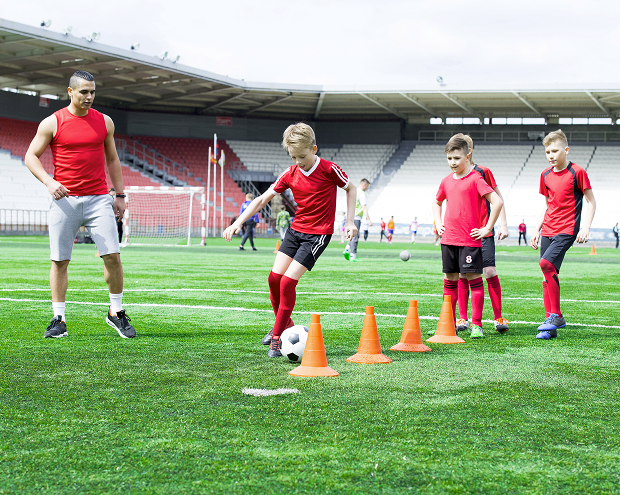
Causes of foot injury in children

Children can't sit still. They seem to test their body's strength daily. The metatarsal bones are most often damaged by direct, incorrect falls or impacts.

Sports and active games

Football, track and field, gymnastics, and dance are all associated with high loads. Young athletes often experience so-called "march" or stress fractures. These are microcracks that occur due to cyclic overload, when bone tissue doesn't have time to recover.

Bad fall, jump, or twisting of the foot

A common foot injury most often occurs when jumping from a height onto a hard surface or when the foot suddenly twists inward (an inversion injury). Direct blows are also common—for example, if a heavy object falls on a child's foot or if someone accidentally steps on their foot during active play.
Symptoms of a metatarsal fracture in a child

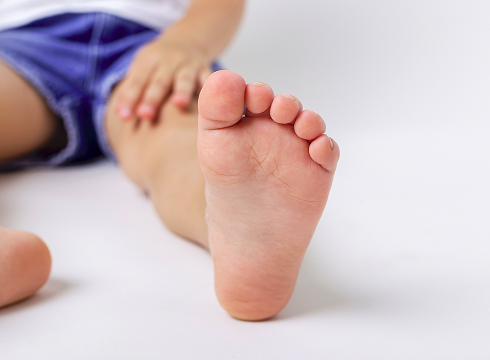
Symptoms of a metatarsal fracture in a child

It's difficult for parents without medical training to understand the severity of the injury. Since children cannot always accurately describe their sensations, it is important to pay attention to the following symptoms:

  • Severe swelling of the foot that appears within the first hours after the incident
  • Severe pain when walking or complete inability to put weight on the foot
  • The appearance of a hematoma (bruise) on the dorsal or plantar side of the foot
  • Visible limp, the child's attempts to walk on the heel or edge of the foot

How to distinguish a fracture from a bruise

Many people mistakenly believe that if a child can wiggle their toes, the bone is intact. This is a myth. A bruised foot is usually characterized by pain that gradually subsides with rest. With a fracture, the pain is diffuse, intensifies with axial loading (pressing on the head of the bone), and is often accompanied by a localized, "tearing" pain directly at the site of the bone injury.

Signs of displacement and more severe injury

A child with a metatarsal fracture often has a deformed foot: it appears unnaturally curved, and a crunching sound (crepitus) can be heard at the site of injury. Significant displacement of the fragments can cause damage to blood vessels and nerve endings, which can result in numbness or paleness of the toes.

Diagnosis of metatarsal fractures

Only a doctor can make an accurate diagnosis. Attempts to "probe" or, especially, "reset" the bone are strictly prohibited, as this may cause further damage to the soft tissues.

Examination by a pediatric traumatologist-orthopedist

The initial consultation is conducted by a pediatric orthopedist or traumatologist. The doctor assesses the child's range of motion, checks sensitivity, and the location of pain points. It is important for the specialist to know the circumstances of the injury: how exactly the child fell and how quickly the swelling developed.

Foot X-ray and additional examinations

A foot X-ray is the best way to assess the injury. The image is taken in several projections (usually AP and oblique): this is the only way to visualize the fracture line and determine whether there is any displacement. In complex cases where growth plate damage or an intra-articular fracture is suspected, the doctor may order a CT or MRI scan for a detailed assessment of the cartilaginous structures.
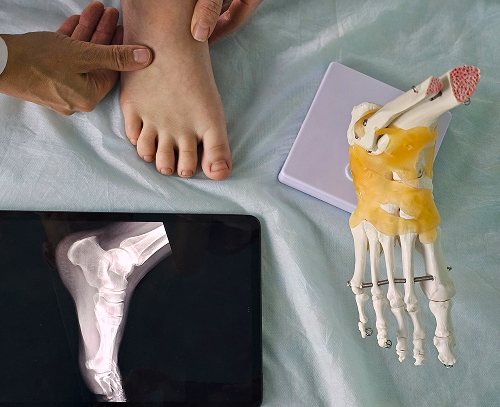
Diagnosis of metatarsal fractures

General information

Treatment of metatarsal fractures in children

Once the diagnosis is confirmed, a treatment plan is selected. The main goal is to ensure the correct anatomical position of the bones for their physiological healing.

Conservative treatment

In most cases, if a non-displaced metatarsal fracture is diagnosed in a child, conservative therapy is used. This includes rest, elevation of the limb in the first few days, and the use of cold compresses to reduce swelling.

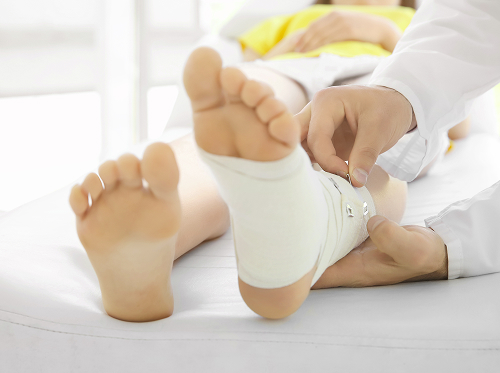
Immobilization: plaster cast, splint, orthosis

Immobilization is necessary to stabilize the fracture fragments. Depending on the location and type of injury, the doctor may suggest various options:

  1. Plaster cast or polymer cast ("plastic cast")
  2. Splint - a plaster cast that immobilizes only part of the foot
  3. Orthosis - a rigid boot that allows for adjustable support and load-bearing capacity

When surgery may be needed

Surgery is rarely necessary. It is usually necessary for multiple fractures, unstable, displaced injuries that cannot be repositioned using closed techniques, or when there is a risk of malunion that affects foot function. In such cases, the bones are fixed with special pins, which are removed after callus formation.

Treatment of metatarsal fractures in children

Recovery and rehabilitation

The end of the fixation period is only the halfway point. For the foot to fully function again, proper rehabilitation is essential.

Healing time

The speed at which the bone heals depends on age. In preschoolers, this process takes about 3-4 weeks, while in adolescents, it takes 5 to 7 weeks. The timing is also influenced by which metatarsal bone is injured (for example, a fracture of the base of the fifth metatarsal often takes longer to heal due to its poor blood supply).

Exercise therapy, physiotherapy, and gradual loading

After the cast is removed, exercise therapy (therapeutic physical training) is prescribed—a series of exercises to develop the joints and strengthen the ligaments.

If a child has difficulty or pain moving their foot, the doctor may prescribe physical therapy (magnetic therapy, electrophoresis).

Weight on the foot should be increased gradually: first walking with crutches, then progressing to full weight-bearing.

Return to school, walking, and sports

Returning to normal life occurs gradually. The child can attend school as soon as the doctor gives the go-ahead and comfortable shoes or orthoses are fitted. However, physical education classes and sports clubs are excluded for 2 to 4 months after the injury.

Recovery and rehabilitation

Possible complications without treatment

Ignoring the injury or self-treating it can lead to tragic consequences. These include:

  • Incorrect fusion, leading to flat feet
  • Chronic pain when walking
  • Formation of a pseudoarthrosis
  • Foot deformity, making it difficult to find shoes
  • Arthrosis of the foot joints in young people
Possible complications without treatment

When is it necessary to urgently take your child to the doctor?

In certain situations, your child needs to be taken to the doctor immediately. It is recommended to seek medical attention in the following situations:

  • The child cannot put weight on their foot
  • The swelling is growing too quickly and spreading to the ankle
  • The skin of the foot has become blue or purple
  • The foot is severely deformed
  • The child complains of a crawling sensation or loss of feeling in the toes

Comparison of types of foot injuries

To help parents navigate the situation, we have prepared a table outlining the main differences between types of injuries.

Symptom Foot contusion Non-displaced fracture Displaced fracture
Weight bearing Possible, but painful Difficulty or impossible Completely impossible
Swelling and bruising Moderate, localized Severe, progressive Extensive, often deformed
Foot position Natural Natural Often deformed
Treatment tactics Rest, cold, ointments Immobilization (cast/orthosis) Repositioning, cast, or surgery
Preventing foot injuries in children

Buy high-quality shoes with a rigid heel counter and good ankle support for active play. If your child plays sports, ensure they are exercising in a controlled manner. Wear protective gear whenever possible.

To strengthen bones, give your child calcium-rich foods and vitamin D in the dose prescribed by your pediatrician.

FAQ

How can you tell if your child has a metatarsal fracture and not a bruise?

A fracture typically causes sharp pain when putting weight on the foot, increasing swelling, and lameness. Bruising often occurs, and the pain intensifies with pressure on the bone. A definitive diagnosis can only be made with an examination by a pediatric orthopedist and subsequent X-rays.

How long does it take for a metatarsal fracture to heal in children?

Healing a metatarsal fracture in children takes 3 to 6 weeks. The time frame depends on the child's age and the presence of complications.

Is a cast always necessary for a metatarsal fracture?

No, the treatment depends on the type of injury. In some cases, if there is no displacement, a rigid orthosis or a special removable cast that allows for proper hygiene may be used. However, the final decision is made by a specialist.

Our doctors

Polovnikova (Kroshkina) Valeria Alexandrovna
Experience 15 years
Make an appointment
Polovnikova (Kroshkina)
Valeria Alexandrovna
Traumatologist-orthopedist, pediatric
Lopatin Kirill Alexandrovich
Experience 16 years
Make an appointment
Lopatin
Kirill Alexandrovich
Traumatologist-orthopedist, pediatric
All specialists
2GIS Award
2GIS Award

This award is given to clinics with the highest ratings according to user ratings, a large number of requests from this site, and in the absence of critical violations.

«Good place» according to Yandex

This award is given to clinics with the highest ratings according to user ratings. It means that the place is known, loved, and definitely worth visiting.

Our doctors are laureates of the ProDoctors Award

The ProDoctors portal collected 500 thousand reviews, compiled a rating of doctors based on them and awarded the best. We are proud that our doctors are among those awarded.

Make an appointment at a convenient time on the nearest date

Price

Initial appointment with a pediatric traumatologist-orthopedist
from 8 950 ₽
Follow-up appointment with a pediatric traumatologist-orthopedist
from 7 950 ₽

Other Services

Treatment of hip sprain in a child Ankle injury in a child: treatment and recovery Calf muscle strain in children: symptoms and treatment Treatment of sprains in children: symptoms, first aid and recovery Treatment of pectoral muscle strain in children Treatment of muscle strains in children Hip sprain in children: symptoms and treatment Sprained Foot in Children: Treatment, Symptoms, First Aid, and Recovery Treatment of Achilles tendon strain in children First aid for bleeding in children: how to act quickly and safely Neck Strain in Children: Symptoms, Treatment, and Recovery Subungual hematoma in children: symptoms, first aid, and treatment in Moscow Wrist sprain in a child: symptoms, treatment, and recovery Subcutaneous hematoma in a child: symptoms, treatment, and first aid Treatment of the consequences of trauma in children Orthopedic rehabilitation for children in Moscow: recovery from injuries, surgeries, and musculoskeletal disorders Reduction of subluxations and dislocations in children Plaster cast application for a child: procedure, types of casts, and care Treatment for a child's shoulder sprain Soft tissue hematoma in a child: symptoms, first aid, and treatment Application of an immobilization bandage to children Swelling after a bruise in a child: treatment and first aid Hip contusion in a child: symptoms, first aid, and treatment Head injury in children: treatment, symptoms, and first aid Chest contusion in a child: symptoms, first aid, and treatment A child's post-injury hematoma: how to treat it, when to see a doctor, and what to do in the first few hours Hematoma on a child's arm: causes, symptoms, and treatment Treatment of a child's hand contusion: symptoms, first aid, and recovery Hematoma on a child's finger: first aid, treatment, and when to see a doctor Knee contusion in a child: treatment, symptoms, and first aid Bruised tailbone in a child: symptoms, first aid, and treatment in Moscow Elbow bruise in a child: symptoms, first aid and treatment Bruised leg in a child: symptoms, first aid and treatment Hematoma on a child's leg: causes, symptoms, first aid, and treatment Hematoma on a child's face: causes, first aid, and treatment in Moscow Treatment of groin strain in children Bruised nail in a child: treatment, first aid, symptoms, and recovery Hematoma on the head of a child: treatment and symptoms Eye hematoma in a child: treatment, first aid, and when to see a doctor Bruised ribs in children: treatment, symptoms, and first aid Back strain in children: symptoms, treatment, and recovery Soft tissue contusion in a child: symptoms, first aid, and treatment Treatment of a joint contusion in a child in Moscow: symptoms, first aid, diagnosis, and recovery Bruised nose in a child: treatment, first aid, and when to see a doctor Bruised Foot in a Child: Symptoms, First Aid, and Treatment in Moscow Bruised finger in a child: treatment, first aid, and when to see a doctor Back injury in a child: symptoms, first aid, and treatment in Moscow Bruised arm in a child: symptoms, first aid, and treatment Shoulder contusion in a child: symptoms, first aid and treatment Bruised ribs in children: symptoms, treatment, and first aid Treatment of fractures in children in Moscow Treatment of a jaw fracture in a child Compression fracture of the thoracic spine in children: treatment, diagnosis and recovery Humeral neck fracture in children: treatment, symptoms, and recovery Coccyx fracture in children: symptoms, treatment, and recovery Treatment of a broken nose in a child Patella fracture: treatment in children Sacral fracture in children: symptoms, diagnosis and treatment Zygomatic bone fracture in a child: symptoms, diagnosis, treatment and recovery Conservative treatment of fractures in children: how is treatment performed without surgery? Functional method of treating fractures in children 24-hour trauma care for children: when urgent help is needed Emergency traumatology for children: urgent care for injuries
Make an appointment

Appointment to the doctor

Fill out the form, our managers will contact you within 15 minutes
Почему К+31?
К + 31 — full-cycle multidisciplinary medical centers, including the possibility of providing medical services of European quality level.
К + 31 — are leading doctors and diagnostics using high-tech equipment from world manufacturers (Karl Storz, Olympus, Siemens, Toshiba, Bausch&Lomb, Technolas, Zeiss, Topcon).
К + 31 — is ethical. The staff of K+31 clinics maintain open relationships with patients and partners. An individual approach to each patient is the basis of our service standards.
К + 31 — is modernity. On call 24/7: call center operators will answer your questions at any time and book you an appointment with doctors. Contact us by phone, through the feedback form on the website and Max.

Our clinics

Address K+31 on Lobachevskogo

st. Lobachevskogo, 42/4

Contacts

+7 499 999-31-31

Opening hours

Mon-Fri: 08:00 – 21:00
Weekend: 09:00 – 19:00
Didn't find the service you were looking for?

Экстренная помощь