
Hip contusion in a child: symptoms, first aid, and treatment
When a child falls, parents need to immediately assess the situation. Was it just a mild blow or a serious hip contusion that causes the child's leg to swell rapidly?
In this guide, we'll discuss how to quickly relieve soft tissue contusions, hip pain after a blow, and why it's essential to apply cold to a contusion in the first few minutes. You'll learn the signs that indicate a hip fracture in a child and when a hip contusion requires immediate medical attention. These instructions will help you avoid panicking and take action.

specialists

equipment

treatment






Causes of hip contusion in a child
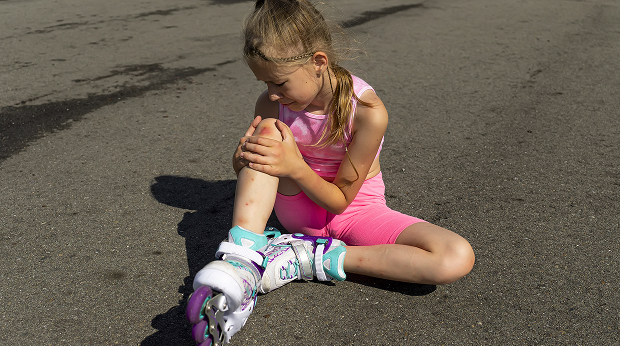
The primary cause is always mechanical impact. This could be a fall from a swing or bicycle, active play on a playground, or a collision during sports (football, wrestling). At home, children often hit the corners of furniture or fall out of bed.
The hip is a large body part with a large amount of muscle mass. With a direct impact, the muscles are pressed against the femur, causing internal bleeding.
The greater the child's speed or the height of the fall, the more severe the hip contusion will be. In rare cases, injury can even occur with a sudden muscle contraction, but most often it is the result of direct physical contact with a hard object.
Symptoms of a hip contusion
Recognizing the injury isn't that difficult if you know what to look for. Typically, the main signs appear immediately or within the first hour after the incident.
The main symptoms of a hip contusion include skin discoloration, changes in leg size, and complaints of pain.
Pain, swelling, and hematoma
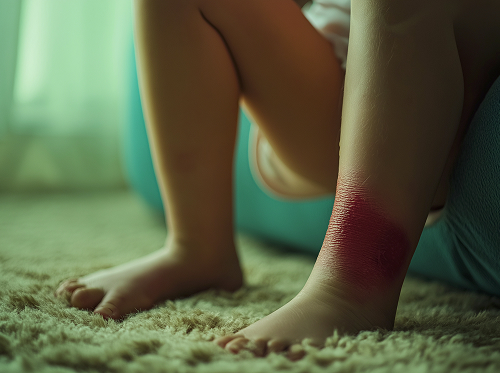
Immediately after the fall, a sharp pain occurs, which gradually turns into a dull or aching sensation. Swelling increases gradually: the tissues become dense, the skin becomes taut and shiny. After some time, a bruise appears on the thigh, changing color from purple-red to bluish.
The depth of the injury determines the severity of symptoms. A glancing blow only damages the skin and fat. A frontal impact causes a large hematoma on the thigh. It is palpable as a dense, hot mass.
Limping, limited movement, and refusal to put weight on the leg
The second set of symptoms is functional impairment. Pain and swelling limit mobility. The child spares the injured leg, limiting the range of motion in the knee and hip joints.
Limping occurs due to weight transfer to the healthy limb. In severe injuries, the child completely refuses to walk, as muscle tension causes severe discomfort.
Signs to rule out a fracture or other injury
A parent's most serious fear when dealing with an injury is a hip fracture in a child. Despite the high flexibility of children's bones, the risk of serious injury cannot be ruled out. Examine the leg quickly and without unnecessary movements. The following symptoms should raise concern:
- The leg appears deformed or twisted unnaturally
- The pain is extremely severe; the child refuses to let you touch the hip
- The swelling increases rapidly and spreads to the knee area
- The child cannot lift a straight leg off the ground while lying down
If any of these signs are present, self-medication is unacceptable. Immediate medical attention is required. Only a specialist can confirm that it is a hip contusion and not a bone fracture based on the results of an examination and diagnostic imaging.
First aid for a hip contusion
The treatment and recovery time directly depend on how quickly and correctly first aid is administered for a hip contusion. Your goal in the first few minutes is to prevent blood from spreading under the skin and stop the swelling from increasing.
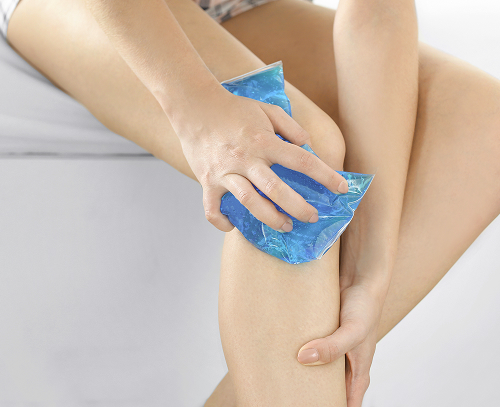
To do this, first lay the child down or sit them up. Any movement will only increase blood flow to the site of the injury, which will cause the hematoma to expand. Then, immediately apply cold to the contusion—it provides local anesthesia.
An ice pack or even a bag of frozen vegetables will do; this is the simplest and safest home treatment for tissue damage. Be sure to wrap them in a towel or other cloth.
Direct contact of ice with the skin is dangerous—it can easily cause frostbite. Apply a cold compress for 10-15 minutes, then pause for the same amount of time. Repeat this procedure for the first two or three hours. Cold will cause the blood vessels to constrict, which will significantly reduce pain and prevent excessive tissue swelling.
How to properly immobilize the leg and reduce pain
If your child is experiencing pain when putting weight on their leg and they still need to get to the hospital, limit their movement as much as possible. Use a soft, compressive bandage—use an elastic bandage.
It's important not to wrap it too tightly, otherwise you'll disrupt lymph flow and normal blood circulation. When lying down or sitting, place a bolster or pillow under the shin to slightly elevate the leg. This will help drain fluid from the injured area and significantly reduce swelling in the thigh.
What not to do: heat, massage, active play
Don't try to "get the blood flowing" with massage or a heating pad. This is contraindicated during the first 48 hours. If you're wondering if it's okay to apply heat to a bruise, know this: this will directly increase inflammation and lead to complications. Keep your child calm. Even if they're eager to play, don't allow it. The muscle needs time to heal, otherwise you'll provoke further bleeding, and the situation will become more serious.
General information
How does a doctor diagnose a hip contusion in a child?
When you bring your child to the clinic, the diagnosis begins with a detailed interview. It's important for the doctor to know the height of the fall and how quickly the child developed a limp.
A pediatric traumatologist performs palpation—gently feeling the hip. The goal is to find the boundaries of the injury and rule out bone pathology.
When are X-rays, ultrasound, or MRI needed?
A visual examination alone is not enough for deep injuries. To make an accurate diagnosis, doctors use diagnostic imaging techniques.
What exactly may be needed:
- X-ray: required if the doctor suspects a fracture or crack in the bone.
- Soft tissue ultrasound: allows you to assess the size of the hematoma and its condition—whether it is liquid or has already coagulated.
- MRI: rarely prescribed, only in complex cases when it is necessary to examine the ligaments or muscle tissue in the hip area.
A comprehensive approach ensures that treatment for hip contusions in children will be chosen correctly, without the risk of complications.



It's impossible to completely protect a child from injury, but you can reduce the risks. It's important to choose high-quality shoes with non-slip soles for walking.
When participating in active sports (rollerblading, skateboarding), wearing protective equipment is essential. It's also important to teach children the rules of safe falls: try to curl up and avoid sticking out straight legs.
Remember that a doctor should determine the treatment for a hip contusion after an in-person examination.
Home remedies, such as cold compresses for a contusion, are only good as a supplement to the main treatment. Protect your children's health and don't delay a visit to a specialist if you have any doubts.
FAQ
How long can a child's hip bruise last?
When should you see a doctor after a hip contusion?



This award is given to clinics with the highest ratings according to user ratings, a large number of requests from this site, and in the absence of critical violations.

This award is given to clinics with the highest ratings according to user ratings. It means that the place is known, loved, and definitely worth visiting.

The ProDoctors portal collected 500 thousand reviews, compiled a rating of doctors based on them and awarded the best. We are proud that our doctors are among those awarded.
Make an appointment at a convenient time on the nearest date
Price
Other Services

Appointment to the doctor









Our clinics


Application “Personal Account K+31”












What is a hip contusion and why does this injury require attention in children?
At its core, any hip contusion is a childhood injury, which is a closed soft tissue injury. Parents are often reassured if the bones are intact, but this isn't entirely true. Children's tissues are loose, and the blood vessels are very close to the surface. Even a moderate blow causes capillaries to burst. Blood floods the subcutaneous tissue or muscles. This is how pain develops.
The problem is that while only a spot is visible externally, a deep hematoma can develop internally. This puts pressure on the nerve endings and interferes with normal blood flow. You can't simply ignore the injury. Be sure to monitor your child's leg for the first two or three days.