
Head injury in children: treatment, symptoms, and first aid
Children are constantly on the move, so falls are inevitable. In most cases, a simple head contusion in a child is not serious, but a baby's skull is fragile. It doesn't protect the brain as well as an adult's. Therefore, it's important to know which symptoms to respond to immediately, without waiting for the injury to worsen.
Let's look at the steps to take: how to help a child immediately after a head injury, and what to watch for in their behavior in the first few hours.

specialists

equipment

treatment



Symptoms of a head injury in children
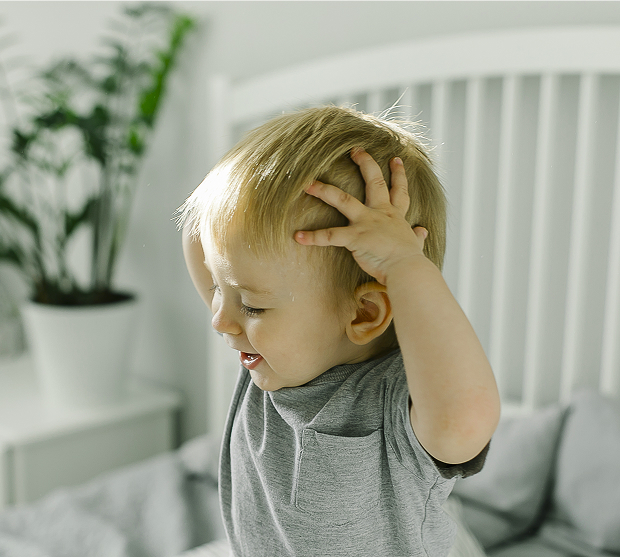
Identifying the problem can be difficult, especially if the child is still unable to speak. Each child's body reacts differently. Some fall asleep immediately from stress, while others become abnormally active.
Therefore, the symptoms of a head injury should be assessed dynamically. If the condition worsens after an hour or two, this is a poor prognostic sign.
Mild Signs After a Blow
Immediately after a fall, a child usually cries. This is normal—a reaction to pain and fright. If the crying lasts no more than 5-10 minutes, and then the child calms down and returns to play, the injury is most likely superficial. Redness or a small bump on the head may appear at the site of the blow, which is caused by the rupture of small capillaries.
With a mild blow, appetite is maintained, motor coordination is not impaired, the pupils are equal in size and react adequately to light. A child may complain about the location of the blow, but they are clearly oriented and recognize loved ones. In these cases, treatment for head contusions in children is limited to the comfort of home and cold applications.
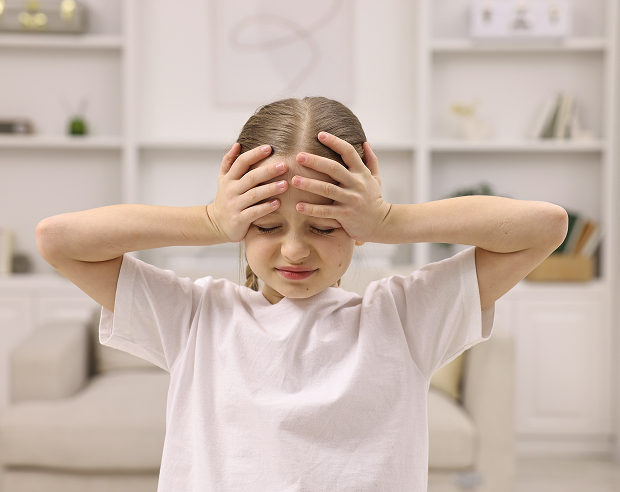
Warning Symptoms Requiring Attention
When to see a doctor? Be alert if your child develops neurological abnormalities after a fall. A single episode of vomiting after a fall is already considered a serious cause for concern. The body is signaling irritation of the brain centers. It is also a sign of trouble if a headache worsens over time.
Closely monitor the victim's level of consciousness. Extreme drowsiness or slurred speech are reasons for emergency assistance. Look for specific physical changes:
- Uneven pupil size
- Paleness and cold, clammy sweat
- Any discharge from the ear canals or nose
- Unsteady gait. These symptoms of a head injury require immediate evaluation by a specialist. Internal injuries are not always immediately visible. A period of apparent health can suddenly be followed by a sharp deterioration due to hidden bleeding.
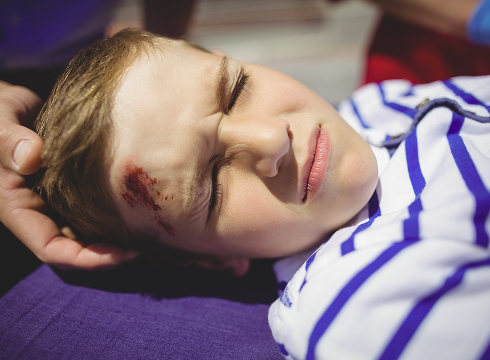
First aid for a head concussion
The first fifteen minutes after a fall are the most critical. How quickly the swelling subsides depends on the parents' actions. The main rule is to remain calm. Your anxiety will be transmitted to your child, raising their blood pressure, which can increase bleeding from damaged vessels. First, lay your child down horizontally and slightly elevate their head.
Immediately after the blow, do the following:
- Use a cold compress through a layer of cloth.
- Hold the cold for 10-15 minutes.
- Take a 20-minute break and repeat.
A heating pad or a freezer bag wrapped in a cloth will work as a cold compress. If the skin is broken, treat the wound with Miramistin or Chlorhexidine.
Do not use alcohol solutions, as they burn the tissue. Bleeding from the head is always profuse, so simply press firmly with a sterile cloth.
Proper first aid for a head injury is based on a calm and focused approach.
How to monitor a child in the first hours
For the first 2-3 hours after the injury, do not give your child much to drink or eat to avoid inducing vomiting if brain damage has occurred. Check for reactions every 30 minutes: ask simple questions, ask to see a favorite toy. Carefully observe how your child moves their arms and legs.
There's a myth that a child shouldn't be allowed to sleep. In fact, sleep is necessary for recovery. However, in the first 24 hours after a head injury, a sleeping child should be awakened every 2-3 hours. You need to ensure that they are waking up adequately, understand where they are, and can respond clearly. Difficulty waking up is a bad sign. Constant observation after a head injury is key to safety.
What not to do
Parents often make mistakes in their attempts to help. Here's a list of things that are strictly prohibited:
- Applying ice directly to the skin (risk of frostbite)
- Administering painkillers immediately (this may mask developing symptoms)
- Allowing the child to watch TV or play with gadgets (excessive strain on the visual analyzer and brain)
- Do not give aspirin, as it thins the blood and can provoke or increase internal bleeding.
Also, conditions such as a brief loss of consciousness should not be ignored. Even if the child "passed out" for only a few seconds and quickly regained consciousness, this is a sign of serious brain damage.
Treatment of head contusion in children
First aid has been provided, and the observation period begins. Effective treatment of head contusions in children is impossible without a protective regimen. Remove gadgets, loud music, and active games.
When home observation is sufficient
If the child's head injury appears mild and there is no vomiting, treat at home. Limit physical activity for three to five days. For the first two days, avoid prolonged sun exposure or hot baths. It is helpful to record changes in the child's condition:
- Appetite
- Sleep
- Complaints
The absence of negative changes after 48 hours confirms that the brain is not damaged.
When a doctor's examination is needed
Some situations require a doctor's attention. For example, when a child's head contusion has caused a hard, throbbing lump. This is a symptom of blood accumulation under the periosteum. The hematoma can become infected, so don't wait.
Make an appointment immediately if you notice any of these signs:
- Behavior has become inappropriate, the child is crying nonstop.
- The child is constantly sleepy or appears very weak.
- Complaints of loss of balance or double vision have arisen.
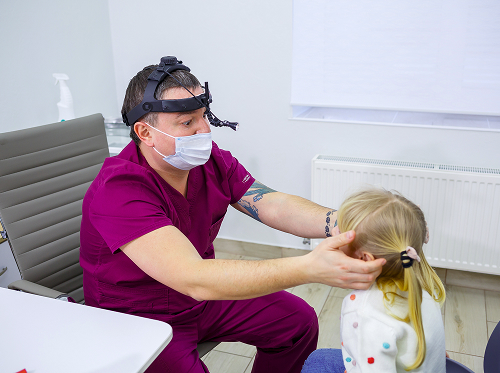
Our center offers professional neurological examinations at any time. The doctor will check the nervous system, assess muscle tone, and provide precise recommendations.
What tests may be prescribed?
Guesswork is unacceptable in medicine; an objective picture is important. For this, specialists use instrumental examination methods. If a concussion is suspected, it is important to check for internal injuries. Typically, the list of appointments includes:
- Neurosonography (ultrasound), if the patient is an infant under 12 months old.
- Classical X-ray to check the integrity of the skull.
- Echo-EG to check the symmetry of the cerebral hemispheres.
- CT or MRI, if it is necessary to rule out deep tissue hemorrhage.
A comprehensive approach and timely treatment of head contusion in children significantly reduce the risk of complications. This is the only way to detect hidden problems that are not apparent in the first hours after the impact.
General information
Head contusion in infants and young children
Infants are a special category of patients. Their skull bones have not yet fused, they have fontanelles, and the sutures between the bones remain mobile. This provides some protection, but also creates additional risks.
What to Look for in Babies
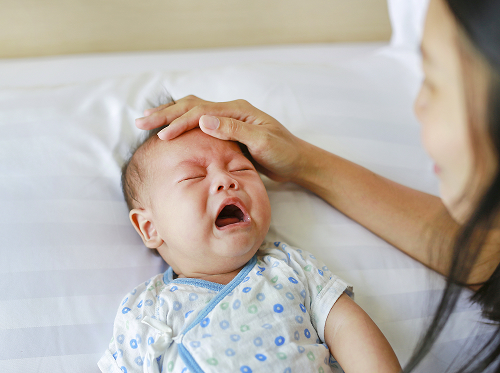
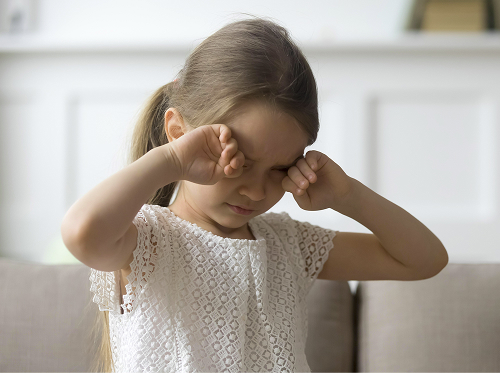
If an infant is injured, the symptoms may be vague. They won't say they have a headache. Instead, you'll hear a sharp, piercing cry or, conversely, an unusual silence.
Pay attention to the bulging fontanelle—if it becomes tense and rises above the level of the bones, this is a sign of high blood pressure. Profuse, projectile-like spitting that repeats several times is also an important sign.
When the risks are higher
For children under one year old, any fall from a height greater than their own height (for example, from a changing table or sofa) is considered potentially dangerous. Young children don't yet have developed protective reflexes—they don't always have time to extend their arms forward, so the impact often lands on the forehead or back of the head with the full force of their body weight. In such cases, only a doctor should decide what to do after an in-person examination.
It's impossible to completely eliminate falls, but you can minimize the risks. Use protective pads on sharp furniture corners. Always secure your child in strollers and high chairs.
If your child is involved in active sports (biking, scootering, rollerblading), a helmet is a must, not a recommendation. High-quality head protection is essential for preventing severe concussions from falls at high speeds. Establishing a safe space at home is the best first aid for a head injury, provided early.
FAQ
When should you seek immediate medical attention after a head injury?
Is it possible to treat a child's head contusion at home?
Our clinic provides qualified treatment for head injuries in children in the shortest possible time. It's important for parents to remain calm and know exactly what to do if a head injury occurs. This is essential for safety and your own peace of mind.
If you are currently in the capital, our doctors will consult you and provide high-quality treatment and monitoring in Moscow.



This award is given to clinics with the highest ratings according to user ratings, a large number of requests from this site, and in the absence of critical violations.

This award is given to clinics with the highest ratings according to user ratings. It means that the place is known, loved, and definitely worth visiting.

The ProDoctors portal collected 500 thousand reviews, compiled a rating of doctors based on them and awarded the best. We are proud that our doctors are among those awarded.
Make an appointment at a convenient time on the nearest date
Price
Other Services

Appointment to the doctor


Our clinics


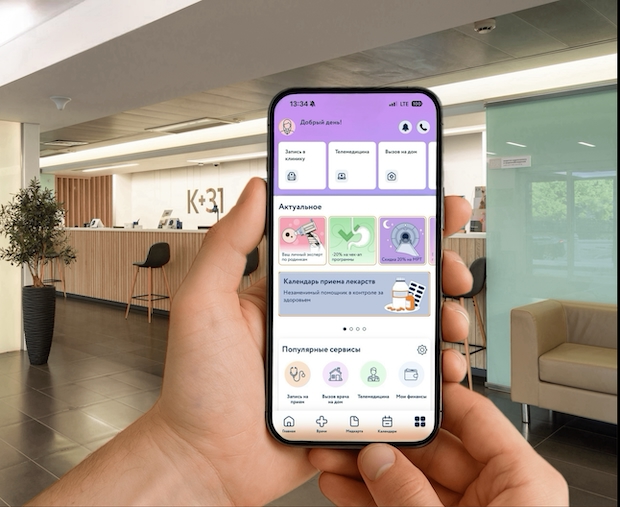
Application “Personal Account K+31”










What is a head injury in a child and how is it different from a concussion?
Parents often confuse two different conditions: a soft tissue contusion and a concussion. When a child's head is hit, the skin, subcutaneous tissue, and blood vessels are damaged. The result is a common bump on the head or bruise. This is an external injury that does not, in itself, affect brain function. The brain is protected by cerebrospinal fluid (CSF), which acts as a shock absorber, absorbing the impact energy.
A concussion is considered a mild form of traumatic brain injury. At the moment of impact, the brain is suddenly displaced and contacts the inner walls of the skull. The tissue is not visibly damaged.
The problem lies deeper: neuronal function is disrupted, and chemical and electrical connections in cells are disrupted. While a common head contusion in a child only affects the outer covering, the brain itself suffers.
Any head injury to a child requires parents to monitor them for two days. Outward calm in the first few minutes can often be deceptive.