
Hip Sprain in Children: Symptoms and Treatment
Children are constantly on the move. Running, jumping, and falling are common parts of growing up. This activity often leads to injuries. Hip sprains in children are diagnosed regularly.
Parents are alarmed when they see their toddler or teenager refusing to put weight on their foot. Proper treatment for hip sprains in children should begin with a proper assessment.
It's impossible to determine the severity of the injury on your own. A professional examination is required!

specialists

equipment

treatment






Why do sprains occur in children?

The causes lie in a combination of external factors and the anatomical features of a growing body.
Falls, sports, and active games
In most cases, injuries occur outdoors or during training. A poor landing after a jump. Sudden braking while running. Unprepared splits. The joint extends beyond its normal range of motion. This leads to hyperextension of the fibers.
Age-related characteristics of ligaments and muscles
The hip joint in children is still developing. The ligamentous apparatus is elastic, but its strength is still insufficient. The growth plates are open. Muscles often cannot keep up with the intensive bone growth. An imbalance occurs. During growth spurts, the risk of injury increases exponentially.
What activities increase the risk of injury?
Gymnastics, football, and martial arts require sudden jerks. Incorrect exercise technique puts strain on the joint. Failure to properly warm up before physical activity is a surefire way to tissue damage.
Symptoms of a hip sprain in a child
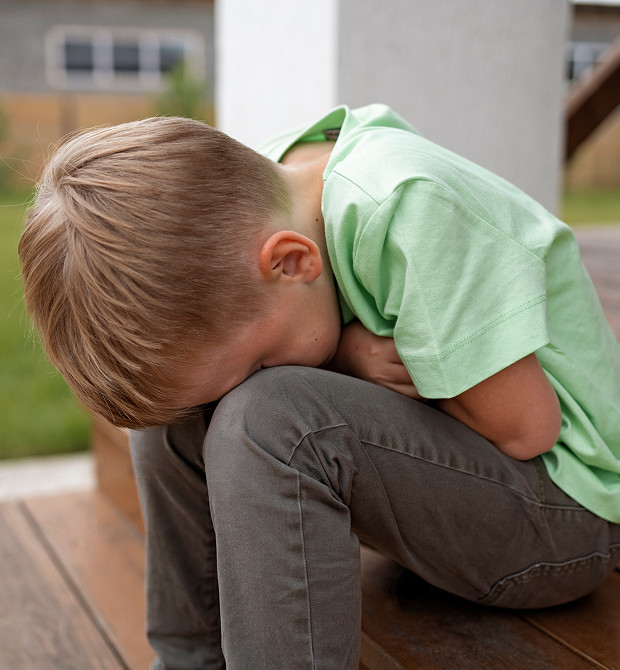
The clinical picture depends on the number of torn fibers. Sometimes the symptoms are obvious, sometimes vague.
Pain in the groin, thigh, or buttock
This is the main marker. The child complains of discomfort. The hip pain intensifies when attempting to move the leg to the side or bend it. The location can vary. Sometimes it radiates to the knee.
Limping and limited mobility
The body tries to protect the injured area. The child limps, protecting the leg. Gait changes. Limited mobility is noticeable when asked to raise the hip or sit down. Children may simply refuse to walk.
Swelling, hematoma, and muscle tension
Tissues react to microtears with inflammation. Swelling appears. A bruise (hematoma) does not always form, only if blood vessels are affected. Muscle tension can be felt around the joint. This is a reflex spasm that prevents further joint displacement.
When symptoms may be subtle
Children have a different sensitivity threshold than adults. A child may become distracted and continue running. Parents notice the problem only in the evening, when the muscles cool down. Symptoms of a hip strain in such cases include a slight limp without severe complaints.

First Aid for a Child After an Injury
Correct actions in the first minutes affect the healing and rehabilitation timeline. Inappropriate intervention worsens the situation.
Rest and limiting weight-bearing
Immediately after a fall, sit or lay the child down. Avoid forcing them to "walk" the leg. The damaged fibers require rest.
Cold and comfortable positioning of the limb
Cooling constricts blood vessels and prevents the spread of swelling. Use ice from the freezer wrapped in a towel. Avoid direct contact of the ice with the skin. Apply cold after an injury for 15-20 minutes. It's best to elevate the leg.
What not to do before seeing a doctor
Remember the strict prohibitions for any joint injuries. Parents need to know a clear algorithm of actions to avoid causing harm. Proper first aid for an injury reduces the risk of complications.
- Keep the child calm
- Avoid physical activity
- Apply cold through a cloth
- Do not massage or heat the painful area
- See a doctor if limping or pain increases
These simple steps will help stabilize the condition. A specialist at the clinic will determine further action.
Don't give your child strong painkillers from your medicine cabinet. These medications will blur the picture, making it more difficult for the doctor to perform the examination.
General information
How does a doctor confirm a diagnosis?
The assessment is conducted according to strict protocols. A medical examination is mandatory even if there is a slight suspicion of injury.
Examination by a pediatric orthopedic traumatologist
The appointment begins with a questionnaire. The doctor determines the mechanism of the fall. Then, he or she performs palpation and special amplitude tests. A good pediatric orthopedic traumatologist evaluates the stability of the joint, the location of swelling, and the degree of muscle spasm.
"In pediatric traumatology, it's important not to focus solely on swelling: a child may limp and barely complain, even if ligaments or the joint capsule are damaged. Our goal is to quickly rule out a more serious injury," says a pediatric orthopedic traumatologist.
When is an ultrasound, X-ray, or MRI needed?
Imaging is prescribed as indicated. It is necessary to rule out fractures and bone fragments. A hip X-ray shows the condition of the bone tissue. This is a standard initial procedure. A hip ultrasound can assess the presence of fluid in the cavity and the condition of the soft tissues. In complex cases, when the clinical picture is unclear, an MRI of the hip is prescribed. This imaging provides a detailed, layered image of the ligaments and cartilage.
What injuries are important to rule out first?
The symptoms of a common sprain often conceal much more serious problems. During an appointment, a traumatologist first checks to see if the child has a dislocation or fracture of the femoral neck. Children also experience epiphysiolysis, which is when the growth plate of the bone shifts. The rule here is simple: the sooner we ensure there are no dangerous injuries, the more peaceful and rapid the subsequent recovery will be.





It's impossible to protect a child from every fall. But we can ensure these incidents occur without serious consequences.
Warm-up, footwear, and load control
Before any activity, it's important to warm up properly. Proper footwear with a high-quality sole absorbs some of the impact. It's also important to closely monitor the child's overall condition. Sports activities typically lead to injury when severe fatigue sets in. Muscles become overtired, relax, and lose their firm grip on the joint.
Strengthening muscles and coordination
Strong hip and gluteal muscles act as a natural corset. Regular physical activity, swimming, and coordination exercises make children's hip joints more resilient to unusual loads.
Frequently Asked Questions
How do you know if your child has a hip sprain?
What to do in the first hours after the injury?
What tests may be prescribed?
How long does recovery take in children?
The exact time frame always depends on the severity of the fiber damage and on how strictly the treatment regimen is followed. If the injury is mild, recovery is fairly quick. However, returning to normal sports or daily activities should be done as gradually as possible. This should only be done after the doctor gives explicit permission.
If hip pain, limited mobility, or limping persists after initial treatment, a follow-up consultation is required. Properly treated hip sprains in children minimize risks, and promptly identified symptoms of hip sprains allow doctors in Moscow to quickly provide the necessary assistance. At the clinic, you will always be advised on how to properly treat a hip sprain in a child.



This award is given to clinics with the highest ratings according to user ratings, a large number of requests from this site, and in the absence of critical violations.

This award is given to clinics with the highest ratings according to user ratings. It means that the place is known, loved, and definitely worth visiting.

The ProDoctors portal collected 500 thousand reviews, compiled a rating of doctors based on them and awarded the best. We are proud that our doctors are among those awarded.
Make an appointment at a convenient time on the nearest date
Price
Other Services

Appointment to the doctor

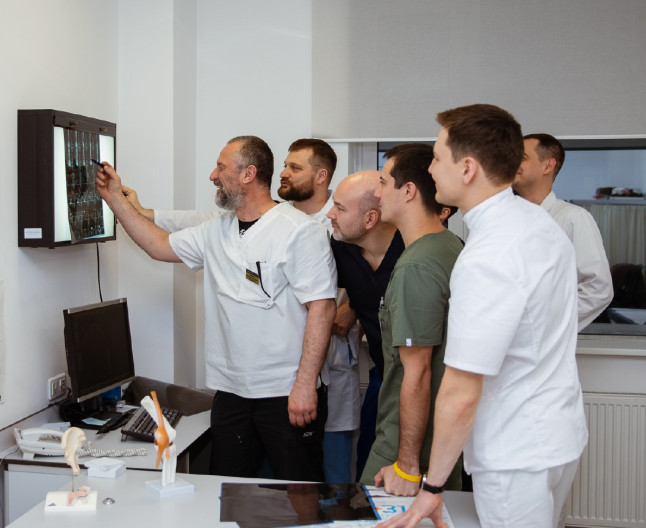









Our clinics


Application “Personal Account K+31”












What is a hip sprain?
This is a mechanical injury to soft tissues. It occurs with a sudden movement that exceeds the physiological norm. The anatomy of the area is complex. The injury affects several structures simultaneously.
What tissues are damaged during an injury?
The ligaments are primarily affected. They connect bones and hold them in the correct position. A hip sprain is accompanied by micro-tears in the fibers. The joint capsule also experiences overload. The muscles surrounding the joint spasm in response to a pain signal. Nerve endings are irritated, causing swelling. Blood vessels can be locally damaged, forming a hematoma.
How does a sprain differ from a bruise, dislocation, and fracture?
Visually, it is difficult to distinguish one injury from another. Instrumental diagnostics are required. But there are characteristic clinical signs.
For clarity, the main differences are presented in the table.
This information provides only a preliminary understanding. A doctor will make a definitive diagnosis.