
Hip fracture in children: treatment, diagnosis and recovery
Musculoskeletal injuries always cause great concern for parents. A femoral neck fracture is especially dangerous in children, as this area is responsible for the natural growth of the entire leg.

specialists

equipment

treatment






Symptoms of a hip fracture

Typical symptoms of a hip fracture appear immediately after a strong mechanical impact. The main symptoms are:
- Pain, limited movement, and lameness
- Swelling, shortening of the limb, and other warning signs
- Swelling (due to blood accumulation within the joint)
When to urgently seek medical attention
Any acute pain after a fall is an absolute reason for immediate medical attention. Ignoring the symptoms of a hip fracture is unacceptable, as a delay worsens the prognosis. Action must be taken quickly to avoid wasting precious time.
If a child complains of groin pain, numbness, or noticeable paleness of the foot, blood vessels may be compressed. In clinical practice, a hip fracture in children is considered an emergency. The sooner the patient gets to the clinic, the higher the chances of full functional recovery.

First aid for suspected fractures
Until paramedics arrive, the main goal is to prevent further displacement of the bone fragments. The victim must be provided with complete physical and psychological rest.
What not to do: mistakes that worsen the condition
It is strictly forbidden to attempt to straighten the leg or pull on the foot. Do not actively massage the injured hip joint or use warming compresses. Heat will only increase internal bleeding and provoke increased painful swelling.
Diagnosis of femoral neck fracture
Timely diagnosis of a hip fracture is key to successful treatment. The doctor not only confirms the diagnosis but also carefully assesses the condition of the blood vessels and soft tissues.
Examination by a traumatologist-orthopedist
An experienced pediatric traumatologist-orthopedist carefully assesses the position of the limb and tissue sensitivity. The doctor carefully checks the vascular pulsation and collects the patient's medical history.
X-rays, CT, and MRI: When are these examinations prescribed?
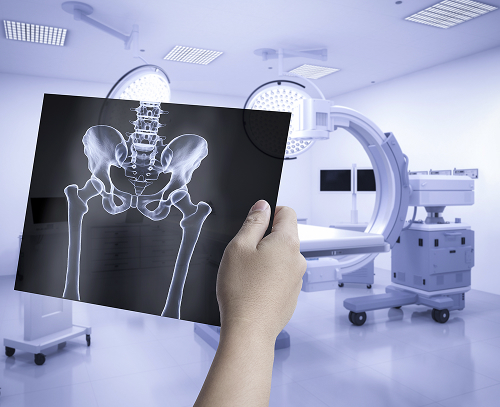
The basic method of initial examination is an X-ray of the hip joint in two projections. This image clearly shows the fracture line and the general position of the bone fragments. If the anatomy of the injury is complex, the doctor may also prescribe a CT or MRI.
Computer tomography allows for a detailed examination of the bone structure in a three-dimensional format. Magnetic resonance imaging (MRI) is excellent for visualizing soft tissue and hidden hematomas. Comprehensive diagnosis of a hip fracture completely eliminates the risk of medical error.
General information
Treatment of a hip fracture in children
The choice of medical approach depends on many parameters, including the patient's weight and the direction of the fracture. Effective treatment of a hip fracture is aimed at precisely aligning the fragments. Optimal treatment for a hip fracture begins with an X-ray of the hip joint.
Conservative treatment: when is it possible?
This method is only acceptable for partial fractures, when there is no risk of bone separation. Proper treatment of a hip fracture requires strict discipline from parents.
For a clearer understanding of medical approaches, please review the comparison table of treatment methods.
| Situation | What is usually done | Why is it necessary |
|---|---|---|
| Non-displaced fracture | Observation, secure fixation, monitoring | Create ideal conditions for natural healing |
| Displaced fracture | Manual reduction or surgery | Restore the correct anatomical position of the bone |
| Post-treatment period | Physical exercise, imaging, graduated loading | Monitor healing and gently restore joint function |
This table shows that every step doctors take has a clear scientific basis. When choosing treatment for a hip fracture, doctors consider numerous physiological factors.
Surgical treatment: indications and main goals
In the vast majority of cases, modern medical protocol requires surgery. When planning treatment for a hip fracture, surgeons strive to minimize tissue trauma. Reliable internal fixation allows the patient to quickly relieve pain.
Doctors perform osteosynthesis using special screws that do not damage the growth plates. This delicate work requires extensive experience and precision. High-quality osteosynthesis virtually minimizes the risk of secondary displacement.
Immobilization, pain management, and observation
After surgery, an important period of complete rest begins for the leg. Proper immobilization of the limb with a plaster cast reliably protects the joint from stress. The length of time the cast should be worn is determined individually based on follow-up imaging.
Reliable immobilization is always complemented by adequate pain management and regular medical monitoring. Doctors monitor the child's temperature and the condition of the postoperative wound. During this period, hip fracture treatment enters the outpatient monitoring phase.



FAQ
Is it possible to treat a child's hip fracture without surgery?
How long does recovery take?
How can you tell if the bone is healing properly?



This award is given to clinics with the highest ratings according to user ratings, a large number of requests from this site, and in the absence of critical violations.

This award is given to clinics with the highest ratings according to user ratings. It means that the place is known, loved, and definitely worth visiting.

The ProDoctors portal collected 500 thousand reviews, compiled a rating of doctors based on them and awarded the best. We are proud that our doctors are among those awarded.
Make an appointment at a convenient time on the nearest date
Price
Other Services

Appointment to the doctor





















Our clinics


Application “Personal Account K+31”












What is a hip fracture in a child?
This type of injury is a disruption of the bone tissue in the upper femur. It occurs in the thin area that directly connects the head of the bone to its main body. Most often, a hip fracture in a child occurs after a severe fall from a height or a traffic accident.
Why does this type of fracture require a special approach in children?
Children's bodies are in the process of continuous skeletal development. The anatomy of this area is complex due to the abundance of blood vessels and the presence of sensitive growth zones. Therefore, a hip fracture in children requires immediate intervention by specialized specialists.
What are the different types of hip fractures?
Traumatologists classify these injuries by the location of the fracture line and the degree of anatomical disruption. Injuries can be stable, without separation of fragments, or unstable. If fragment displacement occurs, the situation immediately requires more complex surgical intervention.
Any femoral neck fracture determines the patient's subsequent medical care strategy. Determining the type of injury allows doctors to choose the safest path to recovery. Each type of femoral fracture has its own management protocols.