Clavicle fracture in a child: symptoms, treatment and recovery

Clavicle fractures in children are common. The main cause is excessive activity in children. The clavicle is the only bone connecting the upper limb to the axial skeleton, and it bears the brunt of the impact when falling on an outstretched arm or shoulder.

Clavicle fractures usually heal without any consequences. However, pain should never be ignored: self-medication leads to improper healing and limited mobility in the future. If you suspect an injury, consult a specialist.

Best specialists
Best
specialists
Expert equipment
Expert
equipment
Advanced diagnostic treatment
Advanced diagnostic
treatment
Sign up
Fill out the entry form on the page and we will call you back
Sign up Позвонить
Download the application “Personal Account K+31”
Everything about your health in one click!
Subscribe to social networks K+31
To keep up to date with current offers and receive useful advice about your health.

What is a clavicle fracture and why is it common in children?

The clavicle is an S-shaped tubular bone that provides stability and mobility to the shoulder joint. It fractures more frequently in children than in adults, due to both physiological factors and lifestyle.

Characteristics of children's bone

Children's bone tissue is more elastic and contains fewer minerals than adults. The thick periosteum (bone membrane) is richly supplied with blood and has a high capacity for regeneration. This is why bone healing in young patients occurs much more quickly. Often, the bone does not fracture completely, but is merely deformed, which influences the choice of treatment strategy.

Main types of fractures: non-displaced, displaced, subperiosteal

Traumatology distinguishes several types of injuries, which determine the severity of the condition:

  • Subperiosteal fracture – often called a "greenstick" injury. The periosteum remains intact and holds the bone together, preventing it from separating.
  • Non-displaced clavicle fracture – the bone breaks completely, but its ends remain in the anatomically correct position. This is the most favorable option.
  • Displaced clavicle fracture – the bone fragments separate under the force of muscle traction or impact. This requires particularly precise diagnostics to rule out damage to nerves and blood vessels.
What is a clavicle fracture and why is it common in children?
Causes of a clavicle fracture in children

Causes of a clavicle fracture in children

The mechanism of injury is usually typical and related to mechanical impact on the shoulder girdle. Understanding the cause helps the doctor quickly determine the nature of the injury.

Falls and household injuries

The most common cause is an unfortunate fall at home or on the playground. A direct blow to the clavicle or landing on the lateral surface of the shoulder creates excessive pressure on the bone, which, at its narrowest point (the middle third), cannot withstand the load.

Sports and play

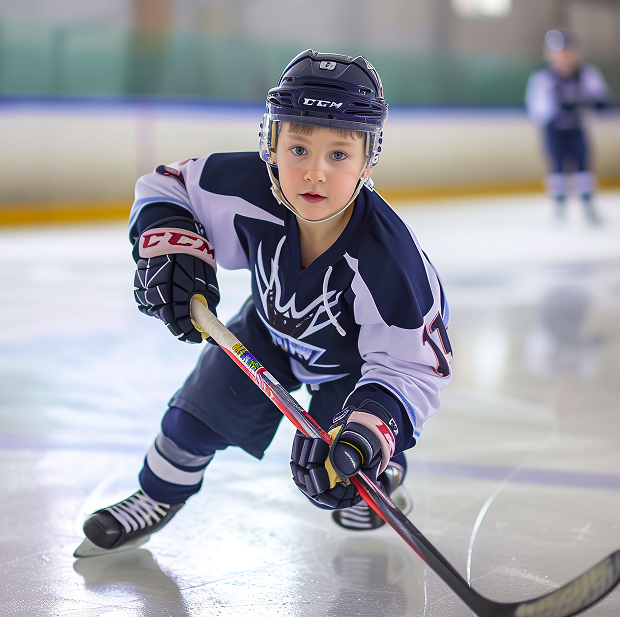
Children involved in contact sports, football, hockey, or wrestling are at risk. The risk of a clavicle fracture in children increases when riding a bicycle, scooter, or rollerblading without protective equipment, as the child reflexively extends their arm forward during a fall.

Birth trauma in newborns

A clavicle fracture in newborns is another common injury. It usually occurs during childbirth. Such injuries are not serious: the fracture heals quickly, but despite this, close monitoring by a pediatrician is necessary during the first days of life.

Symptoms of a collarbone fracture in children

Symptoms of a collarbone fracture in children

A collarbone injury has several characteristic symptoms. Monitor your child's behavior: if they hold their arm close to their body and cry frequently, consult a doctor.

Pain, swelling, and limited motion

The main symptoms of a collarbone fracture are:

  • Sharp pain that intensifies when attempting to raise the arm or move it to the side
  • Swelling and bruising in the supraspinatus area
  • Discomfort during movement and limited mobility in the shoulder joint

Signs of displacement

Signs of displacement

If the fracture fragments are displaced, the shoulder on the affected side may appear shorter or lowered and forward. A characteristic bulge (deformity) may be palpable or visible under the skin. A crunching sound of bone fragments (crepitus) may sometimes be heard when palpated.

When to see a doctor immediately

There are signs that require immediate medical attention:

  • The skin over the collarbone is very tight or damaged (risk of an open fracture)
  • Numbness in the hand or forearm
  • The fingers have become cold or have a bluish tint
  • The child complains of severe pain when moving the fingers
How is a clavicle fracture diagnosed

How is a clavicle fracture diagnosed

To make an accurate diagnosis and determine the appropriate treatment plan, the doctor conducts a comprehensive examination. Don't rely solely on external signs, as a bruise may mask a serious fracture.

Examination by a pediatric orthopedic traumatologist

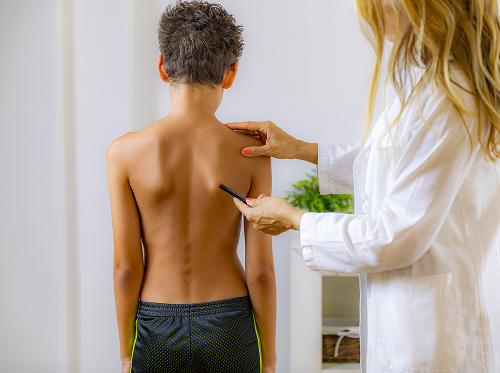
First, the pediatric orthopedic traumatologist palpates the injured area. Next, they assess the integrity of the skin, check for pulsation in the radial artery, and check for skin sensitivity. This is necessary to rule out damage to the vascular-nerve bundle that runs directly under the clavicle.

X-rays and additional diagnostic methods

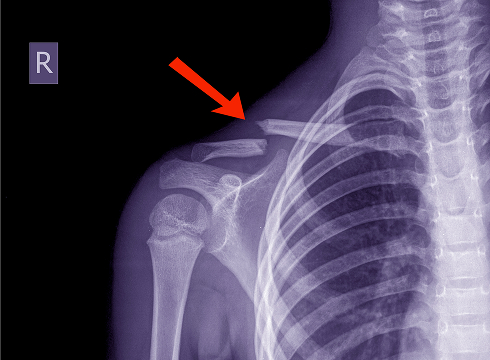
The gold standard is a clavicle X-ray. Only from this image can the nature of the injury be determined:

It allows the doctor to see:

  1. The exact location of the fracture
  2. The presence and direction of fragment displacement
  3. The condition of growth plates in adolescents
  4. In rare cases, when joint or vascular damage is suspected, a CT scan may be ordered.

General information

Treatment of a clavicle fracture in children

The choice of treatment method depends on the child's age and the severity of the injury. In most cases, clavicle fractures in children are treated conservatively.

Conservative treatment

The main goal is to create conditions for undisturbed bone healing. This is achieved by immobilizing the arm in a position that brings the fragments as close together as possible. In newborns and young children, a soft sling is often used, holding the arm tightly against the body.

Arm immobilization and pain relief

Various devices are used for immobilization. The simplest and most effective method is a sling or more modern orthoses (Delbet rings, Desault bandage). Arm immobilization usually lasts from 2 to 4 weeks. In parallel, painkillers such as ibuprofen or paracetamol are prescribed in an age-appropriate dosage to alleviate the child's condition in the first days after the injury.

When surgery may be needed

Despite the fact that children have a high capacity for regeneration, surgery is sometimes necessary. Indications for surgical intervention (osteosynthesis) include:

  • Open fracture
  • Threat of skin damage by a sharp bone edge
  • Severe displacement that cannot be corrected by fixation
  • Vascular or nerve damage

During surgery, the doctor aligns the fragments and fixes them with a special pin or plate.
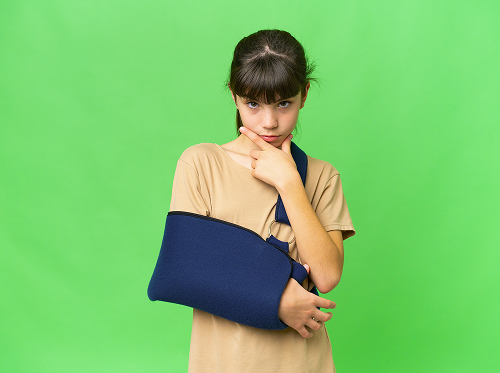
Treatment of a clavicle fracture in children

Recovery from a clavicle fracture

When the pain subsides, recovery from a clavicle fracture begins. The child's return to normal life depends on the parents' correct actions at this stage.

How long does healing take?

In preschool-aged children, primary bone callus forms within 1.5–2 weeks. In school-age children, this process takes 3–4 weeks. Complete bone healing and restoration of its structure is confirmed by a follow-up X-ray.

Rehabilitation and physical therapy

As soon as the doctor removes the cast, rehabilitation begins. It includes:

  • Physical therapy (exercise therapy) - special exercises to strengthen the shoulder joint and restore muscle tone.
  • Physical therapy (magnetic therapy, electrophoresis) to improve circulation.
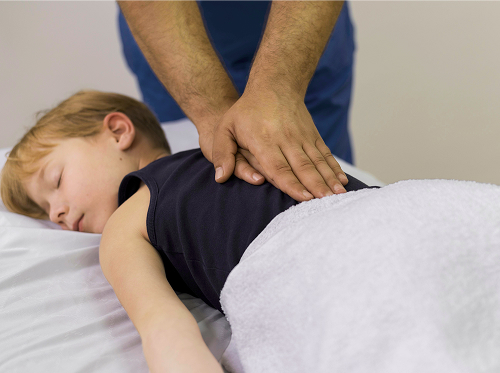
  • Massage of the shoulder and back muscles.

Restrictions at home, school, and during training

During the recovery period (usually 1-2 months after the cast is removed), the child is prohibited from hanging from a horizontal bar, carrying heavy backpacks on one shoulder, and active games that involve the risk of falls. At school, the child is usually exempt from physical education for up to 2-3 months.

Recovery from a clavicle fracture

Possible complications

Complications are rare when consulted promptly by a specialist. However, parents should be aware of the potential risks so they can be identified early.

Feature / CharacteristicFracture without displacementFracture with displacement
CharacteristicsFragments maintain anatomical position, periosteum is often intactBone fragments diverge, possible deformation of the clavicle contour
Treatment tacticsConservative: arm immobilization, sling, restMost often conservative (in children under 10–12 years old); in cases of severe displacement, surgery (osteosynthesis)
What Pain, swelling, and impaired range of motion in the wrist and elbowPosition of the fracture fragments on the control X-ray, neurological symptoms
Repeat examinationAfter 7-14 days to monitor unionAfter 5-7 days, then every 2 weeks until stable fixation

Malounion

If a displaced clavicle fracture was not properly fixed, the bone may heal shortened or at an angle. This leads to a cosmetic defect and asymmetry of the shoulder girdle. In young children, such irregularities often level out during growth, but in adolescents they can remain permanent.

Chronic pain and limited mobility

If small nerve branches have been damaged, the child may experience discomfort when moving. In this case, rehabilitation is necessary: ​​if this stage is ignored, the joint will become rigid and unable to move fully.

Possible complications

What to do before seeing a doctor

If an accident occurs, proper first aid can help prevent further injury and ease the child's suffering.

First aid

You must act quickly and carefully. To prevent bone fragments from moving, follow these steps:

  1. Keep the child completely still and seated.
  2. Perform temporary immobilization: a sling made from any piece of fabric (scarf, scarf) will do. Bend the arm at the elbow and hang it from the neck.
  3. Apply cold to the injury site through a layer of tissue to reduce swelling and prevent the hematoma from becoming widespread.
  4. Administer an age-appropriate dose of pain medication.
  5. Transfer the child to a pediatric orthopedic traumatologist as soon as possible.

What not to do

Never attempt to "reset" the clavicle or probe the fracture site to determine if it is displaced. This can result in damage to the lung (pleural cavity) or major vessels caused by the sharp edge of the bone. Do not tightly bandage the chest, as this will impede breathing.

What to do before seeing a doctor
How to reduce the risk of re-injury

After a fracture, the bone at the healing site becomes quite strong, but the risk of re-injury in the same area remains for several months.

Home and outdoor safety

Eliminate hazards: secure slippery rugs, check the fitness of the sports area. During walks, temporarily avoid overly active peers and dangerous rides.

Return to sports only after doctor's approval

Many children are eager to return to sports. However, a broken collarbone in a child requires time for complete bone remodeling.

"Most collarbone fractures in children are easily treated without surgery: the main thing is to relieve pain promptly and ensure the child rests," doctors emphasize.

Premature stress can lead to a recurrence of the fracture.

FAQ

How long does it take for a clavicle fracture to heal in a child?

The time frame typically depends on age, fracture type, and whether the fracture is displaced. In children, the bone heals faster than in adults (on average, 3-4 weeks), but the doctor will determine the exact time frame after conducting a follow-up examination and evaluating the imaging results.

Is surgery always necessary?

No, not always. How are clavicle fractures in children most often treated? With conservative methods and fixation. Surgery is only required for strict indications, such as when there is a risk of skin perforation or nerve damage.

How can you tell if there's a dislocation?

Significant deformity, severe shoulder pain, pronounced asymmetry of the shoulder blades, and an inability to move the arm may indicate this. A displaced clavicle fracture can only be definitively confirmed by X-ray results.

When can I return to sports?

You can resume light activity 1.5–2 months after the injury, but contact sports and weightlifting should be resumed no sooner than 3–4 months after receiving official clearance from your traumatologist.

A broken collarbone in a child is a minor injury. However, if left untreated, it can have serious consequences. Prompt diagnosis and arm immobilization are key to ensuring the bone heals properly and the child regains full mobility.

Our doctors

Polovnikova (Kroshkina) Valeria Alexandrovna
Experience 15 years
Make an appointment
Polovnikova (Kroshkina)
Valeria Alexandrovna
Traumatologist-orthopedist, pediatric
Lopatin Kirill Alexandrovich
Experience 16 years
Make an appointment
Lopatin
Kirill Alexandrovich
Traumatologist-orthopedist, pediatric
All specialists
2GIS Award
2GIS Award

This award is given to clinics with the highest ratings according to user ratings, a large number of requests from this site, and in the absence of critical violations.

«Good place» according to Yandex

This award is given to clinics with the highest ratings according to user ratings. It means that the place is known, loved, and definitely worth visiting.

Our doctors are laureates of the ProDoctors Award

The ProDoctors portal collected 500 thousand reviews, compiled a rating of doctors based on them and awarded the best. We are proud that our doctors are among those awarded.

Make an appointment at a convenient time on the nearest date

Price

Initial appointment with a pediatric traumatologist-orthopedist
from 8 950 ₽
Follow-up appointment with a pediatric traumatologist-orthopedist
from 7 950 ₽

Other services

Treatment of hip sprain in a child Ankle injury in a child: treatment and recovery Calf muscle strain in children: symptoms and treatment Treatment of sprains in children: symptoms, first aid and recovery Treatment of pectoral muscle strain in children Treatment of muscle strains in children Hip sprain in children: symptoms and treatment Sprained Foot in Children: Treatment, Symptoms, First Aid, and Recovery Treatment of Achilles tendon strain in children First aid for bleeding in children: how to act quickly and safely Neck Strain in Children: Symptoms, Treatment, and Recovery Subungual hematoma in children: symptoms, first aid, and treatment in Moscow Wrist sprain in a child: symptoms, treatment, and recovery Subcutaneous hematoma in a child: symptoms, treatment, and first aid Treatment of the consequences of trauma in children Orthopedic rehabilitation for children in Moscow: recovery from injuries, surgeries, and musculoskeletal disorders Reduction of subluxations and dislocations in children Plaster cast application for a child: procedure, types of casts, and care Treatment for a child's shoulder sprain Soft tissue hematoma in a child: symptoms, first aid, and treatment Application of an immobilization bandage to children Swelling after a bruise in a child: treatment and first aid Hip contusion in a child: symptoms, first aid, and treatment Head injury in children: treatment, symptoms, and first aid Chest contusion in a child: symptoms, first aid, and treatment A child's post-injury hematoma: how to treat it, when to see a doctor, and what to do in the first few hours Hematoma on a child's arm: causes, symptoms, and treatment Treatment of a child's hand contusion: symptoms, first aid, and recovery Hematoma on a child's finger: first aid, treatment, and when to see a doctor Knee contusion in a child: treatment, symptoms, and first aid Bruised tailbone in a child: symptoms, first aid, and treatment in Moscow Elbow bruise in a child: symptoms, first aid and treatment Bruised leg in a child: symptoms, first aid and treatment Hematoma on a child's leg: causes, symptoms, first aid, and treatment Hematoma on a child's face: causes, first aid, and treatment in Moscow Treatment of groin strain in children Bruised nail in a child: treatment, first aid, symptoms, and recovery Hematoma on the head of a child: treatment and symptoms Eye hematoma in a child: treatment, first aid, and when to see a doctor Bruised ribs in children: treatment, symptoms, and first aid Back strain in children: symptoms, treatment, and recovery Soft tissue contusion in a child: symptoms, first aid, and treatment Treatment of a joint contusion in a child in Moscow: symptoms, first aid, diagnosis, and recovery Bruised nose in a child: treatment, first aid, and when to see a doctor Bruised Foot in a Child: Symptoms, First Aid, and Treatment in Moscow Bruised finger in a child: treatment, first aid, and when to see a doctor Back injury in a child: symptoms, first aid, and treatment in Moscow Bruised arm in a child: symptoms, first aid, and treatment Shoulder contusion in a child: symptoms, first aid and treatment Bruised ribs in children: symptoms, treatment, and first aid Treatment of fractures in children in Moscow Treatment of a jaw fracture in a child Compression fracture of the thoracic spine in children: treatment, diagnosis and recovery Humeral neck fracture in children: treatment, symptoms, and recovery Coccyx fracture in children: symptoms, treatment, and recovery Treatment of a broken nose in a child Patella fracture: treatment in children Sacral fracture in children: symptoms, diagnosis and treatment Treatment of metatarsal fractures in children Zygomatic bone fracture in a child: symptoms, diagnosis, treatment and recovery Conservative treatment of fractures in children: how is treatment performed without surgery? Functional method of treating fractures in children 24-hour trauma care for children: when urgent help is needed Fracture of the tibial condyles in children Emergency traumatology for children: urgent care for injuries Pubic bone fracture in a child Sciatic bone fracture: treatment in children Olecranon fracture in children: treatment, symptoms, recovery Treatment of humeral fracture in children Sternal fracture in children Treatment of tibia fracture in children Foot fracture in a child Cervical vertebrae fractures in children
Make an appointment

Appointment to the doctor

Fill out the form, our managers will contact you within 15 minutes
Почему К+31?
К + 31 — full-cycle multidisciplinary medical centers, including the possibility of providing medical services of European quality level.
К + 31 — are leading doctors and diagnostics using high-tech equipment from world manufacturers (Karl Storz, Olympus, Siemens, Toshiba, Bausch&Lomb, Technolas, Zeiss, Topcon).
К + 31 — is ethical. The staff of K+31 clinics maintain open relationships with patients and partners. An individual approach to each patient is the basis of our service standards.
К + 31 — is modernity. On call 24/7: call center operators will answer your questions at any time and book you an appointment with doctors. Contact us by phone, through the feedback form on the website and Max.

Our clinics

Address K+31 on Lobachevskogo

st. Lobachevskogo, 42/4

Contacts

+7 499 999-31-31

Opening hours

Mon-Fri: 08:00 – 21:00
Weekend: 09:00 – 19:00
Didn't find the service you were looking for?

Экстренная помощь