
Ankle Sprain in a Child: Symptoms, Treatment, and Recovery
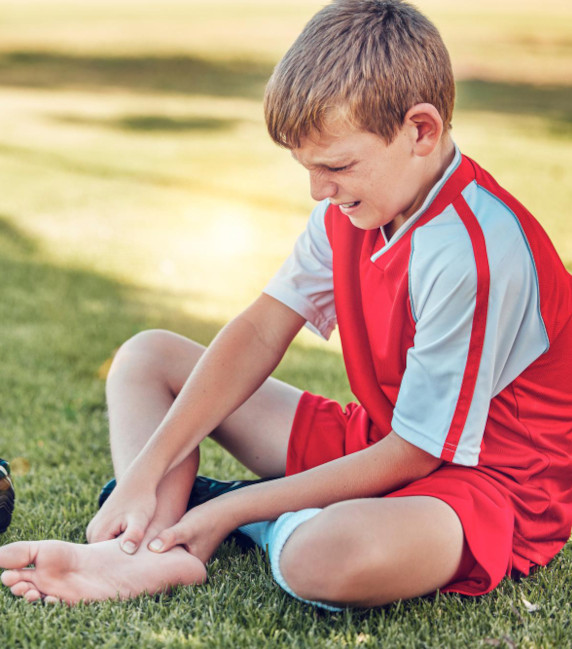
After a jump, physical education class, or training session, a child may not immediately realize they've injured their foot. They may stand up and take a few steps. Only later may they begin to limp, complain of pain, and try to protect their foot.
If swelling or bruising occurs, it's best not to evaluate a child's ankle sprain solely based on the first few minutes after the injury. Sometimes a fracture can cause similar symptoms. Therefore, it's important to reduce stress in the first few hours, avoid heating the joint, and recognize promptly whether a doctor is needed.

specialists

equipment

treatment






Symptoms of a sprain and how to distinguish it from a more serious injury

Parents usually notice several signs: the child complains of pain, the ankle swells, and the gait becomes unsteady. But it's difficult to determine whether the foot is bruised, broken, or sprained based on its appearance alone. The doctor looks to see how quickly the swelling increases and whether the child can put weight on the foot.
Main Signs of a Sprain
The main symptoms of an ankle sprain appear quickly. The child complains of sharp shooting pains on the side or front of the joint, protects the foot, and the child's gait worsens. Swelling of the ankle may worsen over a few hours, and a bruise may appear the next day.

How is a sprain different from a bruise or fracture?
With a mild injury, a pleasant throbbing sensation usually appears after the impact and gradually subsides if the joint remains stable. With a fracture, the pain is often more severe. The child may have difficulty putting weight on the foot, and a deformity or sharp shooting pain along the bone may develop. A doctor can only determine for sure whether the injury is a fracture or a sprain after an examination.
When to suspect a growth plate injury?
After a game or training session, an injury may look like a common sprain, but in children, it's important to remember the growth plate. If discomfort is concentrated near bony prominences, weight-bearing is severely limited, and foot movement causes complaints, it's best not to wait. This type of injury isn't always visible by appearance and can easily be missed without an examination and testing.

First Aid for a Sprained Ankle in a Child
Immediately after a sprained ankle, the child needs rest. Walking, jumping, and "checking" for relief are not recommended. First aid for a sprained ankle helps reduce discomfort and prevent further injury before an examination. It's best to unload the foot, elevate it slightly, and apply cold, but only through a cloth.
What to do in the first hours after the injury
First, remove the child from any weight-bearing activity. Have them sit or lie down. Remove shoes if they are pinching the ankle. After this, you can see if the foot moves and if the pain increases with weight-bearing. During the first few hours, apply cold through a cloth in short bursts. If severe shooting pain, increasing swelling, or an inability to put weight on the foot occurs, consult a doctor.
How to use cold, rest, and immobilization correctly
Elevation and cold are appropriate for home care. Rest and limited weight-bearing are also necessary. An elastic bandage should not be tightly wrapped. The toes need to be warm. Ankle immobilization protects the joint. However, its degree should be determined after an examination.
What not to do
During the first 24 hours, avoid applying heat to the joint. Avoid rubbing the skin or massaging the injured area. Heat and pressure can increase swelling and pain. Avoid asking the child to "walk." Jumping to test or exercising the ankle is prohibited.
General information
Diagnosis: When to See a Doctor
A consultation is necessary if the sharp shooting pain is severe or limping occurs. Also, see a doctor immediately if the child is unable to put weight on the foot or the swelling is rapidly increasing. A minor injury also requires attention, especially if the complaints do not subside. A pediatric traumatologist evaluates:
- Mechanism of injury
- Foot position
- Pain points
- Joint stability
What a pediatric traumatologist evaluates
Typically, the doctor asks how the injury occurred. They inquire whether the child was able to walk after the fall and where the shooting pain is strongest. Then they check for swelling, bruising, movement, sensitivity of the fingers, and bony points. Diagnosis helps determine whether a gentle treatment approach is sufficient.
When are X-rays, ultrasound, or MRI prescribed?
X-rays are prescribed if a fracture is suspected. This diagnostic procedure is also performed if there is damage to the growth plate, bone pain, or inability to bear weight. Ultrasound helps evaluate soft tissues. MRI is used to visualize ligaments and cartilage. The choice of examination is based on the results of the examination.
Why is it important to rule out fractures and damage to the growth plate?
In children, a fracture can masquerade as an ankle sprain. This is especially true after a jump or a sharp twist of the foot. If the growth plate is damaged, delayed treatment increases the risk of acute lumbago. Therefore, when a patient complains of damage, the doctor first rules out dangerous conditions.




Emergency care is necessary for severe pain, deformity, increasing swelling, or inability to put weight on the foot. Other important signs include numbness in the toes, cold feet, bluish skin, and an open wound. Waiting several days for these symptoms is dangerous.
Worrying symptoms that shouldn't be ignored
You should take your child to a doctor if the pain intensifies, a large bruise appears, the foot is positioned unusually, or the child has severely limited movement. Additional signs include severe swelling, lameness, and inability to put weight on the foot. With these signs, it's important to rule out a fracture, damage to the growth plate, or instability.
- Severe swelling
- Severe pain
- Limping
- Inability to put weight on the foot
- Bruising or deformity
After such a list, it's best not to check the joint at home. A specialist will determine the extent of the examination.
Ankle Injury Degrees
| Degree | Symptoms | What to do | Recovery Time |
|---|---|---|---|
| Mild | Pain without significant swelling, weight-bearing | Rest, ice, observation | Usually faster |
| Moderate | Swelling, bruising, pain when walking | Doctor's examination, immobilization, activity limitation | Longer |
| Severe | Severe pain, instability, inability to walk | Urgent diagnosis and individualized treatment | Individualized |
The table helps assess the situation but does not replace an examination. In children, the external appearance sometimes does not correspond to the depth of the injury.
Frequently Asked Questions
How long does it take for a child's ankle sprain to heal?
Can I walk with a sprain?
Do I need an X-ray for this type of injury?
When can I return to sports?
Conclusion
An ankle sprain in a child can't be assessed solely by how quickly they stand up after the injury. Pain, swelling, support, gait, bruising, and the growth plate are all important. Ankle sprain symptoms can resemble a bruise or fracture, so if symptoms are severe, a doctor should be consulted. Diagnosis, bracing, unloading, and pain-free movement reduce the risk of complications.
"In my experience, even an ankle sprain in children needs to be carefully assessed: sometimes a growth plate injury is hidden underneath," says a pediatric traumatologist and orthopedist.




This award is given to clinics with the highest ratings according to user ratings, a large number of requests from this site, and in the absence of critical violations.

This award is given to clinics with the highest ratings according to user ratings. It means that the place is known, loved, and definitely worth visiting.

The ProDoctors portal collected 500 thousand reviews, compiled a rating of doctors based on them and awarded the best. We are proud that our doctors are among those awarded.
Make an appointment at a convenient time on the nearest date
Price
Other Services

Appointment to the doctor














Our clinics


Application “Personal Account K+31”












What is an ankle sprain in children?
The injury occurs when the foot suddenly turns inward or outward, placing excessive strain on the ankle ligaments. The fibers can stretch or partially tear. Therefore, ankle sprains are assessed based on swelling, foot stability, and support.
Why do injuries often occur in active children?
Children move a lot. They run, jump, change direction abruptly, and don't always have time to plant their feet straight. Most often, ankle injuries occur on playgrounds, training grounds, stairs, or after a bad landing. The joint is still developing, and the muscles don't always maintain good support.
Which ankle ligaments are most often injured?
The lateral ligaments of the ankle are most often injured. This usually occurs when the foot turns inward. A sharp shooting pain appears on the outside of the joint, followed by increasing swelling, and sometimes later a bruise becomes visible. If the child is unable to put weight on the foot, a doctor's examination is necessary.
Why childhood injuries shouldn't be underestimated
A child's bone grows through areas called the growth plate. Discomfort after a twisted foot is sometimes associated with this area. Therefore, an ankle injury requires caution when swelling occurs and weight-bearing is avoided.