
Cleft Lip: Correction of a Cleft Upper Lip
Congenital anomalies of the maxillofacial region should be corrected in early childhood. Most often, this refers to a condition commonly known as a cleft lip, but medically known as a congenital cleft lip.
This is a disorder of soft and bone tissue formation that occurs early in the fetus's development in the womb.

specialists

equipment

treatment






What is a cleft lip?

This pathology is a failure of tissue fusion of the upper lip, which can affect only the skin or extend to the muscle layer, the maxillary bone, and the nasal cavity.
Medical Name and Features of the Pathology
A congenital cleft lip is a lip that has not fused properly. The peculiarity of this pathology is that the integrity of the orbicularis oris muscle is disrupted. Instead of forming a single ring that ensures lip closure, the muscle fibers attach to the base of the nose and the premaxillary bone. This leads to deformation of the entire midface, including a deviated septum and a change in the shape of the alae nasi.
Causes of Cleft Lip Formation
The main factor is genetic predisposition. However, this congenital malformation can also be caused by pregnancy itself. If a woman has been frequently ill, has had a folate deficiency, or has been exposed to toxic substances or radiation, the risk of cleft sac in the child increases. In most cases, doctors attribute the combination of factors to a disruption in the development of the fetus's facial structures.
Types of cleft lip: unilateral, bilateral, complete, incomplete
Before surgery, the type of defect must be determined. Surgeons divide clefts into the following types:
- Unilateral cleft lip: the defect is located to the right or left of the philtrum (the central depression above the lip)
- Bilateral cleft lip: the defect is present on both sides, and the premaxillary bone protrudes forward
- Incomplete cleft lip: the tissues do not fuse only in the lower part of the lip, and a bridge remains at the base of the nose
- Complete cleft lip: the split extends through the entire height of the lip to the bottom of the nasal cavity
A common combination of cleft lip and palate requires staged and longer treatment.
General information
How is treatment performed?
The correction process is a multi-stage process involving a team of specialists: a maxillofacial surgeon, an orthodontist, a pediatrician, and a speech therapist.
Initial consultation and diagnosis
During the first appointment, the doctor assesses the extent of the defect and the condition of the surrounding tissues. Not only the upper lip is examined, but also the condition of the alveolar process and palate. Diagnosis includes an examination, a photographic protocol, and a consultation with an orthodontist to fabricate special prostheses to facilitate eating before surgery.
Preparation for surgery
Preparation for surgery primarily involves examinations. The child undergoes blood and urine tests, and an ECG. The child is then examined by a pediatrician. This is necessary to rule out concomitant diseases. Treatment for cleft lip is most often performed in early childhood. But the child must be healthy and of normal weight.
How is cheiloplasty performed?
The main lip reconstruction procedure is called cheiloplasty. During the procedure, the surgeon isolates fragments of the orbicularis oris muscle and reattaches them in the correct anatomical position. The skin and mucous membrane are then restored. With a complete cleft, the nasal floor and the position of the ala are simultaneously corrected to minimize deformation of the nasal passages.
Anesthesia and postoperative monitoring
Any cleft lip surgery is performed under general anesthesia. Modern anesthesia in pediatric surgery is safe and allows the surgeon to work calmly on the aesthetics of the suture. After the surgery, the child is transferred to a regular ward. During the first few hours, the patient's recovery from anesthesia and the condition of the airway are monitored.

Frequently Asked Questions
This material is for informational purposes only and does not constitute a guide to action. Please remember that cleft lip treatment is an individualized process. Preparation for the procedure and the scope of the examination will be determined by your treating physician during an in-person consultation. Our clinic offers a customized cleft lip correction plan, support throughout all stages of recovery, and the participation of specialized specialists in treatment planning.
What is the best age for the first surgery?
Will the scar last a lifetime?
Is a special diet necessary after surgery?
Can the cleft recur in subsequent children?
Our doctors







































This award is given to clinics with the highest ratings according to user ratings, a large number of requests from this site, and in the absence of critical violations.

This award is given to clinics with the highest ratings according to user ratings. It means that the place is known, loved, and definitely worth visiting.

The ProDoctors portal collected 500 thousand reviews, compiled a rating of doctors based on them and awarded the best. We are proud that our doctors are among those awarded.
Make an appointment at a convenient time on the nearest date
Price

Appointment to the doctor
Reviews

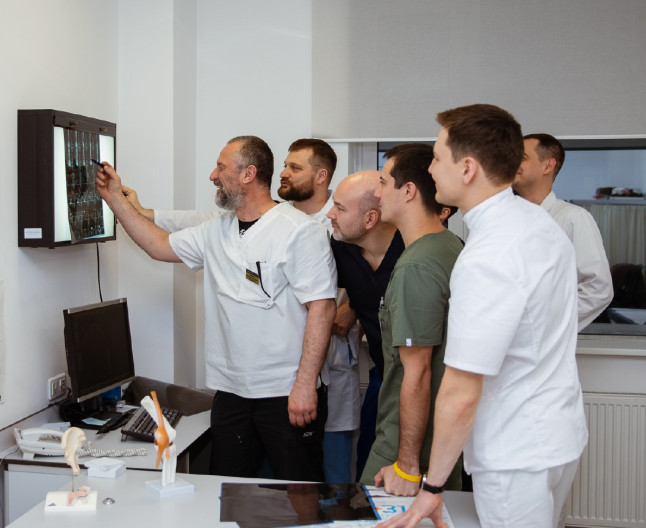



















Our clinics


Application “Personal Account K+31”












When correction is required
The main goal of treatment is to restore the anatomical integrity and function of the maxillofacial system. Surgery is performed between 3 and 6 months of age, unless there are medical contraindications.
Main indications for surgery
Surgery is almost always necessary. This is not only a matter of aesthetics, but also of the child's quality of life. A cleft can disrupt feeding because the child is unable to create the necessary suction. Breathing is also affected, and speech may be impaired in the future.
A doctor's consultation is necessary if:
When is revision surgery necessary?
Primary cheiloplasty addresses the main issues, but revision surgery may be necessary in preschool or adolescence. The treatment plan for each stage is determined individually, based on the developmental dynamics of the facial skeleton.