
Papillomatosis
Papillomatosis is the formation of multiple papillomas on the skin or mucous membranes. It is caused by the human papillomavirus (HPV).
Papillomatosis requires a comprehensive approach to diagnosis, as its manifestations can range from purely cosmetic defects to serious functional disorders, such as lesions of the larynx or genitourinary system.

specialists

equipment

treatment






Types of papillomatosis

The classification of the disease is based primarily on the location of the rash and its course. There are several forms of the disease, each treated differently.
Cutaneous papillomatosis
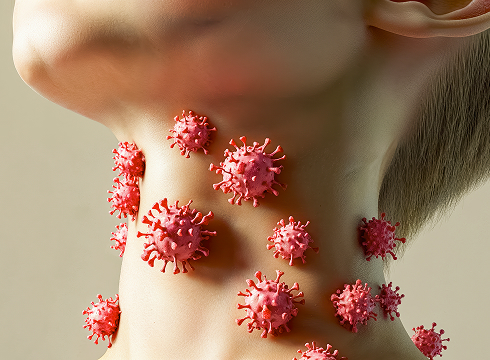
This form is the most common. Cutaneous papillomatosis manifests itself in areas with increased friction or sweating: on the neck, in the armpits, under the breasts, and in the groin folds. Multiple papillomas often form here, and they can be either flesh-colored or brown.
Mucosal papillomatosis
Mucosal papillomatosis can affect the oral cavity, larynx, esophagus, and anogenital organs. These lesions are more vulnerable, prone to bleeding, and can impair organ function (for example, causing hoarseness if the vocal cords are affected).
Recurrent course
A characteristic feature of the disease is the tendency for symptoms to recur. Even after successful destruction of the lesions, papillomatosis may recur. This occurs because the virus remains latent in the deep layers of the skin or in surrounding tissues, reactivating when the body's defenses are weakened.
Causes and risk factors
The development of the disease is always caused by a combination of an infectious agent and favorable conditions for its division in the host cells.
The role of the human papillomavirus
The main etiologic factor is the human papillomavirus (HPV). There are over 200 types of this virus. Some have a low oncogenic risk and cause common warts and papillomas, while others have a high risk, requiring special attention when diagnosing lesions on the mucous membranes.
Transmission routes and triggering factors
The infection is transmitted by contact (through microtrauma to the skin) or sexually. Triggering factors include:
- Long-term chronic inflammatory processes
- Microtrauma to the epithelium (shaving, friction from clothing)
- Impaired skin barrier function
- Hormonal changes
What increases the risk of recurrence
The recurrence of lesions is often associated with the state of general and local immunity. The main causes of recurrent papillomatosis include:
- Severe or prolonged stress that depletes the body's resources
- The presence of concomitant infections
- Incomplete removal of affected tissue, leaving viral particles at the wound edges
- Mechanical irritation of the area where papillomas were previously located
Symptoms of papillomatosis
The clinical picture depends on the type of virus and the location of the rash. The lesions are usually painless unless they are subject to constant irritation.
What do papillomas look like?
These are soft, elastic growths on a stalk or broad base. The surface can be smooth or villous. Sizes range from 1–2 mm to several centimeters.
Complaints depending on location
If the lesions are located on the eyelids, the patient may experience an aesthetic defect and difficulty blinking. If the anogenital area is affected, itching and discomfort upon contact may occur. With laryngeal papillomatosis, the main symptoms are a change in the timbre of the voice and difficulty breathing.
Danger signs that require medical attention
You should see a specialist if:
- The number of papillomas has increased
- The papillomas have changed color
- The papilloma is painful or itchy
- It often oozes

General information
What are the dangers of papillomatosis?
Although most papillomas are benign, their widespread occurrence should not be ignored due to the risk of complications.
Trauma and inflammation
Trauma and inflammation lead to secondary bacterial infection, which manifests as swelling, redness, and suppuration of the surrounding tissue.
Bleeding, rapid growth, changes in appearance
Constant damage to papillomas causes bleeding. If the growth begins to grow rapidly or changes its structure (becomes dense, loses clear boundaries), this may be a sign of unfavorable processes in the tissue.
When is oncological vigilance required?
Oncological vigilance is necessary when high-oncogenic HPV types are detected, especially when localized on the mucous membranes of the cervix or oropharynx. In such cases, the doctor may order a more in-depth examination to rule out malignancy.




There are critical changes that require immediate medical attention:
- The papilloma has begun to bleed for no apparent reason.
- The surface has suddenly darkened or ulcerated.
- The growth is located on the lining of the larynx and interferes with breathing.
- Severe inflammation and swelling have developed around the papilloma.
FAQ
Is it possible to cure papillomatosis with home remedies?
Is this disease hereditary?
Should all papillomas be removed at once?
Our doctors

















































This award is given to clinics with the highest ratings according to user ratings, a large number of requests from this site, and in the absence of critical violations.

This award is given to clinics with the highest ratings according to user ratings. It means that the place is known, loved, and definitely worth visiting.

The ProDoctors portal collected 500 thousand reviews, compiled a rating of doctors based on them and awarded the best. We are proud that our doctors are among those awarded.
Make an appointment at a convenient time on the nearest date
Price

Appointment to the doctor
Reviews





















Our clinics


Application “Personal Account K+31”












What is papillomatosis?
Papillomatosis is when not a single papilloma, but a scattering of new growths appears on the body or mucous membranes. They rarely "live" alone; they usually form groups of growths that quickly invade adjacent areas of skin and can merge into a single large spot.
These papillomas always vary in appearance and feel. Some have a thin, thread-like stalk, others look like flat plaques, and still others grow so extensively that they resemble cauliflower florets. Within each growth is living tissue with blood vessels, "hidden" under a protective layer of epithelium.