
Correction of crowded teeth
This abnormality is characterized by the abnormal positioning of teeth, where they physically do not fit in the jaw. Teeth begin to crowd each other, shift forward or backward, and rotate around their axis. This results in noticeable overlapping of teeth. The jaw arch becomes visually deformed.

specialists

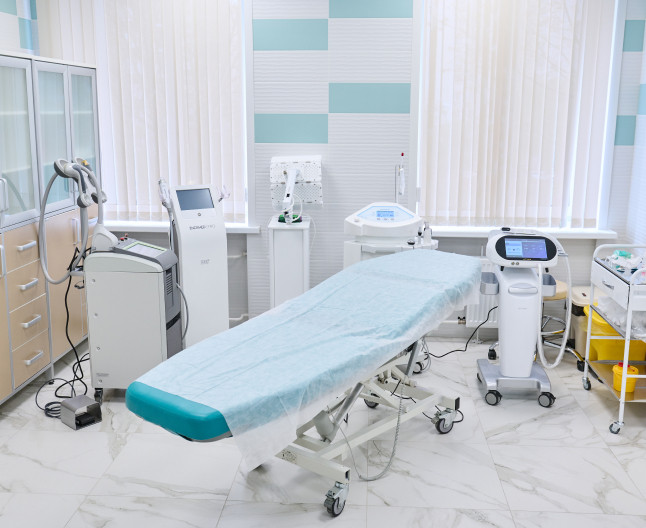
equipment

treatment






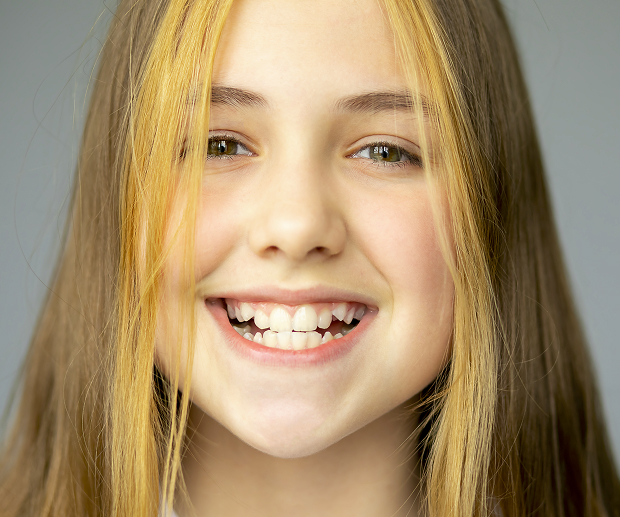
Types and degrees of crowding
The classification helps the dentist choose the optimal treatment strategy.
Crowding in the upper and lower jaws
The pathology affects both arches. The fragile lower jaw is more often affected due to its smaller bone volume. Deformities at the top, where the upper jaw is located, are more noticeable to others.
Crowding of the anterior teeth
The anterior teeth are most susceptible to crookedness. They are the first to bear the excessive pressure of the chewing units.
Mild, moderate, and severe
The mild stage is characterized by minimal rotation of one or two crowns. The moderate stage involves dense layering. The severe form alters the facial contour and prevents normal closure.

How to tell if you have crowded teeth
Patients can detect symptoms of crooked teeth during daily brushing. Warning signs include constant food getting stuck, difficulty flossing, and visible overlapping of enamel edges.
Visual signs
The smile appears uneven. Crowns are positioned sideways, overlapping at the edges.
Complaints and discomfort
The person experiences tension in the chewing muscles and hears a crunching sound in the joint. Pain occurs when chewing hard foods.
Difficulties with hygiene
Tight contacts block the brush's reach. Oral hygiene at home is greatly impaired, as food particles constantly become lodged between the incisors.
What are the dangers of crowded teeth?
Ignoring the problem leads to serious complications.
-
Increased risk of dental caries
Hard-to-reach areas accumulate plaque. Bacteria quickly destroy enamel, causing deep cavities.
-
Gum inflammation
Tartar constantly damages soft tissue. Chronic gum inflammation develops, and gums bleed with every brushing.
-
Misalignment and tooth wear
Uneven loading chips away at enamel. Pathological tooth wear leads to a decrease in jaw occlusion.
-
Aesthetic and functional consequences
A crooked smile can lead to psychological complexes. People avoid social interactions and chew food less effectively.
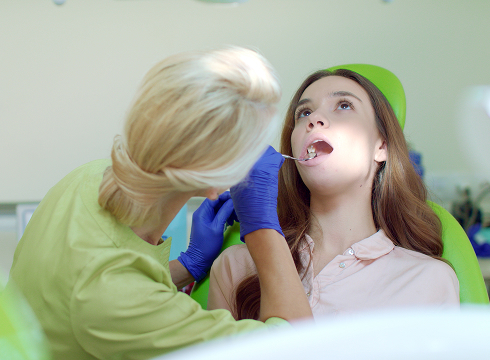
How is the diagnosis performed
Any orthodontic treatment begins with an examination. An accurate diagnosis guarantees the success of the therapy.
Examination and assessment of tooth position
An experienced orthodontist examines the oral cavity, records the condition of the enamel and gums, and assesses the degree of curvature.
Images and digital diagnostics
The doctor prescribes a panoramic image and a TRG to assess bone volume. Modern 3D scanning creates a virtual copy of the jaws.
Bite analysis and correction plan
The doctor analyzes the images and calculates a safe trajectory for root movement.
Methods for correcting crowded teeth
The medical arsenal offers several effective options. Proper dental correction is prescribed strictly after collecting data.
Bracket systems
Fixed appliances reliably move the roots within the bone. Installed braces for crowded teeth easily cope with the most complex anomalies.
Aligners
Clear aligners gently press on the crowns, moving them. Inconspicuous aligners for crowded teeth are easily removed during meals.
Orthodontic appliances for children
The plates guide bone growth. Timely intervention prevents the development of severe deformities.
Tooth separation
The dentist carefully grinds away fractions of a millimeter of enamel on the lateral surfaces. Safe separation allows for maneuverability.
Tooth extraction according to indications
Surgical removal of healthy premolars or wisdom teeth is used by orthodontists as a last resort when there is an acute shortage of available space in the jaw. The dentist makes this radical decision only in clinical situations where the bone arch is anatomically incapable of accommodating a full set of crowns, and hardware expansion will not provide a stable result. The freed millimeters allow for the free movement of curved roots, the reliable alignment of compressed anterior teeth, and the formation of a correct physiological occlusion.

General information
Correcting teeth crowding in children and adults
The patient's age directly influences the choice of treatment strategy.
Treatment features in children
Children's bone tissue is very flexible. Early crowding of teeth in children is corrected with devices that stimulate the natural expansion of the dental arch.
Treatment features in adolescents
The peak of active jaw bone development in adolescents is ideal for the fixation of fixed appliances. Flexible bone tissue quickly remodels, allowing curved roots to easily reposition and align.
Treatment features in adults
Bone is fully formed, so crowded teeth in adults require more time to align.

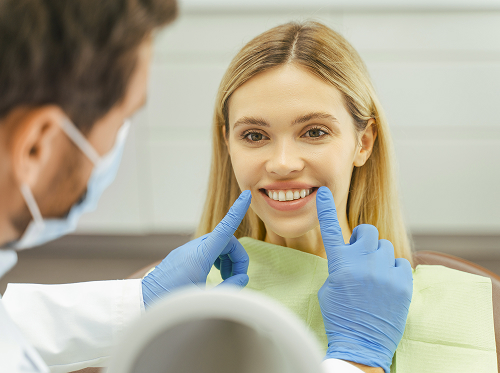
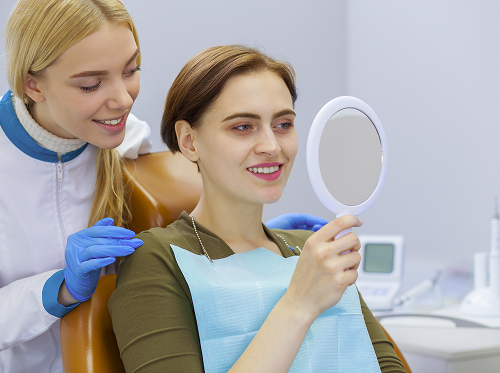
A specialist consultation is necessary when:
- Your teeth are noticeably overlapping each other
- It has become difficult to floss and brush your teeth thoroughly
- Your gums are often inflamed
- Your teeth have changed their alignment
- You are concerned about the appearance of your smile
- You suspect a malocclusion
An orthodontist will dispel any doubts during an in-person appointment.
Comparison of methods for correcting crowded teeth
| Method | When it is used | Advantages | Limitations | Patient Requirements | Is retention necessary? |
|---|---|---|---|---|---|
| Braces | Any degree of curvature | Highly effective, control at all stages | Aesthetics, complexity of hygiene | Regular activation | Yes |
| Aligners | Easy/moderate, sometimes complex | Comfort, removable, invisible | Wearing discipline | Wearing 20-22 hours a day | Yes |
| Children's appliances | Children, growing patients | Guide jaw growth | Not always coping with severe pathology | Parental supervision | Sometimes |
FAQ
Is it possible to correct crowded teeth without extractions?
Do aligners help with crowded teeth?
Should crowded teeth be treated if there's no pain?
At what age is it best to correct crowded teeth?
Modern medical technologies make it possible to achieve a beautiful smile at any age. Professional correction of crowded teeth protects enamel from decay, normalizes digestion, and restores self-confidence. It's important not to delay a visit to the clinic, undergo a full examination, and trust the expertise of our specialists.
This article is for informational purposes only. For a professional consultation, schedule an in-person consultation with our doctor at our clinic.
Our doctors


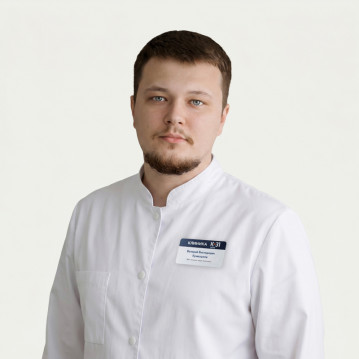


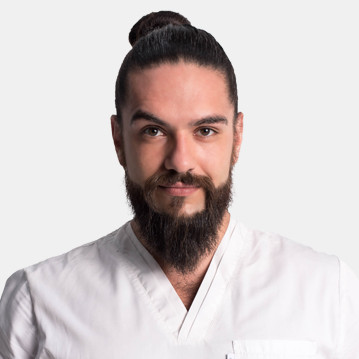
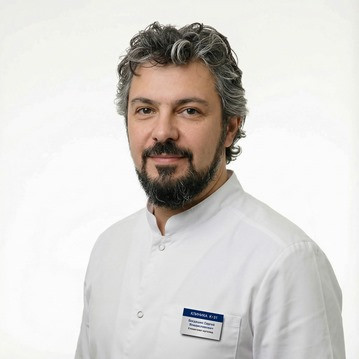

















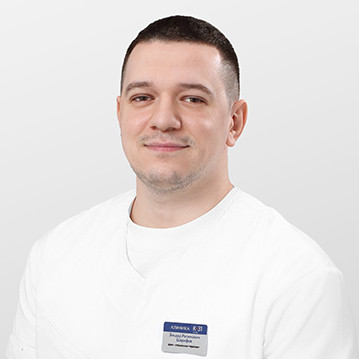










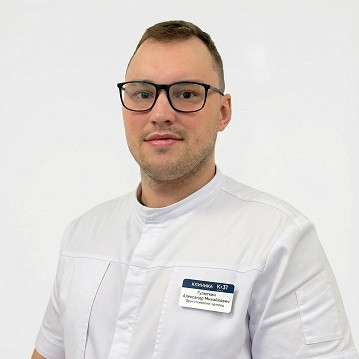




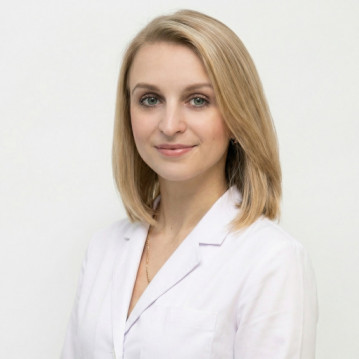





This award is given to clinics with the highest ratings according to user ratings, a large number of requests from this site, and in the absence of critical violations.

This award is given to clinics with the highest ratings according to user ratings. It means that the place is known, loved, and definitely worth visiting.

The ProDoctors portal collected 500 thousand reviews, compiled a rating of doctors based on them and awarded the best. We are proud that our doctors are among those awarded.
Make an appointment at a convenient time on the nearest date
Price

Appointment to the doctor
Reviews















Our clinics


Application “Personal Account K+31”












Why does teeth crowding occur?
The harmonious formation of an even dental arch directly depends on a huge number of physiological factors. Before beginning any therapy, a competent orthodontist must determine the exact causes of dental crowding. Without a thorough understanding of the underlying cause, it is completely impossible to develop a reliable clinical correction plan.
If the initial trigger is ignored, such as chronic nasal obstruction or genetic narrowness of the jawbone, the aligned crowns will inevitably return to a crooked position after the appliances are removed.
Hereditary traits and jaw size
Genetics directly influences facial structure. A child often inherits large crowns from one parent and narrow bones from the other. This creates a size imbalance.
Lack of space in the dental arch
This physical lack of space causes the crowns to erupt outside the arch. A severe lack of space in the dental arch leads to the extrusion of canines or incisors.
Improper replacement of primary teeth
Premature loss of primary teeth due to deep caries or accidental trauma severely disrupts the natural development of the jaw arch. The remaining crowns shift quite quickly, physically trying to close the resulting empty space.
As a result, the rudiment of the permanent tooth critically lacks the bone width for normal eruption. The powerful root is forced to seek alternate routes, so it penetrates the gum from the side, forming a second row and distorting the normal smile line.
Bad habits and the influence of bite
Prolonged mouth breathing changes the shape of the maxillofacial apparatus. Gradually, an incorrect bite develops, which inevitably distorts the smile.
Wisdom teeth and secondary changes
The erupting "eighths," known as wisdom teeth, exert tremendous force. They can shift the entire dental arch toward the center.