Superficial Caries: Symptoms and Treatment

If you are diagnosed with superficial caries, it means the bacteria has not yet had time to penetrate deep into the tooth and destroy its structure.

This is important: if superficial caries is treated promptly, the tooth can be repaired more quickly and affordably. In this situation, the dentist opts for minimally invasive treatment.

Best specialists
Best
specialists
Expert equipment
Expert
equipment
Advanced diagnostic treatment
Advanced diagnostic
treatment
Sign up
Fill out the entry form on the page and we will call you back
Sign up Позвонить
Download the application “Personal Account K+31”
Everything about your health in one click!
Subscribe to social networks K+31
To keep up to date with current offers and receive useful advice about your health.

What is superficial caries?

Superficial dental caries usually occurs in the tooth enamel. This means that bacteria have already managed to partially destroy the tooth's mineral structure. This is essentially the point of no return: you can't treat the problem at home; only a dentist can help.

How does superficial caries differ from the spot stage?

The main difference lies in the integrity of the surface. Initial caries (the spot stage) is characterized by demineralization—calcium and phosphorus salts are washed out of the enamel, causing a white spot to appear on the enamel. However, the surface itself remains smooth. As caries progresses to the superficial stage, the integrity of the enamel-dentin junction is not yet compromised, but a visible or palpable defect appears in the enamel itself. This is a full-blown carious lesion.

How does superficial caries differ from moderate caries?

The main criterion is depth. With moderate caries, the infection penetrates the enamel and penetrates the dentin. Dentin is much softer than enamel, so decay occurs much faster. Superficial caries progresses more slowly and is easier to correct, as it doesn't affect the sensitive inner part of the tooth.

What is superficial caries?

Causes and risk factors

The main cause of decay is bacteria (primarily streptococci). They convert sugar residues from food into organic acids, which dissolve tooth enamel.

How Enamel Damage Develops

The process begins with the accumulation of plaque. If you don't brush your teeth well, the plaque thickens and becomes increasingly difficult to remove on your own. Acids attack a specific area, causing mineral loss. Early-stage caries (stains) first appear, and then microcracks coalesce into a visible defect. This is enamel damage, requiring medical attention.
What habits and conditions increase the risk?

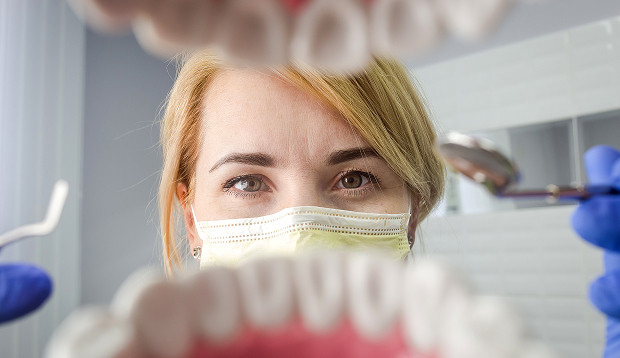
Everyone's lifestyle affects their dental health. The risk of cavities increases in the following cases:

  • You eat a lot of starchy foods and sweets and don't brush your teeth afterward.
  • Your teeth are too close together, preventing you from brushing them properly.
  • Your saliva is too thick and doesn't wash your mouth properly.

Old fillings are another cause of cavities. Bacteria accumulate under them, and if they aren't replaced promptly, the bacteria can spread to adjacent teeth.
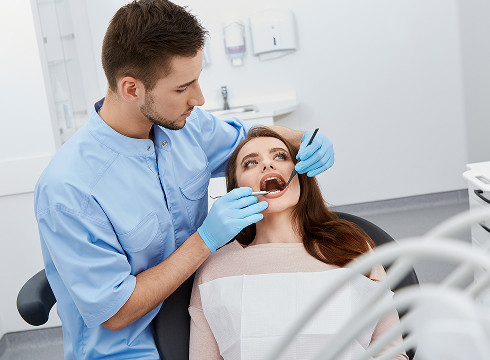
Symptoms of Superficial Caries

Symptoms of Superficial Caries

At this stage of the disease, there is no pain or throbbing. And this is its most insidious: while you think your teeth are fine, the bacteria are already destroying their structure.

What signs can you notice yourself?

At this stage, tooth sensitivity appears. It occurs with contact with very sweet, sour, or cold foods. Unlike pulpitis, the pain disappears immediately after rinsing the mouth or removing the irritant. A rough feeling may also be felt when touching the tooth with the tongue.

When to see a dentist

You should make an appointment if you notice:

  • A matte, rough, or dark spot has appeared on your tooth
  • Your tooth is sensitive to sweet, sour, or cold foods
  • You feel a rough feeling in your enamel
  • Plaque accumulates quickly in the same area
  • More than six months have passed since your last dental checkup

General information

Diagnosis of Superficial Caries

Timely diagnosis of superficial caries helps avoid deep drilling.

Visual Inspection and Enamel Assessment

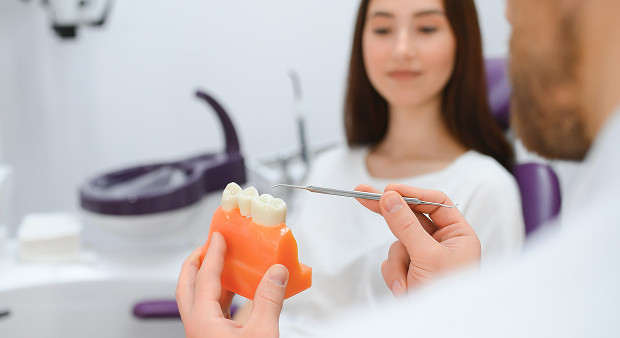
The dentist dries the tooth surface and examines it under a bright light. A dental probe is used to detect defects; at the superficial stage of caries, it may become slightly stuck in the irregularities of the enamel.

Additional Diagnostic Methods

If the doctor needs to accurately determine the extent of enamel damage, they take a targeted X-ray. This is the only way to determine whether the cavity extends into the dentin. Staining (caries markers) and transillumination (illuminating the tooth with a special light) are also used.

How to distinguish caries from pigmentation and non-carious lesions

Enamel pigmentation (from coffee, tea, or smoking) does not affect the diagnosis. Unlike plaque, a carious defect cannot be brushed away. It has clear demineralization boundaries.
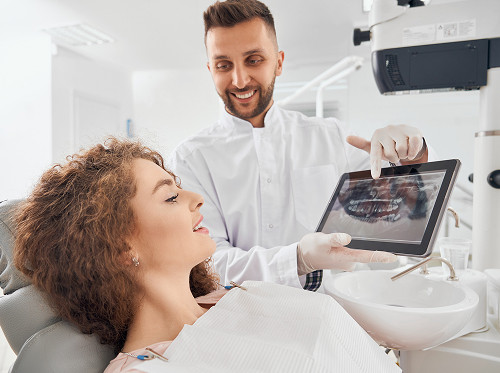
Diagnosis of Superficial Caries

Treatment of Superficial Caries

The choice of method depends on the extent of damage to the tooth structure.

When gentle treatment without preparation is possible

If the defect is small, the dentist uses infiltration (Icon system). The affected area is treated with a special compound that seals the enamel pores. No drilling is required. Enamel remineralization is also performed—saturating the tissue with calcium and fluoride preparations to strengthen the structure.

When tissue treatment and filling are required

If a clear "step" or cavity has formed in the enamel, filling the caries is necessary. This is necessary to completely remove the infected tissue and restore the tooth's integrity.

How treatment is performed step by step

  1. Cleaning. Removing plaque and tartar from the tooth surface.
  2. Isolation. Using a rubber dam to protect against moisture.
  3. Preparation. Careful removal of damaged enamel only.
  4. Adhesive preparation. Application of a compound to ensure a strong bond between the filling and the tooth.
  5. Restoration. Layer-by-layer application of composite material.
  6. Polishing. Giving teeth a natural shine and smoothness

Comparison of stages of tooth damage

ConditionDepth of damageMain symptomsWhat is visible during examinationTypical treatment tactics
Stain stageWithin the enamel (subsurface)Usually asymptomaticChalky area, smooth surfaceRemineralizing therapy
Superficial cariesDefect within the enamelPain from Sweet, sour, roughnessRough spot, probe gets stuckIcon or filling
Moderate cariesDentin damagePain from cold and mechanical factorsDeep carious cavityPreparation and filling
Treatment of Superficial Caries

What happens if superficial caries is left untreated?

Ignoring the problem leads to disease progression.

Progressing to deeper forms of caries

Enamel is the hardest tissue in the body, but it is thin. Once bacteria penetrate it, they end up in the dentin. From this point on, initial caries progresses to medium, and then deep.

Risk of pain, inflammation, and more complex treatment

The deeper the cavity, the higher the risk of developing pulpitis (inflammation of the nerve). In this case, instead of a single filling, root canal cleaning will be required, which is significantly more expensive and complex. The danger of superficial caries is its invisibility: before progressing to the acute stage, it may not cause pain for months.

What happens if superficial caries is left untreated?

Post-Treatment Prevention

After superficial caries has been treated, it is important to prevent recurrence.

Home Dental Care

The foundation is proper brushing technique. Dentists recommend using fluoride toothpastes and flossing to clean interdental fissures and contact areas. Home caries prevention is only effective with a systematic approach.

Professional Hygiene and Follow-up Examinations

Every six months, you should visit the clinic to remove hard plaque. Your dentist can also perform professional fluoridation, which will create a protective barrier. A regular oral examination allows you to detect new lesions at a stage when they can be treated without drilling.

Post-Treatment Prevention

Frequently Asked Questions

Can superficial caries resolve on its own?

No, the damaged enamel structure does not heal on its own. You can slow the process with good hygiene, but the defect will remain.

Is anesthesia necessary for treatment?

Since enamel has no nerve endings, the procedure is often painless. However, if you are particularly sensitive, the dentist may suggest a light local anesthetic.

How can you distinguish superficial caries from regular plaque?

Plaque is soft and can be removed with professional instruments. Caries is a change in the structure of the tooth tissue itself.

How long does the treatment take?

The procedure typically takes 20 to 40 minutes per tooth.

Our doctors
Shcherbakova Valentina Frantsevna
Experience 31 year
Make an appointment
Shcherbakova
Valentina Frantsevna
Head of the Department of Dentistry, dentist
Cherkasov Alexei Andreevich
Experience 19 years
Make an appointment
Cherkasov
Alexei Andreevich
Dentist-surgeon, implantologist, therapist
Bogdashin Sergey Vladislavovich
Experience 26 years
Make an appointment
Bogdashin
Sergey Vladislavovich
Orthopedic dentist
Artyomov Yanislav Alexandrovich
Experience 13 years
Make an appointment
Artyomov
Yanislav Alexandrovich
Dentist therapist
Ivashkevich Sergei Georgievich
Experience 31 year
Make an appointment
Ivashkevich
Sergei Georgievich
Dentist-surgeon, implantologist
Podshekoldina Elena Nikolaevna
Experience 17 years
Make an appointment
Podshekoldina
Elena Nikolaevna
Dentist Therapist
Matevosyan David Aramovich
Experience 12 years
Make an appointment
Matevosyan
David Aramovich
Dentist orthopedist
Samartseva Natalya Victorovna
Experience 20 years
Make an appointment
Samartseva
Natalya Victorovna
Dentist-surgeon, implantologist, therapist
Eloev Arthur Tamerlanovich
Experience 14 years
Make an appointment
Eloev
Arthur Tamerlanovich
Dentist surgeon
Vataev Vladislav Olegovych
Experience 17 years
Make an appointment
Vataev
Vladislav Olegovych
Dentist orthopedist
Pivovarova Natalya Sergeevna
Experience 7 years
Make an appointment
Pivovarova
Natalya Sergeevna
Dentist, hygienist
Bagaev Omar Makhachevich
Experience 20 years
Make an appointment
Bagaev
Omar Makhachevich
Dentist-therapist, pediatric
Zakharyan Georgy Karenovich
Experience 17 years
Make an appointment
Zakharyan
Georgy Karenovich
Dentist-surgeon
Kuznetsova Larisa Nikolaevna
Experience 29 years
Make an appointment
Kuznetsova
Larisa Nikolaevna
Hygienist
Sukhareva Darima Tsyrenovna
Experience 11 years
Make an appointment
Sukhareva
Darima Tsyrenovna
Dentist therapist
Grigoryeva Regina Bogdanovna
Experience 24 years
Make an appointment
Grigoryeva
Regina Bogdanovna
Dentist-therapist, endodontist
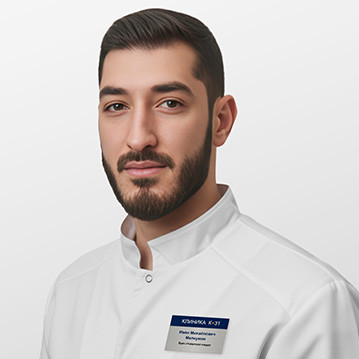
Melkumyan Ivan Mikhailovich
Experience 6 years
Make an appointment
Melkumyan
Ivan Mikhailovich
Dentist-surgeon
Golubev Vitaly Viktorovich
Experience 24 years
Make an appointment
Golubev
Vitaly Viktorovich
Dentist-orthodontist
Pavliy Yulia Vitalievna
Experience 15 years
Make an appointment
Pavliy
Yulia Vitalievna
Dentist-therapist
Najaryan Liana Artyomovna
Experience 6 years
Make an appointment
Najaryan
Liana Artyomovna
Dentist-surgeon, implantologist
Sharifov Eldar Rasimovich
Experience 7 years
Make an appointment
Sharifov
Eldar Rasimovich
Dentist-therapist
Sanikidze Nino Nugzarovna
Experience 14 years
Make an appointment
Sanikidze
Nino Nugzarovna
Dentist Orthodontist
Ibragimova Olesya Kayinbekovna
Experience 18 years
Make an appointment
Ibragimova
Olesya Kayinbekovna
Dentist-therapist, microscopist
Sahakyan Arpine Argishtovna
Experience 9 years
Make an appointment
Sahakyan
Arpine Argishtovna
Dentist, pediatric dentist
Geraskina Inna Igorevna
Experience 11 years
Make an appointment
Geraskina
Inna Igorevna
Orthodontist
Nikolaeva Irina Yuryevna
Experience 31 year
Make an appointment
Nikolaeva
Irina Yuryevna
Dentist surgeon, periodontist
Avdeeva (Sokolova) Anastasia Eduardovna
Experience 12 years
Make an appointment
Avdeeva (Sokolova)
Anastasia Eduardovna
Dentist, pediatric
Shapran Sergey Olegovich
Experience 10 years
Make an appointment
Shapran
Sergey Olegovich
Dentist-surgeon
Lebedeva Natalia Mikhailovna
Experience 6 years
Make an appointment
Lebedeva
Natalia Mikhailovna
Orthodontist
Ozerova Elena Valerievna
Experience 24 years
Make an appointment
Ozerova
Elena Valerievna
Dentist
Lebedeva
Taisia Mikhailovna
Dentist-therapist, pediatric dentist
Gulyutkin Alexander Mikhailovich
Experience 6 years
Make an appointment
Gulyutkin
Alexander Mikhailovich
Dentist-therapist
Mitroshenkov Pavel Nikolaevich
Experience 41 year
Make an appointment
Mitroshenkov
Pavel Nikolaevich
Maxillofacial surgeon
Dergunova Anna Olegovna
Experience 11 years
Make an appointment
Dergunova
Anna Olegovna
Dentist-therapist
Pavlovskaya Evgeniya Olegovna
Experience 13 years
Make an appointment
Pavlovskaya
Evgeniya Olegovna
Dentist-orthopedist, dentist-therapist
Khachatryan Ripsime Grigorievna
Experience 8 years
Make an appointment
Khachatryan
Ripsime Grigorievna
Dentist-therapist
Zakharova Ksenia Sergeevna
Experience 8 years
Make an appointment
Zakharova
Ksenia Sergeevna
Dental surgeon, periodontist
Zhigulina Yulia Olegovna
Experience 10 years
Make an appointment
Zhigulina
Yulia Olegovna
Dentist
Aylarova Zarina Vladimirovna
Experience 11 years
Make an appointment
Aylarova
Zarina Vladimirovna
Dentist-therapist
Marchenko Ekaterina Andreevna
Experience 4 years
Make an appointment
Marchenko
Ekaterina Andreevna
Dental assistant
Dyachkova Inna Vladimirovna
Experience 9 years
Make an appointment
Dyachkova
Inna Vladimirovna
Orthodontist
All specialists
2GIS Award
2GIS Award

This award is given to clinics with the highest ratings according to user ratings, a large number of requests from this site, and in the absence of critical violations.

«Good place» according to Yandex

This award is given to clinics with the highest ratings according to user ratings. It means that the place is known, loved, and definitely worth visiting.

Our doctors are laureates of the ProDoctors Award

The ProDoctors portal collected 500 thousand reviews, compiled a rating of doctors based on them and awarded the best. We are proud that our doctors are among those awarded.
Make an appointment at a convenient time on the nearest date

Price

Reception
Price
Primary appointment with a dentist-therapist
from 5 800 ₽
Repeated appointment with a dentist-therapist
from 4 950 ₽

Appointment to the doctor

Fill out the form, our managers will contact you within 15 minutes

Reviews

Thank you Natalia for your attention and care. If you go to the dentist, then only to her.
16.04.2026
Georgiy Y.
My favorite dentist. The treatment is at the highest level.
13.04.2026
Viktoriya F.
A very nice, neat and attentive doctor.Jewelry work.It was completely painless, fast and as comfortable as possible at the reception.Thanks to Artur Tamerlanovich!
05.04.2026
Yuliya P.
An excellent specialist, very sensitive and attentive. He's doing a great job.
03.04.2026
Gleb V.
An attentive and careful doctor.
01.04.2026
Darya G.
Very attentive, professional. He does it well.
01.04.2026
Yuliya I.
Everything is perfect! I've already recommended the doctor to several of my friends! I will definitely come again!
31.03.2026
Anastasiya B.
I would like to express my gratitude to Ivan Mikhailovich for the operations and bandages performed, as well as to the assistants Natalia, Nadezhda, Victoria. Thank you for your support, professionalism and kindness!
29.03.2026
Darya T.
Yanislav Alexandrovich, I would like to thank you very much for the proven procedure! You are the best doctor! Thank you very much!The best recommendations for all patients!
29.03.2026
Tatyana A.
Thanks to Alexander Mikhailovich and assistant Anna for the work done! There was a hygienic tooth cleaning. The procedure was performed efficiently, cleanly and painlessly!
28.03.2026
Nargiza I.
Почему К+31?
К + 31 — full-cycle multidisciplinary medical centers, including the possibility of providing medical services of European quality level.
К + 31 — are leading doctors and diagnostics using high-tech equipment from world manufacturers (Karl Storz, Olympus, Siemens, Toshiba, Bausch&Lomb, Technolas, Zeiss, Topcon).
К + 31 — is ethical. The staff of K+31 clinics maintain open relationships with patients and partners. An individual approach to each patient is the basis of our service standards.
К + 31 — is modernity. On call 24/7: call center operators will answer your questions at any time and book you an appointment with doctors. Contact us by phone, through the feedback form on the website and Max.
Our clinics

Address K+31 on Lobachevskogo

st. Lobachevskogo, 42/4

Contacts

+7 499 999-31-31

Opening hours
Mon-Fri: 08:00 – 21:00
Weekend: 09:00 – 19:00

How to get there

  • Метро: Проспект Вернадского (1)(11)
  • Автомобиль: Двигаясь по ул. Лобачевского, проезжаем первый шлагбаум (пост охраны ГКБ № 31), поворачиваем направо у второго шлагбаума (пост охраны К+31)

Address K+31 Petrovskie Vorota

1st Kolobovsky pereulok, 4

Contacts

+7 499 999-31-31

Opening hours

Mon-Fri: 08:00 – 21:00
Sat-Sun: 09:00 – 19:00

How to get there

  • Метро: Цветной Бульвар (9), Трубная (10)
  • Автомобиль: По Петровскому бульвару, поворот на ул. Петровка, затем на 1-й Колобовский пер. Муниципальная парковка.

Address K+31 West

Orshanskaya, 16/2; Ak. Pavlova, 22

Contacts

+7 499 999-31-31

Opening hours

Mon-Fri: 08:00 – 21:00
Sat-Sun: 09:00 – 18:00

How to get there

  • Метро: Молодежная (3)
  • Автомобиль: Двигаясь по улице Оршанская, поворачиваем к шлагбауму с постом охраны К+31.
Петровские ворота
Didn't find the service you were looking for?

Экстренная помощь