
Tooth Enamel Erosion: Causes, Symptoms, and Treatment
Enamel erosion is a progressive, non-carious dental lesion characterized by the gradual dissolution and loss of hard tissue. Unlike dental caries, this process is not associated with bacteria.
Tooth decay is caused by either chemical exposure (food, drinks) or mechanical damage (trauma). This condition increases tooth sensitivity, and if enamel erosion is not treated, the defect can affect the dentin.

specialists

equipment

treatment






What is enamel erosion?
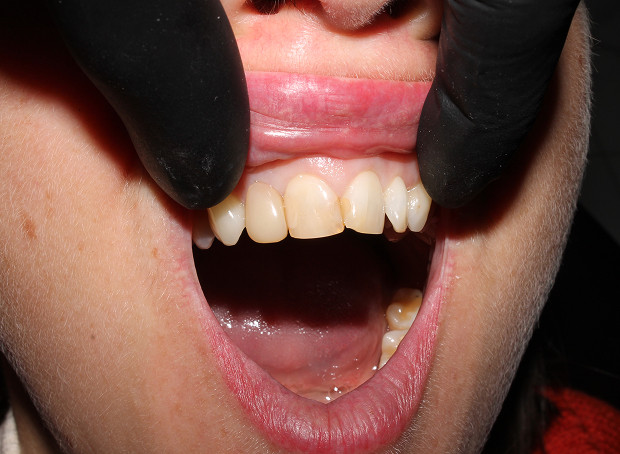
Erosion is an enamel defect that typically occurs on the anterior (vestibular) surface of teeth, most commonly on the incisors, canines, and premolars. Initially, the lesion appears as a slight dullness on the tooth, but over time, it develops into an oval or rounded depression. It's difficult to detect the problem on your own because the tooth initially shows no visible changes.
How does enamel erosion develop?
The process begins with demineralization of the surface layer. Under the influence of aggressive factors, the enamel crystal lattice loses calcium and phosphorus. As a result, enamel destruction occurs gradually: layer by layer, the tissue is "washed away," revealing the underlying dentin. Since dentin is much softer than enamel, the rate of tooth decay increases several times once this layer is reached.
How is erosion different from caries?
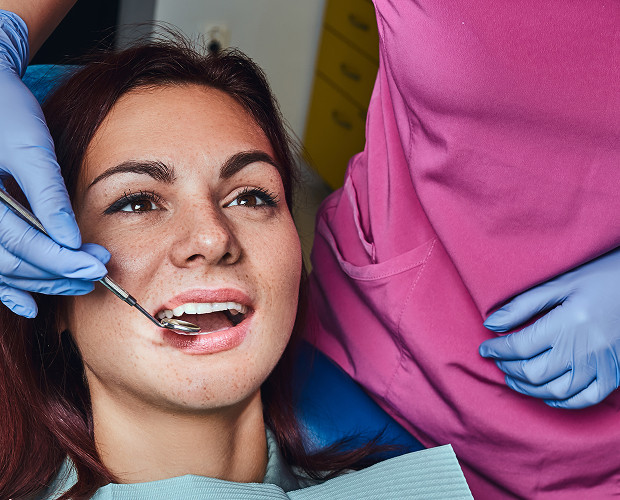
The main difference lies in etiology and appearance. Caries is an infectious process caused by bacteria that convert sugar into acids. A cavity typically has jagged edges and a softened floor. Enamel erosion is non-infectious; its surface is always dense and smooth. Furthermore, erosion more often affects symmetrical teeth and is located on the most convex parts of the crown, whereas caries "prefers" fissures and contact areas between teeth.
How is erosion different from a wedge-shaped defect?
A wedge-shaped defect is also a non-carious lesion of the teeth, but it is always located strictly at the neck of the tooth (at the border with the gum) and has a V-shape. Dental erosion is usually located closer to the middle of the crown or the incisal edge and has a cup-shaped, rounded shape. The causes of this erosion vary, including malocclusion and improper chewing pressure. Erosion is associated with chemical exposure.
Causes of Enamel Erosion
The development of enamel erosion is triggered by a combination of external and internal factors. Understanding the causes of enamel erosion helps a doctor develop an effective prevention plan.
Acidic foods and drinks
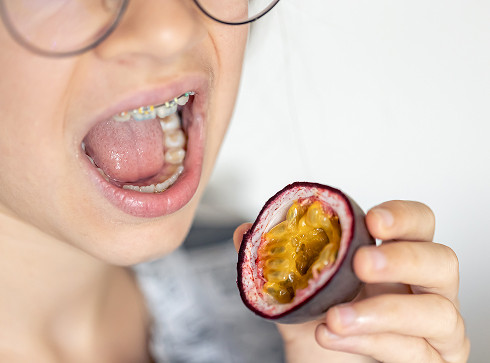
Carbonated drinks, juices, and citrus fruits have an acidic effect on enamel.
Internal causes: reflux and other conditions
The problem often stems from gastrointestinal diseases. With gastroesophageal reflux disease (GERD), stomach contents enter the mouth. Gastric juice is extremely acidic, which immediately causes demineralization. Certain endocrine disorders, particularly hyperthyroidism, are also causes.
Hygiene Errors and Abrasive Exposure
Oral hygiene should be regular. Using hard toothbrushes and whitening toothpastes with a high abrasiveness index (RDA) literally "erases" enamel softened by acids. Avoid brushing your teeth after eating citrus fruits. At this point, the enamel softens and is more easily damaged.
Occupational and Household Risk Factors
Working in hazardous industries has a detrimental effect on teeth. Household risk factors include long-term use of certain medications (for example, ascorbic acid or iron syrups).
Causes of enamel erosion:
- Drinking carbonated drinks
- You have high acidity and frequent heartburn (reflux)
- You're brushing your teeth incorrectly
- You're using a hard toothbrush or whitening toothpaste
- You're not seeing your dentist every six months

Dentists classify the disease by the depth of tissue damage.
Initial Stage
Only the superficial layers of enamel are affected. The defect is virtually invisible visually and may only manifest as a slight dullness of the area. At this stage, diagnosis of enamel erosion is only possible in the dentist's chair with the tooth surface air-dried.
Middle Stage
The lesion affects the entire thickness of the enamel, down to the enamel-dentin junction. Visible depressions appear, and the patient begins to experience discomfort when eating and drinking.
Deep Stage
Dentin is involved. Enamel defects become extensive and brownish or yellow. Tooth wear increases, and sensitivity may become permanent.
What happens if enamel erosion is left untreated?
Increased sensitivity
Hyperesthesia can reach such a degree that the patient cannot eat normally or talk outside in cold weather.
Increased risk of damage to hard tissues
Thin enamel chips easily. This creates conditions for decay to quickly penetrate deeper into the tooth. Often, erosion and decay begin to develop simultaneously in the same area, leading to rapid tooth loss.
Aesthetic changes in teeth
The smile loses its appeal: teeth look old, worn, jagged, and stained. People become self-conscious about their appearance and withdraw from others.
General information
Diagnosing Enamel Erosion
A diagnosis is made only after an examination.
Examination and Collection of Complaints
During the examination, the dentist uses special dyes that do not stain erosion (unlike caries) and conducts probing—the erosion surface always remains hard.
Assessing Lifestyle and Eating Habits
An important part of the appointment is a questionnaire. The doctor determines the patient's diet, bad habits, and chronic stomach conditions. The goal is to address the cause, not the symptom. Otherwise, the disease will return again and again.
Differential diagnosis with other dental lesions
Comparison table: Enamel erosion, caries, and wedge-shaped defect
| Parameter | Enamel erosion | Caries | Wedge-shaped defect |
|---|---|---|---|
| Cause | Acid and mechanical stress | Bacteria | Improper brushing, stress |
| Appearance | Glossy, smooth depressions | Chalky stain, cavity | V-shaped depression |
| Location | Anterior surface | Fissures, interdental areas | Cervical area |
| Pain | From chemicals and temperature | From sweets, later - from everything | Often asymptomatic |
| Treatment approach | Remineralization, filling | Preparation, filling | Closure of the defect, correction |


Frequently Asked Questions
Is it possible to stop enamel erosion at an early stage?
Can enamel be completely restored?
Why do teeth become sensitive with enamel erosion?
Our doctors


















































This award is given to clinics with the highest ratings according to user ratings, a large number of requests from this site, and in the absence of critical violations.

This award is given to clinics with the highest ratings according to user ratings. It means that the place is known, loved, and definitely worth visiting.

The ProDoctors portal collected 500 thousand reviews, compiled a rating of doctors based on them and awarded the best. We are proud that our doctors are among those awarded.
Make an appointment at a convenient time on the nearest date
Price

Appointment to the doctor
Reviews




















Our clinics


Application “Personal Account K+31”












Symptoms of enamel erosion
Symptoms of the disease depend on the activity of the process. Dentists distinguish between an active stage (when tissue loss is rapid) and a stabilized stage (when the process slows down).
Increased tooth sensitivity
The first and most common symptom is hyperesthesia. Increased tooth sensitivity manifests as sharp pain upon contact with cold air, hot drinks, sour fruits, or sweets. Because the protective layer becomes thinner, the nerve endings in the dentinal tubules react more acutely to any environmental changes.
Change in enamel color and gloss
In affected areas, the enamel loses its natural translucency. Teeth may appear more yellow, as the dentin begins to show through the thin transparent layer.
Appearance of pits and surface thinning
As the disease progresses, concave defects become visible on the anterior wall of the tooth. Thinning of the enamel causes the incisal edges of the teeth to become transparent or even crumble. In advanced cases, the shape of the tooth changes visibly, becoming shorter or thinner in the anterior-posterior direction.