Distal occlusion: signs, causes, and treatment methods

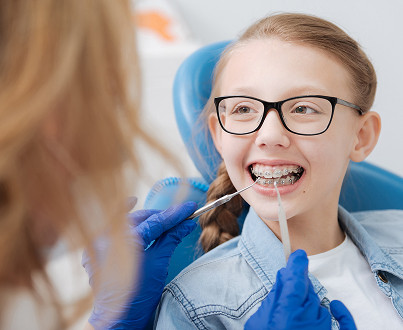
Distal occlusion is the incorrect closure of the teeth. This problem is solvable, as modern dentistry offers correction of distal occlusion using digital diagnostics and the latest treatment methods.

Best specialists
Best
specialists
Expert equipment
Expert
equipment
Advanced diagnostic treatment
Advanced diagnostic
treatment
Sign up
Fill out the entry form on the page and we will call you back
Sign up Позвонить
Download the application “Personal Account K+31”
Everything about your health in one click!
Subscribe to social networks K+31
To keep up to date with current offers and receive useful advice about your health.
The essence of the diagnosis of distal occlusion

The essence of the diagnosis of distal occlusion

There are two types of malocclusion: dentoalveolar and skeletal malocclusion. The former is characterized by an abnormal inclination of the incisors, while the latter is characterized by an abnormal size of the facial bones. Correction of a distal malocclusion in both cases is possible; the key is to consult a doctor promptly.

How to recognize a distal bite

How to recognize a distal bite

It is impossible to make a medical diagnosis on your own. An observant person can notice a number of characteristic physiological features. If you notice the initial signs of a distal bite, you should immediately schedule a visit to an orthodontic clinic for a detailed consultation.

External Signs

The patient's facial profile takes on specific contours. The chin appears small, slanted back, and shortened. The upper lip often protrudes, and the mouth may remain half-open when completely at rest.

Complaints and Functional Symptoms

Patients complain of difficulty biting hard foods. Chewing becomes less effective, and food is swallowed poorly. Speech defects occur, and diction is severely impaired, especially when pronouncing hissing sounds.

Differences from other malocclusions

Anterior-posterior displacement of the jaws relative to each other is the main difference between malocclusion and mesial occlusion, where the upper jaw dominates the lower jaw. The open form is characterized by a vertical gap.

Causes of distal occlusion
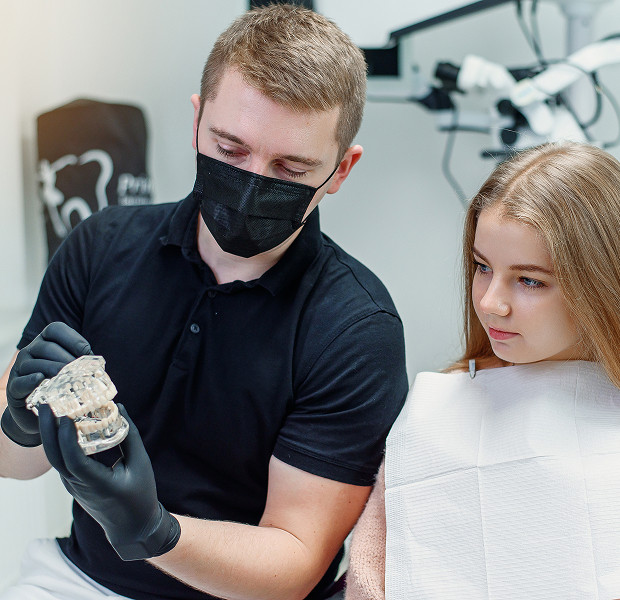
Causes of distal occlusion

The development of the dental system depends on a multitude of intertwined factors. When studying the causes of distal malocclusion, doctors distinguish between genetics and external influences.

Heredity

The architectural features of the facial bones are passed down from parents to children. If the mother or father had a similar disorder, the likelihood of developing it in the child increases significantly. Nature determines the size of the bones long before birth.

Bad Habits and Mouth Breathing

Prolonged sucking of a pacifier, thumb, or foreign objects in early infancy disrupts the natural development of the dental system. Chronic nasal congestion forces the baby to constantly breathe through the mouth.

Growth Disorders of the Upper and Lower Jaws

Sometimes the upper jaw develops too rapidly, exceeding the physiological norm. In other clinical situations, the lower jaw is significantly retarded in growth. Early loss of primary teeth without subsequent pediatric prosthetics causes displacement of the permanent tooth buds, blocking the normal forward movement of the lower jaw.
What is the danger of distal bite?

If left untreated, a serious malocclusion gradually destroys the health of the patient's entire dental system. Mechanical overload leads to irreversible consequences.

Consequences for teeth and enamel

The anterior incisors are at increased risk of injury from falls and sports. Result:

  • Gum recession occurs
  • Sensitive root necks are exposed
  • A wedge-shaped defect develops

Stress on the TMJ

Incorrect occlusion forces the temporomandibular joint to function under extreme stress. Characteristic clicking sounds, a frightening crunching sound when opening the mouth, chronic headaches, and painful spasms in the neck muscles appear.

Impact on chewing, speech, and facial appearance

Poorly chewed food negatively impacts the functioning of the gastrointestinal tract, causing digestive problems. Aesthetic imperfections can cause profound psychological complexes in adolescents.

What is the danger of distal bite?
When is distal bite correction indicated

When is distal bite correction indicated?

The decision to initiate active therapy is made solely by the attending physician based on the clinical picture.

Indications in Children

Timely treatment of distal bite at a young age is most effective. Doctors strongly recommend beginning medical intervention during periods of peak skeletal growth. The main goal of therapy is to create ideal conditions for the harmonious, symmetrical development of the adolescent's jawbones.

Indications in Adults

Fully formed bone tissue is more difficult to undergo large-scale changes. Medical intervention is strictly indicated:

  • In preparation for complex prosthetics or dental implantation
  • In the presence of severe pain in the jaw joint
  • In cases of severe aesthetic discomfort to the patient

Methods for correcting distal occlusion

The final choice of equipment depends on the patient’s age and individual clinical situation.

Plates and functional appliances

Removable appliances are used during the active transition period in children. These systems help stimulate lagging areas or restrain excessive bone growth. A classic functional appliance directs the muscle forces of the lips and cheeks to normalize the position of the jaw bases.

Braces

A classic, highly predictable, and highly effective dental tool. Various braces for distal occlusion allow for precise root movement in three spatial planes simultaneously. The dentist secures the brackets to the enamel, and a metal archwire sets the correct sliding trajectory for the crowns.

Aligners

Transparent biocompatible aligners have become an incredibly popular alternative to metal structures. These discreet, invisible aligners for distal bites work through precisely programmed polymer pressure on the crowns. The systems are easily removed during meals, facilitating home hygiene.

Combined Methods

Complex skeletal and dental anomalies require a comprehensive, integrated approach. Doctors use face bows, intermaxillary traction devices, and orthodontic mini-screws. Sometimes, patients are recommended to undergo full-scale jaw advancement surgery (orthognathic surgery).

Comparison of Correction Methods

Method Who is it suitable for? What problems does it solve? Wearing Features Limitations
Plates / Functional Appliances Children (mixed dentition) Bone growth direction, myofunctional adaptation Removable, discipline is important Child Do not correct the torque (tilt) of individual roots
Braces Teenagers and adults Precise tooth positioning, solution to complex anomalies Fixed, complicate daily cleaning Aesthetic compromise, risk of mucosal chafing
Aligners Teenagers and adults Dental arch alignment, delicate occlusion correction Removable, completely transparent, comfortable High patient discipline (strictly 22 hours a day)
Combination treatment Adults with skeletal forms Surgical reshaping of the facial skeleton Inpatient treatment, long-term rehabilitation Strict medical and surgical contraindications

General information

Diagnosis of Distal Occlusion

A thorough hardware examination is a solid foundation for successful orthodontic therapy. Clinical planning eliminates errors in calculating root movement.

Orthodontist Examination

The initial consultation includes a visual screening. The orthodontist evaluates the patient's facial profile, soft tissue symmetry, lip closure, facial muscle function, basic nasal breathing functions, and swallowing accuracy.

Photos, Scans, Impressions

The standard modern protocol includes a detailed photographic record of the face and dentition. High-precision intraoral dental scanning is used. Alternatively, classic alginate or silicone impressions are taken to cast diagnostic 3D models of the jaws.

TRG, CBCT, and occlusion analysis

A teleradiograph (TRG) in the lateral projection helps distinguish dentoalveolar form from complex skeletal pathology. Cone beam computed tomography (CBCT) provides a detailed three-dimensional image of bone tissue, joint elements, and root position. The patient's centric occlusion is examined in detail.

Treatment plan

By combining the obtained digital data, the specialist develops a detailed dental movement plan. Dangerous self-diagnosis using online photographs will never replace a full-fledged dental examination.
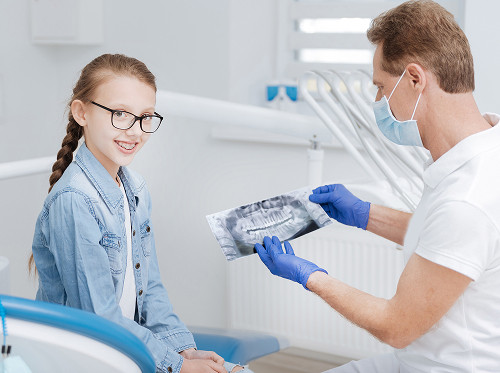
Diagnosis of Distal Occlusion

Characteristics of Correcting Distal Bite in Children

When treating distal bite in children, the doctor utilizes the child's powerful natural potential for biological growth. The doctor's practice includes:

  • Partial braces for anterior incisors
  • Silicone trainers
  • Custom-made plates
Characteristics of Correcting Distal Bite in Children

Characteristics of Correcting Distal Occlusion in Adults

A developed distal occlusion in adults is objectively more difficult to correct conservatively. Appliances successfully move only the dentoalveolar complex. Complex orthognathic surgery, coupled with braces, is used to radically alter facial proportions.

Proper bite correction in adulthood requires perfect oral hygiene before teeth begin to move.

Characteristics of Correcting Distal Occlusion in Adults

Treatment Stages

The global smile transformation process follows a strict, proven medical algorithm.

Oral Preparation and Sanitation

The therapist carefully removes cavities and relieves gum inflammation, while the hygienist performs a thorough professional ultrasonic cleaning. Installing fixed orthodontic appliances on diseased teeth is absolutely unacceptable.

Active Orthodontic Correction

The patient wears the selected appliances continuously. Scheduled activations of metal arches, replacement of sets of transparent aligners, and installation of latex elastics are performed periodically. The overall duration of the treatment depends on the severity of the underlying pathology. An experienced orthodontist regularly monitors the dynamics of changes during monthly clinical appointments.

Retention Period

After the active systems are removed, teeth physiologically strive to return to their original curved position. Reliably securing the result with a permanent retainer is the most important final step.

Treatment Stages
Prevention and control of results

Prevention and control of results

Preventing malocclusion is easier than undergoing years of treatment. Therefore, parents are strongly advised to:

  • Monitor their child's daily habits
  • Treat seasonal ENT conditions promptly
  • Carefully monitor the timing of the baby's teeth being replaced

Frequently Asked Questions

This article is for informational purposes only. All decisions are made by a dentist after an examination.

Can fluorosis be treated at home?

No, whitening toothpastes won't provide the desired effect; they will only damage the enamel. Stains can only be removed by a dentist.

Does fluorosis affect your overall health?

It all depends on the amount of fluoride you consume. High doses can also damage bones.

Are veneers always necessary for fluorosis?

No, this is a last resort for severe cases. More often than not, the problem can be solved with less expensive options.

Our doctors
Shcherbakova Valentina Frantsevna
Experience 31 year
Make an appointment
Shcherbakova
Valentina Frantsevna
Head of the Department of Dentistry, dentist
Cherkasov Alexei Andreevich
Experience 19 years
Make an appointment
Cherkasov
Alexei Andreevich
Dentist-surgeon, implantologist, therapist
Bogdashin Sergey Vladislavovich
Experience 26 years
Make an appointment
Bogdashin
Sergey Vladislavovich
Orthopedic dentist
Artyomov Yanislav Alexandrovich
Experience 13 years
Make an appointment
Artyomov
Yanislav Alexandrovich
Dentist therapist
Ivashkevich Sergei Georgievich
Experience 31 year
Make an appointment
Ivashkevich
Sergei Georgievich
Dentist-surgeon, implantologist
Podshekoldina Elena Nikolaevna
Experience 17 years
Make an appointment
Podshekoldina
Elena Nikolaevna
Dentist Therapist
Matevosyan David Aramovich
Experience 12 years
Make an appointment
Matevosyan
David Aramovich
Dentist orthopedist
Samartseva Natalya Victorovna
Experience 20 years
Make an appointment
Samartseva
Natalya Victorovna
Dentist-surgeon, implantologist, therapist
Eloev Arthur Tamerlanovich
Experience 14 years
Make an appointment
Eloev
Arthur Tamerlanovich
Dentist surgeon
Vataev Vladislav Olegovych
Experience 17 years
Make an appointment
Vataev
Vladislav Olegovych
Dentist orthopedist
Pivovarova Natalya Sergeevna
Experience 7 years
Make an appointment
Pivovarova
Natalya Sergeevna
Dentist, hygienist
Bagaev Omar Makhachevich
Experience 20 years
Make an appointment
Bagaev
Omar Makhachevich
Dentist-therapist, pediatric
Zakharyan Georgy Karenovich
Experience 17 years
Make an appointment
Zakharyan
Georgy Karenovich
Dentist-surgeon
Kuznetsova Larisa Nikolaevna
Experience 29 years
Make an appointment
Kuznetsova
Larisa Nikolaevna
Hygienist
Sukhareva Darima Tsyrenovna
Experience 11 years
Make an appointment
Sukhareva
Darima Tsyrenovna
Dentist therapist
Grigoryeva Regina Bogdanovna
Experience 24 years
Make an appointment
Grigoryeva
Regina Bogdanovna
Dentist-therapist, endodontist
Melkumyan Ivan Mikhailovich
Experience 6 years
Make an appointment
Melkumyan
Ivan Mikhailovich
Dentist-surgeon
Golubev Vitaly Viktorovich
Experience 24 years
Make an appointment
Golubev
Vitaly Viktorovich
Dentist-orthodontist
Pavliy Yulia Vitalievna
Experience 15 years
Make an appointment
Pavliy
Yulia Vitalievna
Dentist-therapist
Najaryan Liana Artyomovna
Experience 6 years
Make an appointment
Najaryan
Liana Artyomovna
Dentist-surgeon, implantologist
Sharifov Eldar Rasimovich
Experience 7 years
Make an appointment
Sharifov
Eldar Rasimovich
Dentist-therapist
Sanikidze Nino Nugzarovna
Experience 14 years
Make an appointment
Sanikidze
Nino Nugzarovna
Dentist Orthodontist
Ibragimova Olesya Kayinbekovna
Experience 18 years
Make an appointment
Ibragimova
Olesya Kayinbekovna
Dentist-therapist, microscopist
Sahakyan Arpine Argishtovna
Experience 9 years
Make an appointment
Sahakyan
Arpine Argishtovna
Dentist, pediatric dentist
Geraskina Inna Igorevna
Experience 11 years
Make an appointment
Geraskina
Inna Igorevna
Orthodontist
Nikolaeva Irina Yuryevna
Experience 31 year
Make an appointment
Nikolaeva
Irina Yuryevna
Dentist surgeon, periodontist
Avdeeva (Sokolova) Anastasia Eduardovna
Experience 12 years
Make an appointment
Avdeeva (Sokolova)
Anastasia Eduardovna
Dentist, pediatric
Shapran Sergey Olegovich
Experience 10 years
Make an appointment
Shapran
Sergey Olegovich
Dentist-surgeon
Lebedeva Natalia Mikhailovna
Experience 6 years
Make an appointment
Lebedeva
Natalia Mikhailovna
Orthodontist
Ozerova Elena Valerievna
Experience 24 years
Make an appointment
Ozerova
Elena Valerievna
Dentist
Lebedeva
Taisia Mikhailovna
Dentist-therapist, pediatric dentist
Gulyutkin Alexander Mikhailovich
Experience 6 years
Make an appointment
Gulyutkin
Alexander Mikhailovich
Dentist-therapist
Mitroshenkov Pavel Nikolaevich
Experience 41 year
Make an appointment
Mitroshenkov
Pavel Nikolaevich
Maxillofacial surgeon
Dergunova Anna Olegovna
Experience 11 years
Make an appointment
Dergunova
Anna Olegovna
Dentist-therapist
Pavlovskaya Evgeniya Olegovna
Experience 13 years
Make an appointment
Pavlovskaya
Evgeniya Olegovna
Dentist-orthopedist, dentist-therapist
Khachatryan Ripsime Grigorievna
Experience 8 years
Make an appointment
Khachatryan
Ripsime Grigorievna
Dentist-therapist
Zakharova Ksenia Sergeevna
Experience 8 years
Make an appointment
Zakharova
Ksenia Sergeevna
Dental surgeon, periodontist
Zhigulina Yulia Olegovna
Experience 10 years
Make an appointment
Zhigulina
Yulia Olegovna
Dentist
Aylarova Zarina Vladimirovna
Experience 11 years
Make an appointment
Aylarova
Zarina Vladimirovna
Dentist-therapist
Marchenko Ekaterina Andreevna
Experience 4 years
Make an appointment
Marchenko
Ekaterina Andreevna
Dental assistant
Dyachkova Inna Vladimirovna
Experience 9 years
Make an appointment
Dyachkova
Inna Vladimirovna
Orthodontist
All specialists
2GIS Award
2GIS Award

This award is given to clinics with the highest ratings according to user ratings, a large number of requests from this site, and in the absence of critical violations.

«Good place» according to Yandex

This award is given to clinics with the highest ratings according to user ratings. It means that the place is known, loved, and definitely worth visiting.

Our doctors are laureates of the ProDoctors Award
The ProDoctors portal collected 500 thousand reviews, compiled a rating of doctors based on them and awarded the best. We are proud that our doctors are among those awarded.
Make an appointment at a convenient time on the nearest date

Price

Reception
Price
Primary appointment with a dentist-therapist
from 5 800 ₽
Repeated appointment with a dentist-therapist
from 4 950 ₽

Appointment to the doctor

Fill out the form, our managers will contact you within 15 minutes

Reviews

Thank you Natalia for your attention and care. If you go to the dentist, then only to her.
16.04.2026
Georgiy Y.
My favorite dentist. The treatment is at the highest level.
13.04.2026
Viktoriya F.
A very nice, neat and attentive doctor.Jewelry work.It was completely painless, fast and as comfortable as possible at the reception.Thanks to Artur Tamerlanovich!
05.04.2026
Yuliya P.
An excellent specialist, very sensitive and attentive. He's doing a great job.
03.04.2026
Gleb V.
An attentive and careful doctor.
01.04.2026
Darya G.
Very attentive, professional. He does it well.
01.04.2026
Yuliya I.
Everything is perfect! I've already recommended the doctor to several of my friends! I will definitely come again!
31.03.2026
Anastasiya B.
I would like to express my gratitude to Ivan Mikhailovich for the operations and bandages performed, as well as to the assistants Natalia, Nadezhda, Victoria. Thank you for your support, professionalism and kindness!
29.03.2026
Darya T.
Yanislav Alexandrovich, I would like to thank you very much for the proven procedure! You are the best doctor! Thank you very much!The best recommendations for all patients!
29.03.2026
Tatyana A.
Thanks to Alexander Mikhailovich and assistant Anna for the work done! There was a hygienic tooth cleaning. The procedure was performed efficiently, cleanly and painlessly!
28.03.2026
Nargiza I.
Почему К+31?
К + 31 — full-cycle multidisciplinary medical centers, including the possibility of providing medical services of European quality level.
К + 31 — are leading doctors and diagnostics using high-tech equipment from world manufacturers (Karl Storz, Olympus, Siemens, Toshiba, Bausch&Lomb, Technolas, Zeiss, Topcon).
К + 31 — is ethical. The staff of K+31 clinics maintain open relationships with patients and partners. An individual approach to each patient is the basis of our service standards.
К + 31 — is modernity. On call 24/7: call center operators will answer your questions at any time and book you an appointment with doctors. Contact us by phone, through the feedback form on the website and Max.
Our clinics

Address K+31 on Lobachevskogo

st. Lobachevskogo, 42/4

Contacts

+7 499 999-31-31

Opening hours
Mon-Fri: 08:00 – 21:00
Weekend: 09:00 – 19:00

How to get there

  • Метро: Проспект Вернадского (1)(11)
  • Автомобиль: Двигаясь по ул. Лобачевского, проезжаем первый шлагбаум (пост охраны ГКБ № 31), поворачиваем направо у второго шлагбаума (пост охраны К+31)

Address K+31 Petrovskie Vorota
1st Kolobovsky pereulok, 4

Contacts

+7 499 999-31-31

Opening hours

Mon-Fri: 08:00 – 21:00
Sat-Sun: 09:00 – 19:00

How to get there

  • Метро: Цветной Бульвар (9), Трубная (10)
  • Автомобиль: По Петровскому бульвару, поворот на ул. Петровка, затем на 1-й Колобовский пер. Муниципальная парковка.

Address K+31 West

Orshanskaya, 16/2; Ak. Pavlova, 22

Contacts

+7 499 999-31-31

Opening hours

Mon-Fri: 08:00 – 21:00
Sat-Sun: 09:00 – 18:00

How to get there

  • Метро: Молодежная (3)
  • Автомобиль: Двигаясь по улице Оршанская, поворачиваем к шлагбауму с постом охраны К+31.
Петровские ворота
Didn't find the service you were looking for?

Экстренная помощь