
Tooth Pigmentation
A smile often changes color over time, and these changes rarely go unnoticed. Some people develop individual dark spots, while others experience more uniform enamel color changes. This can be influenced by daily habits, water quality, frequent coffee consumption, smoking, age-related changes, and overall health. This is why tooth pigmentation requires careful attention rather than attempts to mask the problem with home remedies.
According to dentists, tooth pigmentation in Moscow has indeed become a common reason for people to visit hygienists and smile aestheticians. This discoloration itself is not always associated with a medical condition, but a seemingly harmless spot can sometimes conceal underlying processes that are best examined by a specialist promptly.

specialists

equipment

treatment







This is a change in the natural color or internal tissues. In some patients, tooth pigmentation appears as white spots on the teeth, while in others, brown spots on the coronal tissue, grayish areas, or localized darkening of the tooth are visible.
It is important to note that persistent discoloration is not always related solely to hygiene. Sometimes the staining is superficial, while other times it affects deeper structures.
Extrinsic and Intrinsic Pigmentation
Now let's look at this issue in more detail. Extrinsic tooth pigmentation affects the surface of the coronal tissue and is most often associated with food colorings, smoking, and heavy plaque. Intrinsic tooth pigmentation develops within the tissues and can be associated with trauma, root canal treatment, mineralization disorders, and certain medications. For this reason, similar-looking pigmented spots on teeth require different approaches.
How does discoloration differ from plaque and tooth decay?
Plaque lies on the surface and is usually removed during oral hygiene. Tooth decay destroys hard tissue and changes the structure of the tooth. Tooth enamel pigmentation can appear as spots, streaks, or general darkening, but without a cavity. Visually distinguishing between these conditions is not always easy, so it's best to have a dental examination done promptly if you notice a change in color.
Causes of tooth pigmentation
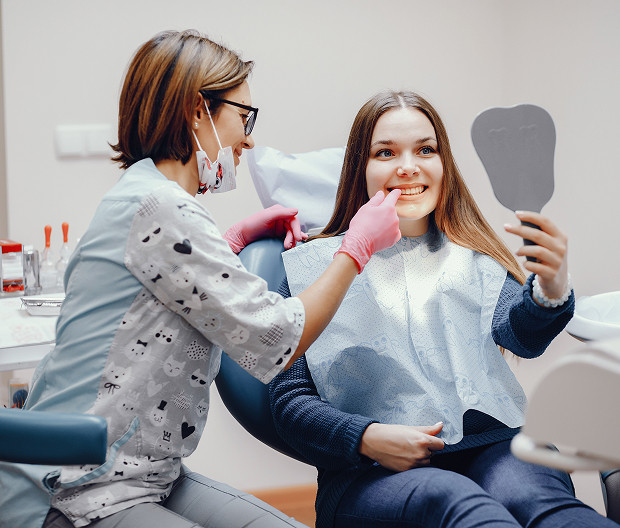
Dentists associate the main causes of tooth pigmentation with external and internal factors. This determines whether professional cleaning will help, whether teeth whitening is needed, or whether restoration is necessary. First, the doctor determines the source of the staining, evaluates the enamel, and determines whether there are any hidden changes in the tissue.
Food colorings, coffee, tea, smoking
Most often, superficial staining is associated with everyday habits. Enamel gradually accumulates dyes, and plaque retains them even more strongly. This causes stains on the enamel, yellowish and dark areas, and sometimes persistent pigment spots on the teeth.
The most common causes of external staining are:
- Coffee and tea
- Smoking
- Food colorings
- Irregular care
Age-Related Changes and Enamel Thinning
With age, enamel thins, causing the dentin to become more translucent. This causes enamel darkening, and in some patients, tooth sensitivity increases. This sometimes resembles plaque, although the cause may be different.
Medication-Related Factors, Trauma, and Consequences of Root Canal Treatment
Causes include certain medications, trauma, old materials after endodontic treatment, and changes within the crown. If the root canal darkens, the dentist always evaluates the depulped crown as well, as internal staining is more common in the depulped crown.
Problem Solution
The answer to the question of how to remove tooth pigmentation depends on the depth of the staining. Removing tooth pigmentation isn't limited to a single, universal procedure. When the problem is superficial, the dentist focuses on plaque removal and polishing. If the change is persistent and internal, the approach will be different.
Professional Hygiene and Surface Plaque Removal
In many cases, professional hygiene is the first step. It helps remove soft and hard plaque, free the surface from stains, and understand the true shade of the tissue. Often, tooth pigmentation removal begins with this step, as without it, it is impossible to accurately assess the depth of the problem.
Air Flow and Enamel Polishing
The Air Flow method helps gently remove fresh stains from hard-to-reach areas. After the procedure and subsequent enamel polishing, the surface becomes smoother, making it harder for new pigments to adhere. For many patients, this type of plaque removal is sufficient and does not require more aggressive methods.
Whitening for Extrinsic Pigmentation
If the color remains darker than desired after cleaning, the dentist may recommend teeth whitening. This option is not suitable for everyone. In cases of high sensitivity, thinned crown tissue, and certain associated conditions, any whitening procedures are selected individually.
Correction of Persistent Internal Pigmentation
Persistent internal staining is not always removed by cleaning. In this case, internal bleaching, restoration, or other correction methods are considered. It's important to honestly explain to the patient where lightening helps and where another method of color restoration is needed.
General information
How the procedure is performed
Tooth pigmentation is often removed in stages. This approach helps preserve the crown tissue, avoid increased sensitivity, and achieve a predictable result.
Preparation
First, the doctor conducts an examination, discusses your complaints, habits, and the timeframe for the staining. If necessary, they will order an x-ray and explain which method is appropriate for your specific situation.
Main Stage
Next, hygiene, polishing, bleaching, or another chosen method are performed. During the procedure, the doctor monitors the condition of the tissue and strives to work gently, avoiding unnecessary trauma.
Post-Procedure Care
After the procedure, it is usually recommended to temporarily limit foods with bright colors, brush gently, and follow home care recommendations. If necessary, products to support the mineralization of the crown tissue are prescribed.


Frequently Asked Questions
Is it possible to remove tooth discoloration at home?
How does permanent discoloration differ from tooth decay?
Why has only one tooth darkened?
What works better: cleaning or whitening?
Our doctors


















































This award is given to clinics with the highest ratings according to user ratings, a large number of requests from this site, and in the absence of critical violations.

This award is given to clinics with the highest ratings according to user ratings. It means that the place is known, loved, and definitely worth visiting.

The ProDoctors portal collected 500 thousand reviews, compiled a rating of doctors based on them and awarded the best. We are proud that our doctors are among those awarded.
Make an appointment at a convenient time on the nearest date
Price

Appointment to the doctor
Reviews





















Our clinics


Application “Personal Account K+31”












When diagnostics are needed
Not all tooth discoloration can be removed with toothbrushing and toothpaste. Sudden darkening of the enamel, new stains, or rapid changes in color require an examination. In the clinic, the doctor will evaluate your complaints, conduct an examination, and, if necessary, order an X-ray.
What symptoms require an examination?
Reasons for a visit include stains on the incisors, molars, and canines; rapid discoloration; sudden darkening after a blow; severe plaque buildup; and discomfort with hot and cold. If one molar has changed more than the others, diagnosis should not be delayed.
How to determine the cause of tooth discoloration
The doctor will evaluate the enamel, plaque density, the condition of old fillings, the nature of the staining, and, if necessary, take an X-ray. This will help determine whether the discoloration is due to fluorosis, external staining, internal staining, trauma, or the consequences of root canal treatment.