Macrognathia: How to Recognize and Correct It
The harmony of the human face is largely determined by the proportions of the cranial bones. When one jaw develops excessively, it not only impairs aesthetics but also vital functions such as breathing, speech, and chewing. This condition is called macrognathia in dentistry and maxillofacial surgery. It is a complex skeletal anomaly that requires a comprehensive approach to diagnosis and treatment.

specialists

equipment

treatment








The clinical presentation and correction strategy directly depend on which part of the facial skeleton has undergone excessive growth.
Maxillary Macrognathia
In this form, the maxilla is significantly enlarged. This is visually manifested by a protruding middle third of the face. In such patients, the upper gum and lip may appear shortened and taut when speaking or laughing.
Mandibular Macrognathia
Mandibular macrognathia (also known as true prognathia) is characterized by a massive, protruding chin. The lower third of the face is elongated, and the lower lip often overlaps the upper lip or appears excessively voluminous. People with micrognathia often have speech impediments.
True and Relative Macrognathia
In true macrognathia, the jaw is actually larger than average. With relative underdevelopment, one jaw appears large only due to the underdevelopment (micrognathia) of the other jaw. In other words, the enlarged jaw is merely an optical illusion.
Causes of macrognathia development
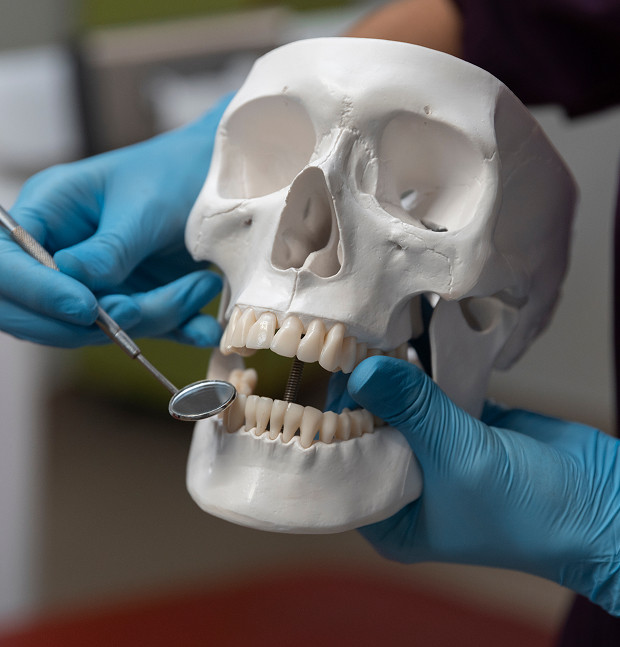
The development of the facial skeleton is a process dependent on numerous internal and external factors. The causes of macrognathia are usually divided into three main groups.
Congenital and hereditary factors
If parents had a jaw developmental anomaly, the likelihood of a similar trait in a child is extremely high. Macrognathia is often associated with ethnicity or genetics.
Jaw growth disorders
Excessive bone growth can be triggered by endocrine disorders. For example, pituitary hyperfunction (excessive production of growth hormone) leads to acromegaly, in which the lower jaw begins to actively enlarge in adulthood. Disturbances in intrauterine development during the first trimester of pregnancy also play a role.
Consequences of injuries and past illnesses
In some cases, jaw deformity is the result of childhood osteomyelitis or inflammatory processes in the bone growth plates. Facial skeletal injuries can cause compensatory, uncontrolled bone growth in the area of the articular processes.
Main symptoms and signs

The symptoms of macrognathia extend far beyond a purely visual defect. The pathology affects the entire dental system.
Changes in facial proportions and profile
This is the most obvious sign. With upper macrognathia, the face appears convex, while with lower macrognathia, it appears concave (resembling a "crescent" in profile). The chin can be displaced not only forward but also to the side, causing pronounced asymmetry.
Bite and dental occlusion problems
People with this diagnosis almost always have a malocclusion. Due to the difference in jaw size, the teeth cannot close properly. This results in either a sagittal gap (a space between the front teeth) or a reverse overbite, where the lower teeth are positioned in front of the upper teeth. As a result, the enamel wears down and the teeth wear out faster.

Difficulty chewing, speaking, and breathing
A dental anomaly of this magnitude interferes with normal life:
- Chewing: the inability to effectively chew food leads to gastrointestinal diseases.
- Speech: patients have difficulty pronouncing hissing and whistling sounds (dyslalia).
- Breathing: narrowing or excessive protrusion of the jaws can narrow the airway, which causes sleep apnea and snoring.
Signs that warrant a diagnosis of macrognathia:
- Noticeable enlargement of the upper or lower jaw
- Significant malocclusion
- Difficulty chewing food
- Visible change in facial profile
- Speech defects that do not respond to speech therapy
- Clicking, crunching, or discomfort in the temporomandibular joint (TMJ)
What is the difference between macrognathia, prognathia, and micrognathia?
These terms are often confused, but there is a fundamental difference between them:
- Macrognathia is an excess of volume and size of the entire bone.
- Prognathia is a normal-sized jaw that is simply shifted forward at the base of the skull.
- Micrognathia, on the other hand, is a pathological underdevelopment (shortening) of the jaw.
To the average person, they may look similar, but the treatment plan for these conditions will be radically different.

When diagnostics are needed
Self-diagnosis based on photographs or subjective sensations is unacceptable. Consult a specialist immediately as soon as you notice an aesthetic disproportion or functional discomfort. Timely diagnosis of macrognathia is especially important in childhood, when bone growth can still be directed in the right direction without radical surgery.

General information
Diagnosing Macrognathia
The disease is diagnosed using several methods.
Clinical Examination and Bite Analysis
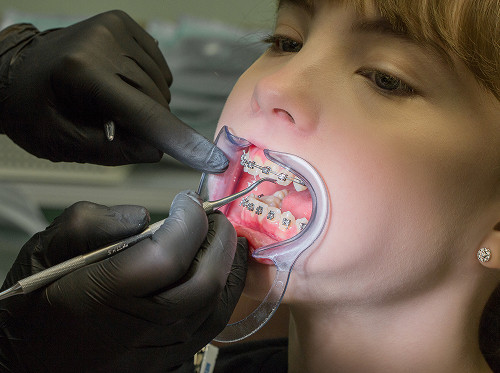
The orthodontist visually assesses facial symmetry, palpates the jaw joints, and evaluates the occlusion of the teeth. Impressions or intraoral scanning are taken to create 3D models of the jaws.
X-ray, CT, Teleradiography
- CT of the jaw: Computed tomography provides a three-dimensional image of the bone structures.
- Teleradiography (TRG): A profile image of the skull, necessary for calculations. It allows us to understand whether the problem is caused by bone size or position.
Cephalometric Analysis and 3D Planning
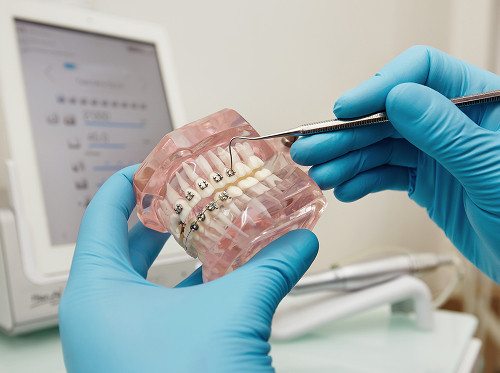
Cephalometric analysis is a mathematical calculation of points and angles on the TRG. It allows the surgeon and orthodontist to determine with millimeter accuracy the exact location of the growth failure. Based on this data, a virtual 3D modeling of the future surgery is performed, allowing the patient to see the projected facial profile before treatment begins.


What happens if micrognathia is left untreated?
Failure to undergo treatment leads to gradual deterioration of the entire dental system. Due to improper loading, teeth become loose and fall out prematurely. Constant facial muscle strain causes chronic headaches. The temporomandibular joint deteriorates, which can lead to blockage and the inability to open the mouth normally. The psychological aspect should not be forgotten either: social maladjustment due to appearance significantly reduces quality of life.


Frequently Asked Questions
Important: This material is for informational purposes only. Any treatment for macrognathia or imaging studies (CT, TRG) should be determined by a specialist only after an in-person examination and assessment of the patient's individual anatomy.
Is it possible to correct this defect with braces alone, without surgery?
What's the best age to have surgery?
Will there be facial scars after surgery?
Our doctors


















































This award is given to clinics with the highest ratings according to user ratings, a large number of requests from this site, and in the absence of critical violations.

This award is given to clinics with the highest ratings according to user ratings. It means that the place is known, loved, and definitely worth visiting.

The ProDoctors portal collected 500 thousand reviews, compiled a rating of doctors based on them and awarded the best. We are proud that our doctors are among those awarded.
Make an appointment at a convenient time on the nearest date
Price

Appointment to the doctor
Reviews




















Our clinics


Application “Personal Account K+31”