
Deep Caries Treatment
Deep caries is the final stage of destruction of hard dental tissue before infection reaches the inner chamber (pulp). At this stage, the pathological process penetrates the enamel and most of the dentin, stopping in a narrow layer of tissue separating the cavity from the nerve.

specialists

equipment

treatment






What is deep caries?

This is a lesion of the deep layers of dentin—the part of the tooth that is more porous than enamel. Deep caries is considered a borderline condition: the tooth is still vital, but the risk of developing pulpitis is highest.
How is deep caries different from moderate caries?
The main difference lies in the volume of destroyed dentin and the severity of the reaction to external factors. With moderate caries, the lesion is confined to the middle layers of dentin, and the healthy tissue layer above the pulp chamber remains quite thick. Deep caries is characterized by only a thin septum of softened or pigmented dentin remaining between the cavity floor and the nerve. Pain from deep caries is more intense and lasts somewhat longer than from moderate caries.
Why is deep caries dangerous for teeth?
The main danger is the proximity of the infection to the pulp. If dental caries isn't treated promptly, bacterial toxins will penetrate the dentinal tubules into the pulp, causing irreversible inflammation. Furthermore, a deep cavity significantly weakens the crown of the tooth. The thin walls can chip off during chewing, sometimes making a simple filling impossible and requiring a crown.
Reasons for development
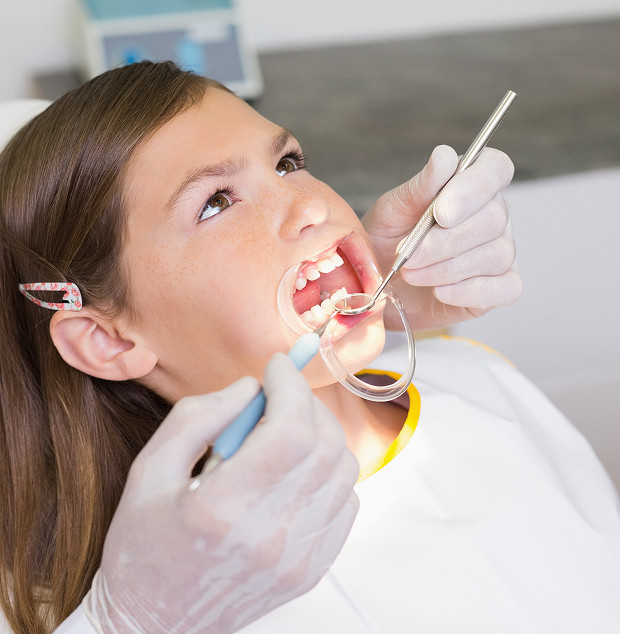
Tooth decay is a long-term process caused by a combination of factors.
Plaque, Bacteria, and Hard Tissue Destruction
The main culprit is cariogenic bacteria (primarily Streptococcus mutans). They metabolize sugars from food and produce organic acids. These acids dissolve the minerals in enamel and dentin, creating conditions for further penetration of bacteria deeper into the tooth.
Poor hygiene and diet
Brush your teeth twice a day for three minutes. It is advisable to use dental floss or an interdental brush after meals. Failure to do so will result in plaque buildup. Reduce your intake of sweet and starchy foods, as they create an ideal environment for bacteria to thrive.
Cracks, chips, old fillings, and secondary caries
Sometimes deep tooth decay develops under an old filling. If the seal of the filling is compromised, saliva containing bacteria can penetrate. The danger is that such decay is very difficult to detect. Chips in the enamel and microcracks, which allow infection to easily penetrate the dentin, also increase the risk.
General information
Diagnosis of Deep Caries
A dentist makes an accurate diagnosis based on an examination. It is impossible to determine the depth of the lesion based on the patient's complaints alone.
Examination and Assessment of the Carious Cavity
During the appointment, the dentist performs a visual examination and probing. With deep decay, probing the cavity floor is usually painful at one point. The dentist evaluates the tissue density, dentin color, and the reaction to tapping (percussion) on the tooth.
X-ray Examination
Diagnosing deep caries with X-rays also helps exclude hidden cavities in the contact walls and assess the condition of the tissues around the tooth root (periodontium).
Differential Diagnosis with Pulpitis
The dentist compares the examination data and the x-rays. If an x-ray shows a thin layer of healthy dentin above the nerve, and the complaints correspond only to reactions to external stimuli, a diagnosis of "deep caries" is made. If the cavity communicates with the pulp chamber or changes are visible on the root, the diagnosis changes.
Comparison of signs of damage
| Criteria | Moderate caries | Deep caries | Pulpitis |
|---|---|---|---|
| Depth of damage | Within dentin | Peripulpal dentin | Pulp inflammation |
| Nature of pain | Short-term, from irritants | Pronounced by irritants | Acute, spontaneous |
| Reaction to cold | Resolves quickly | Resolves within 1-2 minutes | Long-term, paroxysmal |
| Pulp condition | Not affected | Irritated but not inflamed | Inflamed |



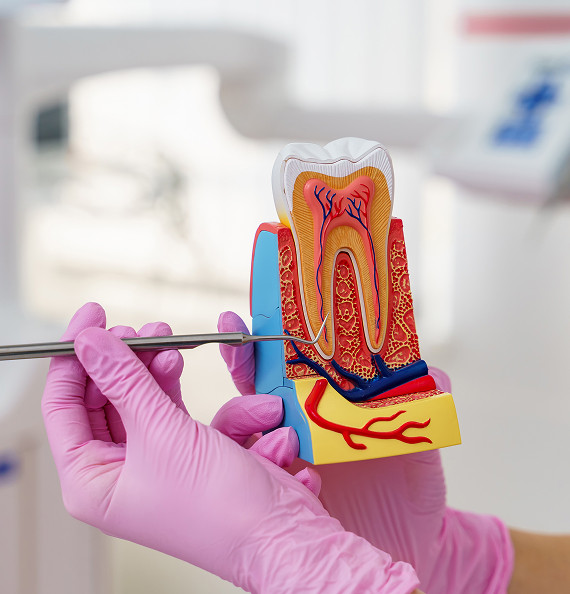
Ignoring the problem leads to predictable and painful consequences.
Pulpitis Risk
This is the most common complication. When bacteria destroy the last barrier and enter the pulp, pulpitis begins. This requires not just a filling, but also nerve removal and root canal cleaning, which is significantly more expensive and complex.
Periodontitis Risk
If pulpitis is left untreated, the infection spreads beyond the root into the bone. Periodontitis develops. In this case, cysts may form. Treatment for periodontitis is lengthy and not always successful.
Tooth decay and more complex restoration
Long-term progression of the disease leads to only thin walls remaining of the crown. In such cases, a standard filling is insufficient – the tooth must be reinforced with pins or a ceramic inlay must be made.
Prevention of deep caries

Preventing a problem is much easier than treating it in its advanced stages.
Home Hygiene
Brush your teeth properly and regularly. Pay special attention to the interdental spaces, as this is where dentin damage begins.
Preventive Examinations
Visiting your dentist every six months allows you to detect cavities at the spot or moderate stage. Early treatment is faster, less expensive, and requires minimal intervention in the tooth structure.
Controlling Diet and Risk Factors
Reducing sugar intake and sticky snacks (sweets, cookies) significantly reduces the risk. It's also important to monitor the condition of old fillings and replace them promptly, before they decay.
Frequently Asked Questions
Is it painful to treat deep caries?
Can it be treated with folk remedies?
Is it necessary to remove the nerve?

Our doctors


















































This award is given to clinics with the highest ratings according to user ratings, a large number of requests from this site, and in the absence of critical violations.

This award is given to clinics with the highest ratings according to user ratings. It means that the place is known, loved, and definitely worth visiting.

The ProDoctors portal collected 500 thousand reviews, compiled a rating of doctors based on them and awarded the best. We are proud that our doctors are among those awarded.
Make an appointment at a convenient time on the nearest date
Price

Appointment to the doctor
Reviews





















Our clinics


Application “Personal Account K+31”












Symptoms of deep caries
At this stage, the patient can no longer ignore the problem. Unlike in the initial stages, the symptoms become obvious and regular.
Pain from cold, hot, and sweet foods
The main symptom is tooth sensitivity. Pain from deep caries occurs suddenly when exposed to cold air, water, or sugar. Removing the irritant will relieve the pain.
External signs: darkening, cavity, food impaction
When examining in a mirror, the following changes may be noticeable:
How to distinguish deep caries from pulpitis
Diagnosis relies heavily on the nature of the pain. With deep caries, the pain always has a cause (cold, sugar, food pressure). Pulpitis is characterized by spontaneous pain that occurs without external factors, often intensifies at night, and may radiate to the ear or temple. If the pain becomes paroxysmal and persists, it's time to see a doctor immediately.