
Micrognathia: Causes, Symptoms, and Correction Methods
The development of the facial skeleton is a complex biological process in which symmetry and proportionality of all structures are essential. Any deviation from the norm affects not only appearance but also basic bodily functions: breathing, swallowing, and speech. One such anomaly is micrognathia.

specialists

equipment

treatment






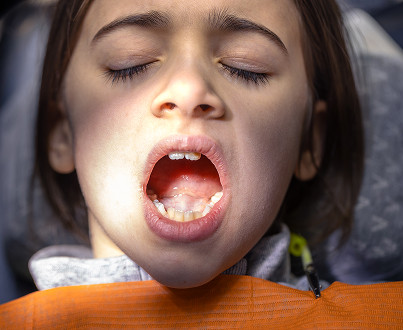
Types of micrognathia

The clinical presentation and treatment strategy largely depend on which specific part of the maxillofacial system is affected during growth. Doctors distinguish several main forms of pathology.
Micrognathia of the Mandible
This is the most common variant. In this case, the small lower jaw visually "sinks" back, causing the chin to appear slanted or practically absent. Micrognathia of the mandible is a problem in which the upper teeth overlap the lower teeth, creating a distal bite. This pathology is dangerous because the root of the tongue is displaced backward, narrowing the airway.
Micrognathia of the Maxilla
Underdevelopment of the maxilla is less common. In this case, the upper lip appears excessively thin, and the lower jaw appears massive, although in fact it is of normal size.
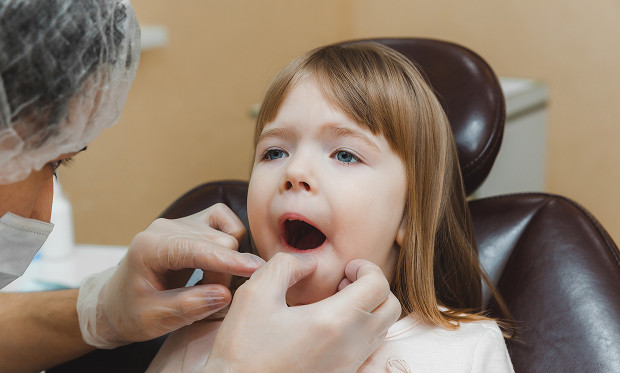
Congenital and acquired micrognathia
Based on the time of onset, anomalies are divided into two groups:
- Congenital micrognathia – develops during fetal development. Diagnosed immediately after birth, it is associated with genetics or maternal illnesses.
- Acquired micrognathia – develops after birth during the child's period of active growth. It can be caused by injuries to bone growth plates, inflammatory processes in the joints, or bad habits that disrupt the proper muscle pressure on the jawbones.
What is the difference between micrognathia and retrognathia?
Micrognathia is a true reduction in the volume and length of the bone itself. Retrognathia is an anomaly in which the jaw is normal in size but positioned abnormally (displaced backward) relative to the base of the skull.
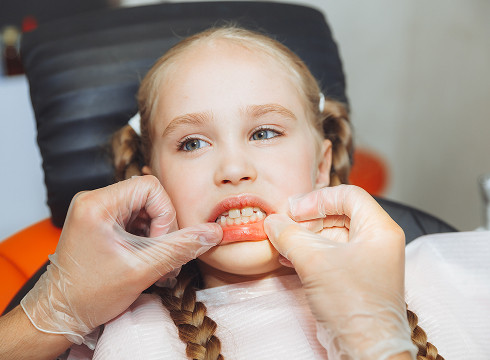
Symptoms and Signs of Micrognathia
The clinical manifestations of the pathology depend on the severity of the deformity. Often, the symptoms of micrognathia are visible to the naked eye, but some are only apparent during functional testing.
Changes in Facial Profile
The most characteristic symptom is facial disproportion. When the lower jaw is affected, the profile becomes "bird-like": the chin appears inexpressive, and the upper lip and nose protrude excessively. When the upper jaw is affected, the face appears flat, and the cheekbones are weakly defined. The lips close unnaturally, requiring effort to completely close the mouth.
Bite and Chewing Problems
A small jaw prevents the teeth from coming together properly. This leads to a severe malocclusion, most often a distal bite. Teeth may erupt outside the arch, overlap (crowding), or remain embedded in the bone (retention). As a result, chewing function is impaired: food is not processed thoroughly, which eventually leads to gastrointestinal problems.
Speech, breathing, and sleep problems
Jaw shrinkage leads to the following problems:
- Speech is impaired due to the incorrect position of the tongue.
- Breathing is difficult due to the narrowing of the throat.
- Breath holding can lead to sleep apnea.
What is the danger of micrognathia?
Functional complications
Due to improper distribution of the chewing load, teeth suffer—they wear down faster, increasing the risk of periodontitis. The temporomandibular joints (TMJ) are also overloaded, causing ear pain, a clicking sound when opening the mouth, and headaches. People with this condition experience breathing difficulties—hypoxia is especially dangerous for children.
Aesthetic and Psychological Consequences
Severe asymmetry or a "weak" chin often causes self-doubt. Children with this anomaly may experience difficulties in social adaptation. In adults, psychological discomfort may be related not only to appearance but also to the inability to speak clearly or eat normally in public.

It is important not to miss the opportunity when micrognathia correction is possible using minimally invasive methods.
Consult a specialist in the following situations:
- Noticeably smaller lower jaw compared to the upper jaw
- Visible misalignment of the teeth or severe crowding
- Difficulty chewing, swallowing, or slurred speech
- Snoring and apnea have developed
- A newborn is unable to latch on to a nipple or bottle
- A significant change in facial profile that is aesthetically disturbing
Warning signs in children
Parents should pay attention to how the child sleeps (with an open or closed mouth) and how they chew food. If a child's lower jaw appears very small and the chin appears to "retract" into the neck, this is a reason to consult a specialist as early as age 3-4.
Complaints in Adults
Adult patients often seek medical attention when micrognathia symptoms are accompanied by facial joint pain, the inability to properly fit a prosthetic due to a malocclusion, or the awareness of breathing problems during sleep.
General information
Diagnosis of Micrognathia
The diagnosis is made by several specialists: orthodontists, surgeons, and otolaryngologists. A definitive diagnosis cannot be made based solely on appearance.
Examination and Medical History
The doctor evaluates facial symmetry, breathing, joint function, and dental condition. He or she also determines whether there were any childhood injuries and the mother's pregnancy history. Diagnosis of micrognathia begins with a detailed medical history.
Photographic Protocol and Digital Scanning
For an objective assessment of appearance, a series of photographs of the face and teeth are taken from specific angles. Digital jaw scanning allows you to create an accurate virtual 3D model of your dentition.
TRG, radiography, CBCT, and additional studies
The following methods are used for diagnostics:
- TRG (teleradiography): skull image
- CBCT of the jaw: (cone beam computed tomography)
- 3D planning: virtual model of treatment outcome


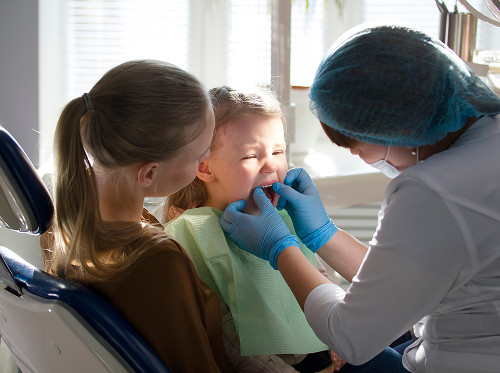

Preparation for treatment and recovery
Any major intervention requires careful planning. The patient must understand every step of the procedure.
Preliminary examination
First, the oral cavity is sanitized and caries are treated. Next, a CBCT scan is performed, and digital impressions are taken. After this, the doctor develops a treatment and rehabilitation plan.
Rehabilitation and follow-up
After surgery, recovery is required (from several weeks to months). The patient is monitored by the surgeon and orthodontist. Rehabilitation includes diet, facial exercises, and regular checkups.
Frequently Asked Questions
Disclaimer: This article is for informational purposes only. It is not a substitute for a consultation with a doctor. If you have significant breathing difficulties, feeding problems in infants, or signs of sleep apnea, seek medical attention.
Can micrognathia be corrected with exercise alone?
Is this anomaly hereditary?
Is it necessary to remove wisdom teeth during treatment?
Often, yes. With a small jaw, there simply isn't room for wisdom teeth, and their eruption can ruin the treatment results by causing crowding.
Treating micrognathia is the path to restoring facial harmony and overall health.
Our doctors


















































This award is given to clinics with the highest ratings according to user ratings, a large number of requests from this site, and in the absence of critical violations.

This award is given to clinics with the highest ratings according to user ratings. It means that the place is known, loved, and definitely worth visiting.

The ProDoctors portal collected 500 thousand reviews, compiled a rating of doctors based on them and awarded the best. We are proud that our doctors are among those awarded.
Make an appointment at a convenient time on the nearest date
Price

Appointment to the doctor
Reviews













Our clinics


Application “Personal Account K+31”












Causes of micrognathia development
The causes of micrognathia can be both biological and mechanical. Understanding the nature of the problem helps the doctor predict future jaw growth.
Hereditary and intrauterine factors
If the parents had jaw underdevelopment, the risk of the anomaly in the child increases. Congenital pathology also accompanies conditions such as Pierre Robin syndrome, Edwards syndrome, or Patau syndrome. Infection during pregnancy, vitamin deficiency, and medication can also disrupt the development of facial bones.
Jaw growth disorders
Jaw growth depends on external stimuli. If a child sucks on the wrong pacifier for a long time while formula-fed or constantly breathes through the mouth (for example, due to adenoids), the lower jaw may begin to lag in development. Bones also need load: if solid foods are delayed, the jaw doesn't receive the necessary growth signal, and bone tissue develops poorly.
Injuries and Associated Conditions
Mechanical injury to the chin area in early childhood can lead to a fracture of the condylar process, which is the growth plate. If this zone is damaged or inflamed (for example, with osteomyelitis), the jaw stops growing on one or both sides.