
Kidney cancer (renal cell carcinoma, renal pelvis cancer)
Kidney tumors often remain asymptomatic for a long time and are often discovered by chance during an ultrasound for another reason. Kidney cancer encompasses several different diseases, and treatment depends on the exact type. Early detection often leads to a favorable prognosis, which is why timely diagnosis is so important. An oncologist at K+31 can help you understand the situation.

specialists

equipment

treatment






Causes and risk factors for kidney cancer
The exact cause is rarely identified. However, a range of contributing conditions is known. The main risk factors include:
- Smoking
- Overweight and a sedentary lifestyle
- Persistently high blood pressure
- Chronic kidney disease and long-term dialysis
- Hereditary syndromes and a history of the disease in close relatives
None of these factors make the disease inevitable—they only increase the likelihood. Therefore, regular checkups are beneficial for people at risk.
Smoking and lifestyle
Lifestyle is the easiest to change: smoking, excess weight, and inactivity increase the risk, but quitting them actually reduces it.
Hereditary factors
Some cases are linked to genetics: hereditary syndromes like von Hippel-Lindau disease lead to tumors at a young age, often in both kidneys.
Chronic diseases and comorbid conditions
Underlying medical conditions also play a role. Long-term dialysis, chronic renal failure, and hypertension increase the risk of kidney tumors.
Symptoms of kidney cancer

The difficulty is that the early stages progress almost unnoticed. Symptoms of kidney cancer usually appear when the tumor has already grown or affected adjacent structures.
Early signs
In the beginning, there are often no complaints at all. Rarely, blood in the urine or a dull ache in the lower back may occur, but these are also nonspecific.
Symptoms of progressive disease
As the tumor grows, the picture becomes more pronounced: noticeable blood in the urine, persistent flank pain, a palpable mass, weight loss, weakness, and fever. These signs of kidney cancer can no longer be ignored.

When should you see an oncologist?
A single complaint doesn't necessarily mean cancer, but it does require testing. You should make an appointment with a doctor if you experience:
- Blood in the urine
- Persistent lower back pain
- Unexplained weight loss
- Weakness and fatigue
- Unexplained fever
- A dense mass in the kidney area
A combination of several symptoms is especially alarming. The sooner you consult an oncologist, the more options your doctor has.
Diagnosis of kidney cancer
The examination is designed to locate the tumor, assess its size, and determine whether it has spread beyond the organ. Kidney cancer diagnosis combines laboratory tests and imaging and usually follows these steps:
- Initial appointment, examination, and collection of complaints
- Blood and urine tests
- Ultrasound of the kidneys
- CT with contrast for clarification
- MRI if indicated
- Biopsy if the diagnosis remains unclear
Not every patient undergoes all the stages—the program is selected individually. However, it is impossible to evaluate a kidney tumor without imaging.
Consultation with a specialist at K+31
They begin with a conversation and examination. The doctor asks about your complaints, past illnesses, and family history of cancer, and then outlines a kidney examination plan.
Laboratory research
Tests provide indirect clues: urine is checked for occult blood, and blood is assessed for kidney function, hemoglobin, and calcium.
Ultrasound of the kidneys
This is the first and most accessible method of examining the kidneys: ultrasound reveals masses and helps distinguish a simple cyst from a solid tumor.
Computed tomography
It provides an accurate picture. A CT scan of the kidneys with contrast shows the size of the tumor, its relationship to the vessels, and the condition of the lymph nodes, and therefore serves as the basis for surgical planning.
Magnetic resonance imaging
It is used when contrast is contraindicated for CT. Renal MRI is good for assessing soft tissue and tumor spread to adjacent structures and veins.
Biopsy and morphological examination
Sometimes a tissue sample is essential. A biopsy can help determine the tumor type in complex cases, although surgery is often performed without it in typical cases.
Our oncologists note one common pattern.
"In our practice, we often encounter situations where a kidney tumor is discovered incidentally during a routine examination. That's why timely diagnosis is crucial. Our team evaluates each case individually and determines the optimal treatment strategy."
Stages of kidney cancer
The stage is determined by the size of the tumor and how far it has spread; this determines both treatment and prognosis. Kidney cancer stages are conveniently divided into three groups.
- Localized process A malignant kidney tumor is confined to the kidney. This is the most favorable scenario, and surgery is often sufficient.
- Locally advanced process The tumor grows into the surrounding tissue, the adrenal gland, or major veins, sometimes affecting the lymph nodes. Treatment here is usually a combination of the two.
- Metastatic kidney cancer The disease has spread beyond the kidney. Kidney cancer metastases are most often found in the lungs, bones, and liver, and treatment becomes systemic.
Kidney cancer treatment methods
| Method | Goal | When used | Features |
|---|---|---|---|
| Kidney resection | Remove the tumor while preserving the organ | Small localized tumors | Organ-preserving, often minimally invasive |
| Radical nephrectomy | Remove the kidney with the tumor | Large and Locally advanced tumors | Possible laparoscopically |
| Targeted therapy | Inhibit tumor growth | Advanced and metastatic cancer | Long-term oral medication |
| Immunotherapy | Activate immunity against the tumor | Metastatic forms | Intravenous, possible immune reactions |
Surgical treatment
Surgery remains the primary treatment for localized renal cell carcinoma. Surgical treatment involves complete or partial removal of the kidney tumor, and it offers the best chance of survival.
Organ-preserving surgeries
Whenever possible, the kidney is preserved. Organ-preserving surgery removes only the tumor with a small amount of tissue and is suitable for small lesions.
Radical nephrectomy
For large tumors, complete renal tumor removal is performed along with the kidney. Nephrectomy is often performed laparoscopically, with the other kidney taking over the work of the removed one.
Targeted therapy
For advanced disease, targeted medications are used: targeted therapy uses drugs that block the tumor's nutrition and growth.
Immunotherapy
A separate modern approach helps the body fight cancer itself. Immunotherapy, using immune drugs, teaches the immune system to recognize tumor cells and is increasingly used for metastases.
Combination treatment regimens
Methods are often combined: drug therapy is prescribed after surgery for high-risk patients, and targeted and immune-based therapies are combined for metastases. This makes kidney cancer treatment a staged approach.
General information
Post-treatment monitoring
Treatment does not end with discharge. The disease can recur, so the patient is monitored for several years to detect kidney cancer metastases early.
Follow-up examinations
The monitoring regimen is similar to the diagnostic one, only less frequently. Follow-up monitoring typically includes:
- Routine examination according to schedule
- Blood and urine tests
- Ultrasound or CT scan of the abdominal organs
- Chest X-ray or CT scan
- Assessment of the remaining kidney
This monitoring allows for the detection of a relapse before symptoms develop.
Relapse prevention
It's impossible to completely prevent the disease from returning, but you can help yourself: keeping a regular appointment schedule, quitting smoking, and monitoring your weight and blood pressure are important.


Answers to frequently asked questions
Below are the questions patients most frequently ask.
What symptoms may indicate kidney cancer?
Is it possible to detect kidney cancer at an early stage?
What treatments are used for kidney cancer?
Is follow-up necessary after completion of treatment?
If any of this sounds familiar, don't delay. Early diagnosis significantly expands kidney cancer treatment options. Schedule a consultation with an oncologist—the doctor will assess your situation, prescribe tests, and offer a clear plan.
Clinical Guidelines of the Ministry of Health of the Russian Federation "Kidney Cancer" - https://cr.minzdrav.gov.ru/
Category of Clinical Guidelines of the Ministry of Health of the Russian Federation - https://cr.minzdrav.gov.ru/
Russian Society of Clinical Oncology (RUSSCO) - https://rosoncoweb.ru
Association of Oncologists of Russia - https://oncology-association.ru
Directory of diseases on the portal of the Ministry of Health of the Russian Federation — https://takzdorovo.ru
Scientific electronic library eLIBRARY (publications on kidney cancer) — https://elibrary.ru
CyberLeninka — scientific articles on oncourology — https://cyberleninka.ru
Federal project on oncological diseases of the Ministry of Health Russian Federation — https://onco-life.ru
Russian Society of Urologists — https://uroweb.ru
National Medical Research Center of Oncology of the Ministry of Health of the Russian Federation — https://www.rnioi.ru
Our doctors
















































This award is given to clinics with the highest ratings according to user ratings, a large number of requests from this site, and in the absence of critical violations.

This award is given to clinics with the highest ratings according to user ratings. It means that the place is known, loved, and definitely worth visiting.

The ProDoctors portal collected 500 thousand reviews, compiled a rating of doctors based on them and awarded the best. We are proud that our doctors are among those awarded.
Make an appointment at a convenient time on the nearest date
Price
Other cancer treatment services

Appointment to the doctor
Reviews





















Our clinics


Application “Personal Account K+31”












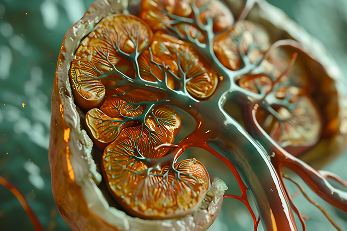
What is kidney cancer?
This is a malignant kidney tumor that grows from kidney cells and gradually destroys healthy kidney tissue. Most often, it is called renal cell carcinoma, although less commonly, the source is the lining of the renal pelvis. This malignancy is treated by urological oncology, and the course and treatment depend on the tissue type.
Renal cell carcinoma
This form accounts for the vast majority of cases. Renal cell carcinoma arises from the epithelium of the renal tubules and grows within the organ for a long time, allowing it to be detected in its early stages.
Cancer of the renal pelvis
This type is less common and differs in location. Renal pelvis cancer develops from the mucous membrane lining the urine collecting cavity and is structurally similar to tumors of the urinary tract.