
Hodgkin's lymphoma (lymphogranulomatosis)
Among lymphatic system tumors, Hodgkin's lymphoma stands out because it responds well to treatment when treated promptly.
Below, our oncologists at "K+31" explain the manifestations of Hodgkin's lymphoma, the importance of early diagnosis of Hodgkin's lymphoma, and the opportunities offered by modern treatment for Hodgkin's lymphoma.

specialists

equipment

treatment






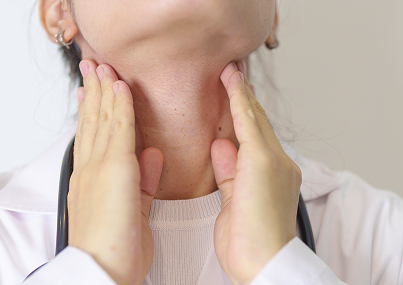
Symptoms of Hodgkin's lymphoma

Manifestations depend on the location and volume of the tumor tissue. Some complaints are related to the nodes themselves, while others are related to the body's overall response to the tumor process.
Enlarged lymph nodes
The most common and noticeable symptom is dense, usually painless nodes in the neck, above the collarbone, or in the armpit. Enlarged lymph nodes can remain the only symptom for a long time, so enlarged lymph nodes without an obvious cause require attention.

General symptoms of intoxication
In addition to the nodes, the disease causes systemic manifestations, which doctors call B-symptoms. These include:
- Fever without signs of infection
- Profuse night sweats
- Weight loss
- Severe weakness
- Itchy skin
These complaints are nonspecific, but when combined with enlarged nodes, they become a compelling reason for examination.
Signs of internal organ damage
When the process extends beyond the lymph nodes, other symptoms are added. Cough and shortness of breath are possible with mediastinal involvement, and heaviness in the hypochondrium with an enlarged spleen or liver.
Stages of Hodgkin's lymphoma
The disease is usually divided into stages based on the extent of the disease. The stage directly influences the extent of treatment and prognosis.
Early stage of the disease
This includes stages I and II, when one or more adjacent groups of nodes on one side of the diaphragm are affected. At this stage, treatment results are particularly good.
A common process
Stages III and IV involve nodes on both sides of the diaphragm and internal organs. Treatment here is more intensive, but even in the later stages, many patients achieve stable remission.
To correlate the stages with symptoms and treatment approaches, we provide a summary table.
| Stage | Prevalence | Symptoms | Treatment approaches | Prognosis |
|---|---|---|---|---|
| I | One group of nodes | Local node enlargement | Radiation ± short-course chemotherapy | Favorable |
| II | Two or more groups of one side of the diaphragm | Enlarged nodes, weakness | Combination treatment | High remission rate |
| III | Nodes on both sides of the diaphragm | Nodes, symptoms of intoxication | Chemotherapy, radiation if necessary | Dependent on risk factors |
| IV | Organ damage outside the lymphatic system | Organ symptoms, intoxication | Intensive chemotherapy | Requires active treatment |
We conduct accurate staging before starting therapy, as it determines the entire treatment program.
When should you see an oncologist?
There are some complaints that require immediate medical attention. An appointment with an oncologist is necessary in the following cases:
- Painless swollen lymph nodes
- Unexplained weight loss
- Long-term fever without cause
- Night sweats
- Persistent weakness
- Itchy skin without apparent cause
An early consultation with an oncologist allows for a faster diagnosis to be ruled out or confirmed, saving time.

Diagnosis of Hodgkin's lymphoma
The examination is built around morphological confirmation of the diagnosis. In our practice, the diagnosis of Hodgkin's lymphoma follows a clear plan:
- Consultation with an oncologist and examination of the lymph nodes
- Laboratory blood tests
- Lymph node biopsy with histological examination
- Immunohistochemistry to clarify the tumor type
- Visualization - CT and PET-CT for staging
Each stage brings us closer to an accurate diagnosis, without which it is impossible to choose the right treatment.
Specialist consultation
It all starts with a consultation: the doctor asks about your complaints and examines accessible nodes. Based on the examination, we use a targeted set of tests rather than prescribing everything.
Laboratory research
Blood tests provide a general idea of the body's condition and the activity of the process. They do not confirm a diagnosis on their own. However, they help assess:
- Inflammation
- Anemia
- Function of internal organs
Lymph node biopsy
The key method is tissue sampling from the affected node. A lymph node biopsy followed by histological and immunohistochemical examination allows us to identify characteristic cells and make a definitive diagnosis.
CT, PET-CT and other imaging methods
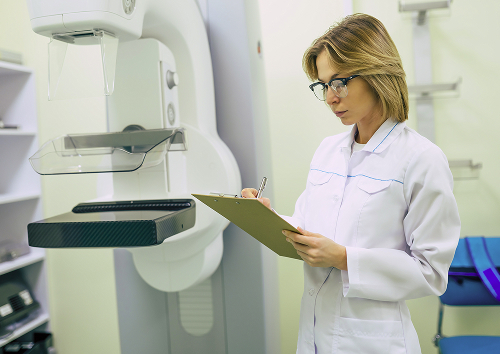
To determine the extent of the disease, imaging techniques are used. Computed tomography and PET-CT scans show all tumor lesions and their activity, and these same studies are then used to monitor the effectiveness of therapy.
"In our clinical practice, timely diagnosis of Hodgkin lymphoma often allows for early treatment. Accurate morphological verification and ongoing monitoring of treatment results help us choose the optimal strategy for each patient,"
— oncologist.
General information
Hodgkin's lymphoma treatment
Modern treatment is based on clinical guidelines and diagnostic data. We develop an individualized program for each patient, and treatment for Hodgkin's lymphoma typically combines several methods.
Drug therapy
Chemotherapy, using proven regimens, is the cornerstone of treatment. Chemotherapy for lymphoma targets tumor cells throughout the body and is the primary treatment for most stages.
Radiation therapy
In some cases, irradiation of the affected areas is added to medication. Radiation therapy enhances results in the early stages and helps maintain the effects of chemotherapy.
Combination therapy
Most often, methods are combined, with their proportions adjusted to the specific situation. This approach provides the best balance between efficacy and tolerability and is the basis of modern lymphoma treatment.
Treatment of relapses
If the disease returns, it's not a dead end. For relapsed Hodgkin lymphoma, more intensive regimens, targeted drugs, and, if necessary, high-dose therapy with stem cell support are used.



Answers to frequently asked questions
We've compiled the most frequently asked questions from patients. The answers are general and do not replace an in-person consultation with a specialist.
What is Hodgkin's lymphoma?
What symptoms may indicate the disease?
How is the diagnosis confirmed?
Is remission possible?
Clinical guidelines of the Russian Ministry of Health. Hodgkin's Lymphoma — https://cr.minzdrav.gov.ru/
Clinical Guidelines Index of the Russian Ministry of Health — https://cr.minzdrav.gov.ru/
Russian Society of Clinical Oncology (RUSSCO) — https://rosoncoweb.ru
Association of Oncologists of Russia — https://oncology-association.ru
Federal State Budgetary Institution "N.N. Sechenov National Medical Research Center of Oncology" Blokhin Russian National Research Medical University of the Russian Ministry of Health — https://www.ronc.ru
PubMed National Medical Library (Russian-language materials and reviews on the topic) — https://pubmed.ncbi.nlm.nih.gov
eLIBRARY Scientific Electronic Library — https://www.elibrary.ru
CyberLeninka — scientific publications on oncohematology — https://cyberleninka.ru
Medical Bulletin Portal — https://medvestnik.ru
Federal Electronic Medical Library — https://femb.ru
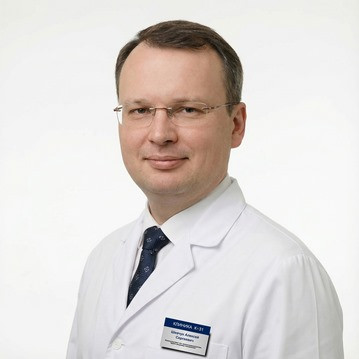
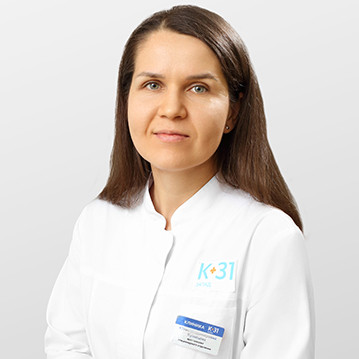
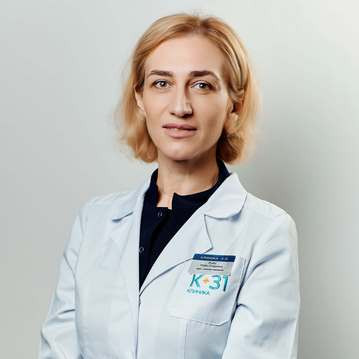
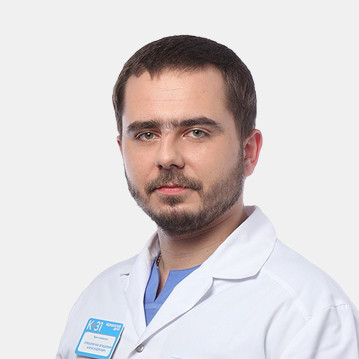
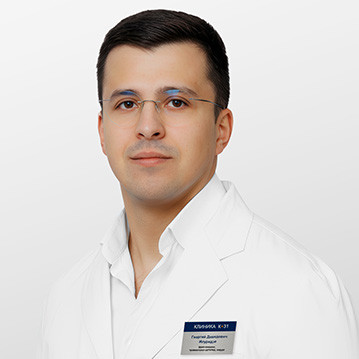
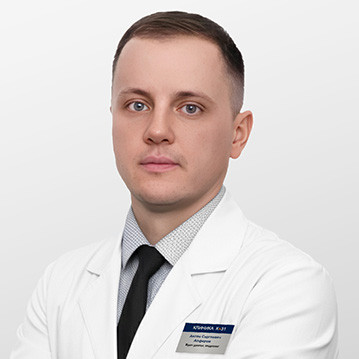
Our doctors





































This award is given to clinics with the highest ratings according to user ratings, a large number of requests from this site, and in the absence of critical violations.

This award is given to clinics with the highest ratings according to user ratings. It means that the place is known, loved, and definitely worth visiting.

The ProDoctors portal collected 500 thousand reviews, compiled a rating of doctors based on them and awarded the best. We are proud that our doctors are among those awarded.
Make an appointment at a convenient time on the nearest date
Price
Other cancer treatment services

Appointment to the doctor
Reviews










Our clinics


Application “Personal Account K+31”












Causes and risk factors for the development of the disease
The exact cause of the disease has not yet been determined. Scientists believe a combination of several factors increases the likelihood of its development. The most commonly cited are:
The presence of a risk factor alone does not lead to the disease, but it does require a more attentive approach to health.